

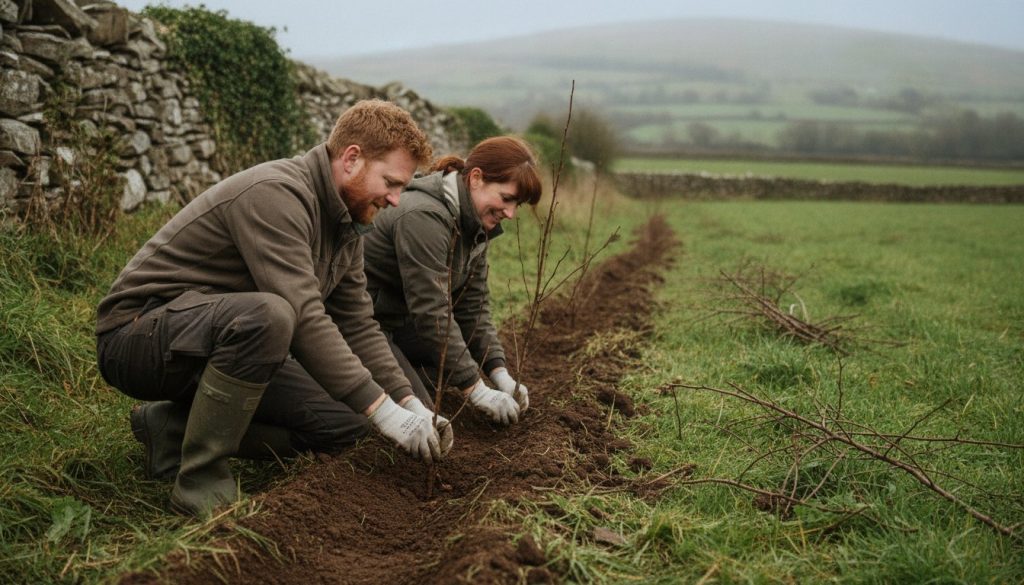
Waiting for a mild, sunny afternoon to start your garden project is often the quickest way to guarantee poor results. While it feels counterintuitive to head outside when the ground is cold and the sky is grey, the best time to plant hedging in Ireland is actually during the dormant winter months. Most people fear that the wet Irish winter will rot new roots. For many species, this period of rest is exactly what they need to settle in without the stress of summer heat.
You’ve likely felt the frustration of choosing between expensive pot-grown shrubs and more affordable bare root options, wondering if the cheaper route is a gamble. We understand the worry that a significant investment won’t take root in heavy, damp soil. This practical 2026 guide clarifies those seasonal windows so you can plant with confidence. You’ll learn the specific timing for favourites like Portuguese Laurel and Copper Beech, alongside a breakdown of how to prepare your ground for a thriving, thick boundary that lasts for decades.
Key Takeaways
- Identify why the dormant season between November and March is the best time to plant hedging in Ireland for root establishment.
- Understand the significant cost savings of bare root plants compared to pot-grown varieties for large-scale projects.
- Master the “Damp vs Drowned” rule to assess Irish soil workability and avoid the risks of waterlogging.
- Learn why planting in a continuous trench produces a thicker, more uniform hedge than using individual holes.
- Match your planting schedule to specific varieties, including native mixes for schemes and forgiving choices like Portuguese Laurel.
Understanding the Dormant Season for Hedging in Ireland
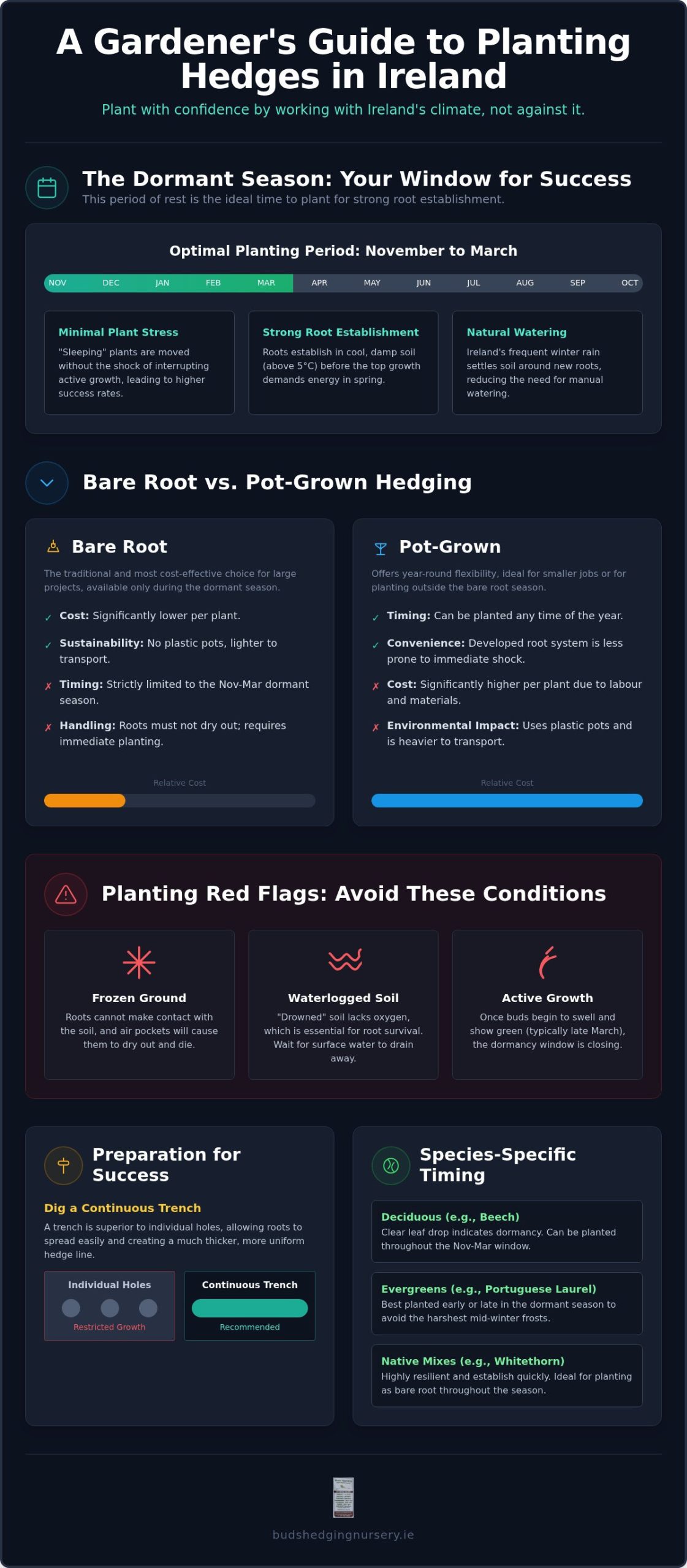
Dormancy is a natural state of rest for plants, triggered by shorter days and falling temperatures. In our climate, this usually spans from November until late March. Identifying this period is crucial because it marks the best time to plant hedging in Ireland. When a plant is “asleep”, it isn’t actively growing new leaves or shoots. This means you can lift, transport, and replant it with minimal stress to its system. It’s the difference between moving a sleeping person and trying to move someone in the middle of a sprint.
The biology behind this is straightforward. Whilst the top of the plant is inactive, the roots can still establish themselves as long as soil temperatures remain above 5°C. Air temperature might be freezing, but the soil acts as an insulator. Ireland’s maritime climate is particularly helpful here. Our winters are generally mild and damp, which prevents the ground from freezing solid for extended periods. This allows for a slightly longer planting window than drier, colder regions in Europe. Understanding What is a hedge? involves recognising it as a living boundary that needs this quiet period to anchor itself before the spring surge.
The November to March Window
Late autumn is often the “Goldilocks” period for Irish gardens. The soil still holds some summer warmth, yet the frequent winter rain helps settle the earth around the roots naturally. This eliminates the need for heavy manual watering that spring planting requires. It’s a low-maintenance approach that works with the weather rather than against it. For deciduous species, the signs of dormancy are clear. You’ll see the leaves turn and eventually drop on beech hedging plants Ireland, signalling the plant has safely entered its rest phase and is ready for relocation.
Exceptions to the Winter Rule
There are times when you should keep the spade in the shed. The following conditions make planting risky:
- Frozen Ground: Roots cannot make contact with the soil, and air pockets will cause them to die off.
- Waterlogged Sites: “Drowned” soil lacks oxygen. If water sits on the surface, you must wait for it to drain.
- Active Growth: Once buds begin to swell and show green in late March, the dormancy window is closing.
Evergreen varieties like Portuguese laurel are a bit different. Because they keep their leaves, they continue to transpire and lose moisture throughout the winter. They usually prefer being moved in the early or late stages of the dormant season to avoid the harshest mid-winter frosts when the ground is most difficult to work.
Bare Root vs Pot-Grown: Timing and Cost Benefits
Choosing the right format for your plants is just as important as knowing the best time to plant hedging in Ireland. Bare root plants are the industry standard for large projects. They’re grown in open fields, lifted during winter, and sold without soil. This makes them light to transport and significantly cheaper than alternatives. Pot-grown plants, by contrast, are available year-round. They arrive with a developed root system in a container of compost. While they offer flexibility, the cost per plant is higher due to the labour, plastic, and space required to grow them.
Bare root stock is the traditional choice for a reason. It’s more sustainable, as it eliminates the need for plastic pots and reduces the carbon footprint associated with heavy transport. For anyone looking to plant hundreds of metres of boundary, the savings are substantial. It remains a popular choice amongst those who value traditional growing methods and cost-efficiency. While pot-grown plants offer flexibility, the best time to plant hedging in Ireland remains the dormant winter period if you want the most cost-effective results.
The Bare Root Season Advantage
If you’re planning a large-scale project, you’ll need to align your schedule with the bare root tree season Ireland. This window is strictly limited to the dormant months. Native species like Whitethorn and Hazel thrive when planted this way. They’re resilient and establish quickly in our soil once the spring warmth arrives.
Handling is the critical factor here. Because the roots are exposed, they’re vulnerable to drying out. You’ll need to plant them almost immediately or “heel them in” by covering the roots with loose soil or sand. If you leave them in the back of a van or exposed to the wind for even an hour, you risk losing the plant.
When Pot-Grown Hedging Makes Sense
Pot-grown plants are the go-to for smaller garden renovations or when you’ve missed the winter window. They’re ideal for evergreens like Photinia Red Robin or Griselinia, which can be more sensitive to root disturbance. You can plant these in mid-summer, provided you’re prepared to water them regularly. Using expert planting techniques ensures these established root balls integrate well with your local soil. If you only need five or ten plants to fill a gap, the convenience of year-round availability outweighs the higher unit price. You can view our current hedging stock to see which format suits your specific project needs.
Navigating the Irish Climate: Frost, Rain, and Soil
Ireland’s weather is famously unpredictable. For a hedge grower, soil moisture and temperature dictate the work schedule more than the calendar. While winter is generally the best time to plant hedging in Ireland, the specific conditions on your site on planting day are what determine success. You’re looking for that narrow window where the soil is moist but not saturated. If the ground is too dry, roots struggle to settle; if it’s too wet, they’ll rot before they ever start to grow.
Our landscape features a broad range of soil types. We see everything from heavy, sticky clays to free-draining sandy loams. Heavy clay is particularly challenging. It holds water for long periods, which can lead to anaerobic conditions where roots literally suffocate. Planting during a dry spell in late autumn or early spring is often the best strategy for these heavier sites. It gives the soil a chance to settle without becoming a muddy slurry that traps the plant in a cold, airless pocket.
The Irish wind is another factor often overlooked. Planting in the earlier part of the dormant season allows roots to anchor before the fierce spring gales arrive. A plant that hasn’t settled will “rock” in the wind. This movement creates a gap at the stem base, which then collects water and increases the risk of rot or frost damage. For exposed sites, getting your hedge in the ground by November is a significant advantage.
Dealing with Waterlogged Soil
We use the “Damp vs Drowned” rule to decide if it’s safe to dig. You can test this with a simple “Squeeze Test”. Take a handful of soil from your planting trench and squeeze it firmly. If it stays in a solid, slimy ball or water trickles through your fingers, the ground is drowned. If the ball crumbles easily when poked, the soil is damp and workable. Planting in water-saturated ground leads to root rot, as the lack of oxygen prevents the plant from establishing. If your site is prone to holding water, incorporate organic matter or grit to improve drainage before the winter window closes.
Frost and Snow Considerations
A light morning frost is rarely an issue for hardy species. However, a “frozen crust”, where the spade bounces off the ground, is a hard “no” for planting. Attempting to plant in frozen soil creates air pockets that will kill off delicate root hairs once the thaw begins. Frost heave is the physical lifting of soil and plants caused by freezing water. After a period of hard snow or ice, it’s vital to walk the length of your new hedge. Use your boot to gently firm the soil back down around any plants that have been pushed upwards. This ensures the roots stay in contact with the earth and don’t dry out in the winter air.
Preparing for Success: Site Preparation and Heeling-in
Success starts long before the first plant goes into the ground. While the best time to plant hedging in Ireland is during the winter, your preparation should ideally begin weeks earlier. Clearing the site is the first priority. You must remove all perennial weeds and old roots. These compete for nutrients and moisture, which young plants can’t afford to lose. We always recommend digging a continuous trench rather than individual holes. A trench provides a uniform environment for roots to spread, resulting in a much thicker, more even hedge.
Sourcing your stock from a specialist plant nursery Ireland provides the best foundation, but how you handle that order upon arrival is critical. Bare root plants are particularly vulnerable. If the weather turns foul or your schedule shifts, you need a plan to protect them. Keeping the roots moist and sheltered is the only way to ensure 100% establishment once conditions improve.
Step-by-Step Site Preparation
Start by marking out your line with a garden string. This ensures a professional, straight boundary. Dig your trench to at least twice the width of the root system. This loosened soil allows new roots to penetrate easily. You can incorporate well-rotted manure or garden compost into the bottom of the trench. Be careful not to over-fertilise young roots, as high nitrogen levels can actually scorch them. The goal is to improve soil structure rather than provide a massive nutrient boost. If you’re ready to start your project, you can order your hedging plants today for delivery during the planting window.
The Heeling-in Technique
Heeling-in is an essential skill for any Irish gardener. If your plants arrive and the ground is frozen or waterlogged, you cannot leave them in their bags. Dig a shallow, V-shaped trench in a sheltered part of the garden. Lay the plants in at a 45-degree angle and cover the roots with loose soil or sand. Firm it down gently with your foot. This prevents air pockets from reaching the roots, which would cause them to dry out and die. You can safely keep plants heeled-in for several weeks, but they must be moved to their permanent home before the best time to plant hedging in Ireland passes and the spring buds begin to break.
Choosing Species Based on Your Planting Window
Choosing the right species for your specific site is the final step in planning. While the best time to plant hedging in Ireland generally falls between November and March, some plants are much more particular about their schedule than others. A mistake in timing with a sensitive species like Beech can result in poor growth or total failure; more robust evergreens offer a bit more flexibility for those starting their projects later in the season. Selecting the best hedging for privacy Ireland often depends on what is available in the nursery during your specific planting window.
Deciduous plants like Beech and Hornbeam have strict dormant requirements. They must be moved whilst they are completely inactive. If you attempt to plant these once the buds have started to swell in late spring, the success rate drops significantly. By contrast, Portuguese Laurel is a much more forgiving choice for early spring planting. It handles the transition well, even as the soil begins to warm up in April. This resilience makes it a popular option for gardeners who missed the peak winter months but still want to establish a thick, evergreen screen.
Native Irish Hedging Mixes
For those participating in environmental grants, the timing for Native Trees Scheme plants is critical. These mixes usually consist of Whitethorn and Blackthorn, which are the backbone of the Irish countryside. They provide essential food and shelter for birds and pollinators. These species are incredibly hardy. They should be planted during the peak of winter to ensure they are fully established before the nesting season begins on March 1st. Matching species to your drainage is also vital. Alder and Willow thrive in damp hollows where other native plants might struggle with wet feet.
Evergreen Favourites: Laurel and Privet
The ideal window for Cherry Laurel and Portuguese Laurel is early or late winter. This avoids the harshest mid-winter frosts whilst the ground is still workable. Golden Privet is another excellent candidate for winter planting. It adds a bright splash of colour to the garden whilst remaining easy to establish in most soil types. It’s a robust plant that settles quickly if the ground is prepared correctly.
Managing the transition from nursery to garden for mature specimens requires extra care. Even if it’s the best time to plant hedging in Ireland, a large plant with a significant leaf area will still require attention to settle its roots. Ensure you have a clear plan for firmed soil and initial watering, especially if a dry spell follows your planting day. This methodical approach ensures your new boundary thrives for years to come.
Secure Your Garden Boundary for the Future
Successful hedging isn’t about luck; it’s about working with the natural rhythms of the landscape. By choosing the dormant months between November and March, you give your plants the quiet window they need to anchor roots without the stress of active growth. Understanding the best time to plant hedging in Ireland allows you to take advantage of cost-effective bare root stock and winter moisture whilst the ground is workable. Whether you’re planting a native mix or an evergreen screen, correct preparation and species choice are the keys to a thick, healthy hedge.
At Buds Nursery Cavan, we bring over 30 years of growing experience to every plant we produce. Our 60-acre site is dedicated to traditional methods that ensure hardy, reliable stock for projects across the country. If you need guidance on soil or variety choice, our team is available on-site Tuesday to Saturday to offer practical, no-nonsense advice. Browse our extensive range of Irish-grown hedging at Buds Nursery Cavan and find the right fit for your project. With correct timing and quality plants, your new boundary will thrive for decades.
Frequently Asked Questions
Can I plant hedging in Ireland during the summer?
You can plant pot-grown hedging during the summer, but it isn’t the best time to plant hedging in Ireland for large projects. Summer planting requires daily watering to prevent the root ball from drying out in the heat. Bare root plants cannot be moved in summer as they’re in active growth. For most gardeners, waiting for the dormant season is more practical and ensures a much higher success rate with less maintenance.
What happens if I plant a bare root hedge in April?
Planting bare root hedging in April is risky because the plants are waking up from dormancy. Once the buds begin to swell and green shoots appear, the plant’s energy moves upwards rather than into root development. A late-planted hedge often struggles to find enough moisture to support new leaves, leading to stunted growth or death. If you miss the March deadline, it’s safer to use pot-grown specimens instead.
Is it better to plant a hedge in autumn or spring?
Late autumn is generally better than spring for establishing a new boundary. Planting in November or December allows the roots several months to settle into the soil before the demands of spring growth begin. Whilst spring planting is possible, it leaves the hedge more vulnerable to early summer droughts. Autumn-planted hedges benefit from the natural winter rainfall, which settles the soil around the roots and reduces the need for manual watering.
How do I protect a newly planted hedge from Irish winter gales?
Wind-rock is the main danger during Irish winter gales. If a plant moves back and forth, it creates a hole at the base that collects water and freezes, damaging the stem. You should firm the soil down with your heel after any period of high winds. For very exposed sites, temporary windbreak netting can be installed. This reduces the wind speed and allows the young plants to anchor themselves securely without constant physical stress.
Do I need to water my new hedge if it rains all winter?
Generally, the Irish winter provides enough rain to keep new hedges hydrated. However, evergreens like Portuguese Laurel or Privet continue to lose moisture through their leaves even in winter. If we experience a prolonged dry spell or particularly cold, drying winds, you should check the soil moisture. If the ground feels dry several inches down, a deep soaking is necessary. Don’t assume that a light drizzle is enough to reach the root zone.
Can I plant a hedge if the ground is currently waterlogged?
You should never plant into waterlogged ground. If the soil is a sticky slurry or water sits in the bottom of your trench, wait for it to drain. Planting in “drowned” soil prevents oxygen from reaching the roots, causing them to rot. If your site stays wet for weeks, consider planting on a slight mound or improving the drainage with organic matter. The best time to plant hedging in Ireland is when the soil is moist but workable.
What is the cheapest time of year to buy hedging plants?
The cheapest time to buy is during the bare root season, which runs from November to March. Bare root plants are grown in open fields and lifted without soil, making them much less expensive to produce and transport than pot-grown alternatives. For large-scale projects or long boundaries, buying bare root stock during the winter dormant window can save a significant amount of money compared to purchasing container-grown plants later in the year.
How long does it take for a winter-planted hedge to start growing?
While you won’t see new leaves until spring, a winter-planted hedge starts growing underground almost immediately. As long as the soil temperature stays above 5°C, the roots will begin to move into the surrounding earth. Visible top growth usually starts in late April or May once the air warms up. Because the roots had a head start during the winter, these plants often grow much faster than those put in the ground during late spring.