

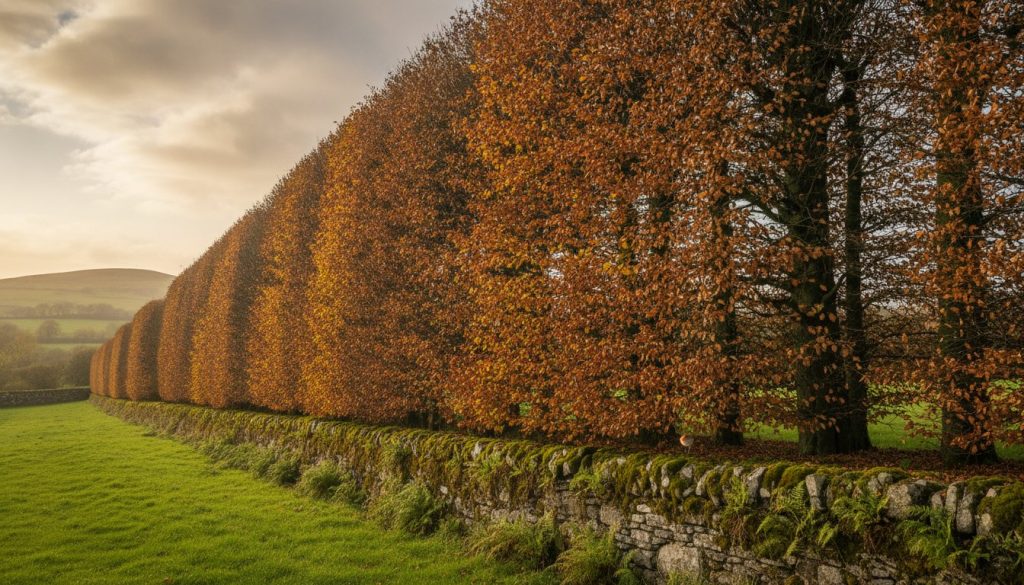
Why do so many Irish gardeners assume that choosing a deciduous boundary means staring at a bare, skeletal garden for six months of the year? It’s a common frustration that often leads people to invest in expensive evergreen alternatives that can be difficult to manage. If you’re researching deciduous hedging plants Ireland, you likely want the beauty of seasonal colour without sacrificing your winter privacy. You need a solution that stands up to harsh winds on exposed sites while providing a rich habitat for local birds and pollinators.
This 2026 practical guide explains how specific varieties like Beech and Hornbeam actually retain their foliage throughout the coldest months. We’ll clear up the confusion between similar species and provide a straightforward look at planting for wind protection and biodiversity. You’ll learn about the most resilient species for the Irish climate and how to navigate legal requirements like the bird nesting season, which runs from 1st March to 31st August. We also highlight current support options, such as the ACRES scheme and local maintenance grants, to help you establish a traditional, cost-effective boundary that lasts for generations.
Key Takeaways
- Understand why marcescent species like Green Beech and Hornbeam provide effective year-round privacy by retaining their copper leaves throughout the winter.
- Discover how to select the best deciduous hedging plants Ireland for exposed sites to filter wind effectively without creating damaging turbulence.
- Learn the practical steps for site preparation and the significant cost advantages of planting during the bare root season.
- Identify specific varieties that offer dramatic seasonal colour changes, from vibrant spring greens to deep autumn golds.
- Gain insights into sourcing hardy, nursery-direct stock to ensure your boundary establishes quickly and thrives in local conditions.
Why Choose Deciduous Hedging for the Irish Climate?
Deciduous hedging refers to plants that shed their leaves annually, usually during the transition into winter. Whilst many homeowners reflexively choose evergreens for instant screening, deciduous hedging plants Ireland offer unique advantages that evergreens can’t match. Understanding the history and purpose of hedging shows that these plants were traditionally chosen for their resilience and their ability to weave seamlessly into the natural landscape.
One of the primary benefits is biodiversity. Native deciduous species provide essential nesting sites, nectar for pollinators, and winter berries for birds. Species such as Whitethorn or Beech support a far wider range of Irish insect life than non-native evergreens. They’re also naturally adapted to our local conditions. Whether you’re dealing with heavy clay in the midlands or damp limestone soils, native and naturalised deciduous plants often thrive where evergreens struggle with root rot or wind burn.
The Aesthetic Appeal of Changing Seasons
A well-planned garden shouldn’t look static. Deciduous hedges act as a living calendar, marking the passage of time with distinct visual shifts. In April, you’ll see the translucent, bright green of new Beech growth. By October, these tones shift into deep golds and coppers. Using Copper Beech is a particularly effective design choice; its dark purple-bronze foliage provides a luxurious contrast against lighter green shrubs. These hedges feel more at home in the Irish countryside, as they mirror the natural cycles of our native woodlands and hedgerows.
Resilience and Growth Habits
Vigorous growth is another practical advantage. Varieties like Green Privet and Whitethorn establish quickly, often reaching a functional height much faster than many potted evergreen alternatives. They’re also built to handle heavy Irish rainfall. Unlike evergreens that can act like a solid sail and catch the wind, deciduous branches allow air to filter through, reducing the risk of the hedge being uprooted during winter storms. Marcescence is the biological process where plants like Beech and Hornbeam retain their dry, brown foliage throughout the winter months. To ensure your hedge gets the best start, aim to plant during the bare root tree season Ireland, which typically begins in mid-November. Consider these growth factors:
- Green Privet: Reliable and fast-growing in most soil types.
- Whitethorn: Extremely hardy and ideal for stock-proof boundaries.
- Beech: Slower to start but creates a dense, architectural screen.
The Most Reliable Deciduous Hedging Varieties in Ireland
Selecting the right deciduous hedging plants Ireland depends on your site’s specific drainage and desired winter appearance. Green Beech remains the standard for formal boundaries. It offers a crisp, green summer display that transitions to a bright, coppery orange in winter. Copper Beech provides a similar structure but features striking deep purple foliage that adds a sense of maturity and luxury to any garden design. Both varieties are highly valued for their marcescence. This is the biological trait that allows them to hold onto their dried leaves until new growth emerges, ensuring you don’t lose your privacy during the colder months.
For gardens with heavier ground, Hornbeam is the superior choice. It looks remarkably similar to Beech but is far more tolerant of the “wet feet” conditions common in many Irish counties. Green Privet is another reliable workhorse. It’s technically semi-deciduous; in milder winters, it often retains its green foliage, providing a dense, functional screen for a lower cost than many mature evergreen alternatives.
Beech vs. Hornbeam: Making the Right Choice
The choice between Beech and Hornbeam often comes down to your soil type. Beech requires well-drained ground and will struggle in waterlogged areas. Hornbeam thrives in heavy clay and damp spots where other plants might fail. Visually, Beech leaves are smoother with a wavy edge and turn a vibrant orange-gold in the autumn. Hornbeam leaves have deeper ridges and fade to a more muted, papery brown. Both species grow at a moderate rate of about 30 to 60cm per year. They respond well to a late summer trim, which encourages the plant to keep that all-important winter foliage for screening.
Native Species for Biodiversity and Schemes
Whitethorn is the backbone of the Irish countryside. It’s incredibly hardy and provides a thorny, stock-proof barrier that’s perfect for larger boundaries or farm hedges. For those participating in environmental initiatives, using Native Trees Scheme plants is a practical way to support local ecology whilst fulfilling grant requirements. According to the Irish Agriculture and Food Development Authority, mixing native species is key to a healthy ecosystem. You can create a traditional country look by mixing Whitethorn with Hazel and Spindle. If you’re unsure which mix suits your land, our team at Buds Nursery can help you select the right balance of species for your specific site.
Deciduous vs. Evergreen: Privacy, Maintenance, and Windbreaks
Choosing between evergreens and deciduous hedging plants Ireland often comes down to a misunderstanding of how privacy works in winter. Many assume that once leaves drop, the screen vanishes. However, as we discussed with marcescent species like Beech, you actually retain a dense, opaque barrier of copper or brown leaves. This provides approximately 80% to 90% screening throughout January and February. For many, this is a fair trade for the seasonal variety and ecological benefits these plants provide. You can find expert advice on selecting hedging plants that balance these aesthetic needs with practical site requirements.
Maintenance is another area where deciduous varieties often win. Most only require a single trim in late summer to maintain their shape and encourage leaf retention. In contrast, fast-growing evergreens like Leylandii can require two or even three cuts a year to prevent them from becoming unmanageable. If you’re looking for the best hedging for privacy Ireland offers, consider the long-term labour costs alongside the initial purchase price. Bare root deciduous plants are significantly more economical when screening large boundaries or long driveways.
Filtering Wind on Exposed Sites
The physics of wind protection is where deciduous hedges truly excel. An evergreen hedge acts like a solid wall or a sail. When strong Atlantic gusts hit a solid barrier, the air is forced over the top, creating turbulent downdrafts on the sheltered side. This can damage smaller garden plants and even lead to “wind rock,” where the hedge itself becomes loose in the soil. A deciduous structure filters the wind. The intricate network of branches and retained leaves breaks the force of the wind without stopping it entirely. This creates a much larger and more stable area of shelter. Hornbeam and Hawthorn (Whitethorn) are particularly resilient on these exposed, windy sites.
Long-term Maintenance and Health
Deciduous species are generally more resilient to the pests and diseases that plague modern evergreen monocultures. Whilst Laurel can suffer from “shot hole” fungus and Box from blight, native deciduous hedges have evolved to cope with local pathogens. They also respond exceptionally well to renovation. If a deciduous hedge becomes overgrown or gappy, you can often prune it back hard to the main stems. It will regenerate with fresh, vigorous growth. Many evergreens don’t recover from this kind of heavy cutting, often leaving permanent brown patches if you cut back into the old wood. This makes deciduous varieties a safer long-term investment for the practical gardener.

Planting and Establishing Your Deciduous Hedge
Successful establishment starts with correct timing. For the best results and lowest costs, you should plan your project around the bare root tree season Ireland, which typically runs from mid-November until March. Planting during this dormant phase allows deciduous hedging plants Ireland to settle their roots before the energy-intensive spring growth begins. If you miss this window, potted plants are available year-round, though they require more frequent watering during their first summer to prevent stress.
Proper site preparation is the difference between a hedge that thrives and one that merely survives. You should clear a strip at least 60cm wide of all grass and weeds. Digging in well-rotted manure or compost amongst the planting line provides a vital nutrient boost. For a thick, stock-proof boundary, we recommend a double-staggered row. This involves planting two parallel lines about 30cm apart, with plants spaced roughly 33cm apart in a “W” pattern. This configuration usually requires 5 to 7 plants per linear metre depending on the species and starting size.
Bare Root vs. Potted Deciduous Plants
Bare root plants are the industry standard for large-scale hedging projects in Ireland. They are easier to transport, more economical to purchase, and often establish more quickly than potted alternatives. When your bare root stock arrives, keep the roots covered and moist. If you can’t plant them immediately, “heel them in” by digging a temporary trench and covering the roots with loose soil. Potted plants offer more flexibility for smaller garden projects outside the winter months, but they represent a higher initial investment per metre.
The First Two Years: Pruning for Thickness
To achieve a dense screen, you must be brave with the shears in the first year. Species like Green Privet and Whitethorn benefit from a “hard prune” immediately after planting. Cutting them back by a third or even a half encourages dormant buds at the base to break, preventing a “leggy” hedge with gaps at the bottom. Weed control is also critical; a thick layer of bark mulch helps retain moisture and suppresses competition for nutrients. You must firm in each plant with your heel to remove air pockets and ensure the roots have direct contact with the soil. If you’re ready to start your project, you can view our current bare root stock and plan your delivery.
Sourcing Quality Deciduous Hedging from a Specialist Nursery
When you invest in deciduous hedging plants Ireland, the source of your stock is just as important as the species you choose. Buying direct from a grower like Buds Nursery Cavan ensures you receive fresher, hardier plants compared to retail resellers. Our stock doesn’t sit in transit or on garden centre shelves for weeks. It’s lifted from our 60 acres of dedicated production land and delivered directly to your site. With over 30 years of experience in the Irish horticultural trade, we understand the specific challenges of our climate and soil types. When selecting deciduous hedging plants Ireland, the maturity and health of the root system are the most critical factors for long-term success.
Expert Guidance at Buds Nursery
Choosing the right variety for a long-term boundary requires more than a quick glance at a label. You can visit our Glassdrummon site from Tuesday to Saturday to see our production methods firsthand. Our team provides practical advice to help you decide between Green and Beech hedging plants Ireland based on your garden’s aspect and drainage. We also specialise in customising mixed native hedge packs. These are ideal for those participating in national environmental schemes, ensuring you have the correct balance of Whitethorn, Hazel, and other native species to support local wildlife.
Quality Assurance and Scale
Sourcing from a specialist plant nursery Ireland offers a level of quality control that mass-market retailers can’t match. We focus on producing “well-feathered” plants. This means our hedging has plenty of side branches from the base up. This ensures your hedge fills out quickly without gappy sections at the bottom. Whether you’re planting a small garden border or a 500-metre farm boundary, we can organise national delivery to suit your project timeline. We manage the logistics for large-scale orders to ensure the plants arrive in peak condition for immediate transplanting. Visit Buds Nursery Cavan or contact us to organise your 2026 planting project.
Establishing Your Seasonal Boundary
Deciduous hedging is a practical and resilient choice for the Irish landscape. By selecting marcescent species like Beech or Hornbeam, you maintain privacy throughout the winter whilst enjoying vibrant colour changes in spring and autumn. These plants don’t just provide a visual screen; they offer superior wind filtration and a vital habitat for local biodiversity. They’re a traditional, hardworking alternative to evergreens that often struggle on exposed or wet sites.
Choosing the right deciduous hedging plants Ireland requires an understanding of your soil type and drainage. Whether you’re working on a small garden project or a large-scale boundary under the Native Trees Scheme, sourcing nursery-direct stock is essential for success. At Buds Nursery Cavan, we bring over 30 years of growing experience and 60 acres of specialist production land to every order. Our team provides expert advice to ensure you select the best species for your specific site conditions.
Browse our full range of deciduous hedging and trees at Buds Nursery Cavan to start planning your next project. Investing in a quality hedge today creates a living boundary that will thrive for decades.
Frequently Asked Questions
Do deciduous hedges provide privacy in winter?
Yes, certain species like Green Beech and Hornbeam provide excellent winter privacy. These plants are marcescent, meaning they retain their dry, coppery leaves throughout the coldest months until the new growth pushes them off in spring. This unique trait ensures that your boundary remains opaque and provides approximately 80% to 90% screening. Whilst they aren’t evergreen, the dense network of branches and retained foliage offers a reliable year-round visual barrier.
When is the best time to plant deciduous hedging in Ireland?
The optimal time to plant is during the dormant season, which runs from mid-November until March. This window coincides with the bare root season, allowing deciduous hedging plants Ireland to settle their roots before the spring growth spurt begins. Planting whilst the ground is cold but not frozen ensures the best survival rates. If you choose potted plants, you can plant year-round, provided you water them consistently during the first summer.
Which is better for wet soil: Beech or Hornbeam?
Hornbeam is the superior choice for wet, heavy, or clay-based soils common in many parts of the country. Whilst Beech requires excellent drainage and will struggle in waterlogged ground, Hornbeam is remarkably tolerant of “wet feet.” It looks very similar to Beech and retains its leaves in winter, making it a reliable alternative for difficult sites. If your garden is prone to standing water during the winter months, Hornbeam is the safer long-term investment.
How fast do deciduous hedges grow compared to Laurel?
Most deciduous hedges grow at a moderate rate of 30cm to 60cm per year. Whilst this is slightly slower than the rapid 60cm to 90cm growth seen in Cherry Laurel, species like Green Privet can be quite vigorous once established. Deciduous plants often catch up quickly because they are less prone to wind rock and root stress in exposed areas. They provide a more manageable boundary that doesn’t require constant, heavy pruning to stay in check.
What is the most cost-effective way to plant a long hedge?
Buying bare root plants during the winter dormant season is the most economical way to plant a long boundary. Bare root stock is significantly cheaper than potted alternatives and is easier to transport in large quantities. Since deciduous hedging plants Ireland are often sold in bundles of 25 or 50, you can cover hundreds of metres for a fraction of the cost of mature evergreens. This method also ensures a high success rate for large-scale projects.
Can I mix different deciduous species in one hedge?
You can certainly mix species to create a traditional country hedge. Combining Whitethorn with Hazel, Spindle, and Holly creates a diverse boundary that supports a wider range of local wildlife. This approach is often required for environmental initiatives like the Native Trees Scheme. Mixing varieties adds seasonal interest through different flowering times and berry production, whilst also making the hedge more resilient to species-specific pests or diseases compared to a monoculture.
How often do I need to trim a deciduous hedge?
Most deciduous hedges only require a single trim per year, typically in late summer or early autumn. For species like Beech and Hornbeam, trimming in August encourages the plant to retain its leaves for winter privacy. If you are growing a formal hedge, you might opt for a second light tidy-up in spring. This low-maintenance routine is a major advantage over fast-growing evergreens that often need two or three cuts annually to stay neat.
Are deciduous hedges better for the environment?
Deciduous hedges are significantly better for the environment than non-native evergreen monocultures. They provide a rich habitat for Irish birds, pollinators, and insects throughout the year. Native species like Whitethorn produce blossoms in spring and berries in autumn, offering vital food sources. They also weave more naturally into the local landscape, supporting the connectivity of wildlife corridors across the countryside, which is a key goal of modern conservation and biodiversity efforts.