


Why settle for a garden boundary that effectively disappears for four months of the year? Many Irish homeowners invest significant time and money into planting only to find their privacy evaporates the moment the autumn leaves fall. If you’ve ever looked out at a skeletal hedge shivering in the winter rain, you know that a seasonal screen is rarely enough for a busy home. Achieving successful year round interest hedging requires a balance between reliable structure and shifting visual appeal that remains functional through every season.
It’s frustrating when a chosen plant struggles in heavy clay soil or fails to thrive during a typical wet winter. You want a boundary that offers a vibrant backdrop in spring, deep colour in summer, and solid privacy when the temperature drops. This article provides a practical guide to selecting and maintaining hedging that actually suits our local climate. We’ll look at durable species like Portuguese Laurel and Viburnum Tinus; we will also explain how to handle difficult ground conditions and share the professional secrets to keeping your garden’s backbone healthy with low maintenance requirements.
Key Takeaways
- Learn why successful year round interest hedging relies on a blend of structural evergreens and plants that offer seasonal shifts in colour and texture.
- Identify the most reliable evergreen species for the Irish climate that provide consistent privacy and shelter throughout the coldest months.
- Discover how to incorporate berries, flowers, and shifting foliage to ensure your garden boundary remains a vibrant feature throughout the year.
- Understand the essential site factors, such as soil drainage and wind exposure, that determine whether your chosen hedge will thrive in local conditions.
- Find out the practical advantages of sourcing stock directly from a specialist nursery to ensure superior plant health and successful long-term establishment.
Understanding Year-Round Interest: More Than Just Evergreen
True year round interest hedging isn’t just about plants that stay green. It’s a combination of leaf cover, bark texture, and the predictable shifts of the seasons. While a solid evergreen screen is useful, relying solely on one species can sometimes result in a “green wall”. In smaller gardens, these dense, unchanging boundaries can feel static or even oppressive. They lack the movement and light play that makes a garden feel alive throughout the year.
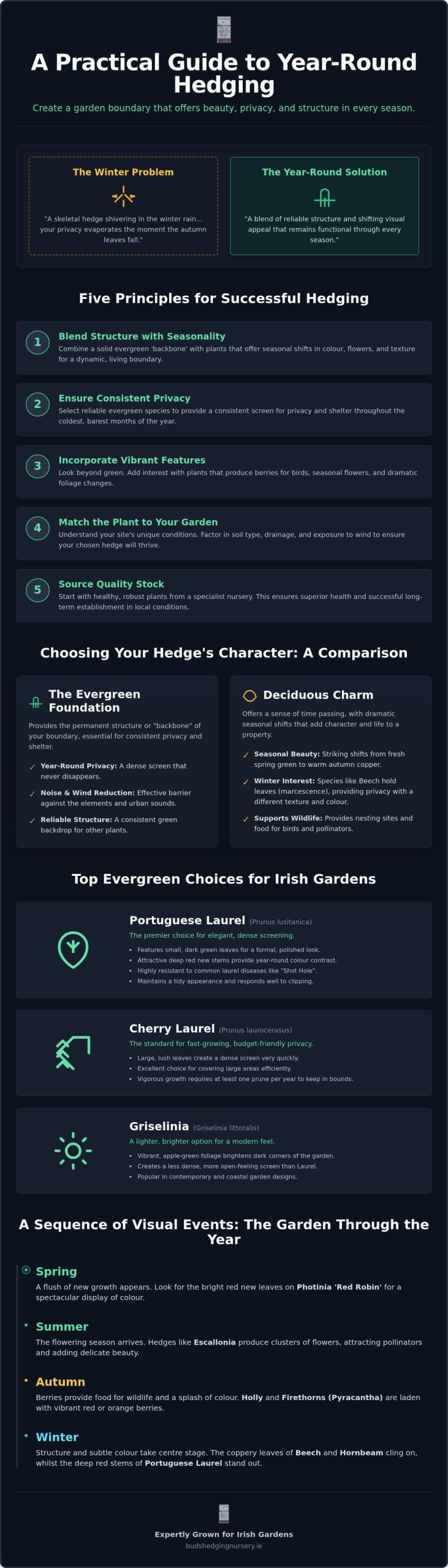
A well-planned hedge provides a sequence of visual events. You get the bright red flush of spring growth on Photinia Red Robin, the summer flowers of Escallonia, and the vibrant berries of Holly or Firethorns in autumn. Even in winter, the structure remains. There’s a common misconception that deciduous hedges are useless once the temperature drops. Species like Green Beech and Hornbeam exhibit marcescence. This means they hold onto their withered, copper-coloured leaves until the new buds push them off in spring. You keep your privacy, but the garden gains a warm, textured look that evergreens can’t match.
The Role of Evergreens in Your Garden
Evergreens provide the permanent structure or “backbone” of your boundary. They’re essential if you need year-round privacy from neighbours or noise reduction in urban areas. The choice of shade matters. Darker leaves, like those on Portuguese Laurel or Cherry Laurel, create a deep, receding backdrop that makes other plants stand out. Lighter or variegated options, such as Golden Privet, can brighten a dark corner. These plants are reliable, hard-wearing, and provide a consistent frame for the rest of your planting regardless of the weather.
Why Deciduous Hedges Deserve a Place
Deciduous species offer a sense of time passing that adds character to a property. The shift from the fresh green of spring to the deep copper of a winter Beech hedge is visually striking. They also offer significant benefits for local biodiversity. A native mix provides nesting sites and food sources for birds and pollinators that a sterile evergreen block might not. From a practical standpoint, deciduous plants are often available as bare root stock. This is a cost-effective way to plant large runs during the dormant winter months, and these plants often establish more quickly than pot-grown alternatives in heavy Irish soil.
By blending these types, you create year round interest hedging that serves its purpose as a boundary whilst remaining a focal point in its own right.
The Evergreen Foundation: Reliable Structure for Every Season
Building a garden boundary with year round interest hedging starts with a solid evergreen foundation. These plants provide the permanent privacy and shelter that Irish gardens need during the long, wet winter months. The choice between species often comes down to the desired aesthetic. Large-leaf evergreens create a lush, almost tropical feel; small-leaf varieties offer a crisp, formal finish that suits contemporary designs. Regardless of the leaf size, the goal is to create a “thick” screen. This density is achieved through regular clipping, which encourages the plant to put out lateral growth rather than just height.
Longevity is a key factor when investing in a hedge. Plants sourced from an established specialist nursery are grown to withstand local conditions, ensuring they establish quickly and remain healthy for decades. Whether you need a low-maintenance screen or a formal boundary, these reliable evergreens form the backbone of a successful garden design.
Portuguese Laurel (Prunus lusitanica)
For many professionals, Portuguese laurel is the premier choice for elegant screening. It features smaller, darker leaves than the common Cherry Laurel and is significantly more resistant to “Laurel Shot Hole” disease. One of its most attractive features is the deep red colour of the new stems. These provide a subtle but distinct visual interest throughout the year, especially when the winter sun hits them. It’s a hardy plant that handles clipping well and maintains a tidy appearance with minimal effort.
Cherry Laurel and Griselinia
Cherry Laurel remains the standard for fast-growing, dense privacy. It’s an excellent choice for larger sites where you need a significant screen on a budget. Because it grows vigorously, it requires pruning at least once a year to keep it within bounds. On the other hand, Griselinia littoralis offers a bright, apple-green foliage that feels lighter and more open. It’s particularly popular in coastal areas because of its high salt tolerance, though it also thrives in milder inland sites across Ireland.
Yew (Taxus baccata) and Holly
Yew is often referred to as the “King of Hedges” due to its incredible longevity and ability to be clipped into tight, formal shapes. It’s a slow grower initially, but once established, it provides an unbeatable dark-green backdrop. Native Holly is another excellent option for security. Its thorny leaves deter intruders, and the red berries provide essential food for birds in winter. When you view our range of hedging, you’ll see that both Yew and Holly offer a traditional, timeless quality that suits both rural and urban settings.
Beyond Green: Adding Seasonal Colour, Berries, and Flowers
A garden boundary that transforms with the months adds a dynamic quality that a static green wall cannot match. Integrating species that flower or produce berries provides more than just visual appeal; it supports local biodiversity. Pollinators and birds benefit from these hedges whilst you enjoy a shifting palette of colours. Some species even offer a “winter glow” by holding onto copper or gold leaves, reflecting the low winter light when other plants look dull. True year round interest hedging is about choosing plants that peak at different times, ensuring there’s always a focal point regardless of the date on the calendar.
Photinia Red Robin: The Splash of Crimson
Photinia Red Robin is a standout choice for modern Irish gardens. In spring, the new foliage emerges in a brilliant crimson, providing a “second bloom” of colour that rivals any flowering shrub. To maximise this effect, you can tip-back the stems in early summer. This encourages the plant to produce multiple flushes of red leaves throughout the growing season. It serves as a contemporary alternative to traditional green hedges, offering solid privacy with a much lighter, more vibrant feel.
Beech and Hornbeam: The Winter Architects
If you prefer a traditional look with high seasonal contrast, beech hedging plants Ireland are a firm favourite. They move from a vibrant lime green in spring to a rich, deep copper in winter. While Green Beech is the standard, Copper Beech offers a darker, purple-tinted foliage for those wanting more visual impact. For gardens with heavy clay or poor drainage, Hornbeam is the “tougher sibling”. It mimics the winter leaf retention of Beech but is far more tolerant of the wet soil conditions often found across the midlands and west of Ireland.
Flowering Interest: Escallonia and Viburnum
Flowering hedges provide a dual purpose by acting as both a screen and a source of nectar. Escallonia is an excellent evergreen option that produces masses of pink or red flowers throughout the summer. It’s hardy and salt-tolerant, making it a staple for coastal sites. For winter interest, Viburnum Tinus is a reliable hero. It produces clusters of white flowers and pink buds from late autumn through to spring, providing interest when the rest of the garden is dormant. If security is also a priority, species like Berberis Darwinii combine sharp thorns with bright orange spring flowers and blue-black berries in autumn. This variety ensures your year round interest hedging remains functional and attractive in every month.
Selecting the Right Species for Your Specific Garden Conditions
The secret to a healthy boundary lies in the “right plant, right place” principle. Even the most resilient year round interest hedging will fail if it’s forced into conditions it wasn’t built to handle. Success starts with a cold look at your site before you dig the first hole. You need to assess three main factors: wind exposure, soil type, and light levels. In the Irish climate, poor drainage is the primary killer of new hedges. If a plant’s roots sit in standing water through a wet winter, they will rot, regardless of how hardy the species is above ground. Proper soil preparation, including loosening the ground well beyond the planting trench, is a step you can’t afford to skip.
Hedges for Windy and Exposed Sites
Coastal gardens face unique challenges with salt spray and constant wind. Griselinia and Escallonia are traditional coastal favourites because their leathery leaves resist salt burn. However, they can be vulnerable to extreme inland frost. For robust rural boundaries or farmland, native mixes featuring Whitethorn are far more reliable. These species have evolved to handle the Atlantic gales. When planting in any exposed area, remember that young plants need support. Staking or temporary windbreak netting protects the root ball from “wind rock”, which can snap delicate new roots before they’ve had a chance to anchor into the soil.
Managing Heavy Clay and Wet Soils
Many Irish gardens sit on heavy clay that turns into a swamp in November. If your garden is prone to standing water, avoid Beech and Yew; they won’t survive with “wet feet”. Hornbeam and Green Privet are far superior choices for damp ground. They are much more tolerant of seasonal waterlogging and maintain their structural integrity in difficult conditions. If you’re dealing with a particularly wet spot, use the “mound planting” technique. By creating a slight ridge of soil and planting into it, you keep the base of the stem above the water line.
Improving the soil structure is also essential. We recommend mixing in plenty of grit and well-rotted organic matter during the planting phase to aid drainage. If you aren’t sure which species suits your specific patch of ground, you can contact our specialist team for practical advice based on over 30 years of growing experience. Getting the foundation right ensures your hedge remains a vibrant, low-maintenance feature for decades rather than a single season.
Sourcing Quality Plants from a Specialist Irish Nursery
Buying directly from a plant nursery Ireland offers a direct link to the grower that general garden centres simply can’t match. Specialist nurseries grow their stock on-site, meaning the plants are already hardened to the local climate. When you select year round interest hedging from a 60-acre specialist site, you’re getting specimens with a known provenance. These plants haven’t been stressed by multiple transport legs or kept in cramped retail displays. You can choose between bare root and pot-grown formats depending on your budget and the time of year you intend to plant.
The Bare Root Advantage
For homeowners planting long boundaries, bare root stock is the most practical and cost-effective choice. This method is only available during the bare root tree season, typically running from November to March. Because these plants are lifted directly from the field while dormant, they often establish a deeper and more resilient root system than those grown in containers. It’s also the most sustainable way to plant. You avoid the use of large plastic pots and the peat-based composts required for containerised stock.
Why Physical Inspection Matters
There’s no substitute for seeing the plants in the ground before they arrive at your property. Visiting a specialist nursery allows you to assess the maturity and health of different species side by side. You can see the exact shade of a Copper Beech or the stem colour of Portuguese Laurel in natural light. It also allows for a conversation with experienced growers who can provide tailored advice on spacing and variety based on your specific site. We provide expert on-site guidance Tuesday to Saturday; we can also arrange national delivery for larger orders if you prefer not to collect in person.
If you don’t plan to plant immediately after sourcing your hedge, correct storage is vital. Bare root plants are particularly sensitive. Keep them in a cool, sheltered spot away from drying winds. If the ground is too frozen or wet to dig, “heel them in” by placing the roots in a temporary trench and covering them with loose soil. Pot-grown plants are more flexible but still need regular watering and protection from extreme frost while they wait for their permanent home. Taking these simple steps ensures your investment in year round interest hedging gets the best possible start.
Transforming Your Boundary for the Seasons
A successful garden boundary does more than just mark a line; it provides a changing landscape that remains functional throughout the winter. By combining a structural evergreen foundation with species that offer seasonal colour or berries, you create year round interest hedging that adds value and privacy to your property. The key is to respect the “right plant, right place” rule, especially when dealing with the wet and windy conditions typical of the Irish landscape.
Sourcing your stock directly from a grower ensures your plants are healthy and ready to establish. With over 30 years of horticultural expertise and a 60-acre dedicated growing site, we provide the quality and variety needed for any scale of planting. National delivery is available on all large orders, or you can visit us to see the plants in the ground. Browse our extensive range of year-round hedging at Buds Nursery Cavan to find the perfect fit for your garden. With the right selection and a little preparation, your new hedge will thrive for decades to come.
Frequently Asked Questions
Which hedge stays green all year round and grows the fastest?
Cherry Laurel is the fastest-growing evergreen for solid privacy. It typically grows between 30cm and 60cm annually once established. Green Leylandii is another rapid option, though it requires more frequent management to prevent it from outgrowing a residential space. Both species provide a dense, light-blocking screen that stays green through every month, making them reliable choices for a quick boundary.
Is it better to plant bare root or pot-grown hedging for year-round interest?
Both formats are suitable for year round interest hedging, but the decision usually comes down to your budget and the time of year. Bare root plants are significantly cheaper for large projects but are only available during the dormant season from November to March. Pot-grown hedging offers more flexibility as it can be planted year-round, provided you can water it during dry spells.
How often should I prune my hedge to keep it looking good in winter?
Most established hedges require pruning once or twice a year to maintain their shape. A trim in late summer is ideal as it allows the hedge to look tidy throughout the winter months without stimulating new, soft growth that might be damaged by frost. For flowering species like Escallonia, it’s best to prune immediately after the flowers fade to ensure you don’t cut off next year’s buds.
What is the best low-maintenance hedge for a small garden?
Portuguese Laurel is a premier choice for smaller gardens because of its manageable growth rate and elegant, dark leaves. It keeps a neat appearance without the need for constant clipping. If you want something even smaller, Holly Box or traditional Box are excellent for low boundaries. These species provide a permanent green structure that stays compact, requiring only a single annual trim to look its best.
Do I need to fertilise my hedge to maintain its colour?
You don’t always need to fertilise if your soil is healthy, but a spring feed can improve leaf vibrancy. For plants like Photinia Red Robin, a boost of nutrients in March helps produce that iconic bright red new growth. The most effective way to maintain colour is to ensure the soil is well-prepared with organic matter before planting, as this provides a slow-release source of nutrients for the roots.
Can I mix different types of hedging together for seasonal interest?
Mixing different species is a highly effective way to create a dynamic boundary. You can blend evergreens like Holly or Viburnum Tinus with deciduous plants like Copper Beech to get a mix of permanent privacy and shifting seasonal colours. This approach supports local biodiversity by providing various food sources for birds and pollinators, whilst ensuring the year round interest hedging remains a focal point in the garden through all four seasons.
What hedging plants are best for privacy in windy, coastal areas?
Griselinia littoralis is the most reliable evergreen for coastal privacy because its leaves are highly resistant to salt spray. Escallonia is another excellent option that provides beautiful summer flowers alongside a wind-resistant screen. For very exposed rural sites further inland, a native mix including Whitethorn and Holly is often the best choice, as these plants are naturally adapted to handle the harshest Irish weather conditions.
Why is my evergreen hedge losing its leaves in the middle of winter?
Evergreen leaf drop in winter is usually a symptom of poor drainage or “wet feet”. When the soil becomes waterlogged, the roots struggle to function, leading the plant to shed foliage under stress. This is common in heavy clay soils during a typical wet winter. To prevent this, ensure your planting trench is well-drained or consider planting on a slight mound to keep the roots above the water line.