

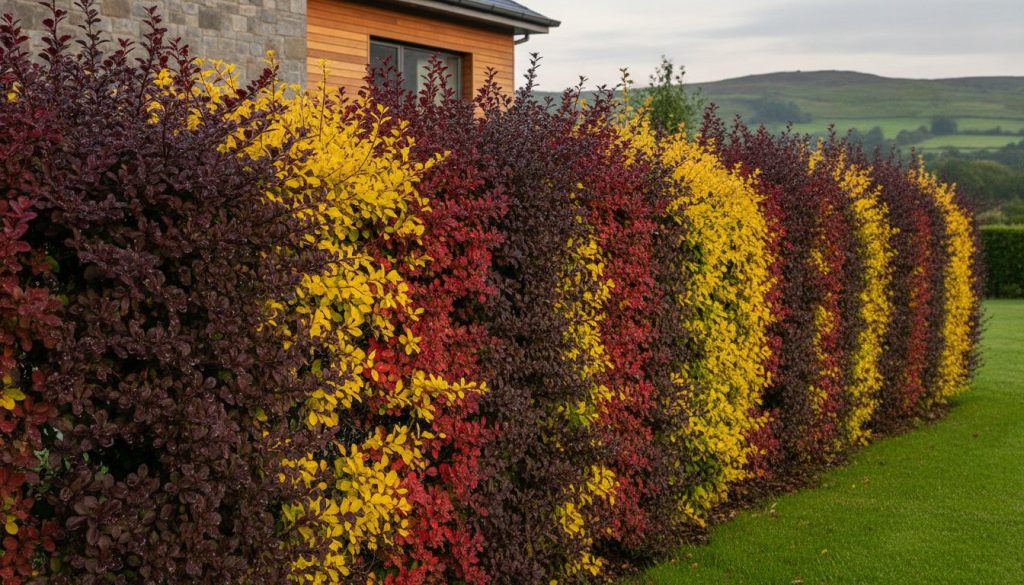
The most striking feature in your garden shouldn’t just be pleasant to look at; it should also work for its keep. Whilst many people default to standard green walls, they often overlook the functional strength of Berberis hedging Ireland. It is a rare plant that offers both a visual masterpiece of purple or gold foliage and a thorny, impenetrable barrier that deters intruders and livestock alike.
We understand the concern that comes with choosing a hedge that can survive a wet Irish winter without losing its functional edge. You want a boundary that doesn’t just sit there but actively protects your property whilst supporting local bees and birds. This guide explains everything you need to know about selecting and maintaining the right varieties for your specific site.
You’ll learn how to establish a thick, secure hedge using specialist stock like Berberis Darwinii or Rose Glow. We will walk through the practical steps of planting and seasonal care to ensure your garden boundary remains safe, vibrant, and resilient throughout the year.
Key Takeaways
- Understand why the dense, thorny structure of Berberis hedging Ireland makes it one of the most effective natural security barriers for local properties.
- Compare the benefits of evergreen varieties like Berberis Darwinii for year-round cover against deciduous types that offer intense autumn colour.
- Learn the logistical differences between cost-effective bare root stock and pot-grown plants to choose the best option for your budget and timeline.
- Discover the specific spacing requirements and site preparation techniques needed to establish a thick, resilient boundary in the Irish climate.
- See why sourcing from a specialist nursery ensures your plants are hardened to local conditions and backed by decades of growing expertise.
What is Berberis Hedging and Why is it Ideal for Irish Gardens?
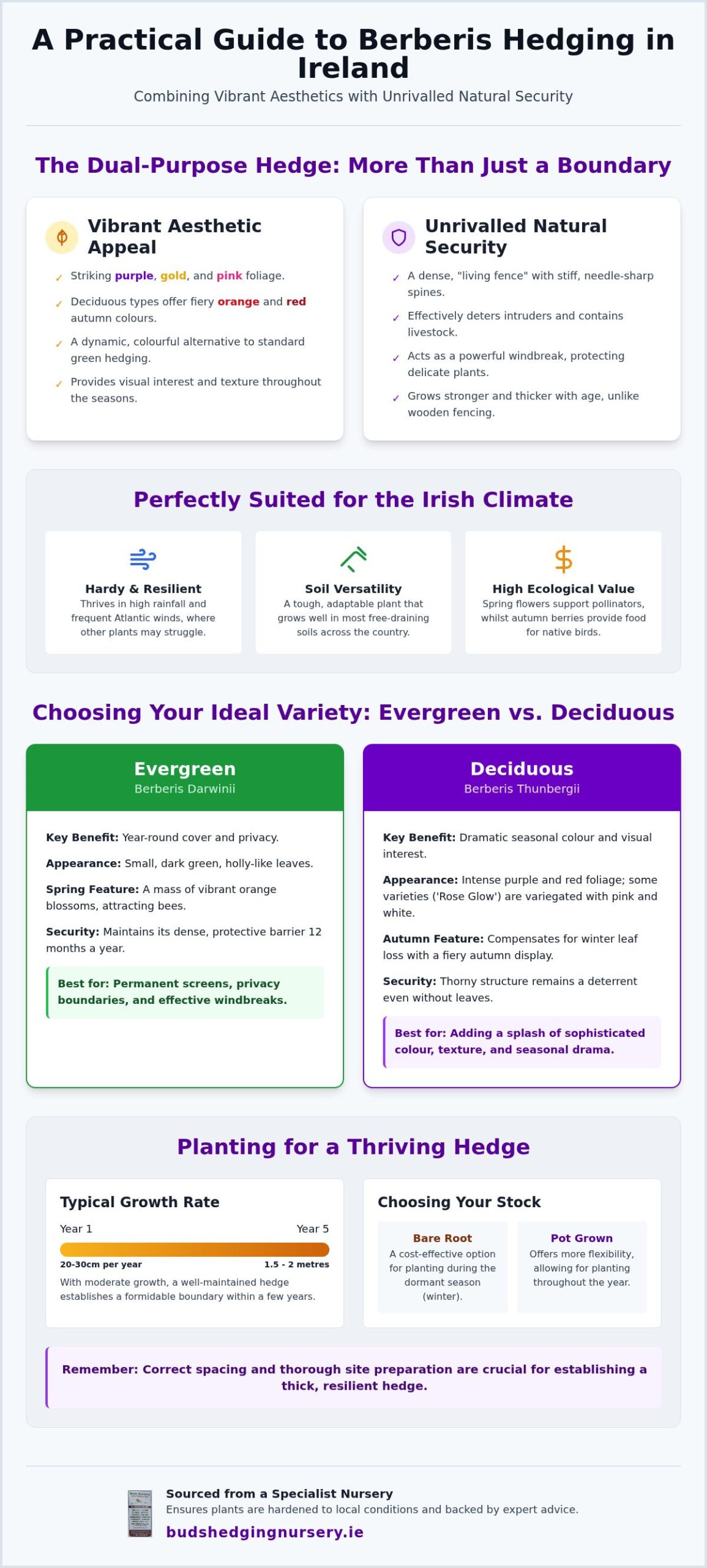
Berberis, commonly known as Barberry, is a versatile genus of shrubs that includes both evergreen and deciduous varieties. These plants are defined by their dense growth, vibrant foliage, and remarkably sharp spines. For those considering Berberis hedging Ireland, it offers a practical solution that balances garden aesthetics with functional security. It is a hardworking plant that thrives where others might struggle.
The Irish climate, with its high rainfall and frequent Atlantic winds, can be challenging for some ornamental species. Berberis is different. It is a tough, resilient plant that thrives in most free-draining soils across the country. Beyond its hardiness, it provides high ecological value. In late spring, clusters of yellow or orange flowers attract local pollinators. By autumn, these develop into small berries that serve as a vital food source for native birds, making it a responsible choice for the local environment.
Just as these berries provide essential nutrition for garden wildlife, finding fresh and healthy options for your own table is paramount; for readers based in the UAE, you can discover Shift 2 Fresh to find a variety of premium produce from the Philippines and South Asia.
The Aesthetic Appeal of Barberry
Berberis is often chosen for its striking colour palette. Cultivars like Berberis Rose Glow offer deep purple leaves mottled with pink, whilst others provide bright, golden-yellow tones. These colours shift beautifully in the soft Irish light, providing a more dynamic look than the standard green of Laurel or Privet. Deciduous varieties are particularly impressive in autumn, turning fiery shades of orange and red before the leaves drop. This seasonal transition ensures the garden remains visually interesting throughout the year, even in the depths of winter. For readers who find inspiration in these vivid botanical tones, MillieBuds specialises in bold and colourful floral designs that capture a similar aesthetic for special events.
Natural Security and Protection
The primary reason many Irish homeowners choose this hedge is its role as a “living fence”. The stems are covered in stiff, needle-sharp spines that make the shrub almost impossible to breach. This physical structure acts as a formidable deterrent against intruders and keeps livestock from pushing through garden boundaries. It is an effective way to secure a perimeter without resorting to harsh metal fencing.
- Strategic Planting: Low-growing varieties are excellent for planting directly under windows to enhance home security without blocking the view.
- Windbreak Function: The dense, twiggy growth habit filters wind effectively, protecting more delicate plants in the garden from harsh gusts.
- Durability: Unlike a wooden fence that rots in the damp, a Berberis hedge grows stronger and thicker with age, requiring only minimal maintenance to keep its shape.
Whether you need to mark a boundary or add a splash of colour to a border, Berberis provides a reliable, long-term solution. It is a plant that respects the gardener’s time whilst delivering clear, tangible results.
Selecting the Right Berberis Species for Your Garden Goals
Choosing the right variety of Berberis hedging Ireland depends on whether you value year-round screening or seasonal drama. While the genus is broadly similar in its protective qualities, the growth habits and leaf retention vary significantly between species. Selecting the wrong type can lead to a hedge that is either too thin for privacy or too vigorous for a small border.
Berberis Darwinii is the evergreen powerhouse of the group. It carries small, dark green, holly-like leaves that stay on the plant throughout the winter. In spring, it produces a mass of vibrant orange blossoms that are a magnet for bees. It is the best choice for a permanent, dense screen that maintains its security function 12 months a year.
Berberis Thunbergii is a deciduous option. While it loses its leaves in winter, it compensates with some of the most intense purple and red foliage available in any hedging plant. It is particularly valued for its fiery autumn display. Berberis Rose Glow is a standout cultivar within this group. It features variegated purple leaves marbled with pink and white, adding a sophisticated texture to a boundary that solid colours cannot match.
Evergreen vs. Deciduous: Which Suits You?
Evergreen species like Darwinii are generally preferred for boundaries where privacy is the priority. They provide a consistent backdrop and a reliable windbreak. Deciduous types, however, offer a changing landscape that reflects the seasons. Some gardeners choose to create a “tapestry hedge” by mixing different varieties. This works well if you select plants with similar growth rates to ensure one variety doesn’t eventually smother the others.
Size and Scale Considerations
Growth rates for most barberry species are moderate, typically adding 20 to 30cm per year. In five years, a well-maintained Darwinii can reach 1.5 to 2 metres in height with a similar spread. Compact cultivars of Thunbergii are better suited for path edgings or low security barriers under windows where you don’t want to block light or views. If you are planning a large-scale project, speaking with an experienced grower can help you match the variety to your specific site conditions and maintenance capacity.
It’s vital to match the plant to the space. Vigorous species capable of reaching 3 metres are excellent for perimeter security but require more frequent pruning if kept in a tight space. Smaller varieties are far easier to manage in residential gardens where space is at a premium. Always consider the ultimate width of the hedge, as the thorny branches will eventually extend well beyond the main stem.
Bare Root vs Pot Grown Berberis: Choosing the Right Format
Determining the best format for your hedge depends on your budget and the time of year you plan to plant. For many, the decision comes down to the scale of the project. If you are planting a long boundary, bare root stock is almost always the better choice. It is significantly more economical and, when handled correctly, establishes a deep, resilient root system in the native soil. Buying Berberis hedging Ireland in this format allows for large-scale planting that would otherwise be cost-prohibitive.
The bare root tree season Ireland typically runs from November to March. During this dormant period, plants can be lifted and transported without the weight of soil or pots. This makes them easier to handle and cheaper to ship. Because these plants grow directly in nursery fields, their roots are often more extensive than those confined to a pot. This leads to better long-term stability once they are in the ground.
Handling Bare Root Stock
Success with bare root Berberis depends on how you treat the plants before they go into the ground. Roots are sensitive to air and light; even a few minutes of exposure to a cold Atlantic wind can dry out the fine root hairs. Always keep the roots covered in their original packaging or under a damp sack until the moment of planting. This is a critical step in ensuring the health of Berberis hedging Ireland during the transition from nursery to garden.
- Heeling in: If the Irish weather turns and the ground becomes waterlogged or frozen, you don’t have to rush. Dig a shallow trench in a sheltered spot, lay the plants at an angle, and cover the roots with loose soil. This protects them until conditions improve.
- Quality checks: Look for a well-branched root system that feels flexible and moist. Avoid any plants with brittle, snapped roots or stems that show signs of shrivelling.
Pot-Grown Advantages
Pot-grown Berberis offers a solution for those who miss the dormant season or need to fill a small gap in an existing hedge. These plants can be moved at any time of year because their root balls remain undisturbed. This significantly reduces transplant shock, making them ideal for summer garden projects or residential borders where an immediate impact is required.
However, pot-grown plants are more reliant on the gardener. Their roots are accustomed to a compost mix and may be slow to move out into the surrounding garden soil. You will need to be diligent with watering during the first full growing season, especially during dry spells in late spring. Whilst they are more expensive per unit, the convenience and flexibility they provide are often worth the extra cost for smaller, targeted planting jobs.
Planting and Long-Term Management of Your Barberry Hedge
Successful establishment of Berberis hedging Ireland begins with thorough site preparation. You should clear a strip at least one metre wide of all grass and weeds. This reduces competition for nutrients and moisture during the critical first year of growth. While barberry is remarkably adaptable, it requires free-draining soil to thrive. If your garden has heavy clay that remains sodden after rain, incorporate organic matter or horticultural grit to improve the soil structure. Permanent waterlogging is one of the few conditions that will cause this resilient shrub to fail.
Spacing is the next priority for a functional boundary. For a standard garden hedge, plant 3 to 4 specimens per metre. If your goal is a truly impenetrable security barrier, use a double-staggered row. This involves planting two parallel lines roughly 30cm apart, with the plants in the second row offset against the gaps in the first. This creates a much thicker, deeper hedge that leaves no space for intruders or livestock to breach the perimeter.
Pruning Safely and Effectively
Handling Berberis requires respect for its physical defences. Heavy-duty leather gloves are essential; standard fabric gardening gloves won’t protect you from the needle-sharp spines. To encourage a dense, bushy habit from the ground up, prune the hedge into an “A-shape”. This means the base remains slightly wider than the top. This technique ensures sunlight reaches the lower branches, preventing the hedge from becoming “leggy” or thin at the bottom over time.
- Evergreen Species: Trim Darwinii and other evergreens immediately after the spring flowers have faded. This preserves the following year’s flower buds whilst maintaining a tidy shape.
- Deciduous Species: Prune varieties like Rose Glow in late winter while the plant is dormant. This allows you to see the structure clearly and shape the frame before the spring leaves emerge.
Aftercare and Troubleshooting
Once your plants are in the ground, apply a thick layer of bark mulch around the base. This suppresses competing weeds and helps retain moisture in the soil during dry spells. During the first spring “flush” of growth, regular watering is vital if the weather stays dry for more than a few days. Established hedges are quite drought-tolerant, but young plants need that initial support to anchor their roots. Keep an eye out for powdery mildew, which can appear as a white film on leaves during humid Irish summers. This is usually managed by improving air circulation through proper spacing and occasional thinning of the inner branches.
If you are ready to start your project, you can view our full range of Berberis stock to find the right size and variety for your garden.
Sourcing High-Quality Berberis from a Specialist Nursery
Buying your plants from a specialist plant nursery Ireland ensures that your stock is properly hardened to the local climate. Unlike imported plants that might have been raised in softer conditions, Berberis hedging Ireland from our fields is grown to withstand the wind and rain typical of the Irish landscape. This local resilience is the foundation of a healthy, long-lasting boundary that won’t fail after its first winter.
Buds Nursery Cavan operates across 60 acres of dedicated growing land. This scale allows us to maintain a diverse inventory of varieties such as Darwinii and Rose Glow. Having this much space means you can often see mature specimens on-site. It helps you understand the eventual height and density of the hedge before you commit to a purchase. We take great care in lifting and preparing our stock, ensuring each plant is in peak condition before it leaves us.
Transporting large hedging orders requires careful organisation. We provide reliable national delivery across the country, using methods that keep roots protected and stems intact. Whether you’re planting a few metres in a suburban garden or several hundred metres on a rural estate, we manage the logistics so your order arrives ready for immediate planting. It’s a straightforward service designed to respect your time and project deadlines.
Expert Advice on Site
Our team brings over 30 years of experience to the trade. We can help you match a specific variety to your soil type and exposure levels. For farmers and landowners, Berberis can be an excellent addition to native trees scheme plants. It adds an extra layer of security and biodiversity to farm boundaries that traditional wire fencing simply can’t match. We’re always available to discuss customising your order for specific project needs.
Planning Your Order
The most efficient way to plant is during the bare root season, which runs from November to March. We recommend booking your order early in the autumn to ensure the best selection of stock. Many of our customers choose to mix Berberis with whitethorn hedging Ireland. This creates a diverse, cost-effective boundary that is both impenetrable and wildlife-friendly. When your order arrives, you can expect the plants to be bundled securely and clearly labelled, making the planting process as efficient as possible.
Establishing Your Secure Garden Boundary
Choosing a hedge that balances beauty with utility doesn’t have to be complicated. By selecting the right variety of Berberis hedging Ireland, you gain a formidable security barrier that also provides year-round visual interest. Whether you opt for the evergreen density of Berberis Darwinii or the striking variegation of Rose Glow, you’re investing in a resilient plant that’s perfectly suited to our local environment.
Timing is everything. Planning your project around the bare root season ensures you get the best value and healthiest root establishment. At Buds Nursery Cavan, we draw on over 30 years of expert growing experience across our 60-acre site to provide you with high-quality stock. We ensure every plant is hardened to the Irish climate before it leaves us, giving it the best possible start in your garden.
If you’re ready to transform your perimeter, you can explore our full range of Berberis and hedging plants at Buds Nursery Cavan. With reliable national delivery across Ireland, we make it easy to secure your property with a living fence that grows stronger every year. We look forward to helping you select the perfect plants for your site.
Frequently Asked Questions
Is Berberis hedging evergreen?
Berberis can be either evergreen or deciduous depending on the variety. Berberis Darwinii is a popular evergreen choice that keeps its leaves all year. Berberis Thunbergii and its cultivars, such as Rose Glow, are deciduous and lose their leaves in winter after a vibrant autumn display. Both types maintain their sharp thorns year-round. This means the security aspect of the hedge remains effective even when the deciduous varieties are bare.
How fast does a Berberis hedge grow in Ireland?
Most varieties have a moderate growth rate of approximately 20cm to 30cm per year. In the damp, mild Irish climate, you can expect Berberis hedging Ireland to reach a functional height for security within three to five years. Regular feeding and mulching in the early stages help the plants establish quickly. Once mature, growth slows down. This makes the hedge easier to manage with just one annual trim to maintain its shape.
Is Berberis suitable for a coastal garden?
Yes, Berberis is exceptionally hardy and can withstand the salt spray and strong winds of coastal locations. Its tough, leathery leaves and resilient stems make it a reliable choice for seaside properties across Ireland. Whilst it handles the salt well, it’s still best to provide some initial protection from the harshest gales during the first season. This ensures the roots can anchor deeply into the soil before the plant faces full exposure.
How many Berberis plants do I need per metre for a hedge?
You should generally plant three to four specimens per linear metre for a standard boundary. If you’re aiming for a thicker, more immediate security barrier, a double-staggered row is the best approach. This requires six plants per metre, arranged in two parallel lines. This density ensures there are no gaps at the base of the hedge. It provides maximum privacy and a stronger physical deterrent against intruders or livestock breaching your property.
Can I plant Berberis in a shady part of my garden?
Berberis will grow in partial shade, but it performs best in full sun. Sunlight is essential for the best foliage colour, especially for purple or golden varieties. If planted in deep shade, the growth may become sparse and the vibrant colours will fade to a duller green. For the healthiest Berberis hedging Ireland, choose a spot that gets at least four to six hours of light daily to ensure vigorous growth and dense branching.
When is the best time to prune a Berberis hedge?
The timing depends on whether the variety is evergreen or deciduous. Evergreens like Darwinii should be pruned immediately after they finish flowering in late spring. This keeps the shape tidy without sacrificing next year’s blooms. Deciduous types are best handled in late winter or early spring before new growth starts. Always use sharp shears. Wear heavy-duty gloves to manage the sharp spines safely during the process to avoid any painful injuries.
Is Berberis invasive in Ireland?
Berberis is not classified as an invasive species in the Irish landscape. While it’s a vigorous grower and produces berries that birds enjoy, it doesn’t spread uncontrollably or outcompete native flora like Laurel or Rhododendron ponticum. It remains a well-behaved garden plant that stays within the boundaries where it’s planted. You only need to give it an occasional trim to maintain its size and prevent it from overhanging paths or neighbouring properties.
What is the best Berberis variety for a security hedge?
Berberis Darwinii is widely considered the superior choice for security. Its evergreen habit provides year-round screening. Its dense, holly-like leaves are backed by incredibly sharp spines that deter intruders. If you prefer a deciduous look with intense colour, Berberis Thunbergii is also excellent. Both varieties create a physical barrier that’s very difficult to push through. They are ideal for protecting residential perimeters or farm boundaries where security is a top priority.