

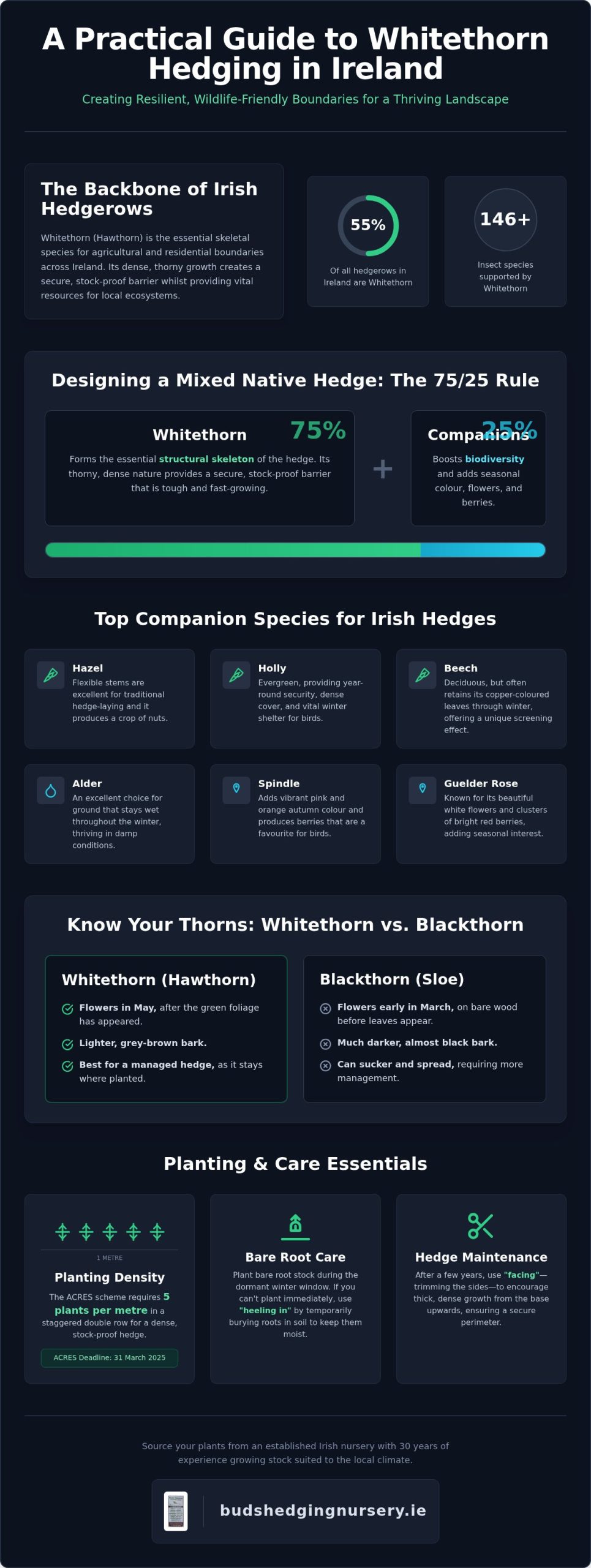
Did you know that whitethorn makes up roughly 55% of all hedgerows across the country and supports 146 different insect species? When planning whitethorn hedging Ireland, it’s clear this species is the backbone of the countryside, providing essential shelter and security for livestock and wildlife alike. Most landowners recognise that a good hedge is more than just a boundary; it’s a living asset that requires the right start to succeed. You might feel uncertain about specific planting densities or worry that bare root plants won’t survive the first winter. Getting the fundamentals right isn’t as complicated as it seems.
This guide explains how to select, plant, and maintain the perfect native boundary using whitethorn and mixed hedging packs. We’ll show you how to combine species to boost biodiversity and ensure a stock-proof finish. From understanding the five plants per metre density required for the ACRES scheme to meeting the March 31, 2025 planting deadline, we’ll provide the practical details you need. You’ll learn how to handle bare root stock safely and which species mix best with whitethorn to create a resilient, long-lasting hedge.
Key Takeaways
- Understand why whitethorn hedging Ireland is the essential skeletal species for creating stock-proof boundaries and supporting over 140 local insect species.
- Learn how to apply the 75/25 rule to design a mixed native pack that balances structural strength with seasonal variety and wildlife value.
- Identify the correct winter window for planting bare root hedges and how to protect your stock using the “heeling in” technique before they go into the ground.
- Master maintenance methods like “facing” to encourage thick, dense growth from the base of the hedge upwards, ensuring a secure perimeter.
- Discover the benefits of sourcing plants from an established Irish nursery with 30 years of experience in growing stock suited to the local climate.
Whitethorn Hedging in Ireland: The Backbone of the Native Landscape
Whitethorn, known botanically as Crataegus monogyna, is deeply rooted in the Irish countryside. Many locals call it Hawthorn or Sceach. It forms the skeletal structure of our rural landscape, serving as the primary choice for agricultural boundaries and residential garden perimeters. Its popularity isn’t accidental. It’s a tough, deciduous shrub that provides a secure, stock-proof barrier thanks to its dense, thorny growth habit. For generations, farmers have relied on this species to manage livestock and define land holdings.
The seasonal cycle of whitethorn hedging Ireland offers visual interest throughout the year. In late spring, usually May, the hedges are covered in a profusion of white blossoms, often referred to as “May-bushes”. By autumn, these flowers turn into deep red berries known as haws. This plant is exceptionally resilient. It thrives in heavy clay soils common in the midlands and stands up well to the salt-laden winds of coastal regions. Whether you’re planting on an exposed hillside or a sheltered garden plot, it’s a dependable choice that establishes quickly.
The Ecological Importance of the Hawthorn
Whitethorn is a powerhouse for biodiversity. Research suggests it supports over 300 species of insects and birds, making it one of the most ecologically valuable plants in the country. The sharp thorns aren’t just for keeping cattle in; they provide safe, impenetrable nesting sites for small birds like robins and wrens, protecting them from predators. During the lean winter months, the haws serve as a vital food source for thrushes, waxwings, and other native fauna. Choosing this species helps create a corridor for wildlife to move through the landscape safely.
Given the vital role these hedges play in supporting pollinators like bees, you can learn more about BS Honey Bees Ltd to see how specialist colonies can further enrich your local ecosystem.
Whitethorn vs. Blackthorn: Identifying the Difference
Farmers often mix these two species in a native pack, but they have distinct traits that dictate where they should be placed. Blackthorn (Prunus spinosa) flowers on bare wood in early spring, often as early as March, before its leaves appear. Whitethorn flowers later, once the green foliage is already established. You can also tell them apart by their bark; whitethorn has a lighter, grey-brown bark, while blackthorn is much darker, almost black. While both are hardy, blackthorn has a tendency to sucker and spread, making whitethorn the better choice for a managed, tidy hedge line that stays where it’s planted.
Selecting and Designing Mixed Native Hedging Packs
A native hedging pack is more than a random assortment of shrubs. It’s a curated selection designed to mimic the natural diversity of the Irish countryside. When planning whitethorn hedging Ireland, we recommend following the “75/25 rule”. This means your hedge should consist of 75% Whitethorn to provide the essential structural skeleton and 25% companion species to boost biodiversity and visual appeal. Following the Hedge Code for planting and management ensures your boundary remains functional whilst providing a corridor for wildlife. This ratio ensures the hedge remains stock-proof while offering a varied habitat for local fauna.
Adapting your mix to the site is vital for long-term success. While Whitethorn is incredibly hardy, adding species like Alder is a practical move for ground that stays wet throughout the winter. For standard sites, a blend of Spindle and Guelder Rose adds vibrant autumn colour and additional berries for birds. These species integrate well with the primary thorns, creating a dense barrier that changes with the seasons. If you’re looking for a specific combination, our native hedging packs at Buds Nursery Cavan are tailored to suit various Irish soil conditions and boundary needs.
Top Companion Species for Irish Hedges
Choosing the right companions requires an understanding of how different plants behave over time. Hazel (Corylus avellana) is a traditional favourite; its flexible stems are excellent for hedge-laying, and it produces a crop of nuts. Holly (Ilex aquifolium) is another essential addition. As an evergreen, it provides year-round security and winter shelter for birds. You might also consider beech hedging plants Ireland as a companion. Although deciduous, beech often retains copper-coloured leaves throughout winter, offering a unique screening effect that complements the bare whitethorn stems.
Choosing the Right Plant Size
When ordering bare root whitethorn hedging Ireland, size matters less than health and establishment speed. You’ll typically choose between 40-60cm and 60-90cm plants. While taller plants offer more immediate height, younger 40-60cm plants often establish faster. They experience less transplant shock and can quickly overtake larger specimens that take longer to settle their root systems. Upon delivery, use this checklist to ensure your stock is in top condition:
- Root Moisture: Roots should feel damp and look fibrous, not brittle or dry.
- Bark Integrity: The bark should be smooth and firm, with no signs of peeling or disease.
- Bud Development: Look for plump, healthy buds along the length of the stem.
- Structure: Stems should be straight and vigorous, showing good growth from the previous season.
How to Plant Bare Root Whitethorn and Mixed Native Hedges
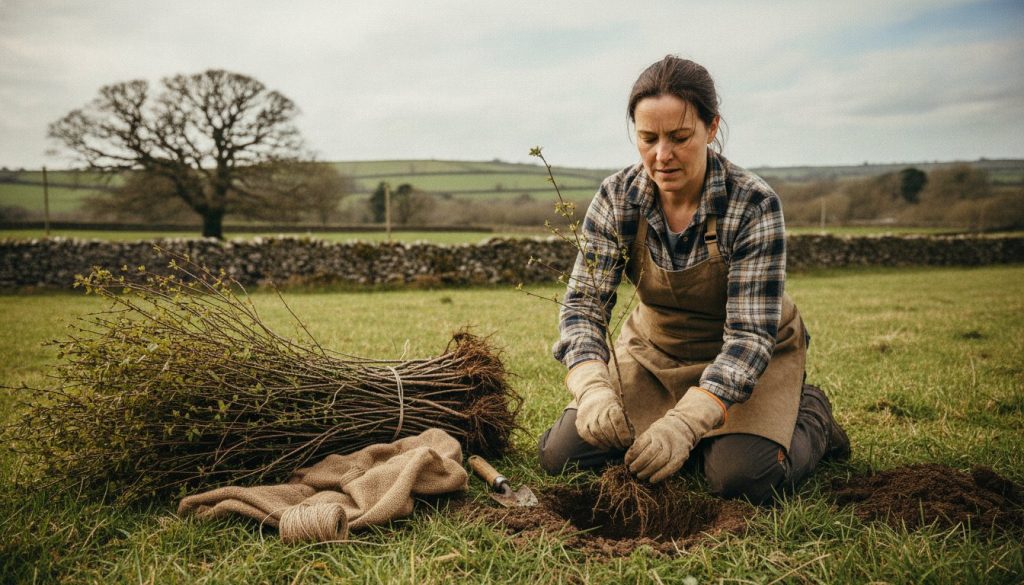
The window for planting whitethorn hedging Ireland is strictly during the dormant season, typically from November to March. During these months, the sap has retreated, and the plants are less susceptible to the stress of being moved. If your delivery arrives and ground conditions aren’t suitable due to frost or waterlogging, you must “heel in” the plants. This involves digging a temporary trench and covering the roots with loose soil to prevent them from drying out. For a professional, stock-proof finish, we recommend a staggered double row. This method creates a thicker, more secure boundary than a single line. To achieve this, you’ll need 6 plants per metre. This density is a standard recommendation for robust boundaries, often referenced in the Teagasc guide to Irish hedgerows.
Understanding the bare root tree season Ireland helps you plan your labour and ground preparation effectively. Success depends on getting the roots into the soil whilst they’re still sleeping. Proper timing ensures the hedge is ready to burst into growth as soon as the soil warms in spring.
Step-by-Step Planting Process
A successful hedge starts with clean ground. Clear a 1-metre wide strip of all grass and weeds to reduce competition for nutrients and moisture. Follow these steps for the best results:
- Step 1: Ground Preparation. Use a spade to turn over the soil or apply a herbicide well in advance to ensure the strip is clear.
- Step 2: Planting Method. On soft ground, “slit planting” is fast and effective. For stony or heavy clay soils, “pit planting” ensures the roots have enough space to spread without being cramped.
- Step 3: Root Health. Dip roots in water or use mycorrhizal fungi to encourage rapid root development and better nutrient uptake.
- Step 4: Finishing. Firm the soil with your heel to remove air pockets and apply a mulch, such as bark mulch or woodchip, to keep the ground clean.
Avoiding Common Planting Failures
Most failures occur due to poor technique during the first hour the plant is in the ground. “J-rooting” is a common error where roots are forced into a hole that’s too small, causing them to curl upwards. This stunts growth and can lead to instability as the plant matures. Ensure the roots spread naturally downwards and outwards. Planting depth is equally critical; the soil level should match the nursery mark on the stem. If you plant too deep, the bark may rot; too shallow, and the roots will dry out. Finally, always tread the soil firmly. Air pockets around the roots are a silent killer for young whitethorn hedging Ireland.
Managing Growth: Pruning, Maintenance, and Environmental Schemes
Planting your hedge is only the first step. The way you manage growth in the first few years determines whether your boundary becomes a sparse line of trees or a thick, impenetrable barrier. For whitethorn hedging Ireland, maintenance is a balance of patience and timely intervention. One of the most effective techniques is “facing”. This involves trimming the side growth to encourage the plant to put its energy into filling gaps. This process creates a dense wall of thorns from the ground up, which is essential for a truly stock-proof finish.
Pruning for a Thick, Dense Hedge
There is often a debate amongst growers about when to first prune. While some suggest waiting for establishment, our experience shows that cutting whitethorn back to 10-15cm immediately at planting is the best approach. This drastic cut triggers dormant buds at the base of the stem, forcing the plant to produce multiple new shoots. If you skip this step, the hedge may grow tall too quickly, leaving a “leggy” and open bottom that livestock can push through.
In subsequent winters, focus on light trimming to shape the hedge into an A-frame. This shape is wider at the base than the top, ensuring sunlight reaches the lower branches and keeps them healthy. Always remember the legal restrictions under the Wildlife Act. It’s prohibited to cut or prune hedges between March 1st and August 31st to protect nesting birds. Stick to the winter months for all major maintenance tasks.
Navigating Irish Grant Schemes
Many landowners plant native hedges to comply with environmental programmes. The ACRES scheme has specific requirements, such as planting at a density of at least five plants per metre in a double staggered row. It also emphasises species diversity, which is why mixed packs are so valuable. For those participating in the Native Trees Scheme plants programme, the focus is on using certified native provenance stock to support local ecology.
To ensure your hedge passes inspection, keep all documentation. This includes plant passports and receipts from your nursery. Schemes often require proof that the plants are suited to the Irish climate and meet specific height and age criteria. If you’re planning a project for an environmental scheme, you can view our range of scheme-compliant whitethorn at Buds Nursery Cavan to ensure your boundary meets every official standard.
A simple three-year maintenance calendar will keep your project on track:
- Year 1: Cut back at planting. Keep the 1-metre strip clear of weeds. Water during prolonged dry spells in spring.
- Year 2: Lightly trim the side branches (facing) in January or February. Replace any failures (beating up).
- Year 3: Continue shaping the A-frame. The hedge should now be thick enough to require less intensive weeding.
Sourcing Quality Native Hedging from a Specialist Irish Nursery
Sourcing your plants from a specialist producer is the most reliable way to ensure a successful boundary. Buds Nursery Cavan brings 30 years of experience to the trade, operating from an extensive 60-acre production site. Unlike generic garden centres that often buy in stock from various third-party sources, we grow our plants to suit the local Irish climate. This scale allows us to maintain a wide variety of species whilst ensuring each plant is hardy enough for our specific weather patterns. When you choose whitethorn hedging Ireland from a dedicated grower, you benefit from professional-grade stock that hasn’t spent weeks sitting in a distribution centre or on a shop floor.
Our “lifted to order” policy is a core part of our service. This means plants stay in the ground until the moment they are needed for your project. By avoiding long storage periods in cold rooms or on retail shelves, we protect the delicate root systems from drying out. This direct approach ensures maximum vitality when the plants reach your site. Speaking with a seasoned professional on-site provides clarity that a generic retail environment cannot offer, helping you select the right plant maturity for your specific soil type and exposure.
Why Freshness Matters for Bare Root Plants
Bare root plants are living organisms in a state of suspended animation. Their survival depends on keeping the root hairs moist and protected from the wind. We bag our plants immediately after lifting to lock in moisture and prevent desiccation. Buying from a Department-registered nursery also guarantees that your stock meets official health and traceability standards. This local acclimatisation is vital; plants grown in Irish soil are already adapted to our rain cycles and soil temperatures. This leads to higher survival rates compared to imported alternatives that may struggle to adjust to local conditions.
Planning Your Order and Delivery
The peak season for bare root planting begins in November. Demand is always high during this window, especially for those participating in national grant schemes like ACRES. We advise pre-ordering your whitethorn hedging Ireland early in the autumn to secure the specific sizes and quantities you require for your project. For larger agricultural or residential boundaries, Buds Nursery Cavan handles national delivery to ensure your order arrives in prime condition and ready for immediate planting.
Whilst we provide comprehensive information online, we encourage a visit to our site for specialist plant nursery Ireland expertise. Seeing the production process first-hand and speaking with a grower who understands the nuances of the land can help you avoid costly mistakes. We can provide practical advice on species mix, planting density, and long-term maintenance tailored to your specific location.
Establishing Your Native Boundary
Building a successful native hedge requires more than just digging holes. It starts with selecting the right balance of species, following the 75/25 rule to ensure structural strength and biodiversity. By choosing whitethorn hedging Ireland as your primary species and mixing it with companions like hazel or holly, you create a resilient boundary that serves both livestock and local wildlife. Remember that early intervention, specifically pruning back at the point of planting, is the key to achieving a thick, stock-proof base that lasts for decades.
Getting the fundamentals right ensures your investment in the land pays off. Buds Nursery provides the expertise needed for large-scale agricultural projects and garden boundaries alike. With over 30 years of experience and 60 acres of native trees and hedging, we offer the practical guidance and fresh, lifted-to-order stock required for healthy establishment. View our range of Native Hedging and Whitethorn at Buds Nursery to start your project. With the right preparation and quality plants, your new native hedge will become a permanent and valuable feature of the landscape.
Frequently Asked Questions
When is the best time to plant whitethorn hedging in Ireland?
The best time to plant whitethorn hedging Ireland is during the dormant season from November to March. Planting whilst the sap is down allows the roots to settle without the stress of active leaf growth. You should avoid planting when the ground is frozen or waterlogged to prevent root damage. This winter window is essential for the success of bare root stock and ensures the plants are ready for spring growth.
How many whitethorn plants do I need per metre for a thick hedge?
For a thick, stock-proof hedge, you need 6 plants per metre planted in a double staggered row. This layout ensures the boundary develops enough density to provide security and shelter. Spacing the plants approximately 33cm apart within each row creates a robust structure. A single row of 3 to 4 plants is sometimes used for garden borders, but the double row is the standard for functional, long-lasting rural perimeters.
What should be included in a mixed native hedging pack?
A standard mixed native pack typically contains 75% Whitethorn for structure and 25% companion species. Common additions include Hazel, Holly, Spindle, and Guelder Rose. These species are chosen to mimic the natural diversity of the Irish countryside. Mixing plants this way provides a varied habitat for insects and birds whilst offering better visual interest throughout the different seasons, from spring blossoms to autumn berries and winter evergreens.
How fast does whitethorn hedging grow per year?
Once established, whitethorn can grow between 40cm and 60cm per year. This rate depends on soil quality and local weather conditions. During the first year, growth may appear slow as the plant focuses energy on developing its root system. Regular weeding in the early stages helps the hedge reach its full growth potential more quickly by removing competition for nutrients and moisture in the soil.
Do I need to prune my new native hedge immediately after planting?
You should prune your new whitethorn hedging Ireland back to 10-15cm immediately after planting. This encourages the plant to produce multiple shoots from the base, preventing a leggy or gappy bottom. Whilst it feels drastic to cut a new plant so low, it’s the most effective way to ensure a dense, secure hedge. Skipping this step often results in a thin boundary that lacks privacy and structural integrity.
Can whitethorn hedging grow in wet or coastal soils?
Whitethorn is exceptionally hardy and thrives in both heavy clay and coastal conditions. It handles salt spray and strong winds well, making it a reliable choice for exposed sites. If your soil is permanently waterlogged, we suggest adding Alder to your mixed pack. Alder is specifically adapted to wet ground and helps the overall hedge establish in difficult, damp areas whilst providing extra variety for local wildlife.
Is whitethorn suitable for the ACRES or Native Trees Scheme?
Whitethorn is a primary species for both the ACRES and the Native Trees Scheme in Ireland. These programmes require specific planting densities and native provenance stock to support national biodiversity goals. Our plants meet the necessary criteria for these grants. We recommend keeping your nursery receipts and plant passports safe, as you will need them to prove compliance during official scheme inspections and audits of your land.
How do I care for bare root hedging plants before they are planted?
If you can’t plant your bare root stock immediately, you must “heel them in” to keep the roots alive. Dig a shallow trench in a sheltered spot, place the plants inside, and cover the roots with loose soil. This prevents the roots from drying out or freezing. If you only have a short delay of a day or two, keep the plants in their bags in a cool, dark, frost-free shed.