

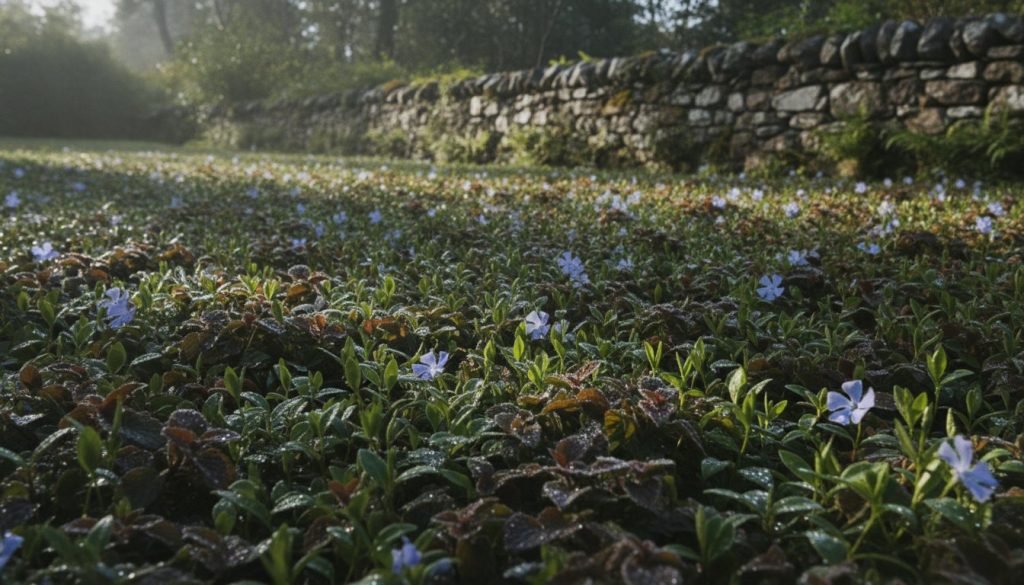
Why spend every weekend kneeling in damp soil when you could let nature do the hard work for you? For many gardeners, the struggle against persistent weeds and waterlogged clay feels like a losing battle, especially during our long, grey winters. Establishing low maintenance ground cover Ireland is the most effective way to reclaim your time and ensure your borders stay green and tidy throughout the year.
It’s frustrating to see bare patches of earth turn into a muddy mess or an explosion of weeds the moment you turn your back. We agree that a garden should be a place of rest, not a source of endless chores. In this 2026 practical guide, you will discover the best hardy, weed-suppressing plants specifically chosen for the Irish climate. We will show you how to select species that survive our frosts and heavy rainfall, ensuring your soil is protected and your garden remains beautiful with minimal effort. From rapid-spreaders like Ajuga reptans to the latest varieties recommended by the All-Ireland Pollinator Plan, we provide the clear, expert advice you need to transform your outdoor space into a thriving, self-sufficient environment.
Key Takeaways
- Learn how to use “living mulch” to suppress weed growth by up to 90%, significantly reducing your gardening labour in damp conditions.
- Identify the best species for your specific site, whether you are dealing with heavy clay, deep shade, or the need for low maintenance ground cover Ireland.
- Discover reliable, hardy plants like Hypericum Hidcote and Vinca that provide year-round interest whilst thriving in the unique Irish climate.
- Master the essential steps for clearing and preparing your soil to ensure new plants establish quickly and out-compete aggressive weeds like docks and nettles.
- Understand why sourcing plants from a specialist Irish nursery ensures your stock is hardened to local weather and ready for immediate planting.
Defining Low Maintenance Ground Cover for Irish Gardens
In the context of an Irish garden, low maintenance doesn’t just mean a plant that grows slowly. It refers to species that are hardy enough to withstand an Irish winter whilst being vigorous enough to smother scutch grass and buttercups. Choosing the right low maintenance ground cover Ireland requires an understanding of how plants interact with our specific soil types, from heavy clay to peaty loams. When these plants are established, they create a dense canopy that prevents light from reaching weed seeds, effectively doing the work of a hoe or a spray bottle. Understanding What is Ground Cover involves looking at these plants as a functional layer of the garden that protects the soil from erosion and helps retain moisture during our increasingly dry spells in May and June.
Ground cover serves as a living carpet that eliminates the need for chemical weedkillers.
Success in “set and forget” gardening depends entirely on your initial species selection. Whether you are researching local ground cover or looking for inspiration from international experts like Paul Plants, the principle remains the same: if you pick a plant that isn’t suited to your specific site, you’ll spend more time nursing it than enjoying it. A well-chosen variety will knit together within two seasons, creating a “living mulch” that benefits the environment. These plants provide essential corridors for insects and help maintain a stable soil temperature, which is vital for the health of your larger shrubs and trees.
The Benefits of Ground Cover over Traditional Bark Mulch
Many gardeners rely on bark mulch to tidy up borders, but this is often a temporary and expensive fix. Bark decomposes within a season or two, requiring fresh layers and manual topping up. In contrast, living ground cover is a permanent investment that improves soil structure as roots penetrate deep into the earth. While bark looks brown and static, evergreen ground cover provides vibrant textures and colours that remain attractive even in the depths of January. It’s a more sustainable approach that builds a healthy garden ecosystem rather than just covering up bare patches of dirt.
Why the Irish Climate Favours Specific Ground Cover Varieties
Our maritime climate provides a unique advantage for establishing ground cover. Mild winters mean that many species don’t go fully dormant, allowing their root systems to develop even when the air is cool. However, the high rainfall in many parts of the country can lead to waterlogging in heavy soil. This is why it’s essential to focus on varieties that can handle “damp feet” without rotting. By selecting plants that are already hardened to Irish conditions, you ensure they can cope with the sudden frosts and heavy downpours that define our weather. This resilience is what makes a garden truly low maintenance over the long term.
Top Ground Cover Plants for the Irish Climate
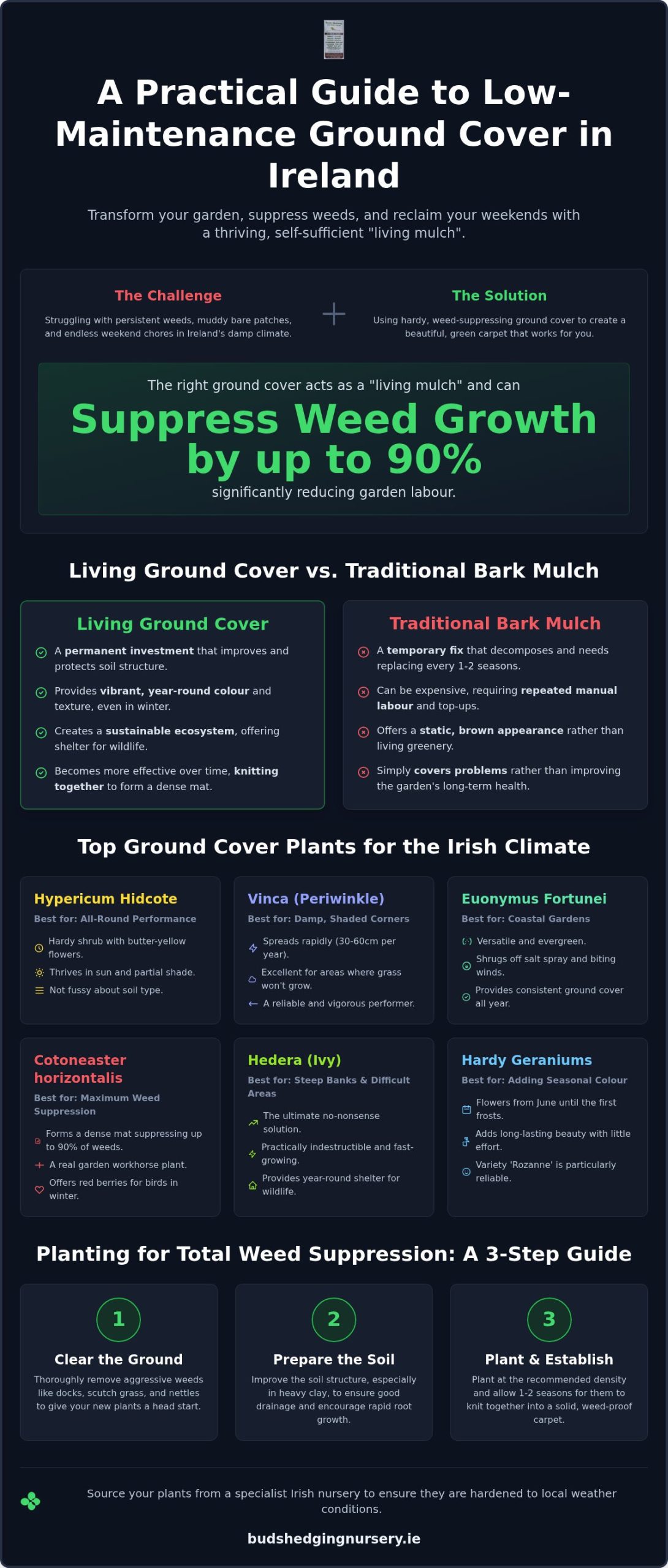
Selecting the right species is the difference between a tidy border and a constant weeding chore. In our experience, the best low maintenance ground cover Ireland provides more than just green leaves. It needs to be vigorous enough to out-compete weeds whilst remaining easy to control. Hypericum Hidcote is a standout choice for many Irish gardens. It’s a hardy shrub that produces masses of butter-yellow flowers from mid-summer into autumn. It isn’t fussy about soil and manages well in both sun and partial shade.
For those damp, shaded corners where grass refuses to grow, Vinca (Periwinkle) is a reliable performer. It spreads quickly, with Vinca minor often covering 30 to 60cm per year. If you have a coastal garden, Euonymus Fortunei is a versatile evergreen that shrugs off salt spray and biting winds. Cotoneaster horizontalis is another workhorse, providing a dense mat of foliage that can suppress weed growth by up to 90%. It also offers red berries for birds in the winter. For the most difficult, steep banks, Hedera (Ivy) remains the ultimate no-nonsense solution. It’s practically indestructible and provides year-round shelter for garden wildlife.
Flowering Ground Cover for Seasonal Interest
Hardy geraniums, particularly the variety Rozanne, are excellent for adding long-lasting colour. They flower from June until the first frosts and require very little attention. If you’re working with deep shade under mature trees, Pachysandra Terminalis is a better option. It produces subtle white flowers in spring and maintains a neat, low profile. These flowering varieties work exceptionally well when planted at the base of a Portuguese laurel hedge. This creates a tiered effect that looks professional and finished.
Evergreen Workhorses for Year-Round Greenery
Evergreen varieties are essential for winter weed suppression. When the soil is bare in January, opportunistic weeds will strike. Dense evergreens like Sarcococca (Christmas Box) prevent this whilst adding a rich, honey-like scent to the garden when little else is in bloom. Choosing plants that are already acclimatised to our damp winters is vital. These staples are always available at a specialist plant nursery Ireland, where they are grown to withstand local conditions. If you’re unsure which variety suits your garden’s specific soil, we’d suggest visiting our site in Cavan for practical, face-to-face advice.
Choosing Ground Cover Based on Soil and Light Conditions
Before you commit to any planting scheme, you must understand your site’s limitations. Finding the right low maintenance ground cover Ireland starts with a spade and a few minutes of observation. Most Irish gardens deal with heavy clay or peaty soils that hold onto water, but coastal areas often face the opposite: sandy, fast-draining ground and salt-laden winds. A plant that thrives in a sheltered Dublin suburb might struggle on an exposed site in Donegal or along the Atlantic coast. Identifying your soil type and light levels ensures you don’t waste money on plants that will simply fail to establish.
For south-facing borders with well-drained soil, sun-loving species like Lavandula angustifolia or certain Berberis varieties provide excellent cover whilst tolerating dry spells. On the other hand, north-facing walls and areas beneath high canopies require plants that can handle low light without becoming leggy. Choosing the wrong plant for these conditions leads to patchy growth, which gives weeds an opportunity to take hold. Matching the plant’s natural habitat to your garden’s reality is the most effective way to reduce future labour; this precision in plant selection is a hallmark of specialist growers like Rareplants, who focus on providing quality stock suited to specific environmental niches.
Best Plants for Heavy Clay and Damp Soil
Heavy clay is common across the Irish midlands and north-west. While it’s nutrient-rich, it can become waterlogged and suffocate sensitive roots. Ajuga reptans (Bugle) is a favourite for these conditions. It’s a native-friendly species that can fill a 1m² area in a single growing season, according to 2026 horticultural data. If your soil is particularly boggy, you can improve the survival rate by incorporating grit or well-rotted organic matter into the planting hole. This provides just enough drainage to let the roots breathe during a wet Irish winter.
Solutions for Dry Shade and Under Trees
Areas under mature trees are notoriously difficult because the tree canopy blocks rainfall and the roots suck the soil dry. This creates a “double whammy” of low light and low moisture. Dry shade is the most difficult garden niche, requiring robust species like Dryopteris. These hardy ferns are built for the forest floor and can cope with the competition from larger trees. We also recommend Pachysandra terminalis for these spots. It spreads at a steadier rate of 10 to 20cm per year, eventually forming a dense, evergreen carpet that requires almost no intervention once established.
Planting and Establishing Ground Cover for Total Weed Suppression
To achieve a truly low maintenance ground cover Ireland, the preparation stage is non-negotiable. You cannot simply plant into a patch of existing weeds and expect the new arrivals to win the battle. The first step involves thoroughly clearing the area of perennial weeds like docks, nettles, and scutch grass. These have deep, persistent root systems that will easily punch through a young carpet of foliage if they aren’t removed entirely. Digging them out by hand is often the most reliable method for smaller borders, ensuring you get every piece of the taproot.
Once the ground is clear, focus on soil preparation. Even though many ground cover varieties are hardy, they establish much faster in nutrient-rich soil. We recommend digging in a generous amount of well-rotted manure or garden compost. This improves the soil structure, which is particularly helpful if you’re dealing with the heavy, compacted clay common in many Irish gardens. A healthy soil base encourages rapid root development, allowing the plants to “knit together” before the next flush of weed seeds can germinate in the spring.
Spacing and Density: How Many Plants per Square Metre?
The most common mistake is planting too far apart to save on initial costs. If you leave large gaps of bare soil, weeds will move in faster than your plants can spread. For a variety like Vinca minor, we generally recommend five to seven plants per square metre. For larger, mounding shrubs like Hypericum Hidcote, three to four plants per square metre is usually sufficient. This density ensures that the canopy closes within two growing seasons. When the foliage overlaps, it creates a “living mulch” that blocks light and prevents 90% of weed growth, as noted in recent horticultural studies.
Maintenance During the Establishment Phase
Whilst these plants are eventually self-sufficient, they require attention during the first six months. Watering is critical, especially if you plant in the spring and face a dry spell. Even in Ireland, young plants can desiccate quickly before their roots reach deeper, damper soil. Occasional pruning also helps. Snipping back the leading shoots of plants like ivy or periwinkle encourages them to branch out sideways rather than just growing in one direction. This results in a much thicker, more effective carpet. Many gardeners choose to plant these varieties as a lush understorey beneath the best hedging for privacy Ireland, creating a professional, multi-layered look that remains tidy year-round. If you’re ready to start your project, you can order your ground cover plants directly from our Cavan nursery for nationwide delivery.
Why Source Your Ground Cover from a Specialist Irish Nursery?
Buying plants that have been raised in the same wind and rain they’ll face in your garden is the best way to ensure success. When you invest in low maintenance ground cover Ireland, you need to be certain that the stock hasn’t been pampered in a Mediterranean polytunnel before arriving in a damp Irish winter. At Buds Nursery Cavan, we operate a 60-acre production site in Cavan where our plants are exposed to the elements from day one. This process ensures they develop the resilience required to thrive in heavy clay or exposed sites without needing constant attention. We aren’t just resellers; we are traditional growers who understand the practicalities of Irish soil.
Our 30 years of experience has taught us which varieties truly perform and which ones are best avoided for certain sites. We’ve seen how different species behave across three decades of Irish weather patterns, from exceptionally wet summers to harsh spring frosts. This long-standing expertise allows us to provide quiet, confident advice that prioritises the utility and longevity of your garden. When you source from a specialist, you’re getting plants that have been selected for their hardiness and ability to do the job they’re intended for: suppressing weeds and looking well with minimal fuss.
The Advantage of Locally Grown Stock
Locally grown stock doesn’t just benefit the environment; it makes practical sense for the gardener. Plants that don’t have to endure long-distance international transport suffer significantly less stress. This leads to better establishment and higher survival rates once they’re in your borders. Sourcing locally also allows you to align your planting schedule with the natural rhythm of the Irish landscape, such as the bare root tree season Ireland. By choosing plants that are already acclimatised to our specific light levels and rainfall, you’re giving your garden the best possible start.
National Delivery and Expert Consultations
We provide a reliable national delivery service that handles large-scale orders across the country with professional efficiency. Whether you’re covering a small bank or a large commercial site, our logistics ensure your plants arrive in top condition. For those who prefer a more personal touch, we encourage visiting our Glassdrummon site for a no-nonsense professional chat. We can walk you through our 60 acres of stock and help you choose the right varieties for your specific project. Plan your low maintenance garden today by contacting Buds Nursery Cavan to discuss our current availability and expert recommendations.
Establishing a Self-Sufficient Garden for 2026 and Beyond
A successful garden doesn’t require a lifetime of weeding and maintenance. By selecting the right low maintenance ground cover Ireland, you can protect your soil and create a beautiful, weed-free border that thrives in our damp climate. Success depends on matching the species to your specific site. Whether you are dealing with heavy clay or dry shade, choosing hardy plants ensures your “living mulch” knits together quickly to suppress future weed growth.
It’s also vital to consider where your plants start their life. Sourcing from an established grower means your stock is already hardened to the Irish weather. At Buds Nursery, we’ve spent over 30 years refining our varieties across our 60-acre production site. We understand the practicalities of the land and provide national delivery to bring quality plants directly to your gate. This ensures you receive robust stock that is ready to perform from the moment it is planted.
View our range of hardy ground cover plants at Buds Nursery and start planning your labour-saving garden today. With the right foundation, you can spend less time working in your garden and more time enjoying it.
Frequently Asked Questions
Is ground cover better than grass for low maintenance?
Yes, ground cover is often a superior choice for low maintenance because it doesn’t require weekly mowing or edging. Grass frequently struggles in deep shade or on steep banks where ground cover thrives. Once these plants establish a dense canopy, they create a self-sustaining carpet that protects the soil and suppresses weeds. This makes them a practical alternative for difficult garden patches where grass would look unsightly or require constant effort.
How long does it take for ground cover to stop weeds?
Most varieties will achieve full coverage and effective weed suppression within two to three growing seasons. For instance, Vinca minor can spread 30 to 60cm per year, while Ajuga reptans can fill a square metre in a single season. The speed depends on your initial planting density. Using five to seven plants per square metre ensures the canopy closes quickly, blocking light and preventing 90% of weed germination.
Can I plant ground cover over existing weeds?
No, you shouldn’t plant ground cover directly over established perennial weeds like docks or nettles. These aggressive species will out-compete young plants for nutrients and light every time. You must clear the area thoroughly and remove all roots before you begin. Starting with clean soil allows your low maintenance ground cover Ireland to establish a dense root system without competition, which is the only way to ensure long-term success.
What is the fastest-growing ground cover for Ireland?
Ajuga reptans (Bugle) and Vinca (Periwinkle) are amongst the fastest-growing options for our climate. Bugle is particularly vigorous in damp, heavy soil and can cover large areas within a single year. Ivy is also exceptionally fast on steep banks or vertical surfaces. These species are reliable workhorses that knit together rapidly, providing the quick results many gardeners look for when trying to cover bare earth or suppress persistent weeds.
Do I need to prune ground cover plants?
Occasional pruning is beneficial, especially during the first two years, to encourage thicker growth. Snipping the tips of trailing plants like ivy or periwinkle forces them to branch out sideways rather than just growing in length. Once the area is fully covered, very little maintenance is required. You might only need a quick trim once a year to keep the plants from encroaching on paths or other garden borders.
What happens if ground cover becomes too invasive?
Choosing the right plant for the right space prevents most issues with over-vigorous growth. If a variety like ivy or periwinkle spreads beyond its intended border, it can be easily managed with a sharp spade or shears. We recommend selecting species that match your garden’s scale. If you’re concerned about spread, look for slower-growing varieties like Pachysandra terminalis, which expands at a more manageable rate of 10 to 20cm per year.
Are these ground cover plants safe for pets?
Many popular choices are safe, but some common varieties require caution. For instance, ivy and periwinkle can be mildly toxic if ingested in large quantities by dogs or cats. Always check the specific toxicity of a plant before introducing it to a garden shared with pets. Hardy geraniums are generally safer alternatives. If you’re unsure, we can provide specific advice on pet-friendly low maintenance ground cover Ireland at our nursery.
Can I buy ground cover plants in bulk for delivery?
Yes, we provide bulk quantities of ground cover plants with national delivery across the country. Buying in bulk is often the most cost-effective way to cover large areas or steep banks. Because we grow our stock on our 60-acre site in Cavan, we can supply high volumes of hardy, acclimatised plants. This ensures consistency in quality and growth rates across your entire project, regardless of your location in Ireland.