

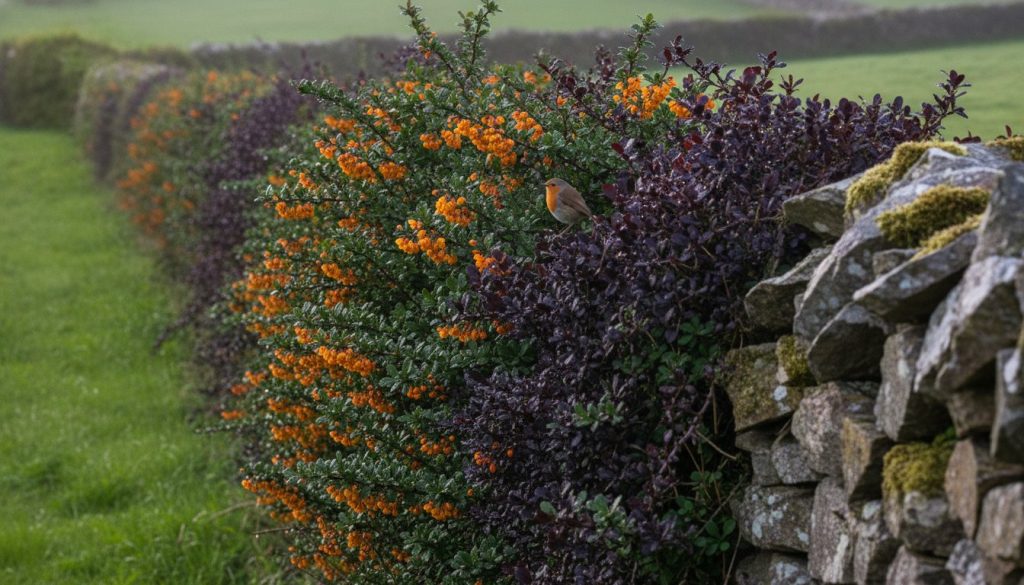
Could the most effective security system for your property be one that actually improves with the seasons? Many homeowners and farmers in Ireland find it difficult to balance the need for a secure boundary with the desire for a garden that looks well. It’s a common frustration to feel forced to choose between a functional, thorny barrier and a hedge that provides vibrant colour and supports local wildlife.
We believe your hedging should do both. This guide covers everything you need to know about Berberis hedging Ireland, from selecting the right variety for our damp climate to proper planting and maintenance. You’ll learn how to establish a dense, impenetrable boundary using hardy varieties like Berberis darwinii or Rose Glow. We will walk through the practical steps to ensure your hedge thrives in Irish soil, provides a safe haven for birds, and remains a formidable deterrent against intruders or livestock. Whether you need a low-maintenance security screen or a splash of seasonal gold and purple, you will find the right solution here.
Key Takeaways
- Create a secure, “living fence” using the naturally thorny branches of Berberis to deter intruders and protect your property boundaries.
- Select the best species for your garden, such as evergreen Berberis darwinii for year-round cover or deciduous varieties for intense autumn colour.
- Planting bare root Berberis hedging Ireland during the dormant season offers the most cost-effective solution for establishing long boundaries.
- Achieve a thick, dense hedge by spacing plants correctly and preparing the site with a clear, well-drained planting strip.
- Source your stock from a specialist nursery to ensure the plants are hardened to the Irish climate and backed by professional growing experience.
What is Berberis Hedging and Why is it Ideal for Irish Gardens?
The Berberis genus comprises a diverse group of deciduous and evergreen shrubs. Most gardeners recognise them by their small, oval leaves and the sharp spines that line every branch. In the context of Berberis hedging Ireland, these plants are prized for their ability to thrive where other species might struggle. They aren’t just ornamental; they are hard-working plants that provide a physical barrier as much as a visual one.
Our Irish climate can be testing. High rainfall and salt-laden coastal winds often batter garden boundaries. Berberis is exceptionally resilient. It tolerates most soil types found across the country, provided there is decent drainage. Unlike some softer hedging options, it doesn’t mind a bit of rough weather. It stays sturdy and functional through the wettest winters.
Wildlife benefits are a significant draw for local gardeners. In the spring, the shrubs produce clusters of small, nectar-rich yellow or orange flowers. These are a vital food source for bees and other pollinators. By autumn, these blooms turn into deep red or blue-black berries. These fruits provide essential forage for native birds like thrushes and blackbirds during the colder months.
The Aesthetic Appeal of Barberry
While many choose Berberis for its thorns, its visual contribution is just as impressive. You can find varieties with deep purple, vibrant gold, or fiery orange leaves. In the unique, soft light of an Irish afternoon, these colours appear particularly rich. They offer a striking alternative to the standard green of Laurel or Privet. Deciduous types often put on a spectacular show in October, with foliage turning brilliant shades of scarlet before falling.
Natural Security and Protection
The “living fence” is perhaps the most accurate description for this hedge. The spines are remarkably sharp. They grow densely along the stems. This makes an established Berberis hedge almost impossible to push through. It acts as a formidable deterrent against intruders or wandering livestock. For homeowners concerned about security, planting low-growing varieties beneath ground-floor windows creates a natural, thorny barrier that is both attractive and functional. Choosing Berberis hedging Ireland for your property ensures a boundary that is as beautiful as it is secure. Beyond security, the thick growth habit also serves as an effective windbreak, protecting more sensitive plants in the interior of your garden.
Selecting the Right Berberis Species for Your Garden Goals
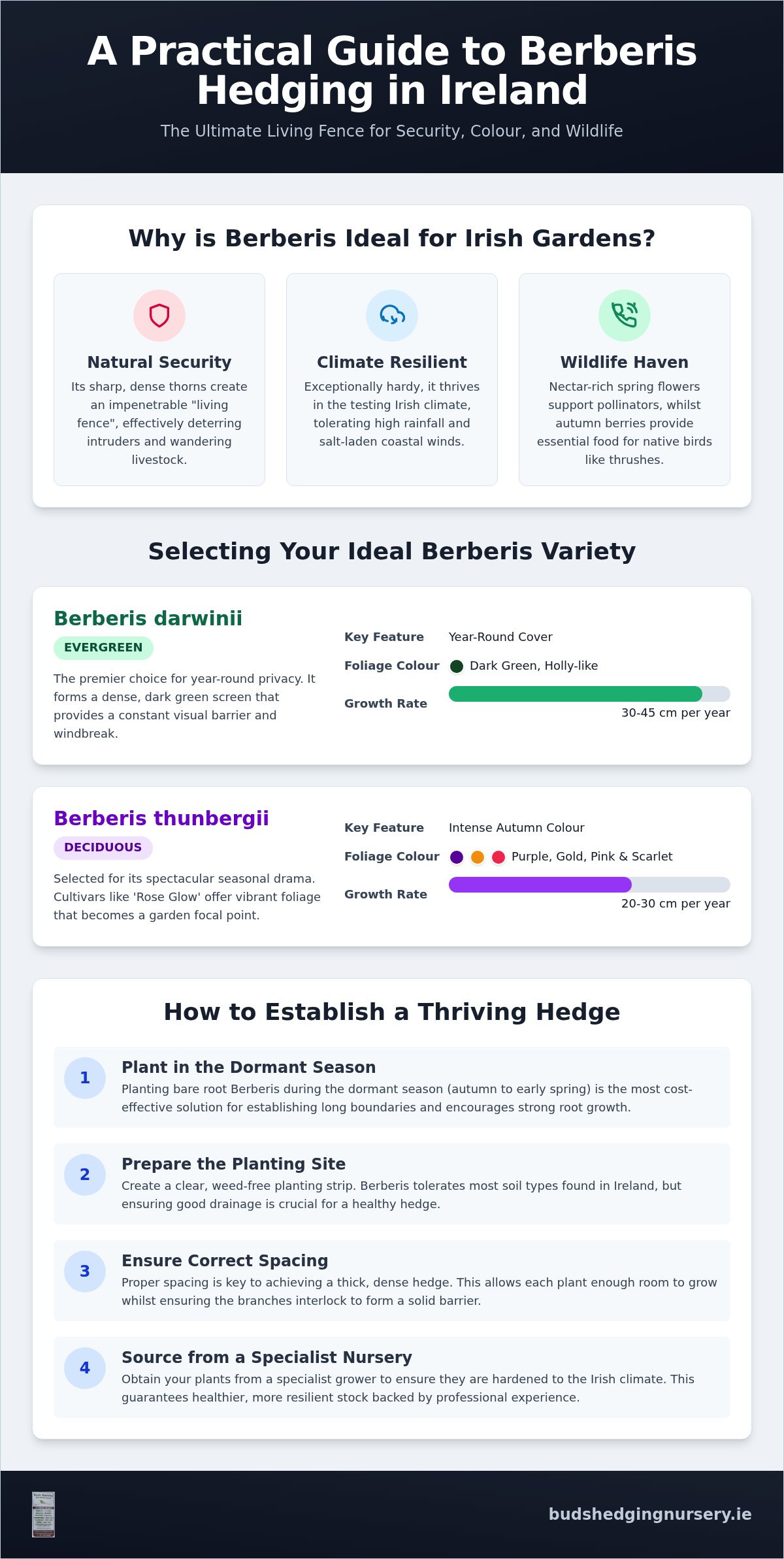
Not all barberry is the same. When choosing Berberis hedging Ireland, you first need to decide if you want year-round cover or seasonal drama. Berberis darwinii is the standard for evergreen hedges in this country. It has small, dark green, holly-like leaves and produces a mass of bright orange flowers in April. It’s a vigorous grower. Once established, it can add 30 to 45cm of height annually, making it ideal for tall boundaries.
If you prefer deep foliage colours, Berberis thunbergii (Japanese Barberry) is often the better choice. It’s deciduous, meaning it loses its leaves in winter, but it makes up for this with intense purple or gold foliage through the summer months. Berberis Rose Glow is a particularly striking cultivar. It features mottled pink and purple leaves that turn a fiery scarlet in autumn. It’s a specialist favourite for those who want their boundary to be a focal point rather than just a backdrop.
Growth rates vary across the genus. Generally, you can expect the following from healthy, Irish-grown stock:
- Berberis darwinii: 30-45cm per year.
- Berberis thunbergii: 20-30cm per year.
- Berberis Rose Glow: 25-30cm per year.
Evergreen vs. Deciduous: Which Suits You?
Evergreen varieties like Darwinii are best for privacy. They provide a dense, green screen 365 days a year. Deciduous varieties are more about the visual transition. They offer a fresh look in spring and a dramatic finish in autumn. You can mix these varieties for a tapestry hedge effect. Just remember that the evergreen sections will look much denser in January than the deciduous parts. It’s also worth considering that deciduous types often have even sharper thorns, which compensates for the leaf loss in terms of security.
Size and Scale Considerations
Matching the variety to your space is vital. Compact types like Berberis thunbergii ‘Atropurpurea Nana’ rarely exceed 60cm in height. These are perfect for low borders or security planting under ground-floor windows. In contrast, Berberis darwinii can easily reach 2.5 to 3 metres if left unpruned. For those planning a new boundary, understanding Planting and Long-Term Management ensures you don’t end up with a hedge that overwhelms your garden. You can find robust, climate-hardened stock at Buds Nursery Cavan to ensure your hedge gets the best possible start.
Bare Root vs Pot Grown Berberis: Choosing the Right Format
Choosing the right format for Berberis hedging Ireland depends on your budget and the time of year you plan to start work. For most large-scale projects, bare root stock is the sensible choice. These plants are grown in open fields and lifted during the winter months. Because they are transported without soil, they are significantly cheaper to buy and ship than pot-grown alternatives. This makes them the preferred option for farmers or homeowners with long boundaries to secure.
The bare root tree season Ireland typically runs from November to late March. Planting during this dormant phase allows the hedge to establish its root system before the energy-intensive spring growth begins. Many growers find that bare root plants actually catch up to their pot-grown counterparts within two seasons. They tend to develop a more extensive and resilient root architecture in the native soil. According to the RHS guide to Berberis, these shrubs prefer well-drained conditions, and bare root planting encourages the roots to seek out nutrients naturally.
Pot-grown Berberis, by contrast, can be planted at any time of the year. They are the “instant” solution for gardeners who need to fill a gap in an existing hedge or want to start a project in mid-summer. While more expensive per unit, they offer the convenience of flexibility. If you are only planting a few metres under a window for security, the extra cost is often worth the immediate impact and reduced risk of failure outside the dormant season.
Handling Bare Root Stock
Irish winters are often wet and windy. If your order arrives and the ground is waterlogged or frozen, you must “heel in” the plants. Dig a shallow trench in a sheltered part of the garden. Lay the plants at an angle and cover the roots with loose soil or compost. This protects them from wind-chill and prevents the roots from drying out. When you inspect your plants upon arrival, look for roots that are moist and flexible. Brittle or mushy roots are a sign of poor health. Protecting these young plants before they go into their permanent home is the best way to ensure 100% success with your Berberis hedging Ireland project.
Pot-Grown Advantages
Pot-grown Berberis has the advantage of a fully intact root ball. This reduces transplant shock, which is particularly helpful if you are planting during a dry spell in May or June. These plants are ideal for smaller residential borders where you want an immediate visual impact. However, they require more discipline. Because the roots are confined to a potting mix, they will need consistent watering throughout their first summer to prevent them from drying out in the Irish breeze.
Planting and Long-Term Management of Your Barberry Hedge
Success with a new hedge starts before the first plant goes into the ground. Proper site preparation is the most important step. Clear a one-metre wide strip of all grass and weeds. This reduces competition for nutrients and moisture. While Berberis hedging Ireland is remarkably adaptable to various soil types, it won’t survive in waterlogged ground. If your site has heavy clay that stays wet throughout the winter, dig in some grit or organic matter to improve drainage. In extreme cases, planting on a slightly raised mound can protect the root systems from rot.
Spacing determines how quickly your hedge becomes a solid barrier. For a standard garden boundary, space your plants 25cm to 33cm apart. This equates to 3 or 4 plants per metre. If you are planting for maximum security or to create a stock-proof barrier, use a double-staggered row. This method requires 5 or 6 plants per metre, set in two parallel lines about 40cm apart. This creates the density needed for a truly impenetrable “living fence” that prevents both human and animal intrusion.
Don’t be afraid to prune young plants. Trimming the leading shoots in the first year encourages bushy growth from the base. A hedge that grows too fast without pruning will become “leggy” and thin at the bottom. This creates gaps that compromise the security and aesthetic of the boundary. Regular maintenance ensures the hedge remains thick and functional for decades.
Pruning Safely and Effectively
Heavy-duty leather gloves are essential. The thorns on Berberis hedging Ireland are needle-sharp and can easily pierce standard gardening gloves. Timing depends on the variety. Trim evergreen species like Berberis darwinii immediately after the orange flowers fade in late spring. This preserves the next year’s blooms. For deciduous types, prune in late winter while the plant is dormant. Always aim for an “A-shape” profile. Keeping the top narrower than the base ensures sunlight reaches the bottom branches. This prevents the hedge from becoming bare at ground level.
Aftercare and Troubleshooting
Apply a thick layer of bark mulch or well-rotted manure shortly after planting. This suppresses weeds and keeps moisture in the soil during the critical first spring growth. In the humid Irish climate, you might notice a white, dusty coating on the leaves of deciduous varieties. This is powdery mildew. It’s rarely fatal. You can manage it by ensuring good airflow around the plants and using organic sulphur-based sprays if the infestation is heavy. Regular watering is only necessary during the first two summers or during uncharacteristic dry spells. If you need help choosing the right spacing for your site, you can order your hedging plants directly from our specialist nursery.
Sourcing High-Quality Berberis from a Specialist Nursery
Buying from a specialist plant nursery Ireland offers a level of reliability that general retailers cannot match. At Buds Nursery Cavan, we manage 60 acres of dedicated growing space. This scale allows us to grow our stock in open-ground conditions, ensuring every plant is hardened to the Irish climate before it leaves our fields. When you buy Berberis hedging Ireland from a specialist, you are investing in plants that have already proven their resilience against local wind and rain.
Our commitment to quality is backed by over 30 years of experience in the trade. We don’t just sell plants; we prepare them for a lifetime in your garden. This includes careful selection of parent stock and precise lifting techniques during the dormant season. For those with large projects, we organise efficient national delivery. We use specialised transport methods to ensure your hedging arrives at your gate in peak condition, with the root systems protected and ready for immediate planting.
Seeing mature specimens on-site is another advantage of visiting a specialist grower. It allows you to understand the eventual scale and density of different Berberis varieties before you make a final decision. Whether you are a homeowner securing a small border or a farmer protecting a large estate, we provide the practical guidance needed to ensure your Berberis hedging Ireland project is a long-term success.
Expert Advice on Site
Matching the right variety to your specific soil and exposure is vital. Some Berberis species handle coastal salt better than others, whilst some prefer the sheltered conditions of an inland garden. We help you customise your order based on these variables. For agricultural boundaries, we can advise on integrating Berberis into native trees scheme plants. Adding a thorny element to a farm boundary provides an extra layer of security for livestock that standard native mixes might lack.
Planning Your Order
We recommend booking your order early, especially for the bare root season which runs from November to March. This ensures you get the best selection of varieties like Darwinii or Rose Glow. When your order arrives, you should be prepared to plant or “heel in” the stock immediately. Many of our customers choose to combine Berberis with whitethorn hedging Ireland. This creates a diverse, stock-proof mix that supports local biodiversity whilst maintaining an impenetrable physical barrier. We can help you calculate the exact number of plants required for a single or double-staggered row to meet your specific security goals.
Secure and Colourful Boundaries for Your Property
Choosing the right boundary is a long-term investment in your home’s security and appearance. You don’t have to sacrifice beauty for safety. Berberis offers a formidable physical barrier whilst rewarding you with vibrant spring blossoms and rich autumn foliage. Whether you select the evergreen resilience of Darwinii or the variegated charm of Rose Glow, your garden will benefit from a hedge that works as hard as it looks. It’s a practical choice for any Irish property owner looking for durability and seasonal interest.
Establishing successful Berberis hedging Ireland starts with high-quality stock. Sourcing from a specialist grower with 60 acres of nursery land and over 30 years of expert experience ensures your plants are ready for the local climate. We provide reliable national delivery across the country to help you get your project underway. Explore our full range of Berberis and hedging plants at Buds Nursery. With the right preparation and spacing, your new “living fence” will provide a safe, wildlife-friendly boundary for many years to come.
Frequently Asked Questions
Is Berberis hedging evergreen?
Both evergreen and deciduous varieties are available depending on your specific garden goals. Berberis darwinii is the most popular evergreen choice in Ireland; it retains its small, holly-like leaves throughout the entire year. Deciduous types like Berberis thunbergii lose their leaves in winter but provide much brighter autumn foliage colours. If you require year-round privacy and screening, an evergreen species is the better option.
How fast does a Berberis hedge grow in Ireland?
Growth rates vary between species, though most are considered moderate growers. Berberis darwinii is quite vigorous and can add between 30cm and 45cm of height annually once established in good soil. Deciduous varieties like Rose Glow grow slightly slower, typically adding about 20cm to 30cm each year. Regular pruning is necessary to maintain a dense, thick habit rather than letting the plants become leggy.
Is Berberis suitable for a coastal garden?
Yes, Berberis is exceptionally hardy and handles coastal conditions with ease. The tough, leathery leaves of evergreen varieties are particularly resistant to salt spray and harsh Atlantic winds. It’s a reliable choice for seaside boundaries where more delicate hedging plants often suffer from leaf burn. Just ensure the soil is well-drained, as coastal sites can sometimes have heavy clay pockets that retain too much water.
How many Berberis plants do I need per metre for a hedge?
You should plant 3 to 4 plants per metre for a standard single-row hedge. If you require a thicker, more impenetrable boundary for security, a double-staggered row is the best approach. This method requires 5 or 6 plants per metre. Space the two parallel rows about 40cm apart to allow the plants enough room to knit together into a dense, thorny barrier that deters intruders.
Can I plant Berberis in a shady part of my garden?
Berberis will grow in partial shade, though it performs best in full sun. Sunlight is necessary to trigger the most vibrant foliage colours in purple and gold varieties. You will also find that plants in sunny spots produce a much higher volume of spring flowers and autumn berries. If your site is very dark, the growth might be thinner and less dense than a hedge grown in an open position.
When is the best time to prune a Berberis hedge?
The best time to prune depends on whether your Berberis hedging Ireland is an evergreen or deciduous variety. Trim evergreen types like Darwinii immediately after they finish flowering in late spring to avoid cutting off next year’s buds. Deciduous varieties should be pruned in late winter while the plants are still dormant. Always use sharp shears and heavy-duty leather gloves to protect your hands from the sharp spines.
Is Berberis invasive in Ireland?
No, the ornamental varieties commonly used for hedging are not considered invasive species in Ireland. While the native Berberis vulgaris was largely eradicated in the past due to its role as a host for wheat rust, species like Berberis thunbergii and Berberis darwinii are safe to plant. They are widely used across the country and are highly valued for supporting local pollinators and providing food for birds.
What is the best Berberis variety for a security hedge?
Berberis darwinii is widely considered the best choice for a tall security boundary. It grows vigorously to over 2 metres and features incredibly sharp spines that act as a powerful deterrent. For lower security barriers, Berberis hedging Ireland varieties like Rose Glow or Atropurpurea are excellent for planting under ground-floor windows. Their dense, thorny structure makes them almost impossible to push through without heavy protection.