

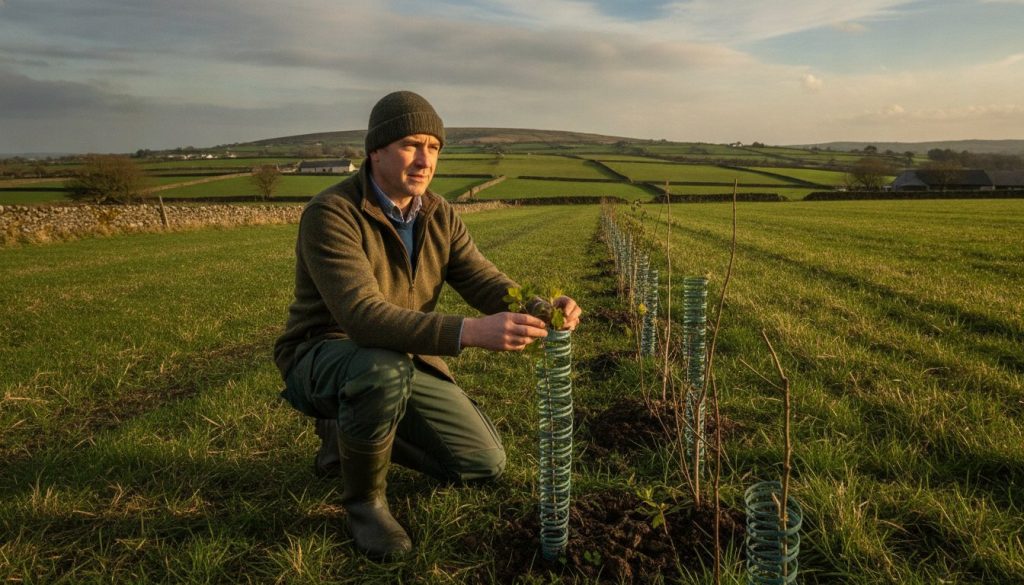
Planting the wrong sapling isn’t just a waste of time; it’s a missed opportunity to secure your land’s future under the 2026 ACRES requirements. If you’re searching for native irish trees for sale, you aren’t just looking for greenery; you’re looking for a hardy, biodiverse boundary that survives its first winter. With 53,300 farmers now participating in the ACRES scheme, sourcing provenance-certified stock is essential for meeting your environmental obligations and securing your part of the €280 million funding allocated for this year.
It’s difficult to manage complex agricultural regulations whilst worrying if your young saplings will actually take root. This guide simplifies the process, showing you how to select the right species for your specific site drainage and scheme requirements. We’ll cover the best native species for the Irish landscape, the specific 2026 deadlines for establishment, and how to identify quality bare root stock that ensures a high survival rate for a low-maintenance, thriving boundary.
Key Takeaways
- Understand why Irish provenance is vital and why sourcing native irish trees for sale from local growers ensures your stock is acclimatised to our specific weather conditions.
- Identify the optimal planting window during the dormant season to maximise root establishment and reduce the risk of transplant shock.
- Learn how to select the right mix of species to satisfy Native Trees Scheme requirements whilst creating a biodiverse, low-maintenance landscape.
- Discover the practical indicators of healthy stock, such as stem thickness and root structure, to ensure your saplings thrive from the first season.
- Explore how to integrate native trees into existing whitethorn boundaries to create multi-functional, hardy hedgerows that support local wildlife.
Why Choose Native Irish Trees for Your Landscape?
Native trees are species that established themselves in Ireland following the last ice age, roughly 10,000 years ago, without human intervention. When you browse native irish trees for sale, you’re selecting stock that has evolved alongside our specific landscape. It isn’t just about the name of the tree; it’s about the provenance. This term refers to the geographic origin of the seed. Trees grown from seeds collected here are biologically synchronised with the Irish seasons. They understand our light levels and temperature shifts. Imported stock often buds too early or fails to harden off before the first frost. Native species are built for the damp, windy conditions that define our climate. They don’t mind the heavy, clay-rich ground found across the country. Native trees are the foundation of Irish biodiversity and landscape heritage.
Environmental Benefits and Wildlife Support
Native trees do more than just sit in a field. They’re active participants in the local ecosystem. For example, a single Sessile Oak or Silver Birch can support hundreds of insect species. These insects are a vital food source for native birds and bats. If you’re reviewing a list of native Irish trees, you’ll see species like Rowan and Holly. These provide high-energy berries during the lean winter months for thrushes and blackbirds. Beyond wildlife, their root systems are functional. In heavy ground, native roots help with soil stabilisation and water management. They reduce runoff during heavy rain by improving soil structure. You also get the benefit of seasonal shifts, from the white blossoms of the Hawthorn in spring to the deep golds of the Beech in autumn.
Climate Resilience and Low Maintenance
One of the biggest advantages of choosing native stock is the lack of fuss. Once established, these trees require far less intervention than exotic or ornamental species. They have a natural resistance to local pests and diseases that might devastate non-native varieties. Many native irish trees for sale are perfectly happy in poor, waterlogged soil where other trees would rot. Species like Alder or Willow thrive in these conditions. This makes them a practical, low-maintenance choice for farmers and landowners who want a hardy boundary that doesn’t need constant chemical treatments or pruning to stay healthy.
Essential Native Irish Tree Species for Sale
Selecting the right species for your site requires a balance between your long-term landscape goals and the specific conditions of your soil. When you look for native irish trees for sale, it’s helpful to categorise them by their eventual height and growth habit. Some species are destined to become massive canopy giants, whilst others remain compact enough for a suburban garden or a tight hedgerow. For a detailed breakdown of identification features, you can refer to the Tree Council of Ireland’s native tree guide, which remains a benchmark for understanding our local flora.
Tall Canopy Trees for Large Landscapes
If you have the space, these species provide the structural backbone of a traditional Irish woodland. The Sessile Oak (Quercus petraea) and Pedunculate Oak (Quercus robur) are the definitive legacy trees. They are slow-growing but can live for centuries. For areas with poor drainage or riverbanks, the Common Alder (Alnus glutinosa) is the most reliable choice. It actually improves soil quality by fixing nitrogen through its roots. Silver Birch (Betula pendula) and Downy Birch (Betula pubescens) offer a faster result. Their white bark provides excellent winter interest. Finally, the Scots Pine (Pinus sylvestris) is our only native large conifer. It provides vital evergreen cover and nesting sites for red squirrels.
Smaller Native Trees for Garden Interest
Not every site can accommodate a 30-metre Oak. For smaller spaces, Rowan (Sorbus aucuparia), also known as Mountain Ash, is a favourite. It stays relatively small and produces heavy clusters of red berries that attract birds in autumn. The Crab Apple (Malus sylvestris) is another excellent choice, offering pink-white blossoms in spring and small, sour fruits. Hazel (Corylus avellana) is highly versatile; you can grow it as a multi-stemmed tree or coppice it regularly for bean poles. To maintain some privacy during the winter, always include Native Holly (Ilex aquifolium). It is a slow-growing evergreen that sits perfectly amongst deciduous mixes, providing deep green colour when other trees are bare.
For those establishing a new boundary, the structural foundation usually comes from Whitethorn (Crataegus monogyna) and Blackthorn (Prunus spinosa). These are the traditional hedging plants of the Irish countryside. They are incredibly hardy and create a stock-proof barrier that supports countless pollinators. If you are unsure which mix suits your ground best, you can speak with our experienced growers for practical advice on species selection. We ensure all our native irish trees for sale are grown to handle the local climate, giving your project the best possible start.
Selecting Between Bare Root and Container-Grown Trees
The choice between bare root and container-grown stock depends on your timeline and budget. If you are looking for native irish trees for sale, most professional planting happens during the bare root tree season Ireland. This window runs from November to March. During these months, the trees are dormant. Their energy is stored in the roots rather than the foliage. Planting whilst the tree is “asleep” allows the root system to settle into the soil before the demands of spring growth begin.
Soil type is a critical factor that many overlook. In Ireland, we often deal with heavy clay or peat. Bare root trees are particularly effective in heavy clay. When you plant a potted tree in clay, the roots can struggle to break out of the potting compost and penetrate the heavy surrounding ground. This can lead to poor establishment. Bare root stock puts the roots in direct contact with your native soil immediately. This encourages deeper and more resilient growth from the start.
The Advantages of Bare Root Trees in Winter
Bare root trees are the standard for hedging and large-scale woodland projects. The unit cost is significantly lower than container-grown alternatives. This makes large-scale biodiversity schemes feasible for most landowners. They are also easier to handle and transport. You can move hundreds of bare root whips in a single load without the weight of soil and plastic pots. This reduction in plastic waste is a practical benefit for those focused on environmental sustainability. Once the soil warms in spring, these trees develop a natural, expansive root system.
When to Opt for Potted Native Trees
Potted trees offer flexibility. They can be planted year-round, provided the ground isn’t frozen or waterlogged. This is ideal for filling gaps in an existing boundary during the summer months or for planting specimen trees. If you need an instant impact for a garden focal point, a larger container-grown tree is often the better choice. The root ball remains intact, which reduces transplant shock for more mature specimens.
Your decision should come down to project scale and timing. For a few specimen trees, container-grown is convenient. For a multi-species boundary, wait for the dormant season and source quality native irish trees for sale in bare root form. It’s the most reliable way to ensure long-term survival in the Irish landscape.
Native Trees for Agricultural Schemes and Hedgerows
Farmers often search for native irish trees for sale to fulfil environmental commitments and enhance farm infrastructure. These plantings aren’t just for aesthetics; they’re functional components of a working landscape. Integrating trees into a whitethorn hedging Ireland boundary creates a multi-layered shelterbelt that protects livestock and buildings from the elements. These mixed native hedges also play a significant role in carbon sequestration, helping farmers meet national environmental compliance targets. Buds Nursery produces hardy stock on our 60-acre site, providing the certified trees necessary for national schemes.
Meeting Native Trees Scheme Requirements
Compliance starts with the species choice. For those researching native trees scheme plants, the specifications usually include Sessile Oak, Silver Birch, and Common Alder. Purchasing from a registered nursery is vital for scheme eligibility. You’ll need the correct plant passports and certification for your ACRES advisor to sign off on the work. Funding for the ACRES scheme was increased by €20 million to a total of €280 million for 2026, supporting over 53,000 farmers across the country. Typical requirements involve specific spacing, often 2 or 3 metres apart for trees, and robust fencing to exclude livestock. Using tree guards is standard practice to prevent rabbit or hare damage during the first few growing seasons.
Creating a Mixed Native Hedge for Biodiversity
A productive hedge should be diverse to maximise its environmental value. We generally recommend a ratio of 75% Whitethorn to 25% mixed native species. This mix provides a strong, thorny barrier whilst supporting a wider range of pollinators and nesting birds. When sourcing native irish trees for sale for these boundaries, including species like Spindle, Guelder Rose, and Blackthorn ensures a succession of flowers and berries throughout the year. These hedges act as wildlife corridors, allowing animals to move safely across open land. A thick, well-maintained hedge is much more than a simple boundary; it’s a living ecosystem that manages water runoff and prevents soil erosion on heavy ground. If you’re planning a scheme-compliant project, you can contact our team for a quote on bulk native stock tailored to your site.
How to Source and Plant Your Native Trees
Success in the landscape begins with the quality of your stock. When you are looking for native irish trees for sale, the physical condition of the sapling tells you more than a label ever could. Visit a specialist plant nursery Ireland to inspect the plants before they go into the ground. A healthy native tree should have a balanced ratio between its height and stem thickness. Avoid trees that look “leggy” or spindly. For bare root stock, the roots must be fibrous and damp. If the roots feel brittle or look bone-dry, the tree is already under significant stress. Checking these details ensures you aren’t fighting a losing battle from day one.
Sourcing from a Specialist Irish Nursery
Buying direct from a grower is the most reliable way to secure hardy stock. At Buds Nursery, we manage 60 acres of production, meaning our trees are acclimatised to the Irish climate before they reach your gate. This direct connection eliminates the long transport times that often lead to root desiccation. Visiting the nursery also allows you to get expert on-site guidance for your specific ground conditions. We understand the logistics of large-scale orders and provide national delivery for bare root stock during the dormant season, ensuring your trees arrive fresh and ready for the spade.
Essential Planting and Aftercare Tips
Preparation is the difference between a thriving woodland and a high failure rate. Clear a one-metre circle of grass and weeds around each planting spot to remove competition for nutrients. For small bare root whips, the “slitting” method is the most efficient. Simply drive a spade into the ground, create a vertical slot, insert the roots, and firm the soil back down with your heel. For larger specimen trees, use the “pit planting” method. Dig a hole twice the width of the root system to allow for easy expansion.
- The Root Flare Rule: Always ensure the root flare, the point where the roots meet the stem, is level with the soil surface. Planting too deep is a common cause of bark rot and eventual tree death.
- Staking and Ties: Use stakes for any tree over 1.5 metres. Place the stake on the windward side to support the tree against the prevailing Irish breeze.
- Mulching: Apply a thick layer of bark mulch or woodchips. This suppresses grass for the first three years, which is the most critical period for establishment.
- Protection: Never underestimate local wildlife. Rabbits and hares can strip the bark from a young native tree in a single night. Use spiral guards or mesh fencing to protect the stems.
Establishing native irish trees for sale requires patience and proper aftercare. Water your trees during dry spells in the first two summers, even if the weather seems damp. A little attention in the early years ensures a low-maintenance, hardy boundary that will stand for generations.
Securing Your Landscape’s Future
Planting native species is a practical investment in the long-term resilience of your land. Success depends on matching provenance-certified stock to your site’s specific drainage and soil type. By choosing to plant during the dormant winter months, you give your saplings the best chance to establish a strong root system before the spring growth begins. This approach supports local biodiversity and ensures your project meets the rigorous standards of current agricultural schemes.
At Buds Nursery, we manage 60 acres of home-grown stock to ensure every tree is hardy and acclimatised to our environment. We offer expert guidance on Native Trees Scheme compliance and provide national delivery for all tree and hedging orders. If you’re ready to start your project, explore our full range of native Irish trees for sale at Buds Nursery. Selecting the right mix today creates a thriving, biodiverse landscape that will serve your family and the local ecosystem for generations to come.
Frequently Asked Questions
When is the best time to buy and plant native Irish trees?
The optimal window for planting is between November and March whilst the trees are dormant. This is the period when we offer the widest selection of native irish trees for sale in bare root form. Planting during these colder months allows the root system to settle into the soil without the stress of supporting active leaf growth.
Can I use native trees for a small urban garden?
Yes, several native species are perfectly suited to smaller spaces. Rowan, Holly, and Hazel are excellent choices because they stay relatively compact and offer high wildlife value through berries and blossoms. You can also manage the size of these trees through regular pruning or traditional coppicing to keep them within your garden’s boundaries.
What is the difference between Sessile and Pedunculate Oak?
The distinction is found in the stalks of the leaves and acorns. Sessile Oak has acorns that sit directly on the twig but leaves with long stalks; it’s the hardier choice for acid soils and upland areas. Pedunculate Oak features acorns on long stalks and leaves with almost no stalks, preferring the heavier, more fertile lowland soils found across the midlands.
How fast do native Irish trees grow on average?
Growth rates vary significantly between species and soil conditions. Fast-growing “pioneer” species like Silver Birch and Common Alder can put on nearly a metre of height per year in the right ground. Slower, long-lived species like Oak or Holly may only grow 20 to 30 centimetres annually, focusing their energy on dense wood and deep root systems instead.
Are native trees suitable for coastal or windy sites?
Certain species are naturally adapted to handle salt spray and harsh exposure. Hawthorn and Blackthorn are the most reliable for creating windbreaks on coastal sites because they grow thick and thorny. Common Alder also performs well in windy, damp locations, whilst Scots Pine provides a sturdy evergreen structure that stands up to the prevailing Atlantic breezes.
Do I need a permit or scheme approval to plant native trees?
You don’t need a permit for general planting on private property. However, if you intend to claim grants under the 2026 ACRES or Native Trees Scheme, your project must be approved by a Department-certified advisor. This ensures your species mix and planting density comply with the specific environmental regulations required for national funding.
How do I care for bare root trees if I cannot plant them immediately?
If planting is delayed, you must “heel in” the trees to protect the roots from drying out. Dig a shallow trench in a sheltered area, place the bundles of trees inside at an angle, and cover the roots entirely with loose soil or sand. This simple step keeps the roots moist and protected from frost for several weeks until your site is ready.