

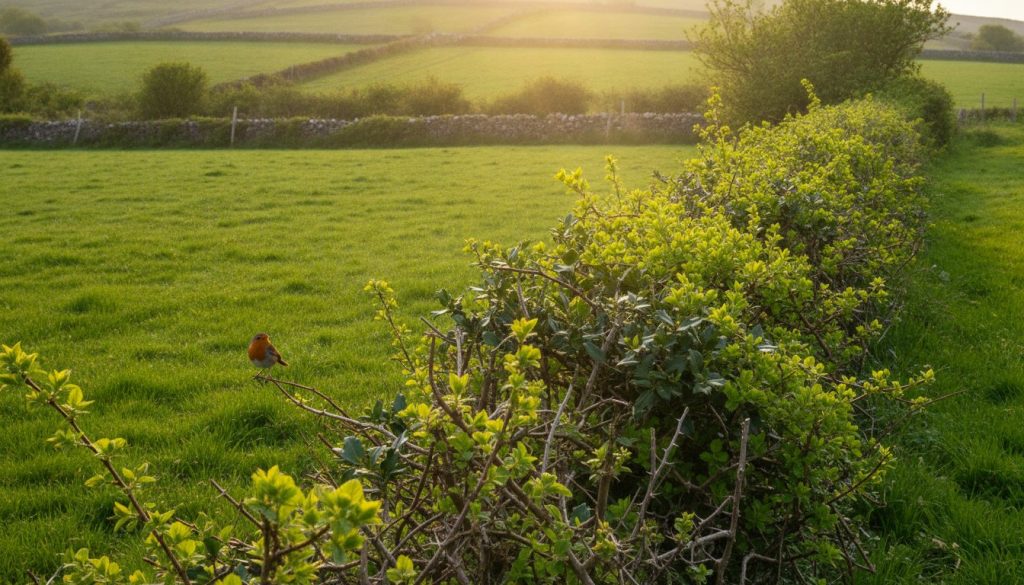
Ireland’s forest cover currently stands at just 11.6%, significantly lower than the European average of 38%. This statistic highlights why your boundary is more than just a line; it’s a vital ecological corridor. Many landowners feel the pressure to get their planting right but struggle with the narrow bare root season. Investing in mixed native hedging packs is the most practical way to start. These packs simplify the process by providing a balanced ratio of species like Whitethorn and Holly, ensuring your new boundary is hardy and compliant with local environmental standards.
You likely want a thriving, bird-friendly hedge that doesn’t require constant intervention or risk failure due to poor spacing. It’s a common concern, especially with the requirements of the Native Trees Scheme and the March to August cutting ban. This guide provides the clarity you need to plant with confidence. We’ll cover soil preparation, the 75/25 species rule, and the specific planting deadlines for 2026. By the end, you’ll know how to establish a resilient natural fence that supports biodiversity and stands the test of time.
Key Takeaways
- Understand why a 70% backbone of Whitethorn is essential for creating a resilient and biodiversity-rich boundary.
- Identify the optimal bare root planting window between November and March to ensure high establishment rates and cost efficiency.
- Select mixed native hedging packs that meet Irish provenance standards and comply with the latest Native Trees Scheme regulations.
- Master the double staggered row planting method to achieve a dense, stock-proof finish with five plants per linear metre.
- Learn the pruning and weed management techniques necessary during the first three years to encourage healthy, bushy growth.
Understanding Mixed Native Hedging: Why Diversity Matters
A mixed native hedge is a balanced blend of deciduous and evergreen indigenous plants. In the context of the Irish countryside, these boundaries are far more than simple property markers. To truly understand What is a Hedgerow?, one must view it as a living, breathing ecosystem that has defined our landscape for centuries. By choosing mixed native hedging packs, you’re opting for a functional boundary that mimics the natural diversity found in local woodland edges.
Diversity is the primary defence against environmental stress. Single-species hedges, whilst visually uniform, are vulnerable to specific pests or diseases that can wipe out an entire line of growth. A mixed approach ensures that if one species struggles, the others fill the gap, preserving the structural integrity of your fence. This resilience is a key reason why traditional growers recommend a variety of species like Whitethorn, Holly, and Hazel for long-term land management.
The Ecological Benefits of Native Species
Native plants have co-evolved with local wildlife over thousands of years. They provide a reliable food source, from spring blossoms for pollinators to autumn berries for nesting birds. Unlike non-native evergreen walls, a mixed hedge changes with the seasons, offering different levels of shelter and nutrition throughout the year. These hedges function as vital wildlife corridors, allowing small mammals and insects to move safely between fragmented habitats in both rural and suburban settings. Key benefits include:
- Seasonal Nutrition: A sequence of flowering and fruiting species supports birds through the winter.
- Structural Shelter: Varied growth habits provide nesting sites for different bird species.
- Soil Management: Deep root systems assist with drainage and prevent erosion on sloping ground.
From a technical standpoint, native hedges also outperform ornamental varieties in soil health and carbon sequestration. Their deep, varied root systems help stabilise the earth and manage water runoff more effectively than shallow-rooted garden alternatives. This makes them a practical choice for landowners dealing with the damp, heavy soils often found across Ireland.
Native Trees Scheme and Environmental Grants
National biodiversity targets for 2026 place a heavy emphasis on restoring our hedgerow network. Utilising high-quality mixed native hedging packs is often a prerequisite for accessing environmental grants and complying with the Native Trees Scheme. These programmes aim to increase forest cover and protect water quality through strategic planting.
To qualify for these schemes, it’s essential to source plants from registered nurseries that specialise in Irish provenance. This ensures the plants are adapted to our climate and free from imported diseases. For a detailed breakdown of the requirements, you can refer to A Practical Guide to Native Trees Scheme Plants in Ireland. Following these guidelines ensures your boundary is not only beautiful but also a recognised contribution to the national landscape.
Choosing the Right Mix: What Goes into a Native Hedging Pack?
Selecting the right species ratio is the difference between a sparse fence and a thick, resilient boundary. Most professional growers recommend a specific “backbone” species to provide structural integrity. In our mixed native hedging packs, this foundation is almost always Whitethorn. This species provides the density and thorns required to create a functional barrier whilst supporting the growth of more delicate companion plants.
The Core Species Breakdown
Whitethorn (Crataegus monogyna) typically makes up 60-70% of a standard mix. It’s the workhorse of the Irish hedgerow. Its thorny branches and dense growth habit create a stock-proof barrier that keeps livestock in and intruders out. It handles heavy pruning well, which is vital for maintaining a neat shape over decades. Without this high percentage of Whitethorn, a hedge often lacks the structural “weave” needed to stay upright and thick at the base.
Blackthorn (Prunus spinosa) and Hazel (Corylus avellana) act as the primary supporters. Blackthorn provides the earliest nectar for bees with its white spring blossom, which often appears as early as February. Hazel is a fast-growing filler that adds bulk and produces nuts for small mammals. These species ensure the hedge isn’t just a line of thorns but a varied structure with different growth rates and textures that can adapt to varying light levels.
Specialist Additions for Biodiversity
To move beyond a basic boundary, specialist species are added to the mix. Holly (Ilex aquifolium) is a standout addition because it’s evergreen. It provides year-round shelter for birds whilst adding winter structure to a dormant hedge. Spindle (Euonymus europaeus) is included for its striking autumn colour. Its pink husks and orange seeds are visually unique amongst native plants and provide a late-season food source for insects.
Wild Crabapple is another favourite for those prioritising wildlife. It supports a vast range of insects and provides fruit for birds in late autumn. When you understand how to plant a hedge for biodiversity, you realise that these minor species, though they make up only a small portion of the pack, are what turn a fence into a habitat. They create the “edge effect” that attracts a wider variety of species to your land.
When selecting mixed native hedging packs, tailoring your mix depends on your specific site goals. If security is the priority, you might increase the Blackthorn content. For a garden boundary, you might focus on species with higher aesthetic value like Guelder Rose. If you’re unsure which species will thrive in your specific soil type, you can enquire about our custom bare root mixes for expert advice based on our 30 years of growing experience.
Bare Root vs. Pot Grown: Timing Your Planting
Choosing between bare root and pot-grown plants depends on your project’s scale and timing. For large-scale boundary work, mixed native hedging packs are almost exclusively supplied as bare root whips. This is the most cost-effective method for planting hundreds of metres of hedgerow without the expense of plastic pots and heavy compost. Bare root plants are also lighter and easier to transport in bulk, which simplifies the logistics of a major planting project across the country.
The planting window is strictly governed by the seasons. Bare root plants are lifted and moved whilst they’re dormant, typically from November to March. Planting during this time allows the roots to settle in the native soil before the energy demands of spring growth begin. For a comprehensive look at this window, see our Bare Root Tree Season Ireland: The Complete 2026 Planting Guide. Whilst pot-grown options are available year-round for summer “gap-filling,” they’re significantly more expensive and require constant watering to survive the warmer months.
Why Bare Root is the Professional Choice
Professionals prefer bare root whips because they’re easier to handle and plant in large quantities. At Buds Nursery Cavan, we manage 60 acres of production specifically to supply these native plants for national delivery. Because the roots aren’t confined to a container, they don’t suffer from being “pot-bound,” a condition where roots circle the pot and struggle to spread once planted. Bare root plants establish a direct connection with your local soil immediately, leading to a more resilient hedge in the long term. Our 30 years of experience show that whips between 60cm and 90cm offer the best balance of fast establishment and easy handling.
Preparing for the Planting Season
Success starts with organisation. We recommend ordering your mixed native hedging packs early in the autumn. This secures your preferred species ratios before the peak demand of the Native Trees Scheme begins in November. Early orders also ensure you’re at the front of the queue when the lifting season starts.
If your delivery arrives and the ground is frozen or waterlogged, don’t worry. You can store the plants by “heeling them in.” This involves digging a temporary trench and covering the roots with loose soil or sand to prevent them from drying out. Before the plants arrive, clear a one-metre wide strip of all grass and weeds along your boundary. A clean planting line reduces competition for nutrients and makes the initial maintenance much simpler. Hard-working ground preparation in October pays dividends in growth rates the following spring.

Planting and Spacing: A Step-by-Step Guide
Calculating the correct quantity of plants is the first step in any successful boundary project. For a standard mixed native hedging packs order, the number of whips depends entirely on the density you require. If you are planting 100 metres of hedge, a standard double staggered row requires 500 plants. This follows the industry standard of five plants per linear metre, which is the requirement for most environmental grants like the Native Trees Scheme. For a thinner, ornamental boundary, three plants per metre in a single row may suffice, but this will take much longer to become stock-proof.
Determining Your Spacing Strategy
A single row of plants is the most budget-friendly option. Whips are spaced roughly 33cm apart in a straight line. Whilst this creates a tidy boundary, it often lacks the thickness needed to provide privacy or shelter for wildlife. We generally recommend this only for internal garden dividers where space is limited.
The double staggered row is the professional choice for a resilient Irish hedgerow. To achieve this, you plant two parallel rows roughly 30cm apart. You then offset the plants in a “W” pattern. This zigzag arrangement ensures that as the hedge matures, the branches weave together to close any gaps at the base. This density is what makes a hedge truly stock-proof and provides the deep cover that nesting birds require. Using mixed native hedging packs in this pattern ensures a diverse range of species is distributed evenly along the entire length.
The Planting Process
The method you choose depends on your soil and the scale of the job. Notch planting is the fastest technique for large runs in light or sandy soil. You simply drive a spade into the ground, lever it forward to create a slit, and tuck the whip inside. For the heavy clay soils common in many parts of Ireland, digging a shallow trench is often better. This loosens the earth and allows the roots to spread more easily in their first season.
Depth is the most critical factor during the actual planting. You must ensure the “root collar,” the small bulge where the roots meet the stem, is exactly at the soil surface. Planting too deep leads to stem rot, whilst planting too shallow causes the roots to dry out. Once the whip is in position, firm the soil down with your heel. This removes air pockets that can freeze in winter or dry out in spring. You can order our pre-mixed native hedging packs today to ensure you have the right species ratios for a successful establishment.
Finish the job by applying a thick layer of mulch, such as bark mulch or well-rotted manure, around the base. This suppresses grass competition and retains moisture during the critical first growing season. If the weather is particularly dry in the first spring after planting, a deep weekly soak is better than frequent light watering. This encourages the roots to grow downwards into the native soil rather than staying near the surface.
Long-Term Care and Maintenance of Your Native Hedge
Establishment doesn’t end when the last whip is firmed into the ground. The first three years are the most critical period for ensuring your mixed native hedging packs develop into a dense, functional barrier. Without a structured maintenance plan, even the best-planted hedge can become leggy or succumb to weed competition. Proper aftercare ensures the investment you’ve made in your land pays off with a resilient, stock-proof boundary.
One of the most common mistakes is a reluctance to prune young plants. For deciduous species like Whitethorn and Blackthorn, a “hard” initial cut is vital. Reducing the height of these whips by one-third immediately after planting might seem counterintuitive, but it’s the only way to stimulate bushy growth from the base. This formative pruning forces the plant to divert energy into side shoots, preventing the “hollow” bottom often seen in neglected hedges. You won’t need to do this for the evergreen Holly in your mix; simply let it reach its target height before topping it.
Timing your ongoing maintenance is equally important for legal and ecological reasons. Under the Wildlife Act, hedge cutting is prohibited between March 1st and August 31st to protect nesting birds. All significant trimming should be organised for the winter months whilst the plants are dormant. This schedule respects local biodiversity and ensures you don’t disturb the very wildlife your hedge was designed to support.
Formative Pruning and Thickening
As your hedge grows, aim to shape it into an “A-profile.” This means the base of the hedge remains wider than the top. This specific shape is essential because it allows sunlight to reach the lower branches. If the top is allowed to grow wider than the bottom, it shades out the base, leading to sparse growth and gaps that livestock can push through. Regular light trimming of the sides during the first few winters will encourage a tight, interwoven structure of branches.
Ongoing Protection and Health
Weed management is the primary challenge during the first 36 months. Grass and broadleaf weeds are aggressive competitors for water and nutrients. Maintaining a one-metre wide strip of mulch or bark around the base of the plants is the most effective way to suppress this competition. It also helps retain soil moisture during dry spells in late spring. If you notice any plants failing to thrive, it’s best to replace them during the next bare root season to maintain the continuity of the line.
As an established specialist plant nursery Ireland, Buds Nursery Cavan provides more than just the initial plants. We’re a long-term partner in your land management journey. Whether you need advice on identifying pests or guidance on rejuvenating a mature, overgrown boundary through coppicing, our 30 years of experience are at your disposal. You can contact Buds Nursery Cavan anytime for expert guidance on keeping your native hedge healthy for decades to come.
Establishing Your Living Boundary for 2026 and Beyond
Ireland’s landscape depends on the restoration of these vital corridors. Planting a native hedge is a practical investment in your land’s security and ecological health. Success depends on following the core principles we’ve discussed: prioritising a strong Whitethorn backbone, planting during the dormant bare root season, and committing to that essential first formative prune. These steps ensure your boundary becomes a thick, stock-proof barrier rather than a thin line of trees. By selecting mixed native hedging packs, you’re choosing a resilient system that supports local wildlife whilst meeting the requirements of national environmental grants.
Buds Nursery Cavan is here to help you get the details right. With over 30 years of horticultural expertise and 60 acres of production, we’re a specialist grower and proud supporters of the Native Trees Scheme. We provide the guidance and quality stock needed for successful national establishment. Contact Buds Nursery Cavan to discuss your mixed native hedging requirements and ensure your planting project thrives from the first season. Establishing a permanent natural fence is a rewarding process that will benefit your property for decades to come.
Frequently Asked Questions
How many plants are in a standard mixed native hedging pack?
Standard bundles usually consist of 50 or 100 bare root whips. This quantity simplifies the calculation for long boundaries. Since a double staggered row requires five plants per linear metre, a 50-pack covers exactly 10 metres of hedging. We provide these mixed native hedging packs to ensure a balanced species ratio, typically leaning heavily on Whitethorn for structure whilst including smaller percentages of Hazel and Blackthorn for diversity.
When is the best time of year to plant a native hedge in Ireland?
The optimal planting window runs from November to March whilst the plants are dormant. This bare root season is the only time these whips can be lifted and replanted with high success rates. Planting during these colder months allows the root systems to settle into the native soil before the energy demands of the spring growing season begin. Our 60-acre nursery works strictly within this seasonal cycle to ensure the highest plant quality.
How fast does a mixed native hedge grow?
You can expect a growth rate of 30cm to 60cm per year once the hedge is established. Faster-growing species like Hazel and Whitethorn will reach their target height quickly, whilst Holly takes longer to fill out. The first three years are focused on root development and thickening the base. Consistent weed management and initial formative pruning are the most effective ways to ensure your hedge reaches maturity without significant delays.
Do I need a double row for a garden hedge?
A double row isn’t strictly required for garden boundaries, but it’s highly recommended for privacy. A single row of three plants per metre creates a narrow screen that takes longer to thicken. A double staggered row using five plants per metre provides a much denser barrier that blocks noise and wind more effectively. If your garden has limited space, a single row of Green Beech or Hornbeam is a tidy alternative.
Can I include evergreen plants in a native hedge mix?
Yes, including Holly is the best way to add evergreen structure to a native mix. Most mixed native hedging packs include a small percentage of Holly to provide year-round shelter for birds and winter colour. Whilst the majority of native hedging species are deciduous and lose their leaves in winter, the addition of Holly ensures the boundary doesn’t look completely bare during the dormant months whilst maintaining compliance with the Native Trees Scheme.
Is a mixed native hedge suitable for coastal areas in Ireland?
Many native species are incredibly resilient and thrive in coastal conditions. Whitethorn and Blackthorn are particularly hardy against salt spray and wind. However, you should avoid species that prefer sheltered woodland environments. For exposed sites, increasing the percentage of these tougher, thorny species ensures the hedge survives the harsh Atlantic or Irish Sea winds. We recommend consulting with a specialist grower if your site is directly on the coastline.
How do I prune a native hedge to make it thicker?
Thickening a hedge requires regular winter pruning during the first few years. You should reduce the height of deciduous whips by one-third immediately after planting to stimulate lateral branching. As the hedge matures, trim the sides into an “A-shape” where the base is wider than the top. This profile ensures sunlight reaches the bottom branches, preventing the hedge from becoming hollow or sparse at ground level over time.
What is the best species for a stock-proof farm hedge?
Whitethorn is the undisputed foundation for a stock-proof boundary. Its thorny branches and dense growth habit create a weave that livestock cannot easily push through. Blackthorn is also an excellent addition for farm security due to its long, sharp spines. To meet the requirements for modern environmental grants, we typically recommend a mix that is at least 60% to 70% Whitethorn to ensure the hedge remains functional and durable.