

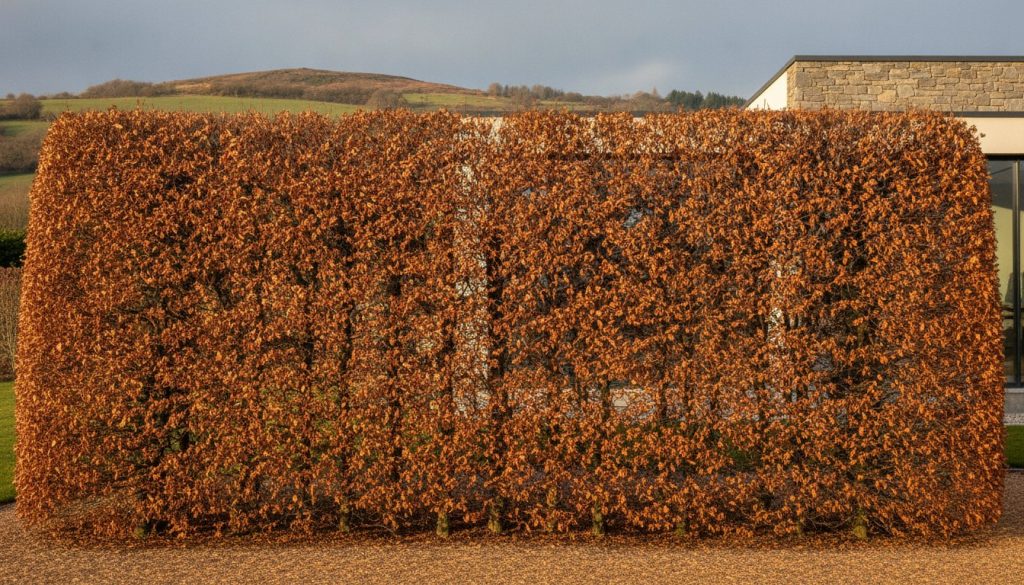
The most reliable privacy screen for an Irish garden isn’t actually an evergreen. While many homeowners reflexively reach for laurel, the traditional green beech hedging Ireland offers a unique “pseudo-evergreen” quality that handles our damp, windy climate with far more grace. You likely want a boundary that feels solid and looks natural, yet you might worry that a deciduous plant will leave you exposed once the temperatures drop.
It’s a common concern, but green beech is different. By retaining its dried, copper-coloured leaves throughout the winter, it provides a dense, wind-proof barrier every day of the year. In this guide, you’ll learn how to select the right stock and prepare heavy clay soils to ensure your plants don’t just survive, but thrive. We’ll walk you through the critical differences between bare-root and potted timing for the 2026 season. You’ll also find practical advice on spacing and maintenance to achieve a thick, professional finish that blocks the wind and secures your privacy.
Key Takeaways
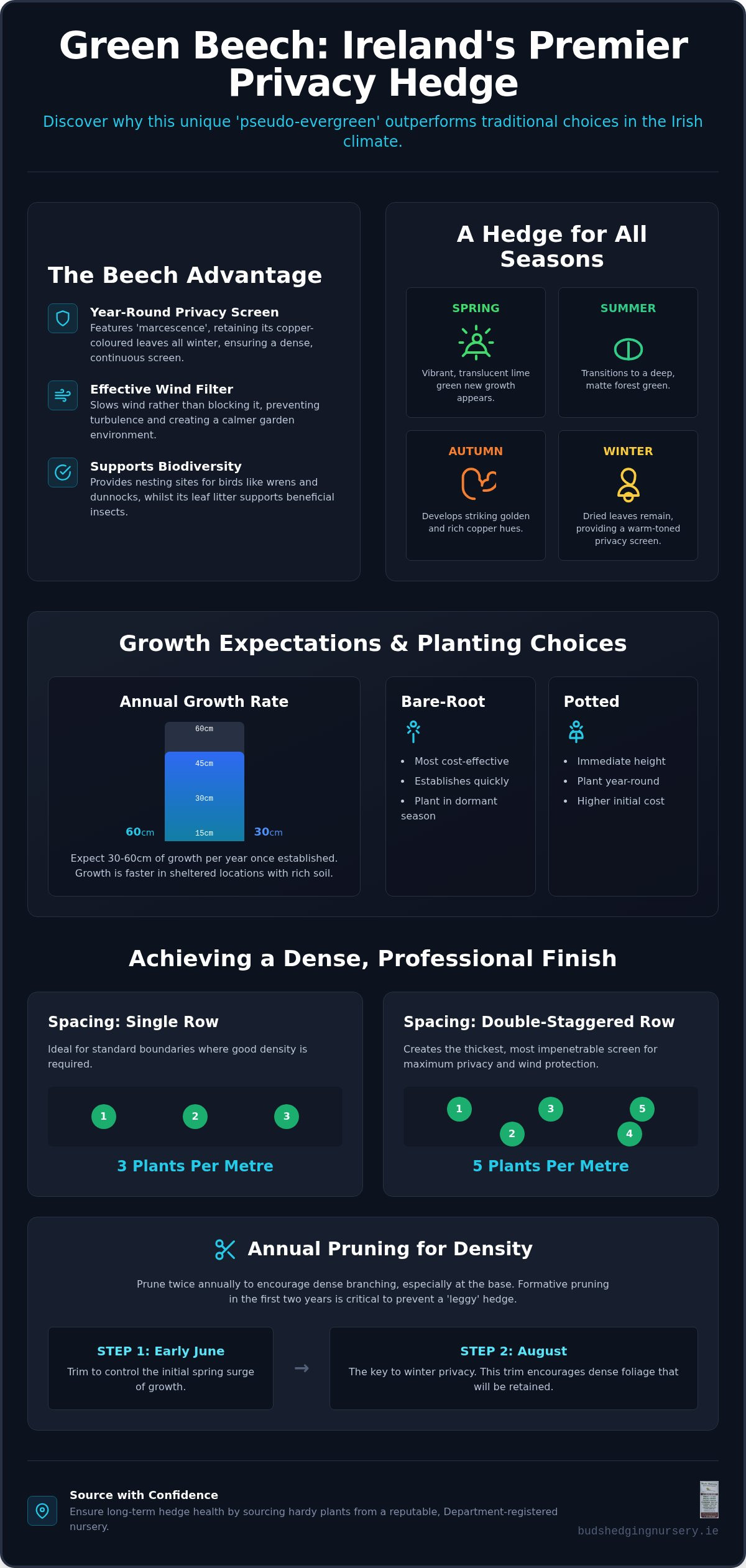
- Learn how the unique marcescence trait allows green beech to provide year-round privacy by retaining its leaves throughout the winter.
- Understand realistic growth expectations of 30-60cm per year and how soil preparation impacts the density of your boundary.
- Identify the correct planting window for green beech hedging Ireland, comparing cost-effective bare-root stock with year-round potted options.
- Master the professional spacing requirements of 3 plants per metre for single rows or 5 for a dense, double-staggered hedge.
- Discover the benefits of sourcing hardy, high-quality plants from a reputable, Department-registered nursery to ensure long-term hedge health.
Why Green Beech Hedging is the Gold Standard for Irish Landscapes
Green beech is frequently cited as the premier choice for boundary planting across the country. While technically a deciduous tree, European Beech (Fagus sylvatica) behaves differently when maintained as a hedge. It possesses a botanical trait known as marcescence. This occurs when the plant fails to complete the typical abscission process; the leaves die and turn a rich copper colour in autumn, but they don’t fall off. Instead, they remain firmly attached to the branches until new growth pushes them away in the spring. For homeowners seeking green beech hedging Ireland, this provides the privacy of an evergreen with the changing beauty of a deciduous species.
Unlike the heavy, often monotonous look of laurel or privet, beech offers a softer and more structured aesthetic. It creates a crisp, formal line when pruned but retains a natural texture that blends into the wider countryside. This dense foliage also serves as a vital corridor for biodiversity. It provides essential nesting sites for birds like the wren and dunnock, while the leaf litter at the base supports a variety of beneficial insects and soil organisms. It is a functional, living boundary that works with the local ecosystem rather than against it.
The Aesthetic Appeal of Seasonal Colour
The visual transformation of a beech hedge is one of its most rewarding features. In late April or early May, the buds burst into a vibrant, translucent lime green. As summer progresses, this transitions into a deep, matte forest green that provides a cool backdrop for garden flowers. When autumn arrives, the hedge takes on the striking golden-copper hues that define the Irish landscape. During the winter months, the dried leaves stay on the branch. They don’t just provide visual screening; they also create a unique rustling sound in the wind, adding a sensory layer to the garden that evergreen walls simply cannot match.
Green Beech and the Native Trees Scheme
Because it is so well-adapted to our climate, beech is a frequent inclusion for those looking at native trees scheme plants. It plays a significant role in restoring traditional Irish field boundaries and hedgerows that have been lost over decades. Beyond its historical value, planting green beech hedging Ireland contributes to local carbon sequestration and improves overall environmental health. It is a hardy, dependable choice that helps maintain the traditional character of our rural and suburban areas while providing a robust windbreak for exposed sites.
Understanding Growth Rates and Privacy Expectations
Managing expectations is the first step to a successful boundary. For green beech hedging Ireland, you should expect a moderate growth rate of roughly 30-60cm (12-24 inches) per year once the plants have established their root systems. This speed depends heavily on your local environment. In sheltered spots with rich, well-drained soil, you’ll see the upper end of that range. In exposed coastal or upland areas, growth might be slower as the plant puts more energy into root development and stem strength. Starting with larger potted plants can give you an immediate height advantage, but smaller bare-root whips often catch up within three to four seasons because they settle into the soil more quickly.
Privacy Without the “Wall” Effect
One of the reasons beech is considered one of the best hedging for privacy Ireland has to offer is its relationship with the wind. Solid walls or very dense evergreen hedges often create turbulent air on the leeward side. Beech acts as a filter. It slows the wind down rather than trying to stop it entirely, which makes the garden feel much calmer and protects smaller plants from being battered. You can maintain a beech hedge at any height from 1 metre for a front garden divider to over 4 metres for a significant boundary screen. As noted in the Woodland Trust’s guide to the common beech, its ability to withstand heavy pruning makes it exceptionally versatile for these varied heights.
Pruning for Density
Thickness is just as important as height. To prevent a “leggy” appearance where you can see through the bottom of the hedge, you need to start formative pruning early. In the first two years, trimming the leading shoots and side branches forces the plant to branch out lower down. Pruning twice a year, once in early June and again in August, is the best way to encourage a dense, impenetrable screen. The June trim controls the initial spring surge, while the August trim is the secret to winter privacy. This timing allows the plant to heal before dormancy while ensuring it keeps those dried leaves through the winter months. Using sharp shears ensures a clean cut that won’t leave the foliage looking ragged. If you’re planning a new boundary this season, you might want to look at our specialist hedging stock to see what’s available.
Bare-Root vs. Potted Beech: Making the Right Choice
Choosing between bare-root and potted stock is usually a matter of budget and timing. For green beech hedging Ireland, the most economical route is bare-root. These plants are lifted directly from the nursery field when they are dormant. They have no soil around their roots, which makes them light to transport and easy to plant in large quantities. This is the standard choice for farmers and owners of large rural gardens where hundreds of metres of boundary need securing. It’s a practical, no-nonsense way to establish a long-lasting hedge without the high cost of container-grown plants.
The Bare-Root Planting Window
Success with bare-root stock relies entirely on the calendar. You must plan your project around the bare root tree season Ireland, which typically runs from November to March. Planting whilst the tree is asleep allows it to establish a root system before the energy-intensive spring growth begins. When your delivery arrives, keep the roots covered and moist. Exposure to a drying wind for even fifteen minutes can damage the fine fibrous roots. If you can’t plant immediately, “heel them in” by digging a temporary trench and covering the roots with loose soil or compost. This keeps them protected until the ground is ready.
Potted Beech for Year-Round Projects
Potted beech offers flexibility that bare-root cannot match. These plants can be put in the ground at any time of year, provided you can commit to regular watering during dry spells. Since the root system is contained within a pot of compost, there is almost zero transplant shock. This makes them ideal for small urban gardens or for filling gaps in an established hedge where you need a plant that can compete immediately. Root-balled trees are a middle ground; they are larger, field-grown specimens moved with a ball of earth, usually available from autumn to early spring for those seeking an “instant” height and more immediate privacy.
While potted plants offer convenience, many professional growers prefer dormant bare-root planting for long-term health. A bare-root beech often develops a more natural, expansive root architecture because it isn’t restricted by the shape of a container. It might look like a collection of sticks in December, but by the second summer, a well-tended bare-root hedge will often be just as robust as its more expensive potted counterparts. It’s a patient approach that rewards the gardener with a deeper-rooted, more drought-resistant boundary. For any green beech hedging Ireland project, the choice depends on your timeline and the scale of the area you need to cover.
Practical Planting: Spacing, Soil, and Maintenance
Proper installation is what separates a thriving boundary from a row of struggling sticks. When planting green beech hedging Ireland, success begins with the ground, not the plant. Follow these four steps to ensure your hedge establishes quickly and grows evenly.
- Step 1: Ground Preparation. Clear a one-metre wide strip of all grass and weeds. Competition for nutrients and water is the primary reason young beech hedges fail. Digging in well-rotted organic matter at this stage provides a vital boost for new roots.
- Step 2: Spacing. For a standard boundary, plant 3 specimens per metre in a single row. If you want a denser, more immediate screen, use 5 plants per metre in a double staggered row. This involves two parallel lines spaced about 40cm apart, with the plants in the second row offset against the first.
- Step 3: Planting Depth. Look for the soil mark on the stem from the nursery. This is your guide. Ensure this mark matches the new ground level; planting too deep can rot the bark, while planting too shallow causes the roots to dry out.
- Step 4: Firming and Watering. Tread the soil in firmly with your heel to remove air pockets around the roots. Water each plant thoroughly immediately after planting, even if the ground feels damp.
Managing Irish Soil Challenges
The biggest threat to green beech hedging Ireland is waterlogging, often called “wet feet”. Beech requires well-drained soil to survive. If your garden has heavy clay that holds water after a downpour, you must improve the drainage. Incorporating grit or creating a slightly raised mound for the hedge can help. If your site is prone to standing water that doesn’t clear within 24 hours, beech will likely struggle. In these specific conditions, we recommend planting Hornbeam instead. It looks very similar to beech and retains its winter leaves, but it is much more tolerant of damp, heavy ground. If you’re unsure about your site’s suitability, browse our hardy hedging varieties to find the best match for your soil.
Aftercare and Establishment
The first year is the most critical period. Even in our damp climate, young plants can suffer during the “May gap” when dry spells often occur. Check the soil regularly during the first two summers and water deeply if the ground feels dry at finger-depth. Applying a layer of bark mulch or compost around the base of the plants helps retain moisture and keeps weeds at bay. Keep an eye out for woolly aphid, which appears as small patches of white, cotton-like fluff on the stems. This is easily treated but should be caught early to prevent it from sapping the plant’s energy. A healthy, well-fed hedge is much less likely to suffer from pests or diseases.
Sourcing Quality Green Beech from a Specialist Nursery
The origin of your plants is the single most important factor in their long-term survival. When you invest in green beech hedging Ireland, buying from a specialist plant nursery Ireland ensures you receive stock raised in our specific environmental conditions. Unlike resellers who might import plants from milder European regions, Buds Nursery Cavan produces hardy stock already accustomed to Irish frost, rain, and wind. This reduces the risk of transplant shock and ensures a much higher success rate in your garden or field boundary.
Biosecurity is another critical consideration for any planting project. Buds Nursery Cavan is a Department-registered nursery, meaning every plant is tracked and inspected for health and quality. This registration is essential for anyone participating in government initiatives like the Native Trees Scheme or ACRES, as it provides the necessary documentation for grant compliance. It also protects your local landscape from the accidental introduction of pests and diseases that can devastate established woodlands.
The Buds Nursery Cavan Advantage
Our stock is grown across a 60-acre production site in Cavan, where the plants are fully acclimatised to the national climate. We offer a broad range of specifications to suit different project needs. You can find everything from 60cm transplants, which are ideal for long farm boundaries, to mature screening plants for immediate privacy in residential gardens. By buying direct from the grower, you avoid the middleman markup found at general garden centres. You get a better plant for a fairer price, backed by 30 years of growing experience and a deep understanding of the Irish landscape.
How to Order Your Hedging
We encourage customers to visit our site at Glassdrummon to see the quality of the stock first-hand. We are open Tuesday to Saturday, providing a professional environment where you can discuss your site’s specific challenges with our team. For those further afield, we provide expert-led national delivery. We handle large orders for farm schemes and private estates with dedicated transport to ensure the plants arrive in peak condition. Whether you need a few dozen plants for a gap or several thousand for a new plantation, you can contact us for a bespoke quote tailored to your project requirements. Our team is available to offer practical advice on plant selection and site suitability to ensure your green beech hedging Ireland project is a success from the start.
Securing Your Garden’s Future with Beech
Establishing a successful boundary requires a balance of timing, soil preparation, and quality stock. Green beech remains a premier choice because it combines seasonal interest with the functional privacy of an evergreen. By understanding the importance of drainage and selecting the right planting window for bare-root or potted specimens, you can create a windproof screen that lasts for generations. It’s a practical choice that supports local wildlife whilst providing a crisp, formal aesthetic for any Irish property.
As a Department of Agriculture Registered Nursery with over 30 years of Irish growing expertise, we provide hardy plants raised on our 60-acre production site in Cavan. This ensures your stock is fully acclimatised to our national climate before it reaches your gate. Browse our premium green beech hedging Ireland and order for national delivery to secure high-quality plants for your next project. We handle orders of all scales, from small garden gaps to extensive farm schemes. A well-tended beech hedge is a rewarding addition to any landscape, offering a reliable, living boundary that only improves with age.
Frequently Asked Questions
Does green beech hedging lose its leaves in winter?
Green beech retains its dried, copper-brown leaves throughout the winter months. This botanical trait, known as marcescence, ensures the hedge provides privacy and shelter even when dormant. The old leaves only fall away when the new, lime-green buds emerge in the spring. This makes it a reliable choice for year-round screening in Irish gardens.
How far apart should I plant green beech hedging?
For a standard boundary, you should plant 3 specimens per metre in a single row. If you want a thicker, more secure screen, use 5 plants per metre in a double staggered row. This involves planting two parallel lines roughly 40cm apart with the plants offset. Proper spacing ensures the hedge knits together quickly without competing too heavily for nutrients.
When is the best time to plant beech hedging in Ireland?
The best time to plant bare-root green beech hedging Ireland is during the dormant season from November to March. This allows the root system to settle before the spring growth surge. Potted beech can be planted at any time of the year, though you must ensure regular watering if planting during the drier summer months to prevent transplant shock.
How fast does a beech hedge grow per year?
You can expect a growth rate of approximately 30cm to 60cm per year once the hedge is established. Speed depends on soil quality and local exposure. In the first year or two, growth may appear slower as the plant focuses on root development. Regular mulching and keeping the base weed-free will help the hedge reach its full height more efficiently.
Can beech hedging grow in wet or clay soil?
Beech doesn’t tolerate waterlogged soil or “wet feet” and will likely fail in ground that stays saturated. While it can grow in clay, the soil must be well-drained. If your site is prone to standing water, Hornbeam is a better alternative. It looks almost identical to beech but is far more resilient in heavy, damp Irish soils.
Is green beech better than copper beech for a hedge?
Neither is technically superior; the choice is purely aesthetic. Green beech offers a traditional, vibrant look that blends naturally into the Irish countryside. Copper beech provides a deep purple foliage that creates a striking contrast. Both species share the same growth habits and winter leaf retention, so your decision should depend on the desired colour palette for your garden.
How often should I prune my beech hedge to keep it thick?
You should prune your hedge at least once a year, ideally in August. This late summer trim encourages the plant to retain its brown leaves over the winter. For a very crisp, formal look, a second light trim in early June can manage the initial spring growth. Consistent pruning from a young age is essential to prevent the base from becoming thin.
Is green beech hedging safe for livestock and pets?
Yes, green beech hedging Ireland is non-toxic and safe for livestock, horses, and pets. It is a traditional choice for farm boundaries across the country for this reason. Unlike Yew, which is highly poisonous to animals, beech provides a safe, sturdy barrier. It also offers a natural habitat for birds and beneficial insects without posing a risk to grazing animals.