

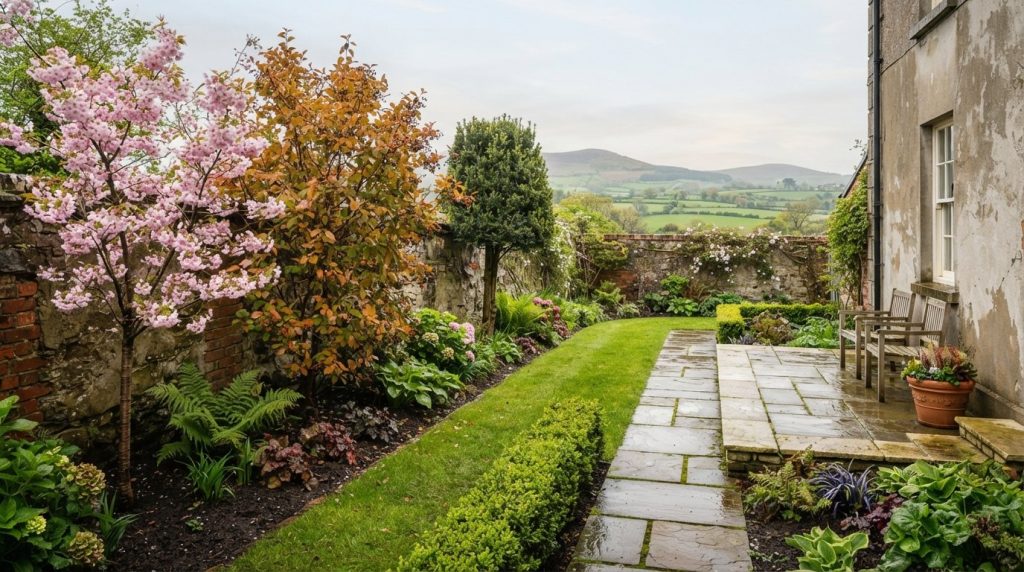
A compact garden should never force you to settle for bare fence panels simply to protect your patio paving and underground drains. Finding the best ornamental trees for small Irish gardens comes down to balancing root behaviour and mature scale against our wet winters, heavy clay soils, and persistent winds.
It is natural to worry about vigorous root systems cracking boundary walls, dense canopies casting deep shade, or waterlogged ground rotting delicate rootstocks. Equally frustrating is investing in a tree only for it to stand bare and uninspiring throughout six months of damp winter weather.
The right selection removes that guesswork entirely. This guide highlights dependable ornamental trees that naturally remain under six metres at maturity, delivering multi-season interest through spring blossom, autumn colour, and distinct winter structure without invading neighbouring boundaries. We examine resilient varieties suited to Irish growing conditions, practical planting techniques for damp ground, and essential spacing advice for confined spaces.
Key Takeaways
- Mature height and root behaviour dictate success; selecting varieties capped under six metres prevents damage to boundary walls, drainage pipes, and patio paving.
- Discover the best ornamental trees for small Irish gardens that offer multi-season interest through spring flowers, rich autumn foliage, and distinctive winter bark.
- Compact evergreen standards, including trained Photinia Red Robin and Portuguese Laurel, provide continuous privacy screening without spreading aggressively into neighbouring plots.
- Irish conditions require deliberate ground preparation, planting dormant bare-root trees into wide, uncompacted soil to prevent root rot during wet winters.
- Sourcing locally grown, field-hardened specimens ensures root systems are naturally acclimatised to damp, heavy clay subsoils and maritime wind exposure.
Essential Criteria for Selecting Small Garden Trees in Ireland
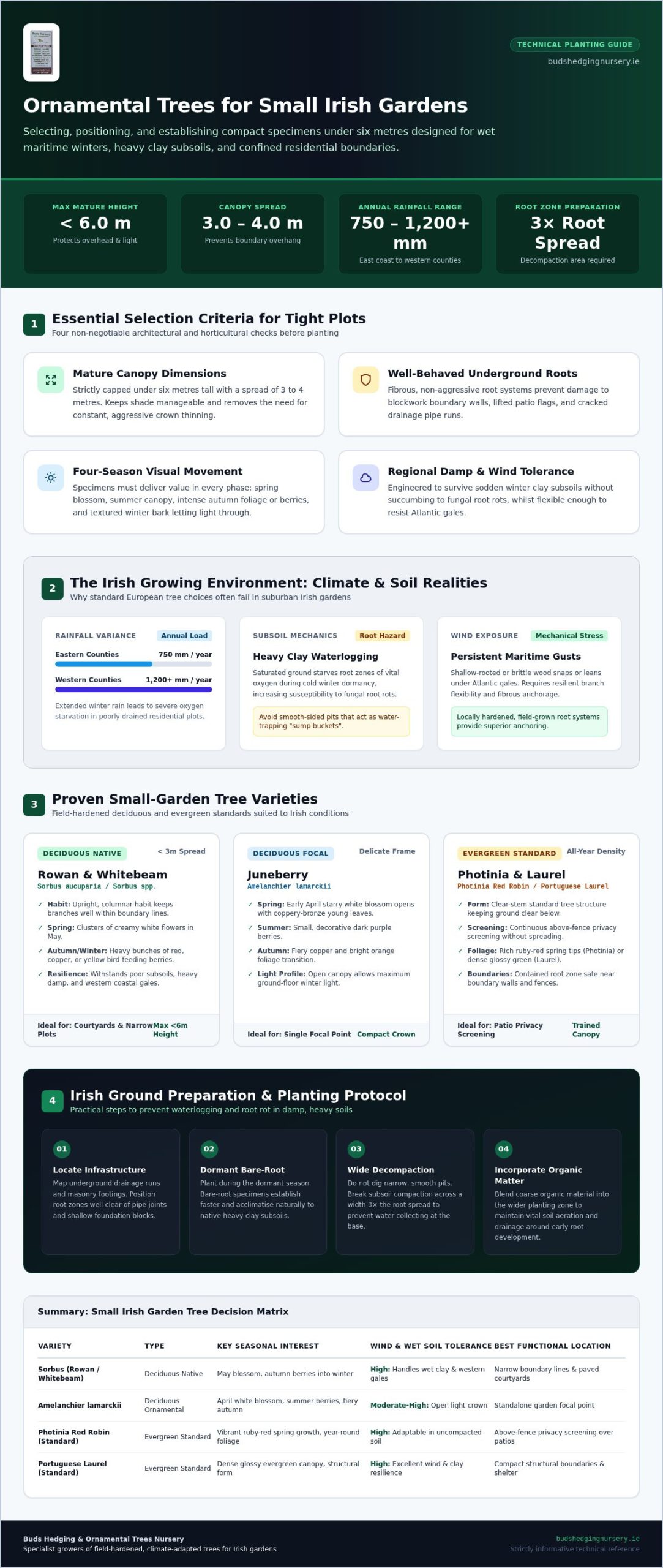
Choosing trees for tight residential plots requires a different mindset than landscaping an open acre. The best ornamental trees for small Irish gardens must earn their keep through all four seasons without compromising nearby structures. That means selecting specimens with a predictable mature height under six metres, a compact canopy spread of three to four metres, and non-aggressive rooting habits.
Every planting decision in an enclosed plot involves four foundational checks:
- Mature canopy dimensions: Keeps shade manageable and avoids constant, heavy crown thinning.
- Underground root spread: Protects masonry boundaries, patio flags, and drainage pipework.
- Multi-season display: Delivers spring blossom, bright summer foliage, fiery autumn leaves, or textured winter bark.
- Regional damp tolerance: Survives wet winter subsoils without succumbing to fungal root rots.
Understanding Root Behaviour and Boundary Proximity
Surface-rooting trees can crack concrete footings, lift patio flags, and destabilise blockwork boundary walls over time. In a small garden, roots also compete directly with surrounding herbaceous borders for summer moisture. Selecting species with well-behaved, fibrous root systems prevents structural damage and avoids aggressive water depletion near boundary lines. Before planting, always locate underground drainage runs and keep vigorous ornamental varieties well clear of pipe joints.
Managing Wind Exposure and Damp Irish Soils
Ireland’s maritime climate brings distinct physical challenges. Annual rainfall ranges from 750 mm in the drier east to well over 1,200 mm along western counties, leaving suburban plots on heavy clay prone to prolonged waterlogging. Saturated ground starves root zones of essential oxygen. Trees suited to these conditions must endure cold, sodden earth through winter without stalling when spring growth begins.
Open sites face another obstacle: persistent Atlantic gusts. Shallow-rooted or brittle species snap or lean under high winds. Species such as rowan handle these conditions naturally; reviewing a detailed Sorbus aucuparia species profile shows how its flexible branch structure and anchored root network manage exposed, damp ground. When preparing heavy clay, avoid digging deep, smooth-sided pits that trap standing water. Instead, break compaction across an area three times the root spread and incorporate coarse organic matter to maintain aeration around the establishment zone.
Careful attention to these site factors ensures your tree stays healthy, remains structurally sound, and fits comfortably within your garden boundaries for decades.
The Best Deciduous Ornamental Trees for Multi-Season Colour
Deciduous trees provide continuous seasonal movement in compact plots. Rather than standing static, they track the Irish calendar through spring budburst, summer canopy cover, brilliant autumn foliage, and bare winter branches that let low seasonal sunlight pass directly into ground-floor living areas. When curating the best ornamental trees for small Irish gardens, prioritise varieties that offer multiple distinct phases of interest on a naturally restrained frame. As highlighted in the Tree Council of Ireland guide to small garden trees, selecting species with naturally restricted crowns prevents heavy boundary overhang and preserves light balance across tight boundaries.
Rowan and Whitebeam (Sorbus) for Compact Spaces
Rowan selections remain exceptionally practical choices for narrow gardens and paved courtyards. Their upright, columnar habit keeps branch spread tidy, typically staying under three metres wide and six metres tall, which avoids unwanted interference with boundary fencing. Creamy white flower clusters in May give way to dense bunches of red, copper, or yellow autumn berries that feed local birds well into winter. Sorbus handles poor subsoils, damp conditions, and exposed western sites without snapping in coastal gales, making it one of the sturdiest native options for Irish conditions.
Juneberry (Amelanchier lamarckii) for Delicate Interest
Amelanchier lamarckii offers exceptional ornamental value where space is restricted to a single focal point. Starry white blossoms emerge early in April, opening simultaneously with coppery-bronze young leaves. By midsummer, the tree carries small, dark purple berries before the foliage transitions to intense crimson and amber in October. It develops a fibrous, non-aggressive root system that sits comfortably alongside boundary footings. The light, open canopy also creates dappled shade, leaving plenty of room below for underplanting with spring bulbs or shade-tolerant perennials.
Ornamental Crab Apples (Malus) for Pollinators and Fruit
Crab apples provide dependable support for early pollinators while maintaining a tidy, manageable scale under five metres. Dense spring blossom blankets the crown in pale pink and white, followed by colourful fruit clusters that hang onto bare winter branches long after the leaves drop. They tolerate heavy clay ground well and accept gentle annual pruning to maintain a clear stem. Sourcing field-grown bare root trees and fruit trees ensures these specimens develop hardy root structures capable of anchoring reliably in damp garden ground.
Evergreen and Foliage Trees for Compact Structural Screening
Deciduous canopies allow essential winter daylight to filter through, but small overlooked gardens often require year-round privacy. Traditional evergreen shrubs can quickly encroach on narrow paths if left unchecked. Selecting clear-stem evergreen standards solves this challenge. By training foliage into a raised head atop a clean, straight stem, you gain crucial eye-level screening above boundary fences without sacrificing valuable square footage at ground level. This makes trained evergreens some of the best ornamental trees for small Irish gardens where boundaries sit close to the house.
Photinia Red Robin Standards for Vibrant Year-Round Privacy
Grown as a clear-stem tree, Photinia Red Robin lifts dense, glossy foliage well above standard two-metre boundary walls. The crown produces fiery scarlet young leaves throughout spring and summer, creating an eye-catching display against dull timber fencing. Its root system remains compact and fibrous, which prevents issues near paving. An annual trim in late spring keeps the crown dense, compact, and balanced, blocking lines of sight from overlooking second-storey windows without casting broad shade over your patio.
Compact Laurel Selections for Shelter and Enclosure
For gardens requiring reliable wind protection alongside privacy, Portuguese laurel standards offer a tidy, formal silhouette. Unlike vigorous common cherry laurel, Portuguese laurel features smaller, deep green pointed leaves held on contrasting rhubarb-pink stems. It handles coastal breezes and inland frost with equal ease. In early summer, the canopy produces fragrant white flower racemes, followed by dark purple autumn berries that provide a seasonal food source for local birds.
Copper Beech and Hornbeam for Structured Vertical Form
While strictly deciduous, both Copper Beech and Hornbeam can be trained into slender vertical forms that function effectively as structural screening. When clipped, they hold their dry, copper-coloured leaves right through the damp winter months. You can compare their performance in our guide to beech hedging plants Ireland. Where boundary soil is heavy, compacted clay prone to winter waterlogging, hornbeam is the superior choice. It tolerates saturated ground and cold subsoils far better than beech, delivering architectural stability and wind deflection year after year.
How to Plant and Establish Small Trees in Irish Conditions
Proper planting practice determines whether your specimen flourishes or struggles against the elements. Even the best ornamental trees for small Irish gardens fail if planted into compacted, waterlogged subsoils without adequate root anchorage. Taking a methodical approach during the dormant months establishes a root system capable of withstanding sodden ground and seasonal gales.
Choosing Between Bare Root and Container-Grown Trees
Timing your planting depends heavily on root presentation. Consult our detailed guide to the bare root tree season Ireland to plan around the winter dormancy window from mid-November to late March. Field-lifted bare root trees establish quickly, develop balanced root systems, and offer exceptional value. Container-grown specimens allow planting outside this window, provided you water them consistently throughout dry spring or summer spells.
Ground Preparation and Anchoring for Exposed Plots
Site preparation in heavy clay requires a wide, shallow approach. Dig a planting saucer three times the width of the root spread, keeping the depth strictly equal to the root collar. Never dig a deep, smooth-sided pit; compacted clay walls turn the hole into a stagnant sump during persistent winter rain. Backfill using the excavated garden soil so the roots adjust immediately to the native ground structure.
Anchoring is essential across wind-exposed Irish gardens. Use low staking rather than securing high up the trunk:
- Drive a short stake into the ground at a 45-degree angle, pointing into the prevailing wind.
- Fix a flexible tree tie around the trunk roughly 45 to 60 centimetres above ground level.
- Allow the upper stem to move freely in the breeze, which naturally thickens trunk girth and stimulates anchoring root growth.
First-Year Care, Mulching, and Pruning Guidelines
Spread a seven-centimetre layer of organic bark mulch over the planting footprint to suppress grass and insulate delicate feeder roots against sudden cold snaps. Leave a ten-centimetre buffer zone around the base of the trunk so damp mulch cannot trigger fungal collar rot. In early spring, provide a deep weekly soaking during dry weeks, soaking the perimeter rather than just the central stem. Carry out minor formative pruning in late winter by removing rubbing, congested, or crossing branches to balance the young canopy. To select hardy, field-hardened specimens grown specifically for these conditions, order bare root trees from our specialist nursery.
Sourcing Resilient Ornamental Trees from an Irish Specialist Nursery
Field conditions dictate long-term garden performance. Choosing the best ornamental trees for small Irish gardens involves more than picking a suitable variety; where and how that tree was cultivated matters just as much. Stock grown out in open fields experiences real maritime weather from the start, developing dense, fibrous roots and sturdy stems capable of managing cold, waterlogged winter ground.
The Advantage of Regionally Acclimatised Nursery Stock
Imported trees raised in sheltered, dry continental poly-tunnels frequently suffer severe transplant shock when introduced to Irish garden soils. Their tender root networks struggle in water-retentive clay, leading to root rot and slow dieback. Locally grown trees, however, are already hardened to heavy rainfall, sudden cold snaps, and persistent winds. Reviewing selection standards from an experienced specialist plant nursery Ireland helps ensure your stock carries official EU plant passports and genuine regional hardiness.
Selecting Superior Specimens for Compact Boundaries
A tight garden footprint leaves little margin for structural defects. When examining young ornamental trees, check for a clear, undamaged central leader and evenly spaced lateral branches. Wide branch angles resist wind stress far better than narrow, V-shaped forks that split under heavy gusts.
Inspect the roots thoroughly:
- Fibrous root distribution: Look for a balanced network of fine feeder roots rather than one or two thick, circling taproots.
- Balanced root-to-shoot ratio: The root system must be large enough to sustain the top growth without relying on synthetic stimulants.
- Clean stem bark: Ensure the trunk shows no frost cracks, mower gouges, or sunken fungal cankers near the base.
Professional growers understand how rootstocks behave in heavy subsoils and can advise on true mature spreads. You can source field-hardened, reliable stock directly from Buds Nursery Cavan, drawing on over 30 years of field-growing experience across 60 acres of dedicated tree and hedging production with nationwide delivery.
Choose the Right Ornamental Tree for Your Space
Selecting the best ornamental trees for small Irish gardens comes down to respecting site limits. Keeping mature heights below six metres protects domestic light and ground space. Pairing non-invasive root habits with tolerance for damp, heavy clay keeps boundary walls and drainage runs secure. Whether you opt for the multi-season display of a rowan or the year-round screening of a clear-stem evergreen standard, matching the tree to your specific soil and wind exposure ensures lasting success.
Starting with resilient, field-hardened stock makes all the difference during establishment. Backed by over 30 years of hands-on growing experience across 60 acres dedicated to robust, field-grown trees and hedging, our nursery stock is built for Irish conditions. We provide direct nationwide delivery alongside practical grower advice available Tuesday to Saturday. Explore hardy ornamental trees and hedging at Buds Nursery to find the right specimen and plant your plot with complete confidence.
Frequently Asked Questions
What is the best ornamental tree for a very small garden in Ireland?
Juneberry (Amelanchier lamarckii) and rowan (Sorbus aucuparia) are among the best ornamental trees for small Irish gardens due to their compact footprints and well-behaved root systems. They rarely exceed five to six metres at mature height and deliver multi-season interest through spring blossom, autumn colour, and bird-friendly berries. Both species thrive in damp ground and cast light shade that allows underplanting to flourish.
Can I plant an ornamental tree close to a garden wall or boundary fence?
Yes, provided you choose a species with fibrous, non-aggressive roots and set it at least 1.5 to 2 metres out from the wall. Clear-stem standards like Portuguese Laurel and Photinia Red Robin suit boundary planting exceptionally well. Their raised canopies provide elevated screening above two-metre timber fences without disturbing boundary footings or spreading low branches across walkways.
Which small trees tolerate wet, poorly drained soil in Ireland?
Hornbeam, rowan, and crab apples tolerate heavy, water-retentive clay soils far better than delicate ornamental cherries. These species withstand cold, waterlogged winter ground without falling victim to root rot. Loosening a wide saucer around the planting site and planting slightly proud of the surrounding ground helps water shed away from the root collar during sustained winter rain.
How far away from my house should I plant a small ornamental tree?
A compact tree with a mature height under six metres should stand at least three to four metres away from external walls. This spacing prevents branches from encroaching on eaves and gutters, avoids blocking ground-floor windows, and keeps underground drainage runs protected. It also gives the crown enough space to form an even, natural shape without one-sided pruning.
Is bare root or pot-grown better when planting trees in small gardens?
Bare root trees are generally superior for winter planting between mid-November and late March. Field-lifted trees establish more natural root systems in open ground and adjust quickly to native soil conditions. Container-grown specimens are useful if you need to plant between April and October, but they demand diligent, deep watering through dry periods during their first growing season.
What small ornamental trees provide colour throughout the entire winter?
Clear-stem evergreen standards such as Photinia Red Robin and Portuguese Laurel keep rich, glossy foliage through the coldest months. Clipped hornbeam and Copper Beech hold onto dry russet leaves until early spring, providing warm colour and effective wind deflection. In addition, ornamental crab apples and rowans often carry persistent red or copper fruit clusters well into mid-winter.
How do I stop an ornamental tree from outgrowing a small garden?
The most dependable approach is selecting a tree naturally capped under five or six metres rather than fighting vigorous growth with severe pruning. Selecting from the best ornamental trees for small Irish gardens ensures predictable mature proportions. Once established, carry out light maintenance in late winter to remove crossing branches and maintain an open, balanced crown.