

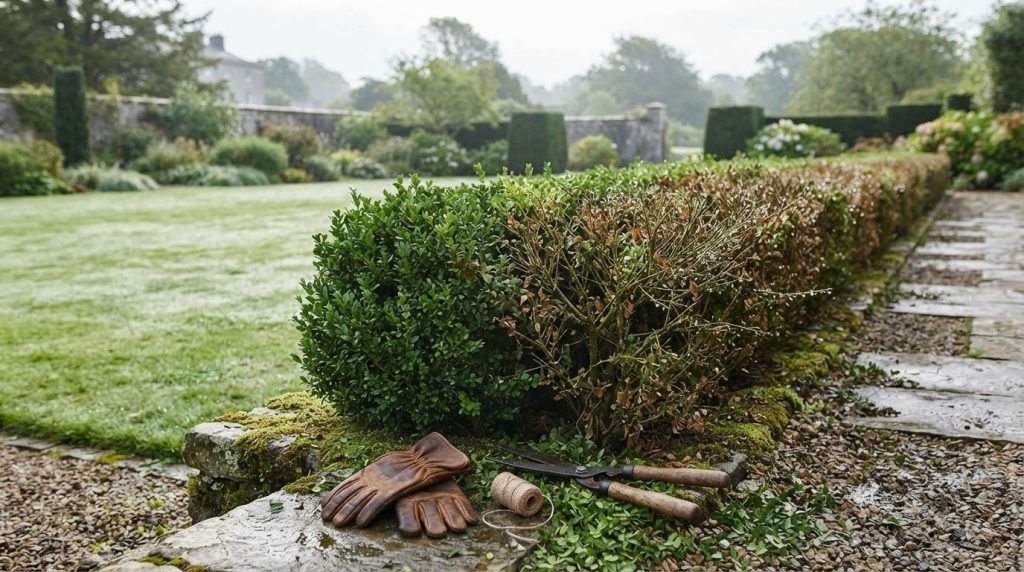
Is your mature box hedge actually a lost cause, or is it simply struggling with the specific dampness of our local climate? Many gardeners assume that a brown, patchily defoliated hedge means it’s time for the skip. When it comes to treating box blight Ireland conditions present a unique challenge, and it’s incredibly frustrating to watch a significant investment in your garden’s structure wither. You’re likely tired of conflicting advice on fungicides and the high labour costs of constant pruning. We understand that frustration because we’ve seen it across countless gardens over the last 30 years.
The good news is that blight doesn’t have to be a death sentence if you focus on managing micro-humidity rather than just reaching for chemicals. This 2026 recovery guide offers a practical plan to identify, treat, and prevent the spread of fungal spores using proven nursery techniques. You’ll learn which products are currently legal for home use under DAFM regulations and how to implement a sustainable maintenance programme. We’ll also look at when it makes sense to switch to resilient, evergreen alternatives like Portuguese Laurel or Holly Box to ensure your garden stays green and structured for years to come.
Key Takeaways
- Learn to accurately identify Cylindrocladium buxicola by distinguishing it from common Irish garden issues like winter wind scorch and box sucker.
- Master a nursery-approved recovery programme for treating box blight Ireland conditions demand, focusing on the ‘Hard Prune’ method and strategic weather windows.
- Navigate 2026 Irish pesticide regulations and learn the legal requirements for disposing of diseased clippings to avoid heavy fines.
- Reduce the risk of re-infection by adopting the ‘Dry Feet’ irrigation rule and modifying your hedge profile to improve internal air circulation.
- Use the ‘50% Rule’ to determine if your hedge is salvageable or if it is time to transition to resilient alternatives like Portuguese Laurel or Holly Box.
Identifying Box Blight in the Damp Irish Climate
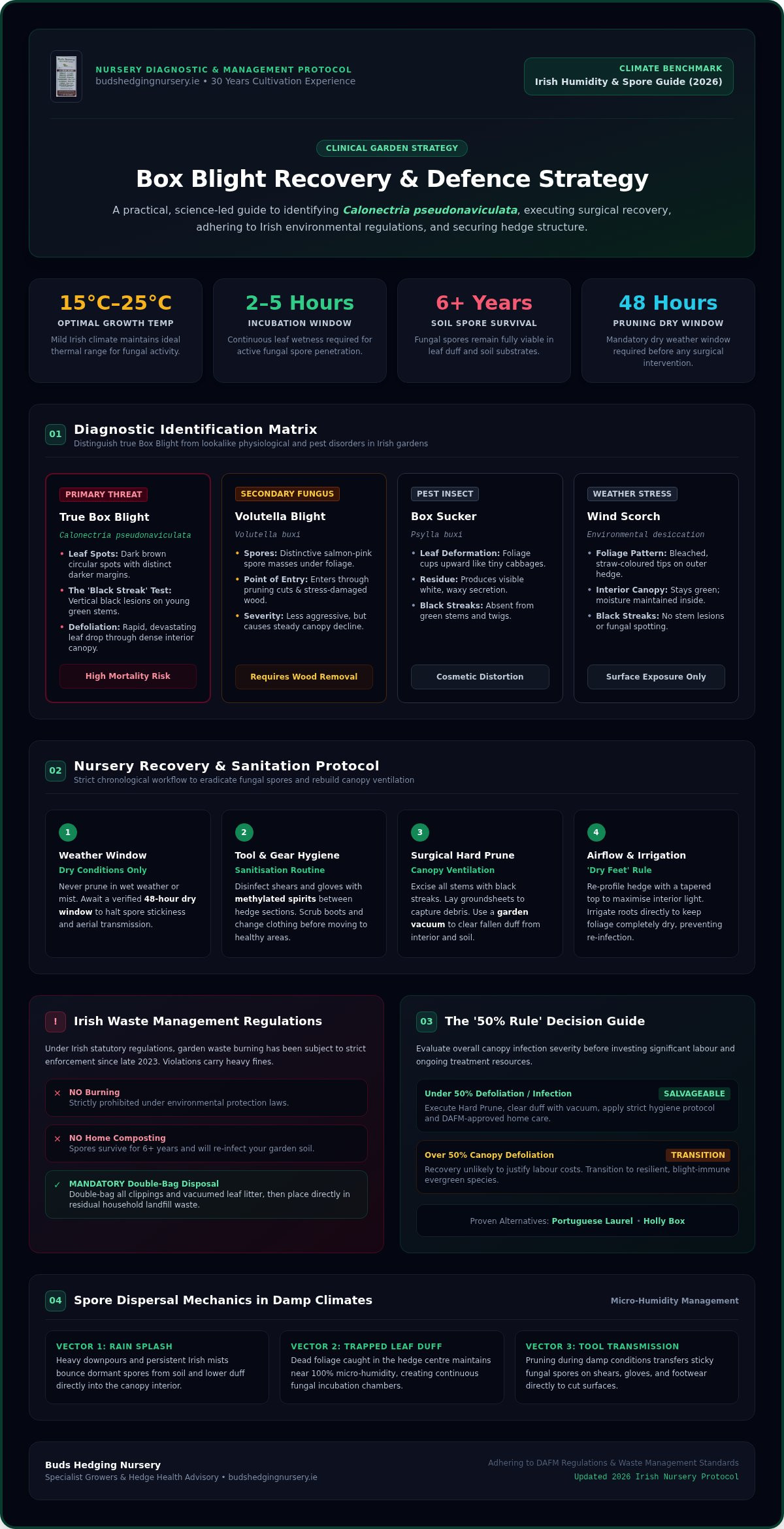
Ireland’s mild, wet winters provide the perfect environment for the boxwood blight fungal pathogen to flourish. Known scientifically as Calonectria pseudonaviculata, this fungus thrives when temperatures stay between 15°C and 25°C with high humidity. Unlike drier European climates, our consistent rainfall means the spores are rarely dormant. When treating box blight Ireland gardeners often struggle because the early stages are hidden within the dense interior of the hedge where air circulation is poorest.
Distinguishing blight from other common issues is the first step. You’ll often see box sucker, which causes leaves to cup like small cabbages and leaves behind a white, waxy residue. Winter wind scorch is also frequent in exposed Irish gardens, appearing as bleached, straw-coloured tips on the outer foliage. True blight is different. It starts as dark brown circular spots on the leaves, often with a darker margin, leading to rapid and devastating leaf drop.
To confirm the infection, you should perform the ‘Black Streak’ test. Examine the young green stems closely. If you see distinct, vertical black lesions or streaks, you’re dealing with a fungal infection rather than simple environmental stress. Because of the high humidity in Irish gardens, dead leaves often stay trapped amongst healthy ones, creating a false sense of security until a light touch causes the entire interior to collapse. Professional guidance for treating box blight Ireland focuses on spotting these streaks before the canopy is stripped bare.
Box Blight vs. Volutella Buxina
You might also notice Volutella buxi, another fungus that produces salmon-pink spore masses on the underside of leaves. While blight is the primary killer, Volutella often acts as a secondary infection in stressed Irish hedges, entering through pruning wounds or areas already weakened by blight. Volutella is less aggressive, but it still requires the immediate removal of infected wood to prevent a total decline of the plant’s health.
The Role of Irish Weather in Spore Dispersal
Rain splash is the primary driver of spore dispersal in our climate. Heavy downpours or even ‘soft’ Irish days with persistent mist move spores from the ground or infected leaves throughout the canopy. These spores can survive in the soil for at least six years, making management a long-term commitment. In 2026 Irish conditions, the incubation window for blight is as little as two to five hours of continuous leaf wetness, which is all the fungus needs to penetrate the plant’s surface and establish a new infection site.
Step-by-Step Treatment Programme for Infected Hedges
Successful recovery begins with timing. You shouldn’t attempt any pruning or treatment during wet weather, as moisture allows spores to stick to tools and move freely through the air. Wait for a clear ‘weather window’ with at least 48 hours of dry conditions. This reduces the risk of mechanical transmission while you work. When treating box blight Ireland gardeners must be disciplined about hygiene. Every pair of shears and every set of gloves should be disinfected with a horticultural sanitiser or a methylated spirit solution between each section of the hedge. If you’ve been working in an infected area, change your clothes and scrub your boots before moving to a healthy part of the garden.
Disposal is where many make a critical error. Under the Waste Management Regulations, it’s illegal to burn garden waste in Ireland, a ban that has been strictly enforced since late 2023. You must never add infected boxwood to your home compost heap, as the spores can remain viable for at least six years. The only safe method is to double-bag all clippings and leaf litter, then dispose of them in your residual household landfill waste. Following these RHS box blight management guidelines ensures you don’t inadvertently seed the fungus back into your soil.
Phase 1: Surgical Pruning and Clearing
The goal is to open up the canopy to let light and air reach the centre. Use the ‘Hard Prune’ method to remove all wood showing black streaks or significant leaf drop. You must also remove the ‘duff’, the layer of fallen, rotting leaves trapped in the middle of the plant. Lay a groundsheet under the hedge before you start to catch every fragment. For a thorough job, use a garden vacuum to suck up the remaining leaf litter from the soil surface. Removing this source of re-infection is just as important as the pruning itself.
Phase 2: Fungicide and Bio-stimulant Application
In 2026, Irish regulations for amateur gardeners focus on health-mix tonics rather than synthetic chemical fungicides, which are largely restricted to professional users. Apply a foliar feed designed to strengthen the leaf cuticle and burn off surface spores. When spraying, you need to ‘drench’ the inner stems and the underside of the leaves, not just the outer surface. Boosting the plant’s natural immunity is vital for long-term survival. We recommend using seaweed-based feeds sourced from a specialist plant nursery Ireland to provide the trace elements needed for rapid recovery. If you’re unsure about the vitality of your hedge, it’s best to consult an experienced grower who can assess the wood’s health.
Chemical vs. Organic Control Options in 2026
Choosing between chemical and organic treatments in 2026 requires understanding current Irish legislation. Under DAFM regulations, most synthetic systemic fungicides that were common a decade ago are now restricted to professional users with a valid PU number. For the average home gardener, treating box blight Ireland has shifted from curative chemical strikes to preventative nutritional therapy. Systemic products, which travel through the plant’s vascular system, are largely unavailable to the public. Instead, we rely on contact-based tonics and leaf-strengthening feeds that create a hostile environment for fungal spores.
The best defence isn’t a bottle of poison; it’s a robust root system. A healthy plant can survive a minor infection, whereas a stressed one will succumb quickly. This aligns with university extension research on boxwood blight, which highlights how water-splash transmission is the main culprit in dense shrubbery. If you’re constantly spraying, you need to weigh the cost against the results. For many, the labour and product expense of maintaining an infected Buxus hedge over several years exceeds the cost of replacing it with a resilient alternative.
Modern Fungicides for the Irish Market
Consumer-grade sprays available in Irish garden centres today are mostly elicitor tonics. These don’t kill the fungus directly but trigger the plant’s own immune response. You need to align your application schedule with our weather. Spraying right before a heavy Atlantic front is a waste of money. Aim for dry windows where the product can dry on the leaf for at least two hours. These modern tonics are generally safer for local Irish pollinators and pets, as they lack the harsh residual toxicity of older triazole-based chemicals.
Organic and Cultural Alternatives
Cultural controls are often more effective than liquids. Using a thick layer of bark mulch or gravel under your hedge prevents spores from splashing up from the soil during heavy rain. Many Irish growers are also seeing success with Effective Micro-organisms (EM). These “good” fungi and bacteria compete with the blight for space on the leaf surface. Products like TopBUXUS Health-Mix have become the standard because they combine nutrition with a pH-buffering effect. This is a pragmatic method for treating box blight Ireland residents can implement without relying on heavy chemicals.
Preventing Re-infection: Maintaining a Blight-Free Hedge
Once you’ve finished the initial phase of treating box blight Ireland conditions will immediately try to reintroduce the pathogen. Long-term success depends on managing the micro-climate around your plants. The ‘Dry Feet’ rule is essential here. You must avoid using sprinklers or hoses on the foliage. Instead, water only at the base of the plant. You should also consider the physical shape of your hedge. A traditional flat-topped box hedge acts as a moisture trap. By cutting the sides at a slight angle to create a pitched or A-frame profile, you allow rain to run off quickly and ensure sunlight reaches the lower branches.
Biosecurity is your second line of defence. In 2026, we recommend a strict four-week quarantine for any new Buxus plants introduced to your garden. Keep them in a separate area and watch for symptoms before planting them near established hedges. Your annual maintenance calendar should include a light thinning in early summer to improve internal airflow. Follow this with a nutritional boost in late August to harden the wood before the damp winter months arrive. Consistent monitoring is better than any emergency treatment.
Watering and Feeding Protocols
Overhead watering is the most common reason blight persists in Irish gardens. It creates a persistent film of water on the leaves that spores need to infect the plant. Installing a simple drip irrigation system keeps the roots hydrated whilst the foliage stays dry. Feeding is equally important for resilience. Use a balanced fertiliser in early spring to encourage vigorous growth. This helps the plant recover quickly from any minor environmental stress that might otherwise invite a fungal attack.
Airflow and Spacing Adjustments
Humidity is the enemy of the box hedge. If your hedge is crowded by other shrubs, thin them out to create a corridor for wind. This helps the leaves dry faster after a rain shower. When pruning, aim for a ‘health-first’ cut rather than a purely aesthetic one. Removing a small percentage of internal branches can drastically reduce local humidity levels. If you are unsure about your garden’s layout, you can always consult a specialist plant nursery Ireland for advice on hedge positioning and airflow management. To ensure your garden remains a healthy environment for years to come, contact our team for a professional assessment.
Box Blight Alternatives: When to Replace Your Hedge
Despite your best efforts in treating box blight Ireland gardeners often face a difficult decision. Sometimes the fungus has simply taken too much of a hold. We suggest using the ‘50% Rule’ to determine the future of your hedge. If more than half of the foliage has dropped, or if the vertical black streaks on the stems cover more than 50% of the plant’s structure, the energy required for the plant to regenerate is often too great. At this stage, the financial and labour costs of ongoing treatments and surgical pruning become a burden. Replacing the hedge with a resilient species is often the most practical long-term solution for a healthy garden.
Before you replant, you must address the soil. Remember that spores remain viable in the ground for at least six years. If you intend to plant another evergreen in the same trench, you shouldn’t choose anything from the Buxaceae family. We recommend removing the top 10 to 15cm of soil and replacing it with fresh, nutrient-rich topsoil to give your new plants the best start. Diversifying your garden’s hedging isn’t just about aesthetics; it’s a biosecurity measure. A garden with multiple species is far less likely to suffer a total loss if a new host-specific disease arrives in the future.
The Best Blight-Resistant Alternatives
Ilex crenata (Holly Box) remains the closest visual match for formal knot gardens and low parterres. It’s entirely immune to blight and handles tight pruning well. For those needing more height or a more robust structure, Portuguese Laurel is a superior choice. It thrives in the Irish damp and provides a dense, glossy screen that Buxus cannot match. If you want a fast-growing, hardy edge, Green Privet or Griselinia are excellent, resilient alternatives that are well-suited to our local soil types and maritime conditions.
Planning for Privacy and Screening
If your primary goal is security or blocking out neighbours, it’s worth looking into the best hedging for privacy Ireland. Transitioning from a formal box hedge to a robust evergreen like Taxus baccata (Yew) or a mixed native hedge can provide better screening and support local biodiversity. Mixed native hedging is particularly effective as it creates a varied habitat that is less susceptible to single-pathogen outbreaks. When ordering replacement stock, always source from a reputable Irish grower to ensure the plants are acclimatised to our specific climate. For expert guidance on selecting the right species for your site, contact our nursery team today.
Securing a Healthy, Structured Garden
Managing your garden’s structure in our damp climate requires a shift from reactive spraying to proactive cultural care. Success in treating box blight Ireland depends on improving internal airflow, maintaining strict tool hygiene, and respecting the disposal regulations that protect our wider environment. Whether you’re nursing a heritage hedge back to health or applying the ‘50% Rule’ to decide on a replacement, making informed choices now ensures your garden remains a vibrant, green space for years to come.
At Buds Nursery Cavan, we’ve been expert Irish growers since 1994. We offer specialist advice tailored to Irish soil and climate conditions, ensuring you get the right plants for your specific site. If you’ve decided to transition to more resilient species, we provide nationwide delivery on all hedging and trees to help you rebuild with confidence. You don’t have to face garden disease alone when you have 30 years of nursery experience at your disposal.
Explore our range of blight-resistant hedging at Buds Nursery Cavan and find the perfect, hardy solution for your landscape today. With a practical plan and the right stock, a beautiful, blight-free garden is well within your reach.
Frequently Asked Questions
Is box blight permanent in the soil in Ireland?
Blight spores aren’t permanent, but they are exceptionally resilient. Fungal structures known as microsclerotia can remain viable in the soil and leaf litter for at least six years. This is why simply removing the plant isn’t enough to clear the site. If you choose to replant in the same area, you must replace the top layer of soil or switch to a species outside the Buxaceae family to avoid immediate re-infection.
Can I use vinegar or baking soda to treat box blight?
Vinegar and baking soda are not recommended for treating box blight Ireland residents often deal with. While these household items have mild antifungal properties, they are not registered as plant protection products and can easily scorch delicate Buxus foliage. Using unproven home remedies often delays effective treatment, allowing the disease to spread deeper into the hedge. It’s better to use professional-grade foliar tonics and seaweed feeds that strengthen the plant’s natural immune system.
How often should I disinfect my shears when pruning boxwood?
You should disinfect your pruning tools between every single plant or distinct hedge section. Fungal spores are invisible and travel easily on metal blades, gloves, and boots. We recommend using a horticultural disinfectant or methylated spirits to clean your shears thoroughly as you work. This simple hygiene practice is one of the most effective ways to stop the mechanical transmission of blight across your garden during the annual maintenance cycle.
What is the best time of year to spray for box blight in Ireland?
The best time to apply foliar treatments is during the active growing season, typically from March to November. However, the specific timing depends on the weather. You must wait for a dry window where no rain is forecast for at least four to six hours. This allows the tonic to dry on the leaf surface. When treating box blight Ireland gardeners find that early morning applications on dry, overcast days are often most effective to avoid leaf scorch.
Are there any boxwood varieties that are truly blight-proof?
There are no Buxus sempervirens varieties that are 100% blight-proof. Some cultivars show improved resistance, but they can still succumb in high-pressure environments with poor airflow. If you want a truly immune option, you should look at visual duplicates like Holly Box. As specialist growers, we find that switching to resistant alternatives is often more successful than searching for a mythical blight-proof boxwood variety in our damp, maritime climate.
Will box blight spread to my other garden plants like Laurel or Beech?
Box blight is host-specific and will not spread to unrelated species like Portuguese Laurel, Cherry Laurel, or Green Beech. The fungus only affects plants in the Buxaceae family, which includes Buxus, Sarcococca, and Pachysandra. This makes Laurel and Beech excellent choices for replacement hedges. You can plant them in previously infected areas without fear of the blight jumping species, provided the soil has been cleared of old boxwood debris and leaf litter.
How long does it take for a box hedge to recover after treatment?
A box hedge can take one to two full growing seasons to show significant recovery after a successful treatment programme. The speed of regrowth depends on the health of the root system and the severity of the initial defoliation. Consistent feeding with seaweed-based nutrients helps stimulate new shoots. If the plant doesn’t show signs of budding on bare stems within a year, the wood may be dead, and the hedge might need replacing.
What should I do if my neighbour’s box hedge has blight?
If a neighbouring hedge is infected, your priority is to minimise humidity and physical contact. Ensure your hedge has excellent airflow by thinning out internal branches and maintaining a pitched profile. Avoid sharing garden tools or machinery with your neighbour without thorough disinfection. Applying regular foliar tonics can help boost your plants’ resilience, but you should monitor the boundary closely for the first signs of black streaks or leaf spots on your own plants.