

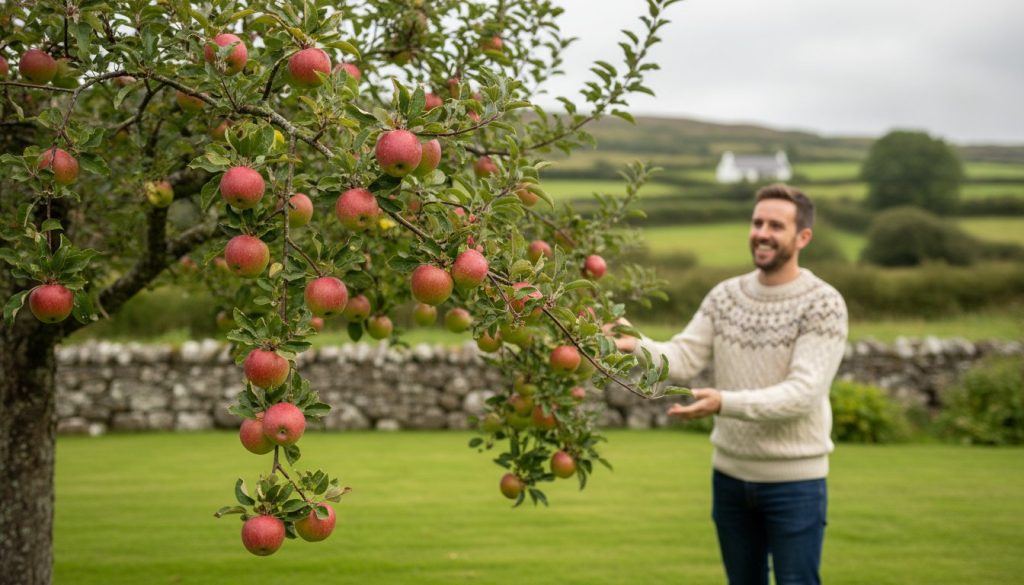
That crisp, supermarket-bought Gala might be your favourite snack, but planting one in a damp Irish garden is often a recipe for disappointment. Many growers find that famous commercial varieties struggle with our cool summers and high rainfall; this often leads to canker and scab rather than a heavy crop. If you have been searching for apple trees for sale Ireland, you have likely noticed that finding clear, practical advice on which trees actually survive a wet winter is surprisingly difficult.
We agree that the technical side of fruit growing, from pollination groups to rootstock codes, can feel unnecessarily complex for a home gardener. This 2026 guide simplifies the process by highlighting the most reliable varieties for the Irish climate and explaining how to plant them for long-term success. We will cover the best disease-resistant options, the cost-saving benefits of bare root stock, and how to meet the requirements for biodiversity programmes like ACRES to help your orchard thrive.
Key Takeaways
- Learn why selecting disease-resistant varieties like Discovery and Bramley is crucial for managing the challenges of the damp Irish climate.
- Identify the best apple trees for sale Ireland by choosing cultivars that are already acclimatised to local growing conditions.
- Discover the economic and horticultural benefits of choosing bare root trees to ensure a more robust root system and better establishment.
- Master the fundamentals of site selection and soil preparation to protect your home orchard from wind and poor drainage.
- Understand the importance of sourcing your fruit trees from a specialist nursery with decades of experience in the Irish trade.
Planting Apple Trees in the Irish Climate: What to Know
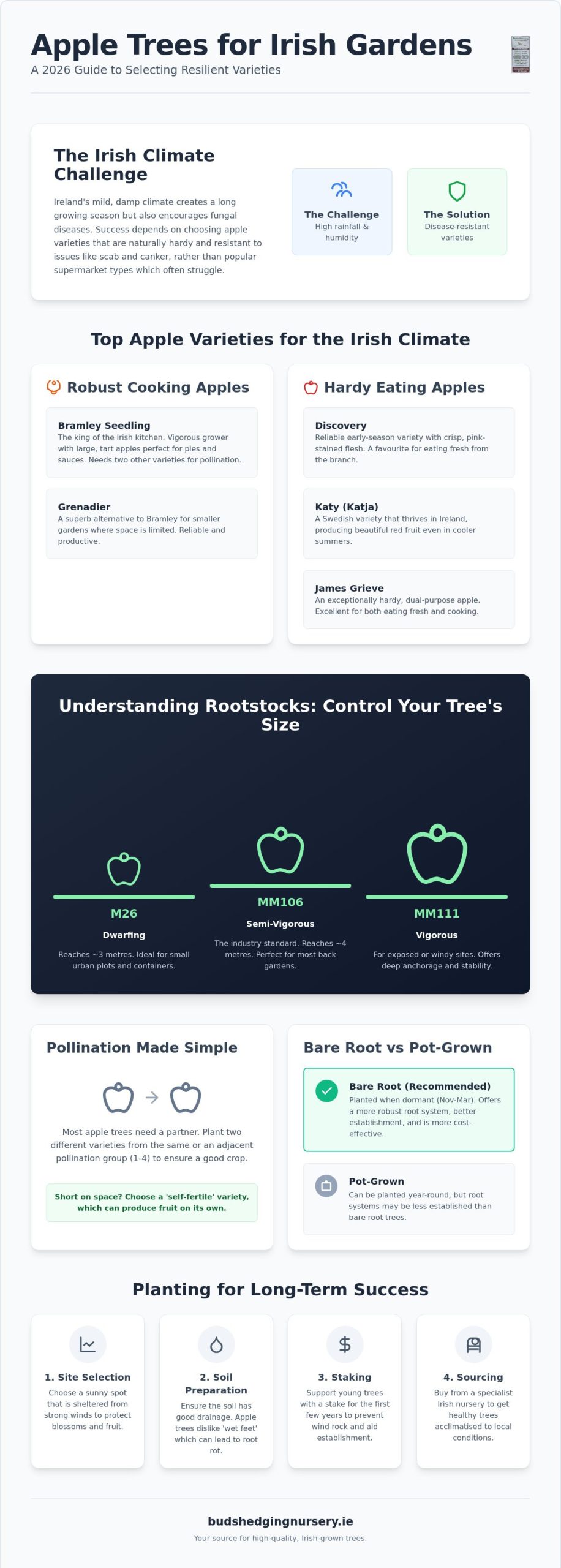
Ireland’s maritime climate is a double-edged sword for fruit growers. Our mild winters and high rainfall provide a long, steady growing season that allows fruit to develop deep, complex flavours. However, this persistent moisture also invites fungal issues, specifically apple scab. When you are looking at apple trees for sale Ireland, your first priority must be health and hardiness. Choosing a variety that can withstand a damp July is more important than picking one based on a supermarket label.
Successful orchards depend on understanding the difference between dessert and culinary apples. Dessert apples are bred for sweetness and a crisp texture, intended for eating fresh. Culinary apples, like the famous Bramley, have a higher acid content and a robust structure that holds up during baking. While there is an extensive list of apple cultivars available to modern gardeners, only a specific selection truly thrives in our local soil conditions. You should also consider the timing of your purchase. The Irish planting season peaks during the dormant months, typically from November to March. This is when bare root trees are available, allowing them to establish a strong root system before the spring growth spurt begins.
The Role of Rootstocks in Garden Planning
An apple tree’s final height isn’t determined by its variety alone, but by the rootstock it’s grafted onto. For most Irish gardens, the MM106 rootstock is the industry standard. It produces a semi-vigorous tree reaching about 4 metres, which is manageable for most backyards whilst still providing a heavy yield. If you have a small urban plot, an M26 dwarfing rootstock keeps the tree to a compact 3 metres. For those on particularly exposed or windy sites, a more vigorous rootstock like MM111 offers the deep anchorage needed to stay upright during Atlantic gales.
Pollination Groups Made Simple
Most apple trees aren’t solitary; they need a partner to produce a crop. Varieties are categorised into pollination groups, numbered 1 to 4, based on when they blossom. To ensure fruit, you need two different varieties that flower at the same time. Usually, this means picking two trees from the same group or one from an adjacent group. If you only have room for one of the apple trees for sale Ireland, look for self-fertile varieties. These are capable of producing fruit on their own, making them the perfect choice for restricted spaces or standalone garden features.
Top Apple Tree Varieties for Sale in Ireland (2026 Roundup)
Choosing the right variety is the most critical decision you’ll make for your orchard. Many gardeners are tempted by supermarket favourites like Gala or Braeburn, but these often struggle in our cooler, wetter environment. When browsing apple trees for sale Ireland, focus on cultivars with a proven track record in local conditions. We recommend starting with hardy varieties that resist scab and canker, ensuring your 2026 planting season leads to a successful harvest in the years to come.
The Bramley Seedling remains the undisputed king of the Irish kitchen. It is a vigorous grower that produces large, tart apples perfect for tarts and sauces. For those wanting a fresh snack straight from the branch, Discovery is a reliable early-season dessert apple. Its pink-stained flesh and crisp texture make it a favourite. Katy (also known as Katja) is a Swedish variety that feels right at home in the Irish climate, producing beautiful red fruit even in summers with limited sunshine. If you only have space for one tree, James Grieve is an excellent dual-purpose option; it is exceptionally hardy and works well for both eating and cooking. Supporting local biodiversity is also easier when you choose heritage varieties like Ballyfatten or Irish Peach, which are naturally adapted to our soil.
Best Eating Apples for Home Orchards
Discovery and Katy are the stars of the early harvest, typically ripening in August and September. These varieties don’t require the intense heat that late-season apples need to sweeten. To keep your harvest crisp, pick them just as the skin colour deepens and store them in a cool, dark, and well-ventilated space. Avoid storing bruised fruit, as one bad apple really does spoil the bunch. For more specific guidance on maintaining your trees, Irish Seed Savers’ apple tree advice offers excellent insights into regional care.
Robust Cooking Apples for the Kitchen
Bramley trees are long-lived and incredibly productive, often becoming the centrepiece of a garden. However, they are triploid, meaning they need two other varieties nearby for pollination. For smaller gardens where space is at a premium, Grenadier is a superb alternative. It is a more compact cooker that produces a fine, frothy purée when baked. You’ll know your culinary apples are ready when they come away from the spur with a gentle lift and twist. If you’re ready to start your orchard, you can find a wide range of these hardy fruit trees at our 60-acre nursery.
Bare Root vs Pot-Grown Apple Trees: Making the Choice
When searching for apple trees for sale Ireland, you will generally find two distinct options: bare root and pot-grown. For the patient gardener or those planting a larger orchard, bare root is often the superior choice. These trees are lifted directly from our 60-acre nursery fields during the winter months when they are dormant. Because they aren’t weighed down by plastic pots or heavy compost, they are more cost-effective to transport and handle. More importantly, bare root trees tend to establish a more robust root system. Their roots make direct contact with your garden soil immediately, rather than transitioning from a peat-based potting mix. This creates a resilient tree that is better equipped to handle the local environment.
At Buds Nursery, we have spent over 30 years refining our field-growing process. Our bare root stock is hardy and fully acclimatised to Irish conditions before it ever reaches your gate. Whilst pot-grown trees offer convenience, the health and value of a field-grown tree are difficult to beat. A bare root tree often catches up to its pot-grown counterpart in size within just two seasons due to its superior root-to-soil contact.
The Bare Root Planting Window
The window for planting bare root trees is strictly tied to the dormant season. In Ireland, this typically runs from November through to March. During this time, the tree is “asleep,” which means it doesn’t suffer the same level of transplant shock as a tree in full leaf. You can find more detail in our Bare root tree season Ireland guide. When your trees arrive, it’s vital to keep the roots moist. If you can’t plant them immediately, “heel” them into a temporary trench or cover the roots with damp sacking. Never leave the roots exposed to the wind. They can dry out and die in minutes if left unprotected on a breezy day.
Pot-Grown Trees for Year-Round Planting
Container-grown trees provide a level of flexibility that bare root cannot match. If you decide to start your orchard in the height of summer, a pot-grown tree is your only option. They provide an immediate visual impact and are useful for gifts or filling gaps in an established garden outside the winter months. However, they require much more maintenance. A tree planted in the heat of July will need regular, deep watering for at least its first full year. When planting, check if the tree is pot-bound. If the roots are circling the inside of the container, gently tease them outwards. This encourages them to explore the surrounding soil rather than continuing to grow in a restrictive spiral.
How to Plant and Stake Young Apple Trees Successfully
A healthy tree starts with the right location. Apple trees require as much sunlight as possible to develop sugars and ripen fruit, so a south-facing position is ideal. However, in Ireland, shelter is just as important as sun. The Atlantic winds can strip blossom from the branches in spring, preventing pollination before the fruit even begins to form. When you are looking at apple trees for sale Ireland, consider the layout of your garden and identify a spot protected by a wall, hedge, or existing treeline. This microclimate will keep the temperature slightly higher and protect the delicate structure of a young sapling.
Soil preparation is the next priority. Much of the Irish landscape consists of heavy clay, which can become waterlogged in winter and baked hard in summer. To give your tree the best start, dig a hole that is twice the width of the root ball. Whilst many gardeners instinctively dig a round hole, a square one is actually more effective. In a round hole, roots often continue to circle as if they were still in a pot. In a square hole, the roots are forced to push into the corners and break out into the surrounding soil. Mix the excavated earth with well-rotted organic matter to improve drainage and provide essential nutrients for the first growing season.
Staking and Tying for Wind Protection
Young trees need support whilst their roots establish anchorage. We recommend using a short stake driven into the ground at a 45-degree angle, pointing into the prevailing wind. This method supports the root ball specifically, allowing the top of the tree to move slightly. This movement actually encourages the trunk to thicken and grow stronger. Use a flexible rubber tree tie rather than wire or twine; wire can easily cut into the bark as the tree grows, leading to infection. Generally, you can remove the stake after two or three growing seasons once the tree stands firm on its own. To browse our current stock and start your own orchard, view our full range of apple trees for sale Ireland.
Initial Pruning and Aftercare
Once the tree is in the ground, a formative prune is necessary. This involves cutting back the central leader or main branches to encourage a strong, open framework. An open “goblet” shape allows light and air to reach the centre of the tree, which is vital for preventing fungal diseases in our damp climate. Apply a thick layer of mulch, such as bark mulch or compost, around the base. This keeps the grass from competing for nutrients and helps the soil retain moisture during dry spells. Keep a close eye on the leaves for the first year, watching for any signs of aphids or scab, and treat them early to ensure the tree’s energy goes into growth rather than fighting off pests.
Buying from an Established Irish Tree Nursery
Sourcing your fruit trees from a local grower is about more than just supporting the local economy. It is a practical decision that affects the long-term health of your orchard. Trees grown in Irish soil are already acclimated to our specific weather patterns, including the high rainfall and fluctuating temperatures. When you look for apple trees for sale Ireland, choosing a nursery with 30 years of experience ensures you receive stock that has been hardened off and prepared for the local environment. Unlike imported trees from warmer climates, our specimens don’t suffer the same level of transplant shock when moved to your garden.
We also play an active role in supporting biodiversity through the Native Trees Scheme. This initiative is vital for restoring Irish habitats and protecting local genetic diversity. By planting traditional varieties and native species, you contribute to a larger ecological network that supports local pollinators and wildlife. Our deep roots in the industry allow us to provide the specific cultivars required for these schemes, ensuring your planting project meets all necessary environmental standards.
The Buds Nursery Difference
Operating across 60 acres of dedicated growing land, we provide a vast selection of fruit trees and hedging. Our scale allows us to maintain high standards of health and vigour across every variety we produce. We pride ourselves on offering a specialist plant nursery Ireland experience where the focus remains on the fundamentals of the craft. You won’t find flashy marketing here; instead, you get straightforward, no-nonsense advice based on three decades of practical experience. We know which trees thrive in heavy clay and which ones need extra shelter, and we share that knowledge freely with our customers.
Planning Your Visit or Delivery
Our nursery is open from Tuesday to Saturday, providing ample opportunity for you to visit and select your own trees. Walking through our 60-acre site allows you to see the maturity and quality of our stock firsthand. For those who cannot visit in person, we organise national delivery for larger orders of trees and hedging. We take great care in packing our bare root stock to ensure it reaches you in peak condition, ready for immediate planting. Whether you are starting a small home orchard or a large-scale project, we have the logistics in place to support you. Contact us today to discuss your requirements and find the perfect apple trees for sale Ireland to suit your garden.
Start Your Home Orchard Today
Growing your own fruit is a practical investment that begins with choosing the right stock. Success in the Irish climate depends on selecting disease-resistant varieties like Discovery or Bramley and understanding how rootstocks determine the final size of your tree. Planting during the dormant season with bare root stock offers the best chance for a healthy root system to establish in our local soil. By focusing on hardy cultivars instead of supermarket favourites, you ensure a productive harvest for many years.
If you’re searching for apple trees for sale Ireland, it’s worth sourcing from a grower who understands our landscape. At Buds Nursery, we bring over 30 years of Irish growing experience to our 60-acre site. We provide a vast selection of quality stock and offer expert horticultural advice on-site to help you find the right fit for your garden. Browse our selection of fruit trees at Buds Nursery and start your planting project with confidence. With the right tree in the right spot, you’ll soon enjoy the unique satisfaction of a home-grown harvest.
Frequently Asked Questions
When is the best time to buy apple trees in Ireland?
The best time to buy is during the dormant season, which typically runs from November to March. This period allows you to purchase bare root stock, which is the most cost-effective and successful way to establish an orchard. Ordering early in the winter ensures you get the best selection of apple trees for sale Ireland before popular varieties sell out for the season.
Can I grow apple trees in a small garden or in pots?
You can certainly grow apple trees in restricted spaces by selecting a dwarfing rootstock like M26 or M9. These rootstocks limit the tree’s ultimate height to between 2 and 3 metres, making them perfect for large containers or small urban plots. Just ensure the pot is at least 45cm to 50cm in diameter and use a high-quality, soil-based compost to provide enough nutrients.
Do I need two apple trees to get fruit?
Most apple varieties require a second, different variety nearby to act as a pollination partner. These trees must be in the same or an adjacent flowering group to ensure their blossoms open at the same time. If you only have space for a single tree, you should look for self-fertile varieties like James Grieve or Falstaff, which can produce a crop on their own.
How long does it take for a newly planted apple tree to produce fruit?
Most young trees will begin to produce a small crop within two to five years of being planted. The exact timeframe depends on the rootstock and the age of the tree at the time of purchase. Trees on dwarfing rootstocks generally start fruiting earlier than those on more vigorous, traditional rootstocks, which may take longer to reach maturity.
What are the easiest apple varieties to grow for beginners in Ireland?
Discovery and Katy are amongst the most straightforward varieties for beginners due to their natural hardiness and disease resistance. These trees are well-suited to the Irish climate and are less prone to issues like apple scab. They provide a reliable crop with minimal intervention, making them an excellent starting point for any new home gardener.
How do I protect my apple trees from common Irish pests like aphids?
The most effective protection is regular monitoring during the spring when new growth is most vulnerable. You can manage aphid populations by encouraging natural predators like ladybirds and hoverflies into your garden through companion planting. For persistent problems, a simple horticultural soap spray applied to the underside of the leaves usually resolves the issue without harming beneficial insects.
Is it better to buy bare root or pot-grown apple trees?
Bare root trees are generally the better choice for establishing a healthy orchard because they develop stronger root-to-soil contact more quickly. They are also lighter to handle and more affordable than container-grown alternatives. Pot-grown trees are only necessary if you missed the winter planting window and want to add apple trees for sale Ireland to your garden during the summer months.
What kind of soil do apple trees prefer in the Irish climate?
Apple trees thrive in fertile, well-drained soil with a slightly acidic to neutral pH level. In areas with heavy Irish clay, it’s vital to incorporate plenty of well-rotted organic matter before planting to improve the soil structure. This prevents the roots from sitting in stagnant water during our wet winters, which is the most common cause of root rot and tree failure.