

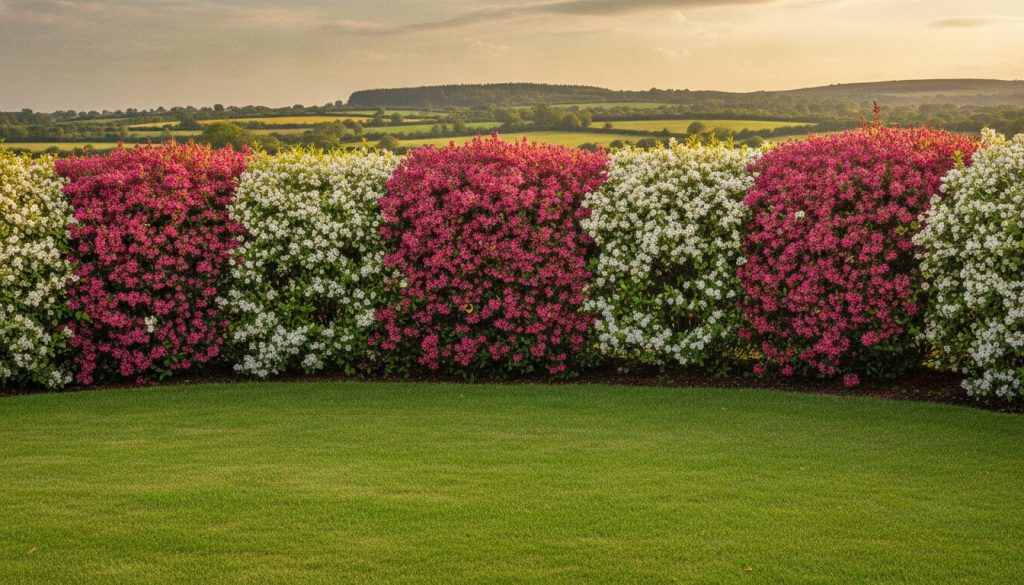
Why settle for a static, dull green boundary when your garden perimeter could be a living, changing display of seasonal colour and life? Many homeowners find that standard hedging often looks boring in winter or fails entirely when faced with waterlogged soil and harsh Atlantic winds. If you’re searching for the best flowering hedge plants Ireland can support, it’s important to choose species that balance aesthetics with rugged climate resilience.
In this 2026 guide, you will discover the most reliable varieties for your garden. These species are specifically selected to thrive in our unique conditions, providing a vibrant boundary that supports local bees and birds. From the salt-tolerant Escallonia to the winter-blooming Viburnum Tinus, we’ll show you how to achieve a low-maintenance but beautiful privacy screen.
We’ll provide a practical overview of the best varieties for different soil types, including those that handle exposed sites. You’ll also find essential advice on planting seasons and how to choose between potted and bare root stock to ensure your garden remains a functional, colourful ecosystem throughout the year.
Key Takeaways
- Identify the most resilient flowering hedge plants Ireland has to offer for coastal, inland, and waterlogged garden conditions.
- Learn how to match specific species like Escallonia or Berberis to your garden’s aspect to ensure healthy growth and vibrant blossoms.
- Compare the benefits of traditional bare root planting with year-round potted stock to find the most efficient method for your boundary.
- Master the essential soil preparation techniques required to establish a durable, low-maintenance privacy screen that supports local biodiversity.
- Understand the long-term advantages of sourcing mature plants from a specialist producer to achieve an immediate and reliable garden transformation.
Why Choose Flowering Hedge Plants for Your Irish Garden?
A flowering hedge is a living boundary. It combines the utility of a traditional screen with the visual interest of seasonal blossoms. We’ve noticed a clear shift in how people approach their gardens. There is a growing preference for ‘soft’ boundaries that do more than just mark a line on a map. By selecting flowering hedge plants Ireland, you create a screen that provides privacy and supports the local environment. It’s a move away from the sterile, ‘static’ look of traditional walls towards something more integrated with nature.
The Beauty of Seasonal Interest
Visual impact is often the first reason people choose these varieties. A plain evergreen wall is functional, but it can look uninspired after a few years. Flowering hedges change throughout the year. You might see a heavy flush of spring flowers followed by deep summer foliage and bright berries in the autumn. These plants frame your garden. They act as a natural backdrop for flower beds and lawn areas. Because they are dynamic, they keep the garden boundary looking fresh as the months pass. It’s a far more interesting way to define your space than a standard fence or a single-species green wall.
Supporting Irish Biodiversity
Environmental health is a major factor for the modern gardener. Species like Whitethorn and Escallonia provide essential nectar for bees and nesting sites for birds. In the Irish landscape, hedges act as wildlife corridors. They connect different habitats and allow creatures to move safely across the land. If you’re interested in the native trees scheme plants, flowering hedges are a perfect fit. They help restore local ecosystems whilst providing a secure boundary. This biodiversity isn’t just good for the planet; it makes your garden a more vibrant, interesting place to spend time.
These plants aren’t just for show. They are functional tools for property management. A well-established hedge is a brilliant windbreak. This is vital for gardens on exposed sites where the wind can damage more delicate plants. They also help with noise reduction, absorbing sound from roads or neighbours much better than a solid wall. Because many flowering hedge plants Ireland grow densely, they offer excellent privacy. You get a secure, beautiful boundary that works for you and the local wildlife. It’s a practical investment that improves the value and comfort of your home.
Top Flowering Hedging Species for Irish Climates
Selecting the right species involves matching plant biology with the local environment. In Ireland, this means choosing plants that can withstand salt spray, heavy rain, and occasional hard frosts. The following species are proven performers across the country, offering a balance of structural integrity and aesthetic appeal. Many gardeners overlook the floral display of traditional evergreens. For instance, Portuguese laurel is highly valued for its dense, dark green leaves, yet it also produces slender racemes of white, fragrant flowers in early summer. It’s a robust choice for those who want a formal boundary with a subtle seasonal lift.
Evergreen Flowering Favourites
Evergreen varieties provide year-round privacy whilst offering distinct flowering windows. These four are particularly suited to the Irish climate:
- Escallonia: A top choice for coastal areas. Its glossy leaves are salt-tolerant, and it produces pink or red flowers from June through to September. It typically grows about 30 to 45cm per year.
- Viburnum Tinus: Essential for winter interest. It carries clusters of small white flowers from November until March, a time when most other flowering hedge plants Ireland are dormant. It’s a dense, slow-to-medium grower.
- Photinia Red Robin: Photinia Red Robin offers a colour-focused alternative. While famous for its brilliant red spring foliage, it also produces large, flat heads of white flowers. It’s a fast grower, often exceeding 30cm per year.
- Berberis Darwinii: A standout for security and colour. It produces a spectacular display of orange flowers in spring, followed by blue-black berries. Its prickly nature makes it an excellent deterrent.
Deciduous and Native Flowering Options
Native and deciduous species are often the best choice for rural boundaries or large gardens where biodiversity is a priority. Whitethorn and Blackthorn are the backbone of the Irish countryside. They provide a massive flush of white blossoms in spring, followed by berries in autumn. These are incredibly hardy and support a vast range of local wildlife, acting as vital corridors for birds and pollinators.
In coastal gardens, Fuchsia Riccartonii is an iconic sight. Its drooping red and purple flowers are synonymous with the west of Ireland. Although it’s deciduous, it is exceptionally tough and thrives where other plants might struggle with sea air. If your priority is intense spring colour, consider Weigela florida purpurea or Forsythia. Weigela provides dark foliage and pink flowers, while Forsythia offers a bright yellow display that is one of the first signs of the season ending. If you’re unsure which variety fits your soil type, you can speak with our nursery team to find the best match for your site.
Choosing the Right Hedge for Your Soil and Aspect
Success with flowering hedge plants Ireland depends on the “right plant, right place” principle. Many hedges fail because they’re forced into unsuitable conditions. Before buying, you must assess three factors: sun exposure, wind levels, and soil drainage. For example, Escallonia is a coastal favourite, but it will quickly rot if planted in heavy, waterlogged clay. Understanding your soil type is the first step to a long-lasting boundary.
Heavy soils often require species like Hornbeam or Whitethorn, which handle seasonal dampness better than most. If you have light, sandy soil, you’ll need drought-tolerant plants that won’t wilt during a dry spell. Drainage is the most common cause of hedge death in Ireland. If water sits on the surface after rain, you must either improve the drainage or select a species that can cope with “wet feet.” Don’t ignore the soil’s natural state; it’s much easier to choose a plant that fits the ground than to try and change the ground to fit the plant.
Resilient Options for Coastal and Windy Sites
Coastal gardens face salt spray and high winds that cause “wind scorch” on tender leaves. Griselinia and Escallonia are excellent here because their leathery foliage is naturally resistant. They thrive where thinner-leaved plants would turn brown and die. When establishing young plants in exposed areas, use a temporary windbreak or netting for the first two seasons. This allows the root system to anchor firmly without the plant being constantly buffeted. Once established, these species provide a sturdy, green wall that filters the wind rather than blocking it entirely, which prevents turbulence in the rest of the garden.
Flowering Hedges for Shade and Sun
Light levels directly impact how many flowers your hedge produces. Most flowering species prefer full sun, but some are more adaptable to darker corners. In deep shade, flowering will always be less dense, so it’s vital to pick the right variety for the specific light levels of your border.
- Partial Shade: Berberis Darwinii and Viburnum Tinus are reliable choices for north-facing borders or areas under tree canopies. They still bloom well with limited direct light.
- Full Sun: Lavender (Lavandula Angustifolia) and Hypericum Hidcote require hot, south-facing spots to perform their best.
If your site is particularly dark, focus on foliage-heavy plants that can handle the low light whilst providing the structure you need. Always check the specific light requirements of your chosen variety to avoid a leggy, sparse hedge that fails to flower. A well-placed hedge is a healthy hedge, and a healthy hedge is far more likely to produce a spectacular floral display.

Planting and Establishing Your Flowering Hedge
Establishing flowering hedge plants Ireland requires more than just digging a hole. Success starts with the foundation. Preparation begins by clearing a strip at least 60cm wide along your intended boundary. You must remove all grass and perennial weeds. These are aggressive competitors for nutrients and water. Dig in plenty of organic matter, such as well-rotted manure or garden compost. This improves the soil structure and helps with moisture retention. It’s a vital step for ensuring your new hedge gets the best start possible.
Spacing is another critical factor. If you plant too close, the species will compete and become leggy. If you plant too far apart, the hedge will take years to knit together. For most flowering varieties, we recommend planting 3 to 5 plants per metre. Using a double staggered row often produces a thicker, more secure screen. Even in our damp climate, watering is essential during the first growing season. New roots need consistent moisture to anchor properly. A heavy soak once a week is far more effective than a light daily sprinkle. This encourages the roots to grow deeper into the soil for long-term stability.
The Bare Root vs. Potted Debate
The bare root tree season Ireland runs from November to March. This is the most cost-effective way to plant long runs of hedging. Bare root plants are dormant, which makes them resilient during transport and transplanting. Potted stock offers more flexibility. You can plant them year-round, and they provide a more immediate visual impact. Many of our customers choose to mix traditional beech hedging plants Ireland with flowering species. This creates a boundary that maintains some winter structure whilst offering bursts of seasonal colour.
Pruning for Maximum Blooms
Timing your pruning is essential for a heavy floral display. If you prune at the wrong time, you risk cutting off next year’s buds. As a general rule, prune spring-flowering species immediately after the flowers fade. Summer-flowering types are usually best pruned in late winter or early spring before the new growth begins. Regular trimming does more than just keep the hedge neat. It stimulates the plant to produce more flowering wood and prevents the base from becoming thin and sparse. This is particularly important for species like Escallonia and Forsythia, which can become woody if left unmanaged for too long.
If you’re ready to start your planting project, contact our specialist growers to discuss the best stock currently available for your garden conditions.
Sourcing Quality Plants from a Specialist Irish Nursery
Buying directly from a specialist plant nursery Ireland provides a distinct advantage over general garden centres. We grow our stock on 60 acres of dedicated production land. This scale allows us to manage plants for long-term health rather than just retail appearance. Nursery-grown plants typically have far better-developed root systems because they haven’t been restricted in small pots for extended periods. This is a critical factor for the successful establishment of flowering hedge plants Ireland. When you source from a producer, you get plants that are already acclimatised to the local climate and soil conditions.
The Value of Expert Horticultural Guidance
Gardening in the Irish climate requires practical knowledge. Speaking with seasoned pros who understand our unique weather patterns is the best way to avoid failure. A visit to the nursery allows you to see plants at different stages of maturity. This helps you visualise the mature size of your hedge before you commit to a purchase. Our team provides straightforward, no-nonsense advice based on over 30 years of growing experience. This expert input can prevent costly mistakes, such as selecting a species that is unsuitable for your garden’s aspect or drainage levels. We focus on utility and clear communication to help you make an informed decision.
Arranging Your Nationwide Delivery
Logistics are a key part of our operation. We offer a national delivery service to ensure our plants reach gardens across the country. For larger orders, we use professional handling and securing methods so that your stock arrives in peak condition. Whether you need a small batch of potted plants or a large run of bare root hedging, the process is methodical and transparent. Our nursery site is open for visits Tuesday to Saturday. We are closed on Sunday and Monday. This schedule allows us to maintain the high standards of production required across our 60-acre specialist facility.
Sourcing directly from a grower ensures you receive high-quality, authentic plants. You get access to an extensive range of varieties, including those suitable for the Native Trees Scheme. By prioritising quality at the source, you ensure your flowering hedge remains a vibrant and functional part of your garden for decades.
Establishing Your Seasonal Boundary
Choosing the right flowering hedge plants Ireland has to offer involves a balance of aesthetic preference and practical site assessment. Success depends on matching species like Escallonia or Viburnum Tinus to your specific soil drainage and sun exposure. Proper ground preparation and correct pruning timing ensure your boundary remains healthy and vibrant. By moving away from static green walls, you create a dynamic ecosystem that supports local pollinators whilst providing essential privacy.
Buds Nursery Cavan brings over 30 years of horticultural expertise to every project. We maintain 60 acres of premium Irish-grown stock and offer a reliable nationwide delivery service. This ensures your plants arrive in peak condition, ready for the planting season. If you’re ready to transform your garden boundary into a living display of colour, contact Buds Nursery Cavan today to discuss your flowering hedge requirements. We’re here to help you build a beautiful, resilient garden screen that thrives in the Irish climate.
Frequently Asked Questions
What is the fastest-growing flowering hedge in Ireland?
Photinia Red Robin is amongst the fastest-growing options, often exceeding 30cm of growth annually once established. Escallonia also grows quickly, typically adding 30cm to 45cm per year in favourable conditions. These species are ideal for homeowners seeking a rapid privacy screen that also delivers a floral display. Regular watering and correct soil preparation during the first year are essential to maintain these high growth rates across different Irish soil types.
When is the best time of year to plant flowering hedging?
The best time to plant depends on the stock type you choose. For bare root flowering hedge plants Ireland, the window is between November and March whilst the plants are dormant. This is the most cost-effective method for long boundaries. Container-grown or potted plants offer more flexibility and can be planted year-round, provided the ground isn’t frozen or waterlogged. Always ensure consistent watering if planting during the drier summer months.
Do flowering hedges provide privacy in the winter months?
Privacy levels in winter depend on whether the species is evergreen or deciduous. Evergreen flowering hedges like Viburnum Tinus, Escallonia, and Photinia Red Robin keep their leaves year-round, providing a permanent visual barrier. Deciduous species, such as Whitethorn or Fuchsia, will lose their foliage in late autumn. If year-round screening is your priority, select evergreen varieties that offer both winter structure and seasonal blossoms to ensure your garden remains private.
Which flowering hedges are best for coastal gardens in Ireland?
Escallonia and Fuchsia Riccartonii are the most resilient choices for coastal environments. These species have evolved to handle salt spray and high winds without suffering from significant wind scorch. Griselinia is also a sturdy coastal performer, though its flowers are less prominent. For gardens on the Atlantic coast, these plants provide a rugged boundary that thrives where more tender species might fail. They help filter the wind, protecting the rest of your garden.
How often should I prune my flowering hedge to keep it tidy?
Most flowering hedges require pruning once a year to maintain their shape and encourage new blossoms. The timing is critical; you should prune spring-flowering plants immediately after they finish blooming. Summer-flowering species are best trimmed in late winter or early spring before new growth starts. Regular maintenance prevents the hedge from becoming woody or thin at the base. It also ensures the plant directs its energy into producing a dense flush of flowers.
Are flowering hedges safe for pets and livestock?
Safety varies significantly between species. Native Whitethorn is generally safe for livestock and is a staple of Irish farmland. However, some popular garden hedges like Cherry Laurel or Portuguese Laurel contain toxins that are harmful if ingested by pets or horses. Always verify the toxicity of a specific plant if you have animals nearby. Our nursery team can provide guidance on selecting non-toxic varieties that provide beauty without risking the health of your livestock.
Can I mix different flowering species in one hedge?
Mixing different species is a brilliant way to increase biodiversity and extend the flowering season. This is often called a tapestry hedge. You can combine species like Whitethorn, Blackthorn, and Dog Rose for a traditional rural look. Alternatively, mixing different evergreen flowering shrubs creates a varied texture and a sequence of blossoms from spring through to autumn. Ensure the species you choose have similar growth rates so one doesn’t eventually overgrow the others.
How much spacing is required between flowering hedge plants?
We generally recommend planting 3 to 5 plants per metre for a standard boundary. For a denser, more secure screen, use a double staggered row with approximately 40cm between the rows. This allows each plant enough space to develop a healthy root system without being overcrowded. Correct spacing ensures the hedge knits together quickly to form a solid wall of foliage and flowers. It also reduces the risk of fungal diseases by allowing better airflow.