

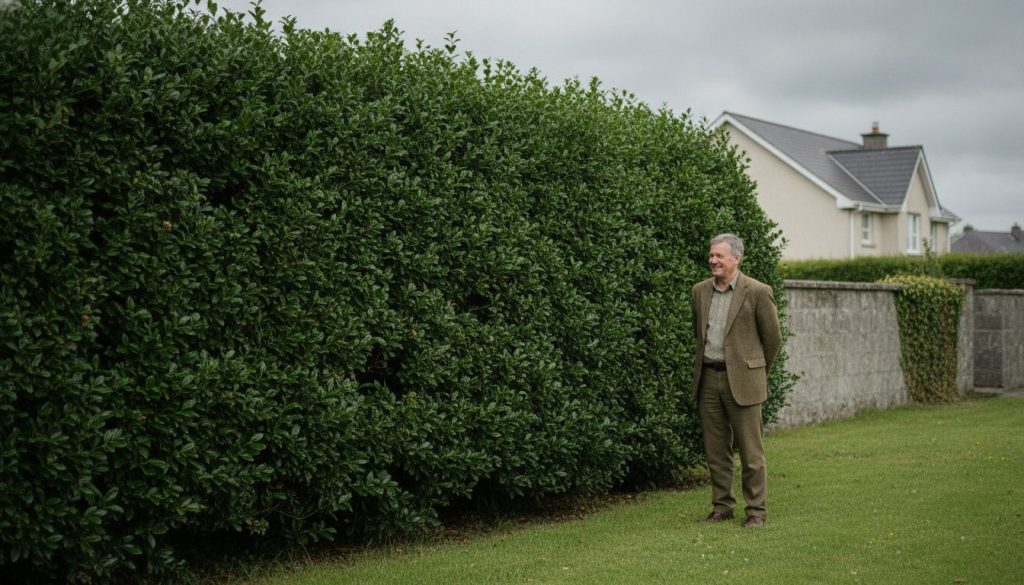
You shouldn’t have to wait ten years to enjoy a private, quiet garden. In the Irish climate, choosing the wrong variety or planting at the wrong depth can stall your progress for seasons. Most homeowners across the country face the same issues: intrusive road noise, biting winds, or a lack of privacy from neighbours. It’s a common frustration, but it’s one that a well-planned, fast growing laurel hedge Ireland residents can trust will solve quickly.
We understand that you want a dense, green wall that looks established, not a row of struggling sticks. This guide draws on 30 years of nursery experience to show you exactly how to achieve a thick screen within two to three seasons. You’ll learn the practical differences between Cherry Laurel and Portuguese Laurel, along with the specific benefits of bare root versus pot-grown stock. We’ll also break down the essential spacing and maintenance steps required to keep your hedge healthy and manageable in our unique weather conditions.
Key Takeaways
- Identify why Cherry Laurel and the ‘Novita’ variety are the superior choices for establishing a fast growing laurel hedge Ireland gardeners can use for rapid screening.
- Learn why planting bare root stock between November and March is the most cost-effective method for creating long, dense boundaries.
- Discover the ideal spacing requirements of two to three plants per metre to ensure your hedge fills in quickly without overcrowding.
- Master the essential soil preparation and maintenance steps needed to achieve a full 5-6ft privacy screen in just a few growing seasons.
- Understand the advantage of sourcing plants directly from a specialist 60-acre nursery to ensure better health, vigour, and local hardiness.
Why Choose a Fast-Growing Laurel Hedge for Your Irish Garden?
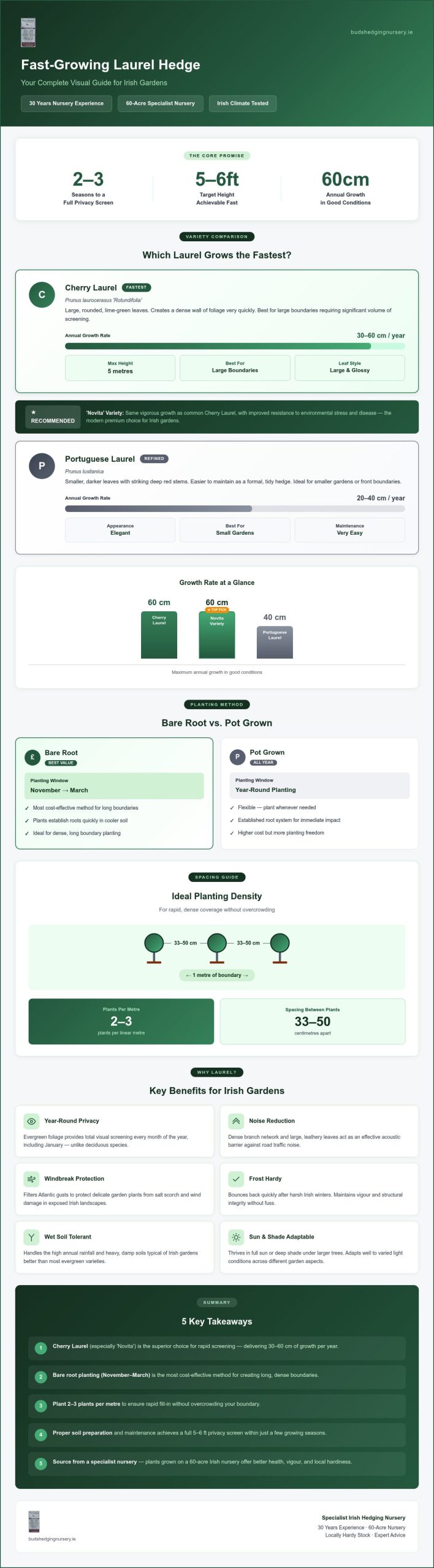
Laurel, or Prunus laurocerasus, is a vigorous evergreen shrub that has become a staple in Irish landscapes. Its reputation as a fast growing laurel hedge Ireland homeowners rely on is well earned. Unlike slower species that take a decade to reach maturity, laurel can establish a functional 5-6ft privacy screen in just a few seasons. This speed is its primary draw. It’s particularly useful for new builds or properties where a boundary has recently been cleared and immediate cover is required. In a good growing year, a healthy plant can put on 30cm to 60cm of new growth, making it one of the most efficient ways to secure a perimeter.
If your site requires professional clearing of old or dangerous timber before you can begin planting, you may wish to explore Tree Removal and Maintenance Services to ensure the work is carried out safely and efficiently.
Beyond visual privacy, the physical structure of a laurel hedge provides tangible practical benefits. The dense branch network and large, leathery leaves act as an effective acoustic barrier. If your garden borders a busy road, a thick laurel hedge can dampen the sound of passing traffic. It also serves as a robust windbreak. In exposed Irish landscapes, it filters the force of the wind rather than blocking it entirely. This protects more delicate garden plants from being scorched by salt or snapped by Atlantic gusts. Establishing a fast growing laurel hedge Ireland wide is often the first task for new homeowners looking to define their space.
Evergreen Privacy and Year-Round Colour
The value of laurel lies in its consistent performance. Deciduous hedges like beech or whitethorn provide excellent summer cover but leave gardens exposed during the winter. Laurel maintains its large, glossy leaves throughout the year. This ensures total visual screening even in the depths of January. The vibrant green foliage provides a much-needed splash of colour during the duller months. It creates a bright, permanent backdrop that remains attractive regardless of the season. Unlike other evergreens that may look sparse, laurel’s broad leaves overlap to form a solid wall of green.
Hardiness in the Irish Climate
Our climate presents specific challenges, including high annual rainfall and heavy, damp soils. Laurel is particularly well suited to these conditions. It’s a resilient plant that handles wet Irish ground better than many other evergreen varieties. Whether your garden is bathed in full sun or sits in deep shade under larger trees, laurel adapts well. It’s also remarkably frost-hardy. Even after a harsh winter, these plants bounce back quickly. They maintain their vigour and structural integrity without the fuss often associated with more sensitive hedging species. It’s a reliable, “no-nonsense” choice for any garden.
Comparing Laurel Varieties: Which Grows the Fastest?
When planning a fast growing laurel hedge Ireland homeowners often ask which specific variety will reach their goal height the quickest. While several types are available, the two main contenders are Cherry Laurel and Portuguese Laurel. They offer very different growth profiles and aesthetic finishes. If your primary goal is speed, the common Cherry Laurel is the traditional choice. However, modern varieties like ‘Novita’ have gained popularity. This variety offers the same vigorous growth as common laurel but with improved resistance to environmental stress and disease.
Choosing the right plant depends on your specific garden goals. A large rural boundary has different requirements than a small suburban front garden. Speed is often the priority, but the final look of the hedge matters just as much for long-term satisfaction.
Cherry Laurel (Prunus laurocerasus)
Cherry Laurel, specifically the ‘Rotundifolia’ variety, is the most vigorous option available. It typically grows between 30cm and 60cm per year under the right conditions. Its large, rounded, lime-green leaves create a dense wall of foliage very quickly. This variety is best for large boundaries where you need a significant volume of screening. If left unpruned, it can easily reach heights of 5 metres. For those dealing with a severe lack of privacy or heavy road noise, this is the most efficient solution. You can browse our range of Cherry Laurel plants to see the different sizes available for immediate planting.
Portuguese Laurel (Prunus lusitanica)
While still considered a relatively quick grower, Portuguese Laurel is slower than its cherry counterpart. You can expect about 20cm to 40cm of growth annually. It’s chosen more for its refined appearance than pure speed. It features smaller, darker leaves and striking deep red stems. This variety is much easier to maintain as a formal, tidy hedge because it doesn’t outgrow its shape as aggressively. It’s the ideal choice for smaller gardens or front boundaries where a neat, sophisticated look is preferred. For a deeper look at this variety, see our Portuguese Laurel: The Complete Guide for Irish Gardens 2026.
In summary, the fastest route to a 6ft screen is the Cherry Laurel. It fills gaps aggressively and provides a massive green presence. If you have more time and prefer a darker, more compact finish, the Portuguese variety is a reliable alternative. Both remain hardy and dependable in the Irish climate, provided they are planted correctly.
Bare Root vs. Pot Grown: Timing Your Planting
The timing of your project determines the type of stock you should buy. In Ireland, the traditional planting window for a fast growing laurel hedge Ireland residents often plan is the bare root season. This period runs from November through to March. During these months, the plants are dormant. Their growth has slowed down, which allows them to be lifted from the nursery field without soil around their roots. Planting while the shrub is asleep is the most reliable way to ensure it wakes up successfully in its new environment. It’s a natural, seasonal approach that respects the plant’s life cycle.
The Advantages of Bare Root Hedging
For anyone planting a long boundary, bare root is the most cost-effective method. Because these plants are grown in open fields and transported without heavy pots or soil, the production and shipping costs are lower. We typically supply these in bulk packs of 25 or 100 plants. This makes them significantly cheaper per unit than pot-grown alternatives. Beyond the price, bare root laurels often establish a more resilient root system. They adapt immediately to your native soil rather than relying on the peat-based compost found in pots. For more details on this window, see our Bare Root Tree Season Ireland: The Complete 2026 Planting Guide.
When to Choose Pot Grown or Rootballed
If you miss the winter window, pot-grown laurel is the year-round alternative. These plants can be put in the ground during the summer months because their root systems are already contained and protected. They are ideal for filling small gaps or finishing a project outside of the dormant season. However, summer planting requires strict attention. You’ll need to maintain a consistent watering schedule to prevent the roots from drying out in the warmer weather. Without regular moisture, the plant will struggle to establish itself before the next winter.
Rootballed laurel is another option for those seeking immediate results. These are larger, more mature plants that are lifted with a ball of earth around the roots, which is then wrapped in hessian. This is the best choice if you need a tall, thick screen from day one. While more expensive than bare root, the mature height provides instant privacy that would otherwise take two or three seasons to achieve. Whether you choose bare root or pot-grown, the goal remains a healthy, dense screen that serves your property for decades. Choosing the right stock for a fast growing laurel hedge Ireland gardens can support depends entirely on your budget and your timeline.
How to Plant and Maintain Your Laurel for Rapid Growth
Achieving a fast growing laurel hedge Ireland properties can benefit from requires more than just digging a hole and hoping for the best. Preparation is the most critical phase. Before your plants arrive, clear a strip of ground at least one metre wide. Remove all grass and perennial weeds, as these will compete with your new hedge for moisture and nutrients during the vital first season. Digging a continuous trench rather than individual holes is the preferred professional method. This ensures the soil is loose and aerated, allowing roots to spread quickly and evenly.
Soil Preparation and Spacing
When digging your trench, aim for a depth and width at least twice the size of the root system. To give your plants the best start, incorporate organic matter or well-rotted manure into the bottom of the trench. This provides a slow-release nutrient source that fuels rapid establishment. Spacing is equally important. For standard screening, we recommend 2 to 3 plants per metre. If you require an extra-thick barrier for noise or total privacy, consider a staggered double row. This method uses more plants but fills the gap much faster. For further advice on planning your layout, read our Best Hedging for Privacy in Ireland: A Practical 2026 Buying Guide.
Pruning and Feeding for Density
It might seem counter-intuitive, but pruning actually accelerates the thickening process. We suggest “heading back” young plants by trimming the top third of the new growth in the first spring. This encourages the plant to branch out from the base rather than just growing tall and spindly. For ongoing maintenance, you can discover Premium Garden Services to assist with professional hedge cutting and lawn care. Always check for nesting birds before you start trimming in late spring or early autumn. A balanced fertiliser applied in early spring will provide the nitrogen boost needed for that signature glossy green foliage.
Watering is the final piece of the puzzle. During the first year, your hedge needs a consistent watering programme, especially during dry spells in May and June. A soaked root system is a growing root system. If the soil dries out completely, the plant will go into survival mode and growth will stall. You can buy high-quality laurel hedging direct from our nursery to ensure you start with the healthiest possible stock for your project.
Sourcing Quality Laurel from a Specialist Irish Nursery
Success with a fast growing laurel hedge Ireland gardens can sustain starts with the quality of the nursery stock. Buying from a general retailer often means purchasing plants that have been sitting in pots on concrete for weeks. At Buds Nursery Cavan, we operate differently. As a specialist grower with 30 years of experience, we manage over 60 acres of production. This scale allows us to focus on the health and vigour of every plant. When you buy direct from the grower, you receive plants that are fresher and more likely to establish quickly. They haven’t been stressed by multiple transport stages or poor storage conditions.
Our approach is grounded in the practicalities of the Irish landscape. We understand the soil types and the weather patterns that your hedge will face. This long-standing expertise means we don’t just sell plants; we provide a reliable foundation for your garden’s privacy. Whether you’re a homeowner or a trade professional, sourcing from a specialist nursery ensures you get the volume and quality required for a successful project. It’s about getting the right plant for the right place the first time.
Why Specialist Knowledge Matters
Acclimatisation is often overlooked but it’s vital for hedging success. Our laurels are grown in the ground, making them hardy and resilient to our climate from day one. This field-grown vigour is superior to imported plants that may struggle with our damp winters. We offer a wide range of sizes to meet different needs. You can choose from cost-effective 1ft bare root plants up to mature 6ft specimens for instant impact. Having this variety on one site makes it easier to match the right plant to your specific budget and site conditions. For a deeper look at how we operate, read our Specialist Plant Nursery Ireland: A Guide to Sourcing Quality Trees and Hedging.
National Delivery and Large Orders
Large hedging projects involve significant logistics. We specialise in handling bulk orders and provide national delivery to ensure your plants arrive in peak condition. Whether you need 50 plants for a small garden or 500 for a rural site, we have the capacity to deliver. If you want to see the quality of our stock first-hand, you can visit our nursery from Tuesday to Saturday. Our staff are on hand to offer straightforward, practical advice on variety selection and planting density. We focus on the fundamentals of the trade to ensure you get a hedge that lasts. Contact us today to discuss your requirements or to get a quote for your next project.
Establishing Your Permanent Green Screen
Building a private garden sanctuary doesn’t have to be a slow process. By selecting the right variety, such as the vigorous Cherry Laurel or the elegant Portuguese Laurel, you can transform your property boundary in just a few seasons. Success depends on working with the seasons. Utilising the bare root window from November to March offers the best value for money, whilst correct spacing and initial pruning ensure your screen grows thick from the ground up. A well-maintained, fast growing laurel hedge Ireland homeowners can be proud of starts with healthy, locally acclimatised stock.
At Buds Nursery, we bring 30 years of experience and the scale of a 60-acre specialist site to every order. We are specialists in both cost-effective bare root hedging and mature laurel stock for those who need immediate results. Our team is here to provide the practical advice you need to ensure your project succeeds. Browse our full range of Laurel Hedging and order for National Delivery to get started. With the right plants and a little patience during the first growing season, you’ll soon enjoy a dense, green barrier that stands the test of time.
Frequently Asked Questions
How fast does a laurel hedge grow in Ireland?
Cherry Laurel typically grows between 30cm and 60cm per year in the Irish climate. Portuguese Laurel is slightly slower, averaging 20cm to 40cm annually. Factors like soil quality and initial preparation play a huge role in these rates. A well-fed, fast growing laurel hedge Ireland gardeners maintain correctly can reach a full 6ft privacy screen within three seasons. This vigour makes it a top choice for rapid boundaries.
What is the best time of year to plant laurel hedging?
The dormant season between November and March is the ideal time to plant bare root laurel. Planting during these months allows the roots to establish before the spring growth spurt begins. Pot-grown varieties can be planted at any time of the year, although summer planting requires much more frequent watering to ensure the plants don’t dry out in the heat. Winter planting is generally more cost-effective.
How far apart should I space laurel plants for a thick hedge?
Standard spacing is two to three plants per metre for a single row. If you’re using smaller bare root plants, three per metre creates a denser screen more quickly. For an extra-thick barrier, you can plant a double-staggered row with approximately 40cm between the rows. This method is particularly effective for establishing a fast growing laurel hedge Ireland homeowners can use to reduce road noise and wind.
Will laurel grow in shade or wet soil?
Laurel is highly adaptable and grows well in both full sun and deep shade. It handles the damp conditions of Irish soil effectively, but it doesn’t like sitting in waterlogged ground for long periods. If your site is prone to flooding, improve the drainage by adding grit or organic matter to the planting trench before you begin. This ensures the roots remain healthy and active during wet winters.
Is laurel poisonous to pets or livestock?
All parts of the laurel plant, including the leaves and berries, contain compounds that are toxic if ingested by pets or livestock. While most animals naturally avoid eating the leathery, bitter leaves, you should be cautious if planting near grazing areas. It’s best to keep clippings away from curious dogs or horses to prevent accidental poisoning. Always dispose of hedge trimmings safely and securely away from animals.
How often should I prune my laurel hedge to keep it tidy?
You should prune your hedge once or twice a year to maintain its shape and density. Late spring and early autumn are the best times for a trim. Avoid pruning during the peak summer months to protect nesting birds. Using secateurs rather than a hedge trimmer can prevent the large leaves from being shredded, which keeps the hedge looking greener and healthier whilst encouraging new growth from the base.
What is the difference between Cherry Laurel and Portuguese Laurel?
Cherry Laurel features large, bright green leaves and grows more aggressively. It’s the best choice for quick, massive screening. Portuguese Laurel has smaller, darker leaves and distinctive red stems. It grows more slowly and is easier to maintain as a neat, formal hedge. Both are hardy evergreens, but the Portuguese variety offers a more refined, sophisticated appearance for smaller gardens or front boundaries where a tidy look is preferred.
Can I plant laurel in a coastal garden in Ireland?
Laurel is quite resilient, but Portuguese Laurel is generally better suited to coastal conditions. It handles salt spray and high winds more effectively than the common Cherry Laurel. If your garden is directly on the Atlantic coast, ensure you provide some initial protection during the first winter to help the plants establish their root systems against the force of the gales. This helps prevent wind scorch on young foliage.