

Most gardeners spend weeks choosing the perfect species, but the success of your garden boundary is actually decided before the plants even arrive at your gate. It’s a common frustration to invest in quality stock only to see it struggle because the roots are drowning in a waterlogged trench or strangled by scutch grass. We know that dealing with heavy Irish clay often feels like a losing battle, especially when you are worried about burying plants at the wrong depth. Learning how to prepare soil for hedging Ireland requires a practical approach that accounts for our unique climate and ground conditions.
This 2026 guide provides the essential steps to prepare your ground for a thriving, long-lasting hedge that establishes quickly. We’ll walk through clearing persistent weeds, managing drainage, and getting the soil structure exactly right. You’ll gain the no-nonsense instructions needed to avoid plant failure in the first year and ensure your new boundary remains healthy for decades.
Key Takeaways
- Learn how to identify your specific soil type using the simple “sausage test” to determine if you are dealing with heavy Irish clay or free-draining loam.
- Master the essential steps of how to prepare soil for hedging Ireland by using the “stale seedbed” technique to eliminate persistent weeds like scutch grass before you plant.
- Discover why digging a continuous trench twice the width of the root mass is far superior to individual pits for faster, healthier plant establishment.
- Understand how to naturally improve soil fertility with well-rotted organic matter while avoiding the common mistake of letting fresh manure touch young roots.
- Ensure long-term success by matching your ground preparation to your chosen species, particularly for drainage-sensitive varieties like beech.
Understanding Your Soil: The Foundation of a Healthy Irish Hedge
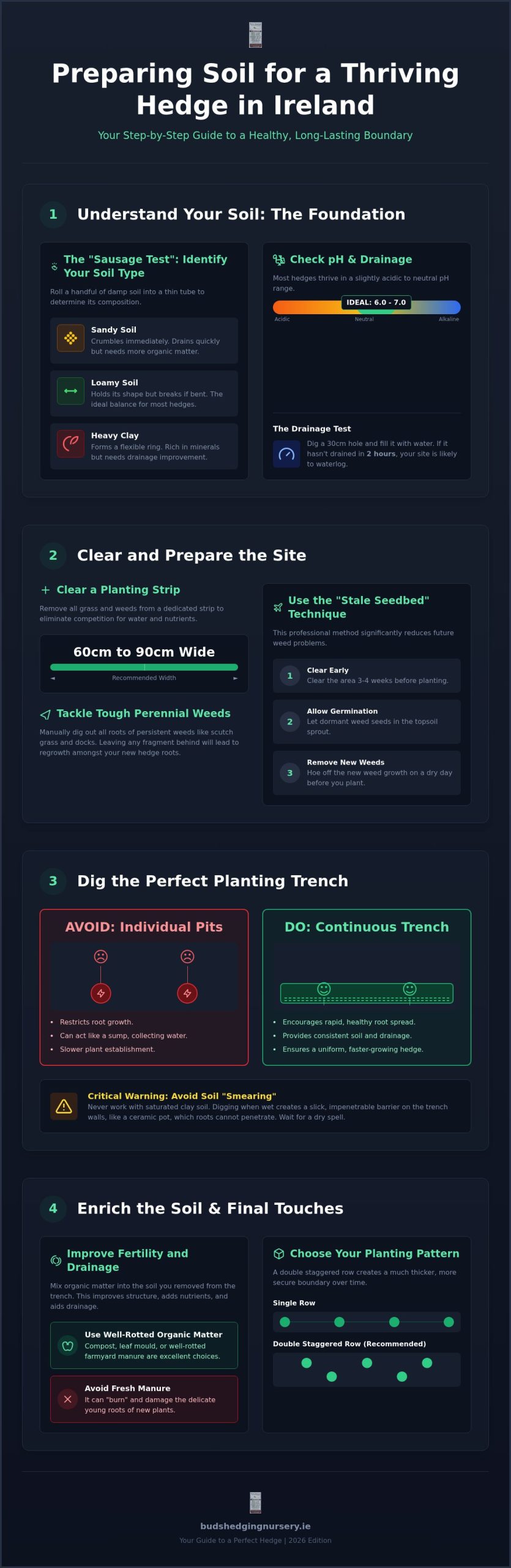
Success starts with what’s under your fingernails. Before you pick up a spade, you need to know exactly what you are working with. A simple “sausage test” is the most reliable way to identify your soil. Pick up a handful of damp earth and try to roll it into a thin tube. If it crumbles immediately, you have sandy soil. If it forms a flexible ring, you are dealing with heavy clay. Most Irish gardens sit somewhere in between, forming a loamy “sausage” that holds its shape but breaks if bent too far. A basic grasp of understanding different soil types is the first step in successful planting.
Irish “heavy” soil requires a different mindset than the light, sandy ground found in other regions. While clay is rich in minerals, its tiny particles pack together tightly, leaving little room for air or water movement. If you don’t address this, your hedge roots will suffocate. You also need to check the pH level. Most hedging varieties in Ireland prefer a slightly acidic to neutral range, typically between 6.0 and 7.0. If your soil is too alkaline, certain plants might struggle to take up nutrients, leading to yellowing leaves and stunted growth.
The “Drainage Test” is your final check. Dig a hole about 30cm deep and fill it with a bucket of water. If the water is still there after two hours, your site will likely waterlog in winter. Knowing how to prepare soil for hedging Ireland means identifying these drainage issues before the first plant goes in the ground.
The Impact of Ireland’s Climate on Soil Preparation
Our weather dictates the schedule. You must avoid working the soil whilst it is saturated. If you dig or walk on wet clay, you’ll cause “smearing.” This happens when the spade creates a slick, sealed surface on the trench walls that roots cannot penetrate. It’s like planting into a glazed ceramic pot. When planning how to prepare soil for hedging Ireland, aim to start at least two weeks before your plants arrive. This allows the soil to settle and gives you a window of dry weather to get the structural work done without destroying the soil’s natural texture.
Assessing Drainage and Compaction
Watch for indicators of poor drainage like rushes, moss, or standing water. These often signal a “pan” layer, which is a hard, compacted crust of earth caused by heavy machinery or past construction work. If you don’t break through this layer, water will sit on top of it, drowning the root zone. Air space in the soil is just as vital as water; roots need to breathe to grow. This is especially true if you are planning to plant beech hedging plants Ireland, as they are notoriously sensitive to “wet feet” and require perfect drainage to survive their first winter.
Site Clearance and Marking Out Your Hedging Line
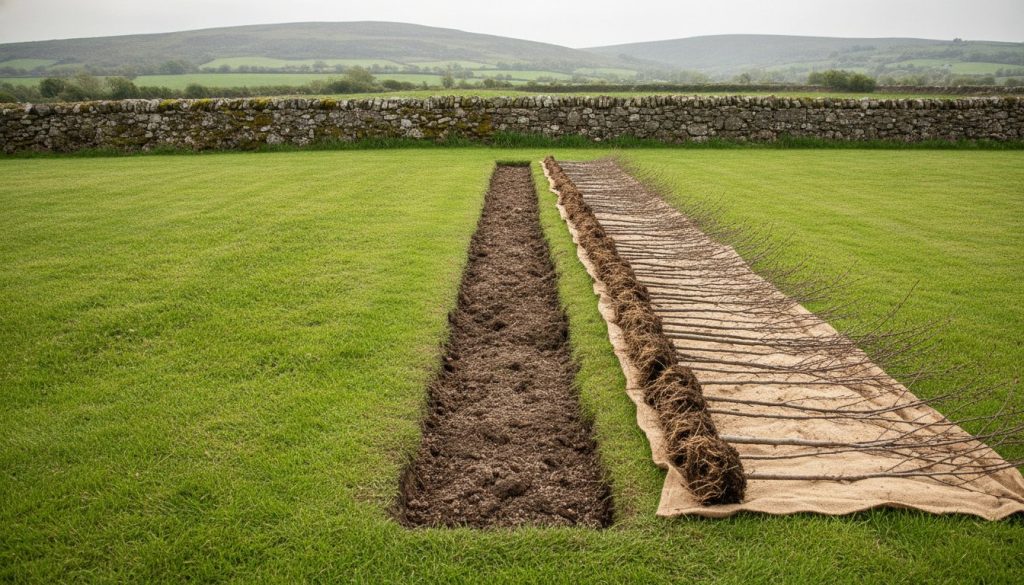
Clearance is often the most physically demanding part of the process. You cannot simply plant into a hole in the lawn and expect a hedge to thrive. Grass is a fierce competitor for nutrients and water. To start, you should clear a strip of ground between 60cm and 90cm wide. This gives the young plants a head start without having to fight established turf. When considering how to prepare soil for hedging Ireland, timing your clearance is as important as the method itself.
Using the “stale seedbed” technique is a professional trick for cleaner ground. Clear the area at least three or four weeks before your plants arrive. This allows dormant weed seeds in the topsoil to germinate whilst the ground is still undisturbed. Once they appear, hoe them off on a dry day. This significantly reduces the weed burden you’ll face in the spring. To keep your line straight, use sturdy wooden pegs and a tight string line. It looks better and makes future maintenance much easier. A straight line is the hallmark of a well-planted boundary.
Dealing with Tough Perennial Weeds
Surface clearing isn’t enough for scutch grass or docks. These weeds grow from deep, persistent roots that can easily outcompete a young plant. If you leave even a small fragment of scutch grass in the ground, it will quickly wrap itself amongst the roots of your new hedge. Manual digging is the most reliable way to ensure every piece of root is removed. Once the ground is clear, consider using a heavy organic mulch. This suppresses regrowth and keeps moisture where it belongs during the first critical growing season.
Marking for Single vs. Double Staggered Rows
Decide on your row configuration before you break ground. A single row is fine for narrow spaces, but a double staggered row creates a much thicker, more secure boundary. If you are preparing for a native hedge mix Ireland, a double row is usually the standard. This requires a wider cleared strip to accommodate the zig-zag pattern. Always leave at least 50cm of clear space between the hedge line and any existing walls or fences. This ensures you have enough room for trimming once the plants mature. If you’re unsure which variety suits your site, you can browse our selection of nursery-grown hedging to see what works best in your local conditions.
How to Dig the Perfect Planting Trench for Hedging
Whilst it might seem easier to dig individual holes, a continuous trench is far superior for long-term health. Individual pits in heavy soil often act like sumps, collecting water and drowning young roots. A trench allows roots to spread laterally through loosened earth, which is vital for quick establishment. The Golden Rule of trenching is to make the opening at least twice the width of the root mass. This provides a generous volume of friable soil for the new hair-roots to explore. When you understand how to prepare soil for hedging Ireland, you realise that the physical structure of the trench is just as important as the soil quality itself.
As you dig, keep your topsoil and subsoil in separate piles. Topsoil is the darker, nutrient-rich layer usually found in the upper 20-30cm. The lighter, stonier subsoil underneath has fewer nutrients and poorer structure. When it’s time to plant, you’ll want the good topsoil back around the roots first. Before you finish, create a “shatter zone” by taking a garden fork and aggressively prodding the base and sides of the trench. This breaks the surface tension of the clay and prevents the roots from becoming “pot-bound” within the trench walls.
Trench Specifications for Bare Root and Pot Grown
Your trench dimensions must match your plant type. During the bare root tree season Ireland, trenches can often be narrower but must be deep enough to accommodate the full length of the downward-reaching roots without bending them. For larger, container-grown varieties like Portuguese laurel, the trench needs to be significantly wider to house the established root ball. Regardless of the species, always ensure the “root flare” (where the stem meets the roots) sits exactly at the soil level. Planting too deep is a leading cause of failure in Irish gardens.
Avoiding the “Planting in a Bucket” Effect
In wet conditions, a spade can leave the sides of a trench looking smooth and shiny. In heavy clay, this creates a waterproof container that traps water and excludes air. This is why how to prepare soil for hedging Ireland involves more than just moving dirt. Use a fork to roughen these “glazed” sides until they are crumbly. When backfilling, don’t just dump in large, wet clods of earth. Break the soil down into a fine tilth. This ensures there are no large air pockets where roots might dry out, whilst still allowing for essential drainage.
Improving Soil Fertility and Drainage Naturally
Feeding the soil is a long-term game. You shouldn’t just throw chemical fertilisers at the ground and hope for the best. The most effective way to build a healthy environment for your hedge is by incorporating well-rotted organic matter. This could be garden compost or farmyard manure. However, there is a vital distinction. Fresh farmyard manure is too “hot” and contains high levels of ammonia that will scorched tender young roots. If you use manure, it must be dark, crumbly, and have no strong smell. When you are looking at how to prepare soil for hedging Ireland, the goal is structural improvement rather than a quick chemical fix.
To give your plants a boost, consider adding bone meal or seaweed dust to the trench. These organic additives are rich in phosphorus, which is essential for early root development. For sites with particularly poor soil, mycorrhizal fungi are a game-changer. These beneficial fungi attach to the roots and create a secondary root system, significantly increasing the plant’s ability to take up nutrients and water. This is a far more sustainable approach than using nitrogen-heavy fertilisers, which often promote soft, sappy top growth that the roots cannot yet support. If you want a hedge that stands the test of time, you can order locally-grown hedging plants that are already adapted to these natural soil-building techniques.
Solving Drainage Issues in Heavy Ground
If your site failed the drainage test mentioned earlier, you need to take action before planting. On waterlogged ground, “mound planting” is a lifesaver. Instead of digging a deep trench, you create a slightly raised ridge of soil and plant into that. This keeps the main root mass above the water table during the wettest winter months. In heavy clay, mixing in plenty of grit or sharp sand helps to open up the soil structure. For chronically wet boundary lines, you might need to install a simple land drain. This involves a perforated pipe buried in a gravel-filled trench to carry excess water away from the root zone.
Irish Soil Nutrients: What is Usually Missing?
Most Irish soils are naturally fertile but can be locked up by compaction or high acidity. Phosphorus is the nutrient most likely to be lacking for new hedges. It doesn’t move easily through the soil, so it must be placed exactly where the roots can reach it. Once your hedge is in the ground, apply a thick layer of organic mulch. This preserves moisture during dry spells and slowly breaks down to feed the soil over several years. Mulching also suppresses weeds, ensuring your new plants don’t have to compete for the nutrients you’ve worked so hard to provide. For the best results, match your preparation to the specific needs of your chosen species.
Final Preparation: Timing and Selecting Your Plants
Your soil preparation is a waste of effort if you select a species that cannot tolerate your local ground conditions. Different plants have distinct requirements that must be met. For instance, beech hedging plants Ireland demand perfect drainage and will quickly rot if left in standing water. Conversely, varieties like Whitethorn or Alder are much more forgiving in damp ground. Sourcing plants grown in the Irish climate is essential. These plants are already adapted to our high rainfall and specific soil profiles, giving them a significant advantage over imported stock that hasn’t been hardened to our weather.
Before you plant, run through a final checklist. Ensure the soil moisture is consistent; it should be damp but not dripping. Check the weather forecast for hard frosts. Whilst you can plant in cold weather, you should never dig into frozen ground. Finally, ensure your tools are clean and sharp. A blunt spade will tear roots rather than cutting them cleanly, which slows down the recovery of the plant after it’s moved. Knowing how to prepare soil for hedging Ireland also means knowing when to wait for the right conditions.
Preparing for Bare Root vs. Root Balled Plants
Bare root plants are particularly vulnerable because their roots are exposed. When they arrive, they must stay moist and protected from the wind. If your ground isn’t ready because of heavy rain or frost, you must “heel them in.” This involves digging a temporary shallow trench in a sheltered spot, laying the plants at an angle, and covering the roots with loose soil. This keeps them dormant and safe until the ground is workable. When selecting the best hedging for privacy Ireland, such as Portuguese Laurel, remember that these often come as heavier root-balled or pot-grown specimens. These require a wider trench and more substantial backfilling to support their height and weight from day one.
The Advantage of a Specialist Nursery
There is no substitute for long-standing experience. At Buds Nursery, we’ve spent over 30 years growing hedging on our 60-acre site in Cavan. We understand the reality of Irish “heavy” ground because we work in it every day. Sourcing your stock from a specialist nursery ensures you receive hardy plants that are ready for the local climate. If you have specific soil challenges, we can provide the direct, practical advice you need to get your hedge off to the best start. Mastering how to prepare soil for hedging Ireland is the first step; choosing the right partner for your plants is the second.
Establish Your Hedge for the Long Term
A thriving garden boundary doesn’t happen by accident. It’s the result of physical groundwork and a clear understanding of your site. By identifying your soil type, clearing persistent weeds like scutch grass, and digging a proper continuous trench, you give your plants the best possible start. Mastering how to prepare soil for hedging Ireland means you won’t be replacing failed stock next season. It’s about working with the land rather than against it. You’ve done the hard work of clearing and digging; now you just need the right plants.
Once your ground is ready, you need hardy stock that’s up to the task. We’ve spent over 30 years growing on our 60-acre nursery in Cavan, ensuring every plant is fully adapted to the Irish climate. Whether you need bare root whips or established pot-grown varieties, we provide national delivery across Ireland to get your project moving. Browse our full range of Irish-grown hedging plants and put your preparation to good use. Your future hedge will thank you for the effort you put in today.
Frequently Asked Questions
Can I plant a hedge in heavy clay soil in Ireland?
Yes, you can plant in heavy clay, provided you break up the structure to prevent waterlogging. Clay is nutrient-rich but needs grit or organic matter to create air spaces. Avoid digging when the ground is saturated to prevent “smearing” the trench walls. This is a critical part of how to prepare soil for hedging Ireland, as it ensures roots can penetrate the soil rather than being trapped in a slick, waterproof container.
Do I need to add compost when planting a new hedge?
Adding well-rotted compost or farmyard manure is highly beneficial for improving soil structure and long-term fertility. It helps clay soil drain better and sandy soil retain moisture. However, never use fresh manure, as the high ammonia levels will burn young roots. Mix the organic matter thoroughly with the excavated topsoil before backfilling the trench to ensure nutrients are distributed evenly around the root zone.
How deep should a trench be for bare root hedging?
A trench for bare root hedging should typically be 30cm to 40cm deep. The most important factor is that the roots can hang vertically without bending or “J-rooting.” You must ensure the root flare sits exactly at the soil surface. Planting too deep leads to stem rot, whilst planting too shallow causes the roots to dry out. Always check the soil mark on the stem from the nursery as a guide.
What is the best month to prepare soil for hedging?
October and November are the best months to prepare your ground before the bare root season begins. Preparing early allows the soil to settle and gives you a chance to clear weeds using the stale seedbed technique. If you wait until the depths of winter, the ground may be too frozen or waterlogged to work effectively. Early preparation is a key step in how to prepare soil for hedging Ireland successfully.
How do I stop weeds from growing in my new hedge line?
The most effective way to stop weeds is to clear a wide strip of at least 60cm and apply a heavy organic mulch after planting. Using the stale seedbed technique before you plant helps eliminate dormant seeds. Once the hedge is in, a 5cm to 10cm layer of bark mulch suppresses regrowth and preserves moisture. This prevents aggressive weeds like scutch grass from stealing nutrients from your young plants.
Should I put fertiliser in the hole when planting?
Avoid putting high-nitrogen fertilisers directly into the planting hole, as they can scorch tender new roots. Instead, use bone meal or seaweed dust, which provide phosphorus for root establishment. Mycorrhizal fungi are also an excellent addition. These natural organisms form a symbiotic relationship with the roots, helping the plant absorb water and minerals more efficiently in the first year without the risk of chemical burn.
What happens if I plant my hedge in waterlogged soil?
Planting in waterlogged soil usually results in root rot and plant failure. Most hedging species, especially beech, cannot survive if their roots are submerged in water for long periods. If your site is chronically wet, you should use the mound planting technique to raise the roots above the water table. Improving the soil structure with grit and organic matter is essential to ensure your hedge doesn’t drown during a wet Irish winter.
How wide should the cleared area be for a double-row hedge?
For a double staggered row, you should clear a strip of ground between 90cm and 100cm wide. This provides enough space for the zig-zag planting pattern and ensures the roots on both sides have uncompacted soil to grow into. A wider cleared area also makes it easier to apply mulch and keep the hedge line free from encroaching grass, which is vital for the first two years of establishment.