

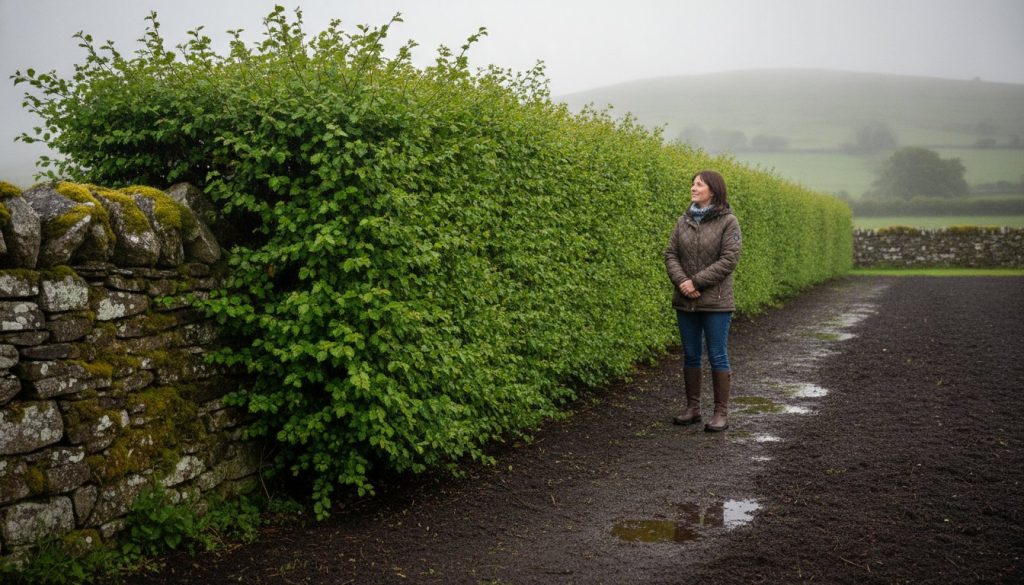
Have you spent hundreds on Beech hedging only to watch it turn yellow and rot in the ground? It’s a common frustration across Ireland, especially where heavy clay or poor drainage turns a garden into a swamp every winter. Choosing the right hedging for wet soil Ireland isn’t about trying to fix the land; it’s about selecting species that naturally manage a high water table. Planting the wrong variety in damp ground is a guaranteed way to waste money and effort.
We know how disheartening it is to see a boundary hedge fail after years of careful planting. You want a thick, green screen that provides privacy and shelter, not a line of dying sticks. In this guide, we’ll share our 30 years of growing experience to show you which plants thrive in heavy, waterlogged conditions. We will cover resilient alternatives like Hornbeam and native species that actually prefer “wet feet,” ensuring your next planting project is a permanent success.
Key Takeaways
- Identify the difference between damp ground and permanently waterlogged sites to avoid wasting money on species prone to root rot.
- Explore the best hedging for wet soil Ireland, including Hornbeam as a superior, damp-tolerant alternative to traditional Beech.
- Learn why native species like Common Alder and Whitethorn are essential for managing high water tables and providing boundary security.
- Discover the ‘mound planting’ method to lift root systems above the water line in heavy clay or boggy ground.
- Get expert advice on selecting Irish-grown plants that are specifically hardened for the local climate and soil conditions.
Understanding the Challenges of Wet Soil in Irish Gardens
Irish gardens often face a struggle with drainage. High annual rainfall combined with heavy clay or peaty subsoils creates a environment where water sits rather than draining away. When selecting hedging for wet soil Ireland, you must first distinguish between ground that is simply damp and ground that is permanently waterlogged. Damp soil feels moist and may squelch underfoot after a storm, but it eventually dries out. Waterlogged soil remains saturated for weeks or months; it is often identified by the presence of rushes, moss, and standing pools of water that linger long after the rain has stopped.
Identifying your specific soil type is the first step toward a successful hedge. Heavy clay is common across the Midlands and parts of Cavan, where tiny soil particles pack together and trap water. In other areas, a high water table means the ground is naturally saturated from below. If you plant a species that requires sharp drainage into these conditions, the result is almost always stunted growth or total plant failure. You’ll often see the signs early; leaves may turn yellow out of season, and the plant will fail to put on any significant height during the summer months.
The Science of Root Rot and Waterlogging
Plants need oxygen to survive. In healthy soil, air pockets between soil particles allow roots to breathe. When ground becomes waterlogged, these pockets fill with water, effectively drowning the root system. This lack of oxygen creates anaerobic conditions, which lead to root rot. Once the roots begin to decay, the plant can no longer take up nutrients or water, even though it is sitting in a puddle.
To combat this, you need “thirsty” species that can actively manage high moisture levels. Some native trees, such as Alnus glutinosa (Common Alder), have evolved to thrive in these exact conditions. These plants are built to withstand seasonal flooding and can help stabilise the ground. Choosing the right species during the bare root tree season in Ireland ensures the hedge has the best chance to establish its root system before the heat of summer arrives.
Why Beech is the Wrong Choice for Damp Ground
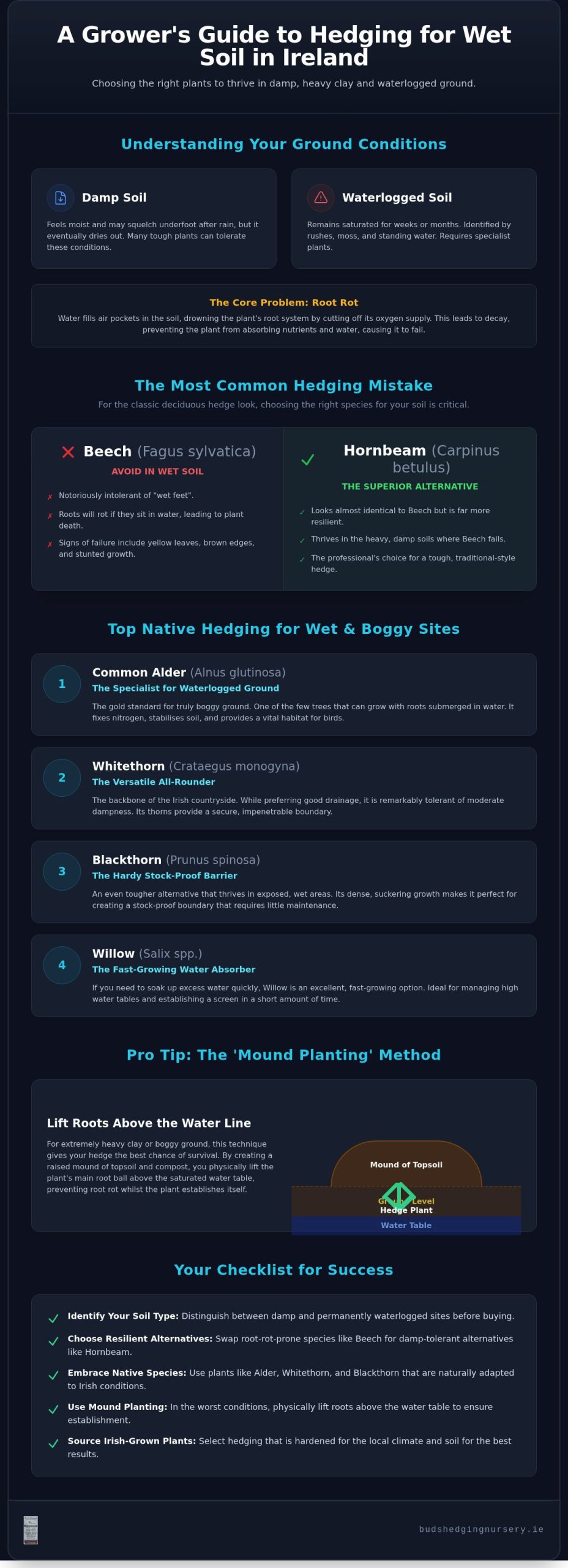
One of the most frequent mistakes we see at the nursery is the attempt to grow a Green or Copper Beech hedge in heavy, wet clay. Beech (Fagus sylvatica) is a magnificent plant, but it is notoriously intolerant of “wet feet.” If the roots sit in water for even a short period during the growing season, the plant will likely die.
If your Beech hedge looks thin, develops brown leaf edges, or shows significant gaps, it is likely reacting to poor drainage. For those who want the look of a traditional deciduous hedge but have hedging for wet soil Ireland requirements, Hornbeam is the professional choice. It looks nearly identical to Beech but possesses a much tougher constitution, allowing it to thrive in the heavy, damp soils where Beech fails. Transitioning to more resilient species saves you the frustration of replacing dead plants every spring.
Top Native Hedging Plants for Wet and Boggy Sites
Native Irish species are exceptionally resilient. They have spent thousands of years adapting to our high rainfall and heavy ground. If you need hedging for wet soil Ireland, native plants are the most practical starting point. These species don’t just survive in damp conditions; they often thrive, providing a sturdy boundary whilst supporting local biodiversity. Unlike ornamental plants that might struggle with the lack of oxygen in heavy ground, native species are often “thirsty” enough to help manage the water table.
Alder: The Specialist for Waterlogged Ground
Common Alder (Alnus glutinosa) is the gold standard for truly boggy ground. It is one of the few trees that can grow with its roots permanently submerged in water. This is because Alder has a unique relationship with bacteria in its root nodules, allowing it to fix nitrogen and survive in anaerobic conditions where others would rot. It is an excellent soil stabiliser, making it ideal for riverbanks or the corners of fields that never seem to dry out. Beyond its utility, Alder provides a vital habitat for birds like siskins and redpolls who feast on its catkins in the winter months.
Whitethorn, Blackthorn, and Willow
Whitethorn is a versatile all-rounder. While it prefers well-drained soil, it is remarkably tolerant of moderate dampness. It is the backbone of the Irish countryside, providing a secure, thorny barrier that is almost impossible to penetrate. For even tougher sites, Blackthorn (Prunus spinosa) is a hardy alternative. It manages exposed, wet areas better than many other species and produces a dense, suckering growth pattern that makes it perfect for stock-proof boundaries. If you need to soak up water quickly, Willow is a fast-growing option. It is often used in bio-swales because of its incredible ability to pull moisture from the ground during the growing season.
Creating a Native Mix for Biodiversity
A single-species hedge is functional, but a mix is often better for the land. Combining different species creates a more resilient boundary that is less susceptible to pests and diseases. If you are participating in government initiatives, you can select specific Native Trees Scheme plants in Ireland to ensure your hedge meets environmental standards. For those just starting out, consulting an RHS guide to gardening on wet soils can help you understand the broader principles of managing damp ground before you begin planting.
For the best results on damp sites, we recommend a mix of 75% Whitethorn with 25% made up of Alder, Blackthorn, and Willow. This creates a hedge that is secure, water-tolerant, and rich in food for pollinators. If you are unsure which mix suits your ground, you can view our full range of bare root hedging at our 60-acre nursery, where we have 30 years of experience matching plants to the Irish climate.
Ornamental and Privacy Hedges for Damp Irish Soils
While native species are excellent for field boundaries and wildlife, many homeowners require a formal screen or year-round privacy for their gardens. Finding ornamental hedging for wet soil Ireland requires selecting plants that can handle heavy clay without sacrificing aesthetics. You don’t have to settle for a struggling hedge just because your ground is damp. Several high-performing species offer the structure and colour of a traditional garden hedge whilst remaining resilient in difficult Irish conditions.
Hornbeam: The Formal Choice for Wet Soil
Hornbeam (Carpinus betulus) is the professional’s choice for a formal, clipped hedge on heavy ground. To most people, it looks nearly identical to Beech, but its biology is much tougher. It thrives in the cold, wet clays often found in the Irish Midlands. When pruned regularly, Hornbeam creates a crisp, architectural screen that is perfect for urban gardens or formal driveways. A significant benefit is its marcescence; like Beech, it retains its copper-coloured dead leaves throughout the winter. This ensures you maintain privacy and a windbreak even during the harshest months of the year.
Evergreen Options for Privacy
Evergreens are notoriously sensitive to waterlogging, as their roots need constant access to oxygen to support their foliage year-round. However, Portuguese Laurel is a notable exception and stands as a far more reliable choice for damp sites than Cherry Laurel. It features elegant, dark green leaves and striking maroon stems. It is a slow to medium grower, making it easy to manage once it reaches your desired height.
For those seeking a splash of colour, Photinia Red Robin is a popular alternative. While it prefers slightly better drainage than Hornbeam, it can manage in damp garden boundaries if the soil is prepared correctly. If you are gardening in a coastal area with moist soil, Griselinia is a hardy favourite. It tolerates salt spray and damp air well, provided the water in the soil isn’t stagnant.
- Hornbeam: Best for formal, tall privacy screens in heavy clay.
- Portuguese Laurel: The most reliable evergreen for damp, garden conditions.
- Dogwood (Cornus): Ideal for adding vibrant winter stem colour in very wet corners.
- Griselinia: A fast-growing, lime-green option for damp, coastal sites.
When planting these ornamental varieties in hedging for wet soil Ireland, the quality of the plant is vital. At Buds Nursery, we grow our stock across 60 acres to ensure they are hardened to the local climate. Choosing plants that have been raised in Irish conditions gives your ornamental hedge the best possible start in challenging ground.
How to Plant Hedges in Heavy Clay and Wet Ground
Success with hedging for wet soil Ireland depends heavily on how you put the plant in the ground. If you dig a hole in heavy clay during a wet winter, you’ve essentially created a bucket that will hold water and drown the roots. Timing is your first line of defence. Planting during the bare root tree season in Ireland, typically from November to March, allows the hedge to establish whilst dormant. This period reduces the stress on the plant, as it isn’t trying to support leaves whilst its roots are cold and wet.
The Step-by-Step Mound Planting Method
In areas where the water table is high or the clay is particularly dense, we recommend mound planting. Instead of digging deep into the wet subsoil, you create a raised ridge of topsoil along your planting line. This technique ensures that the core of the root system stays above the main saturation level during the wettest months of the year. Follow these steps for a successful mound:
- Clear the grass and weeds from a strip approximately 60cm wide.
- Loosen the surface of the soil with a fork to prevent a hard “pan” layer from forming.
- Import or move existing topsoil to create a mound 15 to 20cm high and 40 to 50cm wide.
- Plant your hedging directly into this mound, ensuring the roots are spread out naturally.
Improving Soil Structure Before Planting
Avoid the temptation to fill a planting hole with pure sharp sand. In heavy Irish clay, sand can often act like cement, worsening the drainage issues. Instead, use well-rotted organic matter or compost to improve the soil structure. This creates larger pores, helping water to move through the ground more freely. You must never leave a hollow or “sump” around the base of the plant. The soil should always be level or slightly sloped away from the stem to prevent water from pooling against the bark, which can cause collar rot.
Soft, wet ground doesn’t offer much stability for new plants. For larger specimens or in exposed sites, you may need to stake your hedge to prevent “wind rock.” This occurs when the wind moves the plant, creating a funnel-shaped hole at the base that fills with water and eventually kills the roots. Firm the soil carefully with your heel after planting, but avoid over-compacting it, which can squeeze out the remaining oxygen. If you are ready to start your project, you can buy bare root hedging directly from our nursery to ensure you get plants hardened for these exact conditions.
Sourcing Resilient Hedging from Buds Nursery Cavan
Finding the right hedging for wet soil Ireland requires more than just picking a species from a list. Success depends on the quality of the stock and how it was raised before it reaches your garden. At Buds Nursery Cavan, we have over 30 years of experience growing hedging specifically for the Irish climate. Our plants aren’t imported from softer climates; they are raised across our 60-acre site. This ensures they are hardened to the wind and rain, making them tough enough to handle the damp, heavy ground discussed in this guide.
Quality Plants Grown for Irish Conditions
Plants grown in local conditions have a significantly higher survival rate when moved to a new site. When you buy from a specialist plant nursery in Ireland, you are getting stock that is already acclimatised to our specific rainfall patterns and soil temperatures. Buds Nursery Cavan grows a vast range of species, including Portuguese Laurel, Hornbeam, and native Whitethorn. We offer both bare root and potted options to suit different project timelines. Bare root plants are the most practical choice for large boundary projects during the winter season, whilst our potted stock provides flexibility for planting at other times. Every site has its own challenges, and we provide straightforward advice to ensure you don’t waste money on species that won’t survive your soil’s drainage levels.
Visit the Nursery or Arrange Delivery
Our team is available on-site at Buds Nursery Cavan from Tuesday to Saturday to provide expert guidance. We often suggest that customers bring photos of their garden or even a small soil sample if they are concerned about waterlogging. Seeing the plants in our nursery allows you to judge the scale and health of the stock before it is lifted. For those managing larger sites or commercial projects, we organise national delivery. We use methodical packing techniques to ensure our plants arrive in peak condition, regardless of your location in Ireland.
Starting a hedge project in difficult ground is a long-term investment. By choosing plants grown with 30 years of expertise, you ensure your boundary thrives for decades rather than failing in the first winter. Whether you need a single ornamental specimen or a thousand native whips, Buds Nursery Cavan has the inventory and the practical knowledge to help you get the job done right.
Establish a Resilient Boundary for Your Site
Establishing a successful hedge in damp ground is about working with your land, not against it. Choosing water-tolerant species like Hornbeam or Alder is the first step. Proper technique, such as the mound planting method mentioned earlier, then ensures roots stay healthy whilst they establish. Finding the right hedging for wet soil Ireland doesn’t have to be a gamble if you select plants hardened for the local conditions. These practical adjustments turn a frustrating site into a thriving, green boundary that provides privacy and shelter for years to come.
At Buds Nursery Cavan, we combine 30 years of growing experience with a deep understanding of the Irish climate. All our stock is raised on our 60-acre Irish site to ensure it’s resilient enough for local soil. Whether you need a formal screen or a native mix, we provide expert guidance and national delivery across Ireland. Browse our full range of hedging and trees at Buds Nursery Cavan to find the right plants for your ground. With the correct species and a bit of preparation, you can finally enjoy a thick, permanent hedge that stands up to the Irish weather.
Frequently Asked Questions
Can I plant a Beech hedge in wet soil?
No, you should avoid planting Beech in wet soil. Beech (Fagus sylvatica) is notoriously intolerant of “wet feet” and will quickly suffer from root rot in heavy clay or waterlogged ground. If your site stays damp for long periods, the hedge will likely become stunted or die back entirely. Choosing a more resilient alternative like Hornbeam is a far more practical investment for these conditions.
What is the fastest-growing hedge for wet ground in Ireland?
Willow is the fastest-growing hedge species for wet ground in Ireland. It is incredibly “thirsty” and can put on over a metre of growth in a single season, making it ideal for soaking up surface water. If you require a more formal boundary, Common Alder is another fast-growing native that thrives in boggy sites and provides a sturdy windbreak within a few years of planting.
Is Hornbeam better than Beech for heavy clay soil?
Yes, Hornbeam is a much better choice than Beech for heavy clay. Whilst they look nearly identical, Hornbeam has a much tougher root system that can tolerate the lack of oxygen found in compacted, damp soils. It provides the same formal aesthetic and winter leaf retention as Beech but without the high risk of failure in the typical heavy ground found across many Irish counties.
How do I stop my hedge roots from rotting in winter?
Mound planting is the most effective way to prevent hedge roots from rotting during the winter. By creating a raised ridge of soil approximately 15 to 20cm high, you lift the core of the root system above the water table. This prevents the roots from sitting in stagnant water during the wettest months. It’s also vital to avoid over-compacting the soil, which can squeeze out essential oxygen.
Will Portuguese Laurel grow in damp areas?
Portuguese Laurel can grow in damp areas, provided the soil isn’t completely waterlogged. It is generally more resilient than Cherry Laurel and manages heavy ground better, but it still requires some drainage to thrive. For damp garden boundaries, we recommend using the mound planting technique to give the roots a better start and prevent winter saturation from causing long-term damage to the plant.
Do I need to install drainage before planting a hedge?
You only need to install drainage if the site suffers from permanent, stagnant waterlogging. For most damp Irish gardens, selecting the right hedging for wet soil Ireland and using raised mounds is a more cost-effective solution. However, if water sits on the surface for weeks at a time, a simple French drain or land drainage pipes may be necessary to ensure any hedge survives the winter.
What are the best native Irish trees for waterlogged sites?
Common Alder is the best native species for truly waterlogged ground as it has evolved to thrive in boggy conditions. Other excellent native options include various Willow species and Downy Birch. These trees are naturally adapted to the Irish landscape and are very efficient at managing high water tables whilst providing essential habitats for local birds and pollinators throughout the year.
When is the best time of year to plant a hedge in wet soil?
The dormant season, between November and March, is the ideal time to plant hedging for wet soil Ireland. Planting during these months allows the root system to settle into the new ground without the demand of supporting leaf growth. You should avoid planting if the ground is frozen or during periods of extreme flooding, as working saturated soil can damage its structure and lead to compaction.