

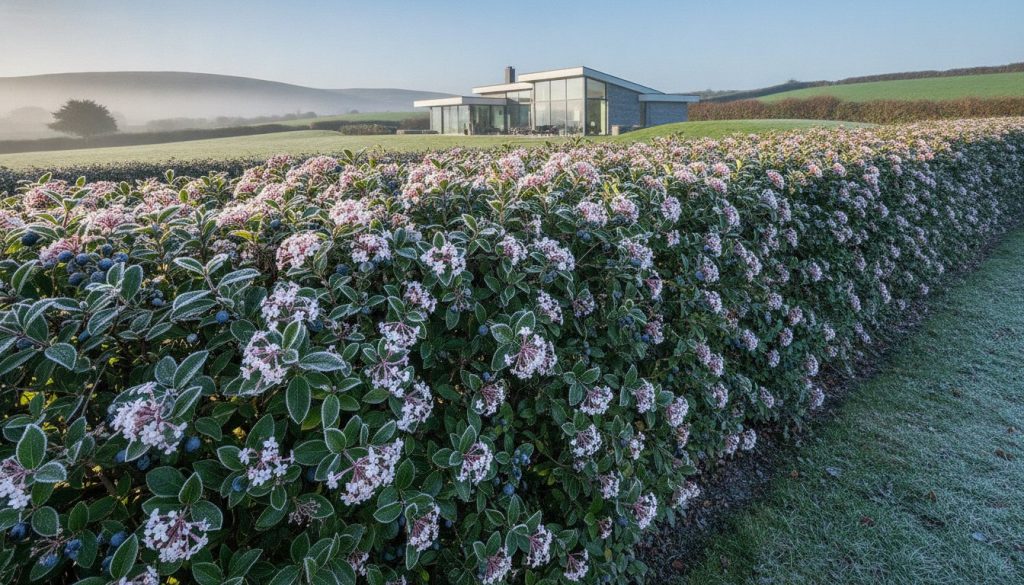
Why settle for a garden that looks skeletal and colourless for five months of the year? Most Irish homeowners accept a bleak, dormant landscape from November to March, watching their privacy thin out as deciduous leaves fall. It’s a common frustration to have a boundary that fails to perform just when the weather is at its worst. Choosing the right viburnum tinus hedging Ireland offers is the practical solution to this seasonal slump. It’s a hardworking, reliable shrub that remains dense and green whilst the rest of the garden sleeps.
We understand the importance of a boundary that offers more than just a physical barrier. You want a screen that brings life to a damp January morning with abundant winter flowers and striking blue-black berries. This complete 2026 guide will help you master the art of growing Viburnum tinus in our specific climate. We will compare popular cultivars like ‘Eve Price’ and ‘Gwenllian’, detail the best planting practices for Irish soil, and explain how to maintain a thick, healthy hedge that supports local biodiversity year-round.
Key Takeaways
- Understand why Ireland’s high rainfall and mild winters create the ideal conditions for this evergreen to flourish whilst other plants are dormant.
- Identify the subtle differences between cultivars like ‘Eve Price’ and ‘Gwenllian’ to ensure your hedge reaches the desired height and density.
- Learn how to calculate the correct spacing for viburnum tinus hedging Ireland to achieve a seamless, low-maintenance privacy screen.
- Compare growth rates with other popular options, such as Portuguese Laurel, to decide which species best fits your long-term garden goals.
- Discover the practical benefits of sourcing locally-grown, hardy stock that is already adapted to the Irish climate for better establishment.
The Appeal of Viburnum Tinus in the Irish Landscape
Viburnum tinus, often referred to by its traditional name Laurustinus, is a staple of the Irish countryside for good reason. It isn’t just another green wall. This Mediterranean native has adapted perfectly to our maritime climate. Whilst we might associate Mediterranean plants with dry, scorched earth, this species thrives in our damp conditions. Ireland’s mild winters and consistent rainfall allow it to maintain its vigour when other shrubs struggle. Selecting viburnum tinus hedging Ireland growers recommend ensures you have a boundary that remains vibrant even in the greyest months.
The visual journey of this hedge is its greatest strength. In late autumn, deep pink buds appear in clusters. These slowly open into star-like white flowers that persist through the darkest part of the year. By the time spring arrives, these blooms give way to metallic blue-black berries. It is a constant cycle of interest. The plant provides a sense of movement and life in a season that often feels static. It bridges the gap between the last autumn leaves and the first spring bulbs.
Winter Interest and Evergreen Structure
A well-maintained hedge acts as the backbone of a garden. It provides structure. During the winter, deciduous plants leave gaps that expose your property. Viburnum tinus keeps its leaves. The foliage is dark green, glossy, and leathery. These leaves are excellent at reflecting the low winter sun, adding a subtle brightness to the garden edge. It doesn’t just block the view; it enhances the light. Following the flowers, the berries provide another layer of aesthetic value. They are small and dark, often staying on the branch well into the spring. This makes it an ideal choice for those who want a screen that looks intentional and cared for throughout the year.
Ecological Impact on Irish Wildlife
The ecological value of this plant is often overlooked in traditional gardening guides. Most hedging options are sterile or non-flowering. Viburnum tinus is different. It provides a vital nectar source for early-emerging Irish pollinators, such as the bumblebee, which may wake during unseasonably warm winter days. The dense, twiggy branch structure is also a favourite for local birds seeking shelter from the wind. It’s a safe nesting site. Berries serve as a critical food source for native bird species amongst the scarcity of mid-winter. By planting this hedge, you are creating a functioning ecosystem rather than just a simple fence.
Choosing the Best Viburnum Tinus Cultivars for Your Garden
Selecting the right variety of viburnum tinus hedging Ireland offers is essential for achieving a balanced garden. Whilst the base species is reliable, specific cultivars have been bred to enhance certain traits. Some focus on flower density, whilst others prioritise a compact growth habit. Understanding these subtle differences helps you avoid a hedge that outgrows its intended space or fails to provide the visual impact you expect.
Hardiness is a key factor for inland Irish gardens. Most cultivars are fully hardy down to -10°C. They withstand the damp frosts typical of our midlands without leaf scorch. Foliage also varies across the range. You can choose from the standard deep green, variegated yellow-edged leaves, or even varieties with bronze-tinted new growth. For detailed technical specifications on these varieties, you can consult the RHS guide to growing Viburnum tinus.
Viburnum Tinus “Eve Price”: The Irish Favourite
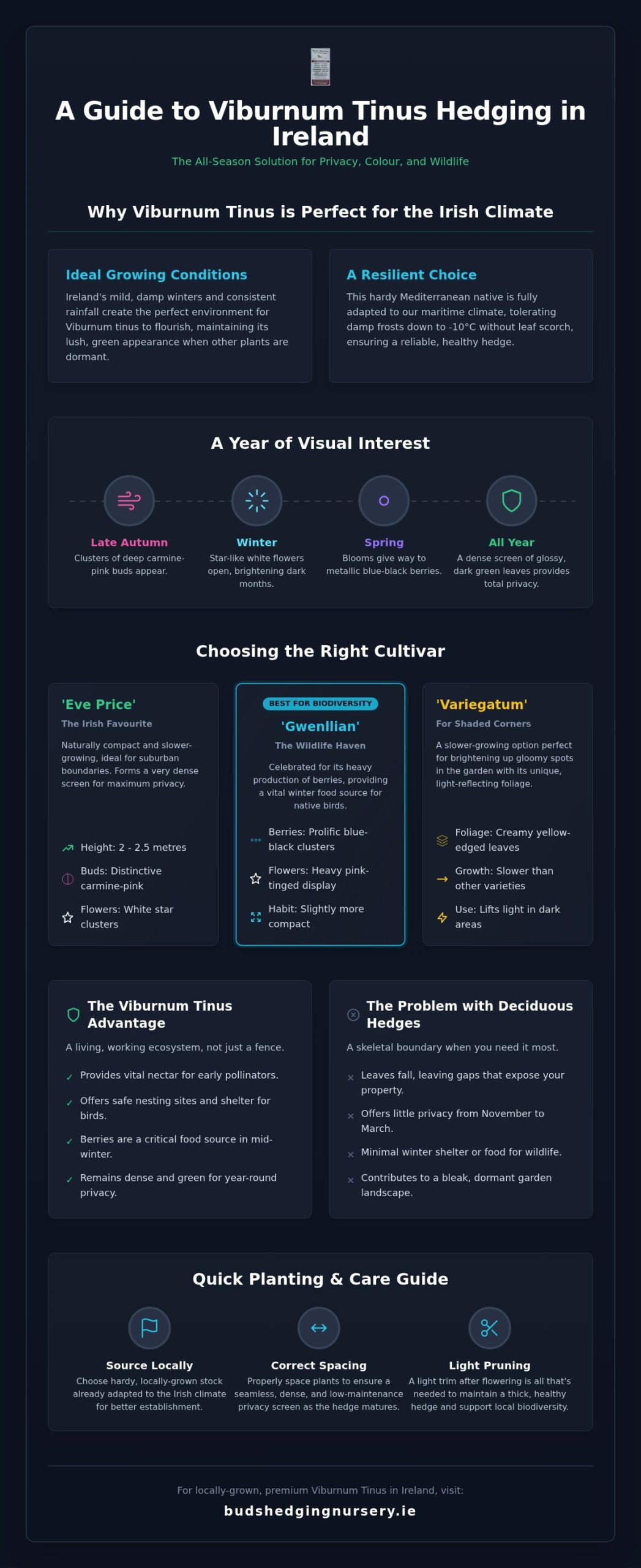
‘Eve Price’ is widely considered the gold standard for hedging in Ireland. It is naturally more compact and slower-growing than the wild form. It usually reaches a maximum height of 2 to 2.5 metres. This makes it perfect for a suburban boundary where you need privacy without a massive maintenance commitment. The flower buds are a distinctive carmine-pink, offering superior winter colour before they open into clusters of small white stars. It forms a very dense screen that is difficult to see through, even in mid-winter.
Other Notable Cultivars: Gwenllian and Variegatum
If your primary goal is biodiversity, ‘Gwenllian’ is an excellent choice. It is slightly more compact than ‘Eve Price’ and is known for its prolific production of blue-black berries. These berries follow a heavy display of pink-tinged white flowers. For those dealing with dark, shaded corners, ‘Variegatum’ provides a solution. Its leaves are edged with a creamy yellow, which helps to lift the light levels in gloomy spots. It is a slower grower but offers year-round foliage interest that standard green varieties cannot match.
‘French White’ is the best option for a crisp, clean aesthetic. It lacks the pink buds of other varieties, producing pure, brilliant white flowers from the start. This cultivar is particularly effective when planted against a dark brick wall or a darker evergreen backdrop. Selecting the right specimen for your specific soil type and aspect is easier when you can see the growth habits in person at our specialist nursery.
Viburnum Tinus vs. Traditional Irish Hedging: A Practical Comparison
Deciding on a garden boundary often leads to a choice between functional screening and ornamental beauty. Whilst many gardens rely on Portuguese Laurel for its rapid coverage, viburnum tinus hedging Ireland offers a more refined, multi-seasonal alternative. It grows at a steady pace of about 30cm per year. This is slower than many laurels, but it means you spend less time with the shears. It also handles the heavy clay soils found across much of the country better than many sensitive species.
Winter aesthetics set this plant apart from the standard green wall. Where Cherry Laurel or Privet remain plain green, Viburnum produces its signature white clusters. This provides a focal point when the rest of the garden is dormant. For those planning a specific layout, understanding Viburnum tinus landscape use is helpful for placing it where its winter blooms are most visible from the house. It thrives in both sun and partial shade, making it more versatile than many traditional options.
The Privacy Debate: Density and Height
Achieving total opacity is the primary goal of any boundary. Viburnum tinus matches the visual density of traditional beech hedging plants Ireland gardens often feature, but without the winter leaf drop. It creates a solid wall of dark green foliage. One limitation is height; it rarely exceeds 3 metres. If you need a 5-metre tall screen, laurel is better. However, for a standard garden boundary, Viburnum is easier to keep narrow, which is vital for smaller urban spaces.
Cost and Long-term Value
Budgeting for a new hedge involves looking at both the start and the finish. Viburnum tinus is typically supplied as pot-grown stock. This makes it a more significant initial investment than the options found during the bare root tree season Ireland typically sees in winter. The long-term value comes from reduced labour. You won’t be pruning it multiple times a year like you would with Leylandii. It also adds significant kerb appeal. A flowering hedge looks more “designed” and can increase the perceived value of a property through its ornamental quality.
Planting and Maintaining Your Viburnum Hedge for Year-Round Health
Establishing a successful boundary requires more than just digging a hole. Timing is the first hurdle. In Ireland, soil temperatures at a depth of 10cm typically stay above 13°C until mid-October. This makes autumn the premium window for planting viburnum tinus hedging Ireland gardens need. The warm soil encourages root growth before winter dormancy, whilst the seasonal rainfall handles the watering for you. Spring is the second-best option, provided you plant before the first major growth spurt in April.
Spacing is where many projects fail. To achieve a dense, gap-free screen, you should plant three specimens per linear metre. If you are using smaller 2-litre pots, you might increase this to four plants per metre for a faster fill. Avoid the temptation to pack them closer. Overcrowding leads to poor air circulation and can encourage mildew in our humid climate. For the best results, always start with hardy, specialist nursery stock that has been acclimatised to local weather patterns.
Step-by-Step Planting Guide
Preparation determines the long-term health of the hedge. Don’t dig individual holes. Instead, dig a continuous trench approximately 60cm wide and 40cm deep. This ensures the root systems can spread evenly into enriched soil without hitting the compacted “walls” of a small hole. Irish soils are often heavy clay or leached of nutrients by high rainfall; mixing in well-rotted organic matter or compost is essential. When placing the plants, ensure the top of the root ball is level with the soil surface. Firm the soil with your heel to remove air pockets and water deeply, even if it’s raining. During the first year, monitor the hedge during dry spells in May and June to prevent the roots from drying out.
Pruning and Maintenance Schedule
Pruning Viburnum tinus is straightforward if you understand the flowering cycle. The secret is timing. You should trim the hedge in late spring, immediately after the flowers have faded. This gives the plant the entire summer to produce the new wood that will carry next winter’s buds. If you prune in late autumn, you will remove the flower heads before they have a chance to open.
When trimming, always aim for a slightly tapered shape. Keep the base of the hedge wider than the top. This allows sunlight to reach the lower branches, preventing the “leggy” look where the bottom of the hedge becomes thin and bare. For older, neglected specimens, don’t be afraid of a hard prune. Viburnum is resilient and can be cut back into old wood in early spring to revitalise growth, though you may sacrifice one season of flowers for a much denser screen in the long run.
Sourcing Premium Viburnum Tinus from a Specialist Irish Nursery
Buying viburnum tinus hedging Ireland produces locally is a strategic choice for the long-term health of your garden. Many plants found in retail centres are imported from milder European climates. Whilst they may look lush on the shelf, they often struggle to adapt to the damp, unpredictable weather of the Irish midlands or the Atlantic coast. Our stock is grown on a 60-acre production site where it is exposed to the elements from the start. This ensures that every plant is hardy, resilient, and ready to thrive the moment it’s in your soil.
With over 30 years of heritage, we’ve refined our growing methods to produce vigorous specimens. When you source directly from a grower, you’re getting more than just a plant; you’re getting expert guidance. We can help you determine if Viburnum is the best hedging for privacy Ireland offers for your specific garden aspect. Whether you are dealing with heavy clay or an exposed boundary, our experience allows us to provide practical, no-nonsense advice that saves you time and money.
Logistics are a critical part of any hedging project. We manage national delivery across the country, ensuring that your order arrives in peak condition. We understand that large-scale planting requires precision. Our team organises transport to ensure the root systems remain protected and hydrated, so your new hedge can be established without unnecessary stress or transplant shock.
The Buds Nursery Cavan Difference
Quality control is a daily priority at our Glassdrummon site. Every row of Viburnum is monitored for growth rate and structural density. We don’t aim for the fastest growth; we aim for the strongest. You’re welcome to visit us from Tuesday to Saturday to see our production methods first-hand. It’s an opportunity to inspect the maturity of our stock and select the exact size that fits your budget. By choosing Buds Nursery, you are supporting a traditional Irish grower with deep roots in the industry and a commitment to quality that spans three decades.
Planning Your Garden Project
A successful boundary often works best when paired with complementary species. You might consider combining your winter-flowering hedge with other trees or shrubs from a specialist plant nursery Ireland gardeners rely on for diverse, acclimatised stock. Whether you need a few individual plants to fill a gap or hundreds of metres for a new boundary, our enquiry process is straightforward.
Contact Buds Nursery today to enquire about our current Viburnum tinus stock!
Enhance Your Boundary with Winter Interest
A winter garden doesn’t have to be a bleak space. By choosing the right cultivar and following proper planting techniques, you can create a dense, evergreen boundary that performs when most other plants are dormant. Viburnum tinus offers a unique combination of structural privacy and seasonal beauty. It provides a vital nectar source for pollinators and a safe haven for birds during the cold months.
When you invest in viburnum tinus hedging Ireland relies on, sourcing from an established grower makes all the difference. Our 60-acre specialist nursery has over 30 years of experience producing hardy, locally-acclimatised stock that is ready for the Irish climate. We prioritise quality and structural integrity in every plant we grow. Whether you’re looking for a compact ‘Eve Price’ or a berry-heavy ‘Gwenllian’, we can provide the expert guidance you need for a successful project.
Take the next step in securing your garden’s year-round appeal. Enquire about our Viburnum tinus hedging stock at Buds Nursery to see what we have available for the current season. We look forward to helping you build a better, more vibrant garden boundary.
Frequently Asked Questions
Is Viburnum tinus fully evergreen in Ireland?
Yes, Viburnum tinus is fully evergreen in the Irish climate. It retains its leathery, dark green foliage throughout the winter months, providing a consistent visual barrier when deciduous plants are bare. Because it doesn’t drop its leaves, it’s a reliable choice for year-round privacy. Its ability to withstand damp, cold winters without losing its lustre makes it a staple for anyone seeking viburnum tinus hedging Ireland nurseries recommend for permanent screening.
How fast does a Viburnum tinus hedge grow per year?
You can expect a growth rate of approximately 30cm per year under typical Irish growing conditions. While it is slower than vigorous species like Leylandii, this moderate pace is often a benefit for homeowners. It requires less frequent maintenance to keep it in shape. Once established, viburnum tinus hedging Ireland gardens feature forms a dense, sturdy structure that fills out naturally, reaching its mature height of 3 metres within a few seasons.
Does Viburnum tinus grow well in shade?
Yes, this shrub is highly versatile and grows well in both full sun and partial shade. While it will produce the most abundant flowers in a sunnier spot, it is one of the few flowering evergreens that still performs in gloomier corners of the garden. This makes it an ideal solution for north-facing boundaries or areas overshadowed by tall trees, as the glossy leaves help to reflect what little light is available.
How many Viburnum plants do I need per metre for a hedge?
For a standard, dense screen, we recommend planting three specimens per linear metre. If you are using smaller 2-litre or 3-litre pots and want a faster result, you might increase this to four plants per metre. Correct spacing is vital for air circulation. Planting them too close can lead to issues with mildew, whilst spacing them too far apart will result in gaps at the base of the hedge.
Can I plant Viburnum tinus in a coastal Irish garden?
Viburnum tinus is well-suited to coastal Irish gardens because of its high tolerance for salt spray. Its leathery leaves are tough enough to withstand the harsh, salt-laden winds that often batter properties along the Atlantic and Irish Sea coasts. While it might grow slightly slower in very exposed locations, it remains a robust choice for creating a sheltered microclimate within a seaside garden, protecting more sensitive plants behind its dense structure.
Why is my Viburnum hedge not flowering?
The most common reason for a lack of flowers is pruning at the wrong time of year. If you trim the hedge in late autumn or winter, you are likely cutting off the developing flower buds before they have a chance to open. Another factor could be an over-application of nitrogen-rich fertiliser, which encourages leaf growth at the expense of blooms. Ensure your hedge is pruned in late spring to avoid this.
When is the best time to prune a Viburnum tinus hedge?
The best time to prune your hedge is in late spring, immediately after the flowering period has finished. Trimming at this stage allows the plant to put its energy into new growth during the summer, which will then carry the buds for the following winter’s display. Avoid heavy pruning in late autumn, as this removes the ornamental interest and can leave the new cuts vulnerable to the first hard frosts of the season.
Is Viburnum tinus toxic to pets or livestock?
Viburnum tinus is considered mildly toxic to pets and livestock if the leaves or berries are ingested in large quantities. Ingestion can lead to stomach upset, vomiting, or lethargy in dogs and cats. Whilst it isn’t as dangerous as some other common garden plants like Yew, it’s still best to monitor animals around the hedge. Most livestock will naturally avoid the leathery leaves, but caution is advised in grazing areas.