

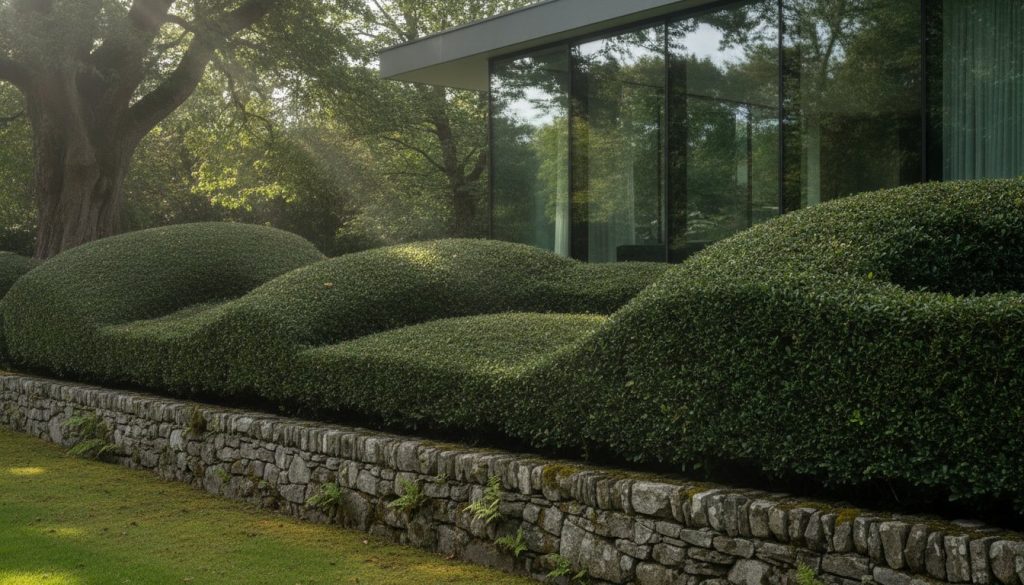
Why do many gardeners believe that a north-facing boundary or the deep shadow of a mature tree is a lost cause for privacy? It’s a common struggle in Irish gardens where low light often leads to hedges that look leggy and sparse. You might find your plants aren’t just fighting for light; they’re often competing for water in the dry, difficult soil found under large canopies. It’s frustrating to invest time and effort into a boundary only to see it fail to fill out or provide the screening you require.
Choosing the right shade tolerant hedging plants can transform these forgotten areas into thick, healthy boundaries that offer year-round cover. We’ll show you which species have the survival strategies to handle reduced sunlight whilst maintaining their density and vigour. This guide covers the best varieties for Irish conditions in 2026, including hardy options like Portuguese Laurel and Taxus baccata. You’ll learn how to overcome slow growth rates and manage dry shade so you can finally establish a lush, private screen in the most challenging parts of your garden.
Key Takeaways
- Understand the difference between shade-loving and shade-tolerant species to ensure your chosen plants can photosynthesise effectively in low light.
- Identify the best evergreen shade tolerant hedging plants for Irish gardens, including high-density options like Taxus baccata and Portuguese Laurel.
- Learn why Hornbeam is a superior deciduous alternative to Beech for shaded boundaries or areas with heavier, damp soil.
- Discover practical methods for managing dry shade under mature trees to prevent your new hedge from becoming leggy or sparse.
- Find out how sourcing hardy, nursery-grown stock from an established Irish grower improves the resilience and growth rate of your hedging.
What Are Shade Tolerant Hedging Plants?
Sunlight provides the fuel for plant growth. While most species require direct rays to thrive, shade tolerant hedging plants have adapted to survive on much less. These plants possess a higher concentration of chlorophyll in their leaves. This biological shift allows them to capture the limited light available in darker corners of the garden. It’s why many shade-tolerant varieties, such as Holly or Yew, often display a deep, dark green foliage that holds its colour even in north-facing sites.
There’s a practical distinction between a plant that loves shade and one that merely tolerates it. Shade-loving plants, like many forest-floor ferns, often struggle if moved into the sun. In contrast, shade-tolerant species are versatile. They prefer more light but have the resilience to maintain their health and structure in lower light conditions. A well-placed Hedge in a shady area does more than mark a boundary; it provides a permanent structural framework amongst the shadows where smaller, sun-loving perennials would simply fail.
Identifying Your Type of Shade
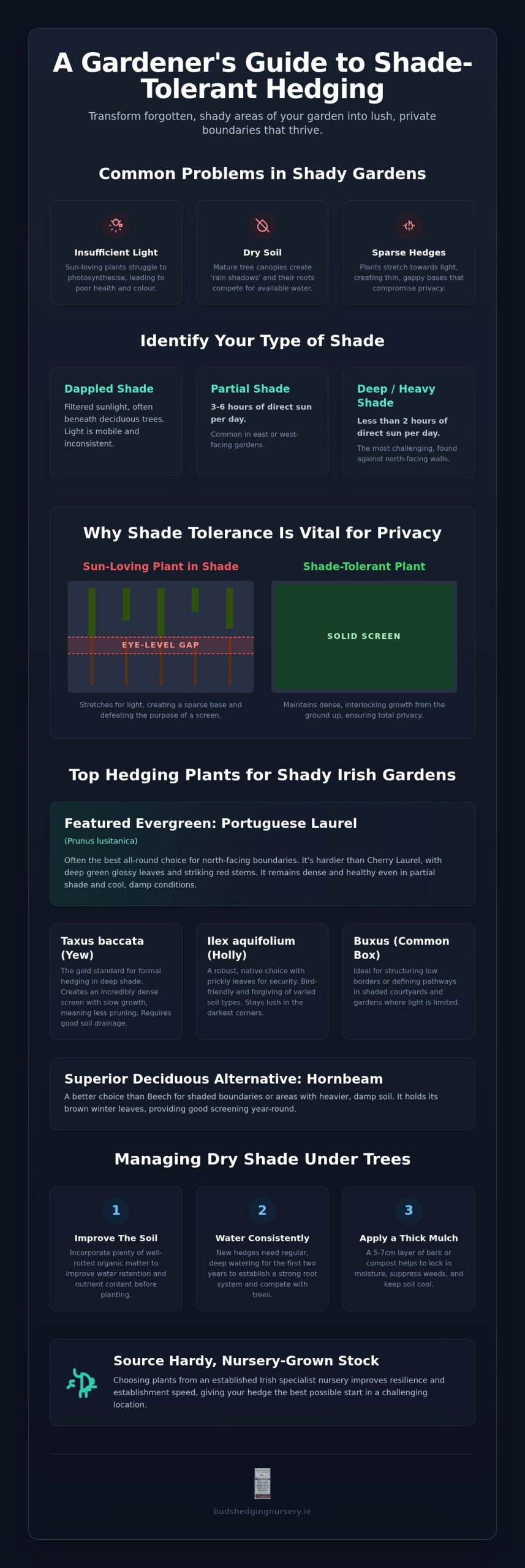
Before selecting your plants, you need to know exactly what kind of shadow you’re dealing with. Light levels change throughout the day and across the seasons. We generally categorise shade into three distinct levels:
- Dappled shade: This occurs when sunlight filters through a canopy of deciduous trees. The light is constantly moving and changing as the branches move.
- Partial shade: These sites receive between three and six hours of direct sun daily. This is common in east or west-facing gardens.
- Deep or heavy shade: This is the most challenging environment. These areas receive less than two hours of direct sun. You’ll find this against north-facing walls or under the dense canopy of evergreen trees.
Why Shade Tolerance is Vital for Privacy
Privacy is the main reason most people plant a hedge. If you choose a sun-loving species for a dark spot, it’ll likely become ‘leggy’. The plant stretches its stems towards the light, resulting in a sparse, thin base with leaves only at the very top. This leaves gaps at eye level, defeating the purpose of a screen. shade tolerant hedging plants are selected because they keep their density from the ground up. They maintain a thick, interlocking branch structure even when they aren’t getting full sun. This ensures your boundary remains a solid barrier, providing the year-round coverage you need for a secure and private garden.
Top Evergreen Shade Tolerant Hedging Plants
Evergreen species provide the year-round structure every garden needs. In shaded areas, they work even harder, maintaining a wall of green when other plants have gone dormant. Selecting the right shade tolerant hedging plants ensures your boundary doesn’t just survive, but stays thick and healthy throughout the seasons. While many evergreens struggle without direct sun, a few reliable varieties have become the standard for Irish landscapes.
- Taxus baccata (Yew): This is the gold standard for formal hedging in deep shade. It grows slowly, which means it requires less pruning, yet it creates an incredibly dense, dark green screen.
- Ilex aquifolium (Common Holly): A robust native choice. Its prickly leaves offer excellent security, while its ability to produce berries in the autumn makes it a favourite for local wildlife.
- Buxus sempervirens (Common Box): Ideally suited for low borders in shaded courtyards. It’s a traditional choice for defining paths where light is limited.
Portuguese Laurel for Shady Boundaries
Prunus lusitanica, or Portuguese Laurel, is often the best choice for north-facing Irish gardens. Its deep green, glossy leaves are supported by striking red stems. This variety is significantly hardier than the more common Cherry Laurel. It thrives in partial shade and handles the damp, cool conditions typical of our climate. Growth will naturally be slightly slower in limited light, but the plant remains dense and avoids the leggy appearance seen in sun-loving species. For a detailed look at this variety, see our Portuguese Laurel: The Complete Guide for Irish Gardens 2026.
The Resilience of Yew and Holly
Managing Taxus baccata in Ireland requires attention to soil. While Yew is famously tolerant of deep shade, it doesn’t like sitting in waterlogged ground. If your shady spot is particularly damp, consider improving the drainage before planting. Holly is more forgiving of varied soil types. It provides a bird-friendly, evergreen screen that stays lush even in the darkest corners. To keep these hedges dense, prune them in late summer. This encourages the plant to put its energy into thick, lateral growth rather than stretching for light. If you’re unsure which maturity is best for your site, our team at Buds Nursery Cavan can advise on the right sizes for immediate impact.
Deciduous and Native Options for Shade
Evergreens aren’t the only solution for screening. Deciduous shade tolerant hedging plants offer a changing seasonal backdrop that benefits both the gardener and local wildlife. Many people assume that deciduous plants require full sun to produce a thick canopy. However, several native and traditional species have evolved to thrive in the lower light levels of the Irish countryside. These plants provide a softer, more natural look whilst remaining functional as a boundary.
Green Beech (Fagus sylvatica) is a popular choice that can handle partial shade. It’s prized for its ability to hold onto its brown, dried leaves throughout the winter, providing a level of privacy similar to an evergreen. It’s important to note that Beech is sensitive to soil conditions. It requires well-drained ground and might struggle in the heavy, damp clay often found in shaded corners. In those specific spots, a tougher alternative is needed to ensure the hedge doesn’t become patchy over time.
Hornbeam: The Reliable Shade Performer
Hornbeam (Carpinus betulus) is the most reliable deciduous performer for difficult, shaded sites. It’s frequently mistaken for Green Beech because it also retains its copper-coloured leaves throughout the winter if pruned correctly. However, Hornbeam is far more tolerant of heavy, wet soils and shaded conditions. It stays thicker at the base in low light, making it a superior choice for privacy in north-facing gardens where Beech might fail. This hardiness makes it a staple for those participating in the Native Trees Scheme in Ireland, where resilience and ecological fit are prioritised.
Berberis and Flowering Shrubs for Shade
If you want to bring colour to a dark corner, Berberis darwinii is an excellent addition. It’s a tough shrub that produces a mass of vibrant orange flowers in the spring, followed by blue-black berries. It’s particularly useful for the understorey of a garden, where it can grow happily beneath the shade of taller trees. Its prickly nature also makes it an effective deterrent for unwanted visitors. Integrating these species into a native hedge mix, alongside Whitethorn and Holly, creates a diverse boundary that supports pollinators and nesting birds. A mixed hedge is often more resilient to pests than a single-species row. In shaded spots, using a higher proportion of Hornbeam ensures the hedge remains a solid barrier even when the sun is low.
The Challenge of Dry Shade: Preparation and Planting
Dry shade is widely considered the most difficult environment in any garden. This condition typically occurs under the canopy of large, established trees. These mature specimens create a “rain shadow” where their leaves prevent rainfall from reaching the soil. Below the surface, their massive root systems aggressively compete for every drop of moisture and any available nutrients. Even the most resilient shade tolerant hedging plants will struggle if they are simply tucked into the ground without proper site preparation.
Success in these spots depends on getting the timing right. Preparing your soil well in advance of the bare root tree season is essential. By improving the ground before the winter planting window, you give new hedging a much better chance of survival. You aren’t just planting a hedge; you’re managing a competition for resources between new arrivals and established giants. If you need specific guidance on your site, you can get expert advice at Buds Nursery to ensure you choose the right maturity for these tough conditions.
Soil Preparation for Shady Sites
Good preparation starts with clearing the ground. You must remove all weeds and grass within at least a 60cm strip where the hedge will go. This eliminates immediate competition for surface water. Once the area is clear, loosen the soil deeply to break up any compaction caused by tree roots. Don’t be afraid to add heavy amounts of well-rotted organic matter, such as garden compost or farmyard manure. This doesn’t just provide nutrients; it acts like a sponge, holding onto moisture that would otherwise drain away.
When selecting your stock, smaller plants often establish better in dry shade. While it’s tempting to buy the tallest plants for immediate height, smaller specimens have a more manageable root-to-shoot ratio. They require less water to sustain themselves during the critical first two years. Over time, these smaller plants often overtake larger ones because they adapt more quickly to the restricted light and water levels.
Ongoing Care and Mulching
Annual mulching is a non-negotiable task in dry shade. Apply a 5cm to 7cm layer of bark mulch or compost every spring whilst the soil is still damp from winter rain. This layer suppresses weeds and significantly reduces evaporation. Because large trees are essentially “stealing” nutrients from the soil, you’ll need a regular feeding schedule. A general-purpose fertiliser applied in early spring and again in mid-summer helps compensate for this theft. Keep a close eye on your shade tolerant hedging plants for pests like vine weevil or scale insects. These often thrive in the sheltered, still air found in shady corners, and catching them early prevents them from weakening an already stressed plant.
Sourcing Shade Tolerant Plants from a Specialist Nursery
Selecting the right species is only half the battle. The success of your boundary depends heavily on the quality and provenance of the stock you plant. Buying direct from a plant nursery in Ireland ensures that your hedging has been raised in the local climate. At Buds Nursery Cavan, we grow our stock on 60 acres of dedicated production land. This exposure to Irish weather conditions from the very beginning builds a level of hardiness that imported plants often lack. When you are establishing shade tolerant hedging plants in difficult sites, starting with resilient, nursery-grown stock is essential for long-term health.
Our experience spans over 30 years of traditional growing. We understand that every garden has its own microclimate. A north-facing wall in a coastal county requires a different approach than a shaded, damp corner in the midlands. By sourcing directly from the grower, you gain access to expert guidance tailored to these specific Irish conditions. We provide a wide range of sizes, from young bare root whips to more mature, rootballed specimens. This variety allows you to choose between a cost-effective long-term project or an immediate privacy screen for a neglected, dark area of your garden.
Tailored Advice for Irish Gardeners
Choosing between bare root and container-grown plants is a common query. Bare root trees are excellent for large-scale planting during the dormant season, typically from November to March. They are cost-effective and establish well in most shaded environments. However, for certain shade tolerant hedging plants like Holly or some laurels, pot-grown options can be planted year-round. These often provide a more developed root system for immediate impact. We can help you design custom hedge mixes that balance privacy with biodiversity, ensuring your shady boundary remains a functional part of the local ecosystem.
Visit Buds Nursery Cavan
We encourage gardeners to visit our nursery in Cavan. Seeing mature specimens in the ground helps you understand the natural growth habits and eventual density of different species. It’s the best way to visualise how a Hornbeam or Yew hedge will look once established in your own space. For those further afield, we offer national delivery across Ireland for all our hedging and trees. We organise our logistics to ensure plants arrive in peak condition, ready for immediate planting. Our commitment to quality and traditional growing methods means you receive plants that are fit for purpose and ready to thrive in the toughest garden shadows.
Establishing a Resilient Boundary in the Shade
Turning a dark or north-facing garden into a private, green sanctuary is entirely possible with the right approach. Success starts with matching your species to the specific light levels of your site, whether you’re dealing with the moving patterns of dappled shade or the deep shadows of an urban courtyard. It’s equally important to address the soil; proper conditioning and mulching are essential for helping new plants compete with established trees for moisture and nutrients whilst they establish.
Choosing high-quality shade tolerant hedging plants that have been raised in our local climate provides the best foundation for a thick, healthy hedge. At Buds Nursery Cavan, we grow our stock on 60 acres in the heart of Ireland, drawing on over 30 years of horticultural expertise to ensure every plant is hardy and fit for purpose. Whether you need the formal structure of Yew or the wildlife benefits of a native mix, we can help you select the right variety for your specific conditions.
Explore our full range of shade-tolerant hedging at Buds Nursery Cavan and take advantage of our national delivery service for all orders. With a bit of preparation and the right plants, you can transform even the most difficult shaded corner into a lush, thriving boundary.
Frequently Asked Questions
Which evergreen hedge is best for full shade in Ireland?
Taxus baccata (Yew) is the most reliable evergreen for full shade. It’s a slow grower but creates a dense, formal screen in areas where other plants fail to thrive. Yew is particularly suited to the Irish climate, provided the soil isn’t waterlogged. It maintains its dark green colour even in the deepest shadows, making it a reliable choice for north-facing boundaries.
Will Portuguese Laurel grow in a north-facing garden?
Yes, Portuguese Laurel is an excellent choice for north-facing gardens. It’s a hardy variety that manages the cooler soil and lower light levels of a northern aspect better than many other evergreens. Its glossy leaves and red stems add visual interest whilst providing a thick, year-round privacy screen. It’s one of the most versatile shade tolerant hedging plants for Irish conditions.
How do I stop my hedge from going thin at the bottom in the shade?
Tapering your hedge during pruning is the best way to prevent a thin base. You should always keep the top slightly narrower than the bottom to allow what little light is available to reach the lower foliage. Additionally, clearing competition from weeds and grass around the base ensures the lower branches aren’t fighting for nutrients and water in already difficult conditions.
Can I plant a beech hedge under large trees?
Planting Beech under large trees is often unsuccessful. Beech is sensitive to dry shade and root competition, which usually leads to sparse, unhealthy growth. Hornbeam is a much more practical alternative for these spots. It looks very similar to Beech but has the resilience to handle the restricted water and light levels found beneath a mature tree canopy.
What is the fastest-growing shade tolerant hedging plant?
Portuguese Laurel and Cherry Laurel are the fastest-growing options for shaded areas. Whilst shade naturally slows down any plant’s development, these laurels maintain a steady growth rate compared to slower species like Yew. You can expect them to fill out a boundary relatively quickly if you prepare the soil with plenty of organic matter to support their early establishment.
How often should I water a hedge planted in dry shade?
You should water a new hedge in dry shade at least twice a week during the growing season. Because large trees act as a canopy that blocks rain and their roots pull moisture from the soil, the ground dries out rapidly. Use a soaker hose or deep-watering method to ensure the water reaches the roots of your new plants rather than just dampening the surface.
Is Hornbeam more shade tolerant than Green Beech?
Hornbeam is significantly more shade tolerant than Green Beech. It’s a tougher plant that handles the heavy, damp soils often found in shaded Irish gardens. While Beech can become leggy and lose its lower leaves in low light, Hornbeam maintains a thick, interlocking branch structure. This makes it the superior choice for a deciduous hedge in difficult, north-facing sites.
Are there any flowering hedging plants that like the shade?
Berberis darwinii and Viburnum tinus are two of the best flowering shade tolerant hedging plants. Berberis darwinii produces a mass of orange flowers in spring, whilst Viburnum tinus offers white or pinkish blooms during the winter months. Both species are hardy and will provide seasonal colour and interest even in parts of the garden that receive very little direct sunlight.