

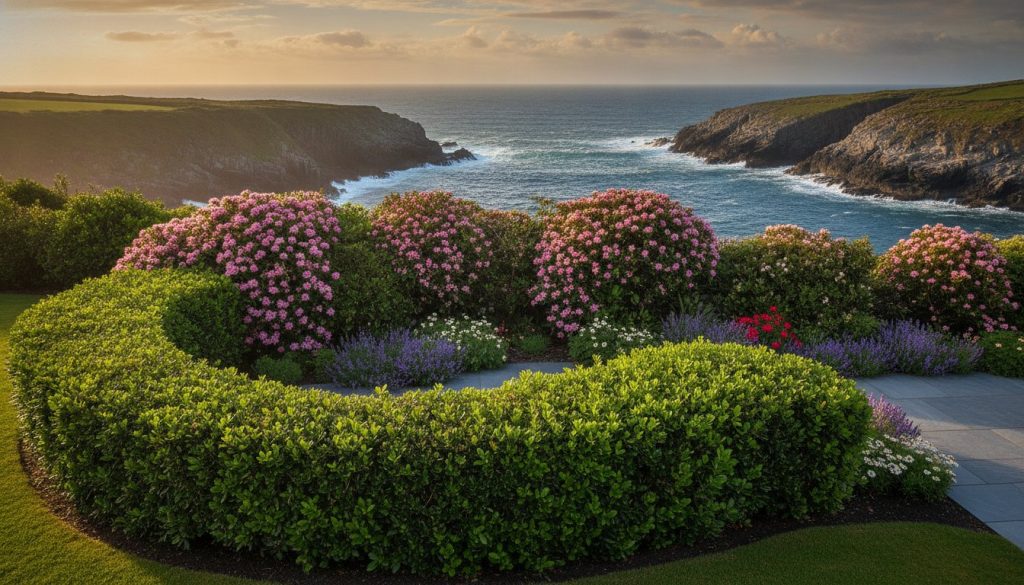
Why spend another season watching your new hedge turn brown and brittle as soon as the first Atlantic gale hits? Many homeowners find that selecting reliable plants for coastal gardens Ireland is a constant battle against salt scorch and thin, sandy soil. You’ve likely seen promising shrubs flattened by a single winter storm, leaving your boundary exposed and your privacy gone whilst you’re left to start over again.
The secret isn’t fighting the weather, but choosing pioneer species that treat the salt spray as a baseline rather than a threat. With over 30 years of experience growing hardy stock on our 60-acre site, we understand which varieties can actually stand up to the Irish coast. This guide introduces the most resilient hedging and shrubs, from salt-hardy Griselinia to robust Escallonia, capable of thriving in 2026’s unpredictable climate. You’ll discover how to create a natural windbreak that protects your property and allows more delicate species to flourish in a sheltered, low-maintenance microclimate.
Key Takeaways
- Identify how salt spray and Atlantic winds cause “salt burn” and mechanical stress on non-tolerant garden species.
- Select the most resilient plants for coastal gardens Ireland, including the reliable Griselinia and flowering Escallonia hedging.
- Incorporate hardy ornamental shrubs like Photinia Red Robin and Viburnum Tinus to maintain colour and structure in exposed sites.
- Utilise the bare root planting season to establish deep, robust root systems capable of anchoring plants against coastal gales.
- Source acclimatised stock from a specialist nursery to ensure your plants are hardy enough for immediate exposure to seaside conditions.
Understanding the Challenges of Irish Coastal Gardening
Gardening along the Irish coastline offers stunning views, but it presents a set of environmental hurdles that would defeat most standard garden varieties. To succeed, you have to work with the elements rather than against them. Choosing the right plants for coastal gardens Ireland requires an understanding of how salt, wind, and soil interact to create a high-stress environment. It isn’t just about the cold; it’s about the physical and chemical toll the Atlantic takes on every leaf and stem.
Identifying Salt Spray Damage
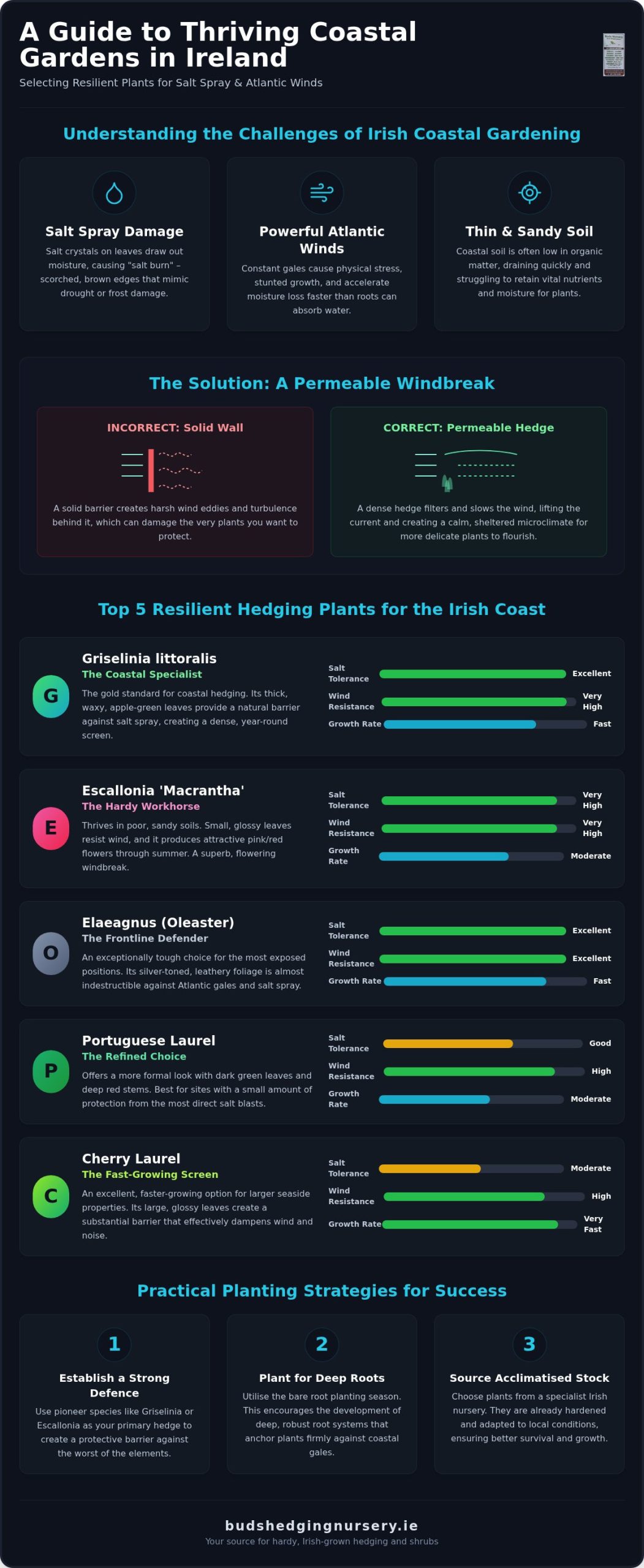
Salt spray is perhaps the most persistent challenge for seaside gardeners. After a heavy storm, you might notice “salt burn” on your hedges. This looks like scorched, brown edges on the leaves, often mistaken for drought damage or frost. Salt crystals deposited on foliage draw moisture out of the plant cells through osmosis, effectively dehydrating the tissue from the outside. Deciduous plants with thin, soft leaves are particularly vulnerable. To counter this, look for species with leathery, waxy, or hairy foliage. These physical adaptations help the plant shed salt and retain internal moisture, even when the air is thick with brine.
The Role of Windbreaks
The Atlantic gales do more than just snap brittle branches. Constant wind exerts mechanical stress that can stunt growth and cause “wind-pruning,” where a shrub grows lopsided away from the prevailing breeze. More importantly, high winds accelerate transpiration. They strip moisture from the leaves faster than the roots can pull water from the soil. A robust primary hedge acts as a filter rather than a solid wall. A solid barrier often creates turbulent eddies that can dump wind force directly onto delicate plants behind it. A permeable windbreak, such as a thick hedge of Griselinia or Escallonia, slows the wind down and lifts the air current. This creates a sheltered microclimate where more sensitive ornamental species can actually survive.
Coastal soil conditions add another layer of difficulty. Many seaside gardens sit on thin, rocky ground or deep, hungry sand that drains almost instantly. These soils are often low in organic matter and struggle to hold onto nutrients. This is why the concept of “pioneer” plants is so vital. These are the hardy, salt-tolerant species that establish the first line of defence. They are capable of rooting into poor soil and enduring the worst of the spray. Once these pioneers are established, they provide the necessary protection for the rest of your garden to thrive.
The Best Coastal Hedging Plants for Salt and Wind
Selecting the right species for a boundary is the most important decision you’ll make for a seaside plot. Not all evergreens handle the high-salt environment. Some scorch. Others simply fail to thrive. The following varieties have proven themselves across the most exposed sites in Ireland. They provide the necessary “pioneer” shelter mentioned previously, creating the foundation for a successful garden.
Griselinia: The Coastal Specialist
Griselinia Littoralis is the gold standard for plants for coastal gardens Ireland. Its distinctive apple-green leaves have a thick, waxy coating. This natural barrier prevents salt spray from penetrating the plant’s surface. It’s incredibly resilient. Once established, it grows at a moderate to fast rate, providing a dense screen that remains lush all year round. For those looking to block out neighbours or unsightly views, it is often cited as the best hedging for privacy Ireland has to offer in seaside locations. It requires little maintenance beyond an annual trim to keep it tidy.
Escallonia and Elaeagnus
Escallonia is a workhorse for coastal boundaries. It thrives in poor, sandy soils where other shrubs might struggle for nutrients. Varieties like ‘Macrantha’ are particularly robust. They act as a superb windbreak whilst producing small pink or red flowers throughout the summer. The foliage is small and glossy, which helps it resist the drying effects of the wind. If you need even more hardiness, Elaeagnus (Oleaster) is a tough alternative. Its silver-toned, leathery foliage is almost indestructible in the face of Atlantic gales. It’s a functional choice for the most battered frontline positions.
For larger boundaries or slightly more sheltered spots, Portuguese Laurel and Cherry Laurel are excellent choices. Portuguese Laurel offers a more refined look with dark green leaves and deep red stems. It is hardy but performs best when it has a small amount of protection from the most direct, constant salt blasts. Cherry Laurel is a faster-growing option. It creates a substantial barrier on larger seaside properties, providing a thick, glossy screen that effectively dampens noise and wind speed. Both varieties respond well to pruning and stay green throughout the winter months.
Because we grow our stock on a 60-acre site, our plants are already acclimatised to the Irish weather before they reach your garden. You can view our range of hardy hedging to find the right fit for your specific coastline. Our 30 years of experience ensures you receive plants with the root strength needed for exposed conditions.
Resilient Ornamental Shrubs for Seaside Colour
Once the primary windbreak is established, you can begin to introduce variety and colour into the internal borders. Finding ornamental plants for coastal gardens Ireland involves looking for species that can withstand occasional salt drift whilst offering seasonal interest. These shrubs act as the ‘second line’ of planting, filling the gaps behind your main hedging with texture and blooms. They rely on the microclimate created by your boundary but still need a high level of inherent hardiness to deal with the damp Atlantic air.
Evergreen Interest with Photinia and Viburnum
Photinia Red Robin is a versatile choice for its bright red spring foliage. It provides a vibrant splash of colour that lasts for several weeks before maturing to dark green. Whilst it is hardy, it performs best when tucked behind a sturdier hedge like Portuguese Laurel. The dark, glossy leaves of the Laurel provide a neutral backdrop that makes the Photinia’s crimson tones stand out. This combination creates a sophisticated, multi-layered look that remains evergreen throughout the year and offers excellent privacy.
Viburnum Tinus is another essential for the seaside garden. It offers white flowers in the middle of winter when little else is happening. It has a dense, bushy habit that holds up well in exposed corners where other plants might look sparse. To keep these shrubs from becoming leggy in the wind, prune them lightly but regularly. This encourages a tighter branch structure. A compact shrub is far less likely to be damaged by gales than one with long, whip-like branches that catch the wind and snap under pressure.
Hardy Flowering Shrubs
Hydrangeas are a staple of the Irish coast for a reason. They thrive in the damp, salt-laden air and are one of the few flowering shrubs that genuinely enjoy sandy soils. They provide massive colour impact from mid-summer through to autumn. Because they are deciduous, they don’t suffer from leaf burn in the winter; they simply drop their foliage before the harshest storms arrive. They are particularly effective when planted in groups to create a sea of blue, pink, or white blooms that define the classic Irish coastal look.
For areas where you need a bit more physical protection, Berberis Darwinii is an excellent option. Its small, holly-like leaves are tough and thorny, making it a good deterrent for boundaries, whilst its bright orange flowers provide a striking contrast against grey coastal skies. Finally, for low-maintenance ground cover, Hypericum Hidcote is difficult to beat. It produces large yellow blossoms and spreads comfortably amongst rocks or on sloping banks. It helps to anchor the soil in gardens where erosion is a concern and requires very little attention once the roots take hold in the local ground.
Practical Planting Strategies for Exposed Coastal Sites
Choosing the right species is only half the battle. On the Irish coast, the physical act of planting requires extra care to ensure young stock doesn’t succumb to the elements before it can establish. Successful establishment of plants for coastal gardens Ireland depends heavily on timing. Planting during the bare root tree season Ireland, which runs from November to March, allows young specimens to settle their roots whilst they are dormant. This avoids the stress of high summer temperatures and ensures they are anchored before the spring growth spurt begins.
Coastal ground is often thin, rocky, or excessively sandy. These conditions drain too quickly and offer little nutrition. Improving the soil structure is essential. Dig in generous amounts of well-rotted manure or organic compost to increase moisture retention. For very sandy sites, adding a layer of heavier topsoil can provide the necessary weight and minerals that young hedging requires to build a strong root system.
Establishing Bare Root Coastal Hedges
Bare root plants are the most cost-effective way to plant long coastal boundaries. Because they are grown in open ground rather than pots, they often develop more natural root systems. When planting, follow these steps:
- Dig a trench: A continuous trench is better than individual holes for hedges. It allows roots to spread laterally and provides a uniform growing environment.
- Incorporate organic matter: Mix compost into the bottom of the trench to encourage deep rooting and nutrient uptake.
- Puddle in: Fill the trench with water before you finish backfilling. This “puddling in” technique ensures the soil makes direct contact with every fine root hair, eliminating air pockets that could freeze or dry out.
Temporary Wind Protection
Even salt-tolerant species like Griselinia need help during their first two winters. Windbreak netting is a temporary mesh used to reduce wind speed by 50% whilst hedges establish. Secure this netting to sturdy timber posts on the seaward side of your new hedge. It acts as a mechanical shield, preventing the young plants from being rocked in the ground, which can snap delicate new roots.
When setting your plants, try angling them slightly (about 10 degrees) into the prevailing wind. This encourages the plant to grow against the force, creating a more upright and stable hedge over time. Finally, apply a thick layer of bark mulch around the base. This suppresses weeds and prevents salt from accumulating in the surface soil, which can happen after heavy spray events. If you are planning a large boundary, you can source acclimatised bare root hedging directly from our nursery to ensure your plants have the best start possible.
Sourcing Coastal Plants from an Irish Specialist Nursery
Establishing a seaside boundary is a significant long-term commitment. It requires stock that is already hardened to the unique challenges of the Irish climate. Choosing a specialist plant nursery Ireland ensures that your hedging has the best possible start. At Buds Nursery Cavan, we have over 30 years of experience growing hardy varieties on our 60-acre site. This scale allows us to produce plants for coastal gardens Ireland that are far more reliable than imported alternatives found in general retail centres.
Why Acclimatisation Matters
Stock grown in milder European climates often fails when faced with a salty Irish gale. These plants are frequently raised in protected environments or warmer regions, leaving them soft and vulnerable to “salt burn” once they reach the coast. Our plants are raised in the open air. They are exposed to the rain and wind of the border counties from the start. This process builds a resilient cellular structure in the foliage and a compact, fibrous root system. When you visit our Glassdrummon site, you can see mature specimens thriving in real-world conditions. Supporting local Irish horticulture also benefits regional biodiversity, as these plants are better suited to the local ecosystem.
Planning Your Coastal Project
If you are managing a large-scale project, expert guidance is invaluable. Selecting the right species for a specific stretch of coastline involves assessing soil depth, wind direction, and proximity to the high-tide mark. You might also consider incorporating native trees scheme plants to add ecological value to your boundary. Varieties like Whitethorn or Holly can work alongside coastal pioneers to create a diverse, wildlife-friendly screen. This approach supports local pollinators whilst providing a robust physical barrier.
Logistics are just as important as the plants themselves. We provide national delivery across Ireland, ensuring your order arrives in prime condition regardless of your location. Whether you need a few ornamental shrubs or hundreds of metres of bare root hedging, our team can organise a delivery schedule that suits your planting timeline. Sourcing directly from the grower guarantees quality. It provides a clear line of accountability for your garden’s success. By choosing acclimatised, nursery-grown stock, you ensure that your coastal garden remains lush and green for decades to come.
Build Your Resilient Seaside Boundary
Creating a lush garden on the edge of the Atlantic is entirely possible when you stop fighting the elements and start working with them. Success depends on two primary factors: selecting the right “pioneer” species like Griselinia or Escallonia and establishing them during the dormant bare root season. By focusing on soil health and providing temporary wind protection, you can transform an exposed, salty site into a sheltered haven for more delicate ornamental shrubs.
Choosing the right plants for coastal gardens Ireland is the difference between a thriving green space and a constant cycle of replacement. At Buds Nursery, we bring over 30 years of horticultural expertise and 60 acres of acclimatised stock to every project. We specialise in large-scale hedging and native trees, ensuring your boundary is robust enough for the local climate. We provide national delivery across all 32 counties, bringing nursery-fresh stock directly to your door.
Take the first step toward a more private and protected garden today. Explore our hardy coastal hedging at Buds Nursery and see the difference that professional, Irish-grown stock makes to your landscape. With the right foundation, your coastal garden will flourish for decades.
Frequently Asked Questions
What is the hardiest hedge for a coastal garden in Ireland?
Griselinia Littoralis and Escallonia are widely considered the hardiest options for coastal boundaries. Griselinia features thick, leathery leaves that naturally repel salt spray, whilst Escallonia is exceptionally robust in the face of Atlantic winds. Both species are reliable choices when selecting plants for coastal gardens Ireland because they establish quickly and maintain their foliage even in exposed frontline positions.
Can I plant Portuguese Laurel near the sea?
You can plant Portuguese Laurel in coastal areas, provided it has some protection from the most direct salt blasts. While it is a hardy evergreen, it performs best as a “second line” of defence behind a more salt-tolerant pioneer hedge like Griselinia. This placement prevents the dark green leaves from scorching whilst allowing you to enjoy its elegant red stems and dense growth.
How do I stop my plants from getting salt burn?
The most effective way to prevent salt burn is to select species with waxy, leathery, or hairy leaves that are naturally resistant to desiccation. Establishing a primary windbreak of salt-tolerant hedging will protect more sensitive species further into the garden. Additionally, maintaining healthy soil with organic mulch helps plants recover faster from the dehydrating effects of salt spray after a storm.
Will Griselinia grow in sandy soil?
Griselinia is highly tolerant of sandy soils, making it a staple for seaside properties. However, because sand drains quickly and holds few nutrients, you should incorporate well-rotted manure or compost at the time of planting. This improvement helps the roots establish firmly and ensures the hedge has access to the moisture it needs during the drier summer months.
When is the best time to plant a coastal hedge in Ireland?
The best time to plant a coastal hedge is during the dormant season, which typically runs from November to March. Using bare root stock during these months allows the root system to settle into the ground before the spring growing season begins. This timing is crucial for plants for coastal gardens Ireland, as it ensures they are well-anchored before they have to face the high transpiration rates of a windy summer.
Do I need to wash salt off my plants after a storm?
Washing salt off your plants with a garden hose after a major storm is a practical way to reduce foliage damage. This is particularly beneficial for species that aren’t fully salt-tolerant, as it prevents the salt crystals from drawing moisture out of the leaves. Focusing on the seaward side of the plants will help mitigate the worst effects of salt burn and keep the garden looking healthy.
Which flowering shrubs are best for seaside gardens?
Hydrangeas and Escallonia are among the best flowering shrubs for seaside conditions. Hydrangeas thrive in the damp, salt-laden air and provide massive colour impact, whilst Escallonia offers evergreen cover and summer blooms. Berberis Darwinii and Hypericum Hidcote are also excellent choices for adding texture and hardy yellow or orange flowers to a coastal border.
How do I protect new plants from high winds?
Protecting new plants requires a combination of physical support and temporary shielding. Installing windbreak netting on the seaward side can reduce wind speed by up to 50% whilst the roots take hold. For larger specimens, use sturdy stakes and consider angling the plants slightly into the prevailing wind to encourage a stable, upright growth habit as they mature.