

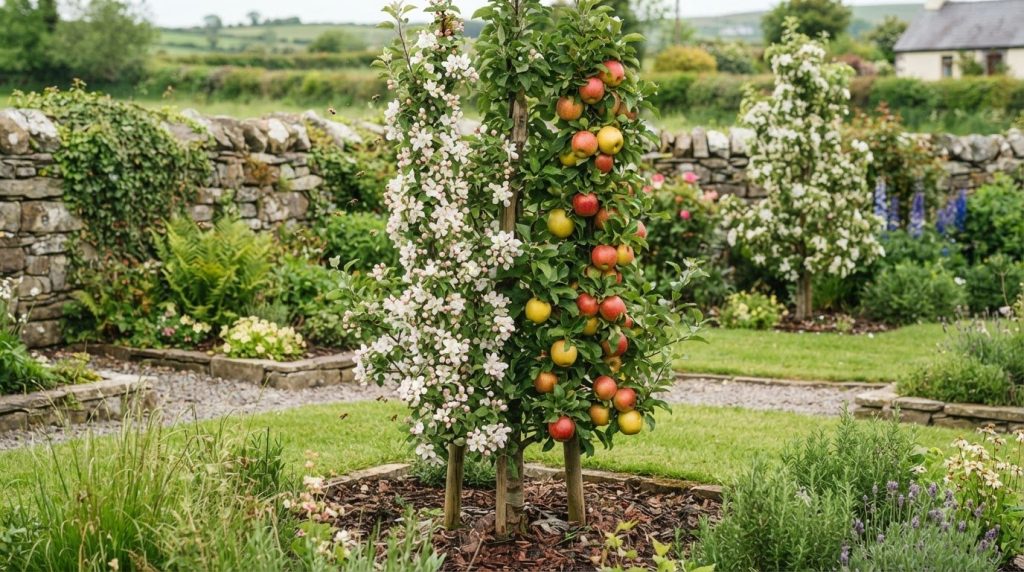
A self-fertile fruit tree can still produce a disappointing crop. If your garden has room for only one tree, choosing from the options for self-pollinating fruit trees Ireland can offer is a sensible start, but the label is not a guarantee of fruit.
Terms such as self-fertile, partially self-fertile and cross-pollinating can be confusing when you are trying to work out whether a tree will fruit on its own. Self-fertility means a tree can set fruit without a pollination partner, though a compatible tree nearby may improve the crop. Flowering conditions, the site and the tree’s suitability for your garden also matter.
This guide explains how pollination works and compares fruit-tree choices for gardens with limited space. You will learn what self-pollination does and does not promise, what to consider about rootstock and growing conditions in Ireland, and what to check before selecting and planting a tree. Use these details to choose for your space and conditions, rather than relying on a label alone.
Key Takeaways
- Use the label for self-pollinating fruit trees Ireland as a starting point, then confirm the chosen cultivar’s pollination requirements.
- If you are considering a pollination partner, check that the cultivars are compatible and flower at the same time.
- Compare the space and planning needs of one tree with those of two trees before deciding what suits your garden.
- Assess sunlight, drainage and exposure, then check these conditions against reliable advice for the cultivar you are considering.
- Buds Nursery Cavan sells fruit trees and offers on-site plant-selection guidance. Check current availability before travelling or ordering.
Self-pollinating fruit trees in Ireland: what the term means
If you have room for only one fruit tree, its pollination type matters. A self-fertile tree can set fruit using pollen from the same tree, so it does not depend on a second compatible tree nearby. The label describes what the tree can do, however, not how much fruit it will produce. Keep this distinction in mind when comparing self-pollinating fruit trees Ireland gardeners might consider for a small plot.
Fruit forms after pollen reaches a flower and fertilises it. Insects, including bees, can carry pollen between flowers, even when those flowers are on the same tree. Self-fertility does not mean a tree can fruit without pollen being transferred or without any pollinating insects. For a plain-language overview, see How fruit tree pollination works.
What does self-fertile mean on a fruit-tree label?
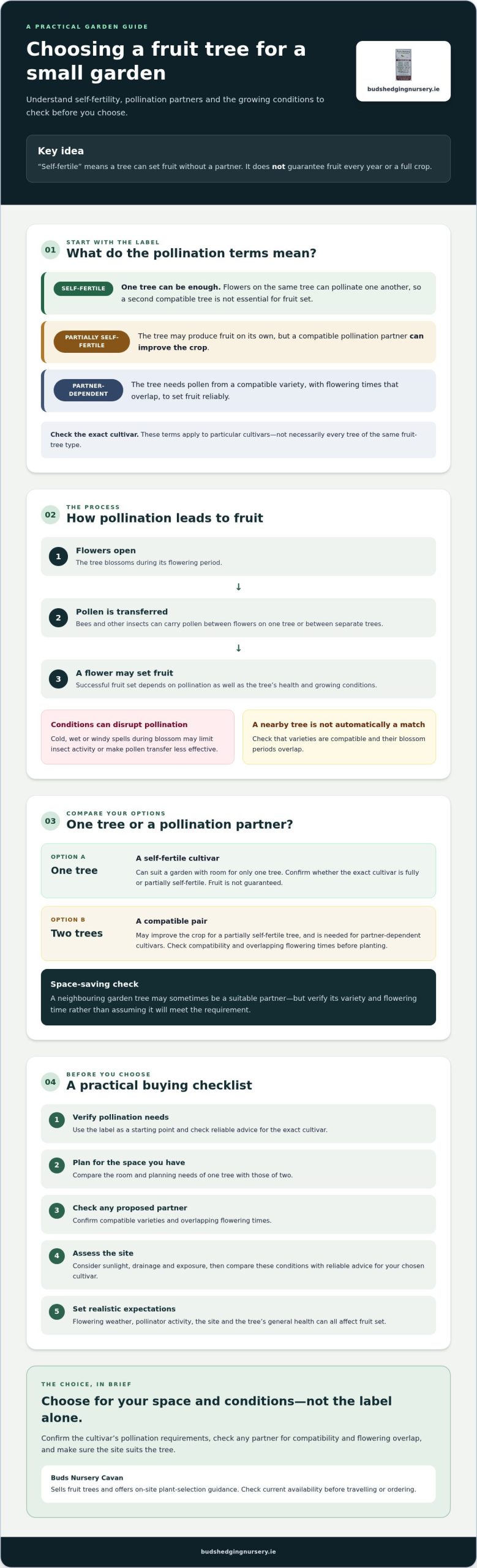
Self-fertile: Flowers on one tree can pollinate one another, so another tree is not essential for fruit set. Partially self-fertile: The tree may produce fruit on its own, but a compatible pollination partner can improve the crop. Pollination-partner-dependent: The tree needs pollen from a compatible variety, with flowering times that overlap, to set fruit reliably.
These terms apply to particular cultivars, not necessarily to an entire fruit-tree species. Check reliable information for the exact cultivar you are considering instead of assuming every tree of that type has the same pollination needs. If you are choosing just one, confirm whether it is fully or partially self-fertile before buying.
Does one self-pollinating tree always produce a crop?
No. Self-fertility makes a tree capable of setting fruit without a pollination partner, but it does not guarantee fruit set or a particular harvest size. Weather during flowering can affect pollination, as can pollinator activity and the tree’s general health. Growing conditions and care also matter.
Self-fertility means a tree can fruit without a partner; it does not promise fruit every year or a full crop.
For a garden with limited space, a self-fertile cultivar can make a single-tree plan possible. A partially self-fertile tree may also be suitable, though a compatible partner could improve the crop if space allows. A partner-dependent tree needs more planning: check compatibility and flowering overlap before planting. These distinctions help you match your choice to both your garden and your expectations.
How fruit-tree pollination works in Irish gardens
Pollination is the transfer of pollen from a flower’s male parts to its female part. Bees and other insects can carry it as they visit blossoms, moving between flowers on one tree or between separate trees. A fruit tree’s pollination needs depend on its species and often its cultivar. The RHS explains how fruit tree pollination works, including the role of insects and compatibility between trees.
A tree that needs a partner will not be helped by just any second tree. The varieties must be compatible, and their blossom periods need to overlap so pollen is available while both are flowering. A tree in a neighbouring garden may sometimes be suitable, but check the varieties and flowering times rather than assuming it will meet the requirement.
When does a fruit tree need a pollination partner?
Some cultivars set fruit more reliably with pollen from a compatible tree. Others can set fruit without one. If you are considering a pair, check cultivar-specific pollination advice before buying. Confirm that the trees are compatible and flower at the same time. Pollination groups can help, but check the information for the particular cultivar rather than applying a rule to every apple, pear, plum or cherry.
A suitable pollination partner must be compatible and in flower at the same time. If space is tight, establish whether your preferred tree can fruit on its own before planning for a second.
What can affect pollination and fruit set in Ireland?
Conditions during blossom vary between sites and seasons. Cold, wet or windy spells may limit insect activity or make pollen transfer less effective while flowers are open. The effect will not be the same in every garden, and weather is only one factor. A sheltered site with suitable conditions for pollinating insects can support visits to blossom, but it cannot remove the need for a compatible partner where one is required.
When comparing self-pollinating fruit trees Ireland has to offer, treat pollination details as part of the buying decision, not an afterthought. Confirm the exact cultivar’s needs and, if you plan to plant a partner, check flowering overlap. Buds Nursery sells fruit trees and provides on-site plant-selection guidance. You can ask about fruit-tree selection and check current availability before travelling or ordering.
Self-pollinating fruit trees versus pollination partners: compare your options
Choosing between one tree and a pair involves more than pollination. Consider the space you have, the fruit you want and the cultivar’s requirements. A self-fertile label does not make pollination conditions irrelevant: insects still need to transfer pollen, and blossom weather and tree health can affect fruit set. A compatible partner can improve the crop for some cultivars, but it is not a universal requirement or guarantee.
Is one tree enough for a small garden?
A confirmed self-fertile cultivar may suit a garden with room for just one tree. A partially self-fertile cultivar may also set fruit alone, though its crop could benefit from a compatible partner. If space allows, a second tree may be worth considering, but check compatibility and flowering overlap first. For either option, verify the tree’s mature dimensions and rootstock, then compare them with the space available.
| Option | Space and planning | Pollination consideration |
|---|---|---|
| One self-fertile tree | Usually the simpler fit where space is limited. Check its mature size. | Can set fruit without a partner, but this does not guarantee a crop. |
| One partially self-fertile tree | Uses space for one tree, but cropping alone may be less certain. | A compatible partner may improve fruit set. Confirm the cultivar’s needs. |
| Two compatible trees | Needs more room and planning, including space for both mature trees. | Check that the cultivars are compatible and flower at the same time. |
How should you compare fruit-tree types and cultivars?
Start with the exact cultivar, not a broad label such as apple, pear or plum. Pollination requirements can differ within each type, so check whether the tree is self-fertile, partially self-fertile or dependent on a partner. Then consider how you want to use the fruit, such as eating it fresh or cooking with it, and whether the tree’s size and growing needs suit your garden.
Use this order to narrow your choice:
- Pollination: Confirm the cultivar’s requirements and whether a partner is needed or may improve its crop.
- Space: Check mature dimensions and rootstock information for the tree you are considering.
- Site and use: Match the cultivar’s growing needs and intended fruit use to your garden and plans.
These checks make choosing self-pollinating fruit trees Ireland gardeners consider more practical than relying on a label alone. Buds Nursery sells fruit trees and offers on-site plant-selection guidance. Check which options are currently available before travelling or ordering.
A buying checklist for self-pollinating fruit trees in Ireland
Prepare before you buy so you can match a tree to your garden rather than choosing by label alone. Work through the checks in this order: space, site conditions, pollination needs and current availability. This is especially useful if you are comparing self-pollinating fruit trees Ireland gardeners can grow in a limited space.
What should you check about your garden before buying?
Start with the planting space. Check reliable information for the chosen cultivar and rootstock to understand its mature height and spread. A young tree may look compact, but its eventual canopy needs room, and you will need access to plant and care for it. Do not rely on a general size estimate for an entire fruit-tree species.
Next, note the conditions at the intended planting spot. Consider how much sunlight it receives, whether water drains freely or tends to sit, and how exposed the site is to wind. These factors vary between gardens. Record what you observe and compare it with cultivar-specific growing advice, or discuss it with a knowledgeable nursery before deciding.
What should you ask before choosing a tree?
Confirm the exact cultivar’s pollination type. Ask whether it is self-fertile, partially self-fertile or dependent on a compatible partner. If it needs or benefits from another tree, check which cultivars are compatible and whether their flowering periods overlap. A “self-fertile” label does not guarantee a harvest, so treat pollination as one part of the selection process, not the only test.
- Size and form: What are the mature dimensions, and what form is the tree supplied in?
- Roots and planting: Is it bare-root or container-grown, and what planting guidance applies to this tree?
- Availability and delivery: Is the cultivar currently available, and what delivery arrangements apply?
If you are considering a bare-root option, read this bare-root tree planting guide and confirm the planting advice for the tree you select. A specialist plant nursery can help you check sourcing and selection details for your site.
Buds Nursery sells fruit trees and offers on-site plant-selection guidance. Before travelling or ordering, contact the nursery to check fruit-tree availability and delivery arrangements.
Choose a fruit tree with confidence and plan your next step
A suitable choice brings together the cultivar’s verified pollination needs, the space and conditions in your garden, and how you plan to use the fruit. A self-fertile label can make planting a single tree possible, but it should not be the only reason to choose a particular tree. For gardeners comparing self-pollinating fruit trees Ireland offers, checking cultivar-specific information is a sound final step before buying.
How to turn your shortlist into a suitable choice
Review your garden notes alongside the tree’s mature size, site requirements and pollination information. If anything is unclear, confirm the details for the exact cultivar with a knowledgeable nursery. Ask whether the options you are considering suit your available space and site conditions.
Keep your intended use in view, too. Choose a tree that will fit the garden as it grows and produce fruit you will use. If you are considering a pollination partner, include its space requirements and compatibility in your decision rather than treating it as an afterthought.
What to do before placing an enquiry
Have a few details ready to make questions about selection more useful. Note the approximate planting space, sunlight, drainage and exposure. Include whether another fruit tree is nearby, if you know its variety, and whether you want a single tree or would consider a compatible pair.
- Ask for the cultivar’s pollination classification and any partner requirements.
- Confirm the tree’s form, root type, mature dimensions and planting guidance.
- Check current availability directly, as stock can change.
- For a larger order, ask about delivery options and arrangements before proceeding.
These checks help you compare suitable options without assuming a particular variety is in stock or that delivery applies to every order. Buds Nursery can provide plant-selection guidance on site; confirm current availability and delivery arrangements before travelling or ordering.
Once you have your garden details and questions ready, browse Buds Nursery for fruit-tree options.
Make your next fruit-tree choice with confidence
Choosing self-pollinating fruit trees Ireland gardeners can grow starts with more than a label. Confirm the cultivar’s pollination needs, then check its mature size and growing requirements against your garden. Self-fertility can make planting one tree an option, but it does not guarantee fruit or remove the influence of site and flowering conditions.
Before deciding, note your available space, sunlight, drainage and exposure. If you are considering a pollination partner, check compatibility and flowering overlap. These details help you ask focused questions and compare options that suit both your garden and how you intend to use the fruit.
Delivery options are available for larger orders; check current arrangements and fruit-tree availability before travelling or ordering.
Ready to explore your options? Browse fruit trees and ask Buds Nursery about current availability. With these checks in place, you can choose a tree that fits your space and plan how to get it established.
Frequently Asked Questions
Are apple trees self-pollinating in Ireland?
Some apple cultivars are self-fertile, but not all apples are. For example, ‘Cox’s Orange Pippin’ and ‘Summer Red’ are listed as self-fertile in the information used for this guide. Other cultivars may need a compatible pollination partner, or crop better with one. Check the pollination details for the exact cultivar you are considering, including whether it flowers at the same time as a potential partner.
Can one self-pollinating fruit tree produce fruit on its own?
Yes. A confirmed self-fertile tree can set fruit without a second compatible tree nearby. However, self-fertility describes its capacity to pollinate itself, not a promise of fruit every year or a particular harvest size. Pollen still needs to reach flowers, often with help from insects. Blossom-period weather, pollinator activity, site conditions and the tree’s health can all influence fruit set.
Which fruit trees can grow without a pollination partner?
It depends on the cultivar, not just the fruit-tree type. Examples listed as self-fertile in the information used for this guide include the apple cultivars ‘Cox’s Orange Pippin’ and ‘Summer Red’, the cherry ‘Stella’, and the plum cultivars ‘Victoria’ and ‘The Czar’. Some pears, including ‘Conference’ and ‘Concorde’, are described as partially self-fertile and may crop better with a suitable partner. Verify cultivar details before choosing.
Do self-fertile fruit trees still need bees or other pollinating insects?
Self-fertile does not mean a tree can set fruit without pollen transfer. Bees and other insects can carry pollen between flowers on the same tree, helping pollination take place. A self-fertile tree does not rely on a second compatible tree in the same way as a partner-dependent cultivar. Insect activity can help, but it cannot guarantee a crop.
How can I tell whether two fruit trees will pollinate each other?
Check reliable, cultivar-specific pollination information for both trees. They must be compatible, and their flowering periods need to overlap so pollen is available while both are in blossom. A general label such as “apple” or “pear” is not enough to confirm a suitable match. Before buying a second tree, ask the nursery to check compatibility and flowering timing for the exact cultivars you are considering.
Will Irish weather affect fruit-tree pollination?
It can. Cold, wet or windy conditions during blossom may reduce insect activity or make pollen transfer less effective, but the effect varies between gardens and seasons. A sheltered site and conditions that support pollinating insects can help, though neither guarantees fruit set. If a cultivar needs a partner, check compatibility and flowering overlap as well as considering your garden’s exposure and conditions during blossom.
When is the best time to plant a self-pollinating fruit tree in Ireland?
Bare-root fruit trees are generally planted during the dormant season, from autumn to early spring, typically November to March. Potted trees can be planted throughout the year, according to the information used for this guide. Check the planting advice for the tree you choose, as timing can depend on its form and conditions at your site. Confirm current stock before travelling or ordering.