

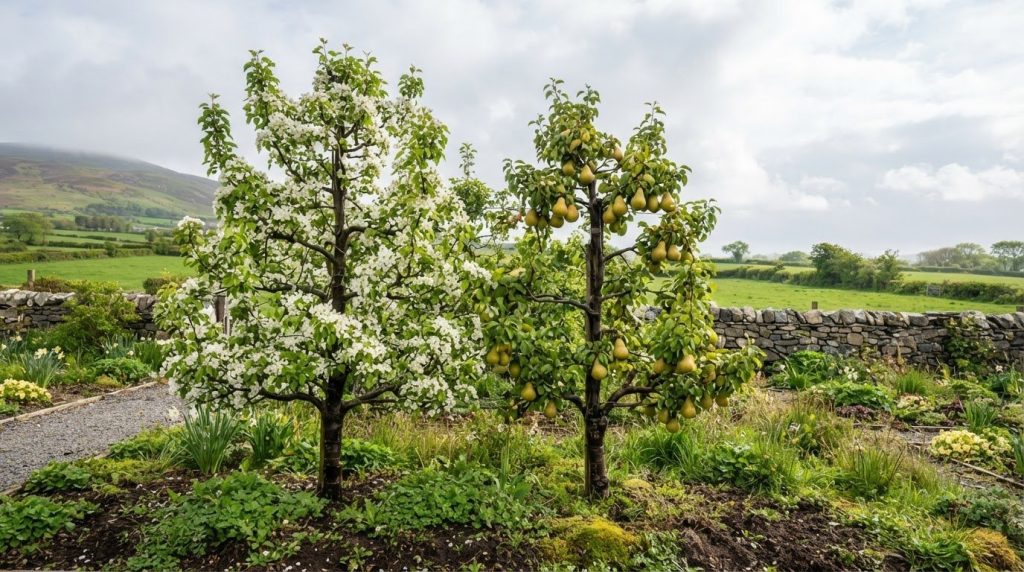
A pear tree that can set fruit alone may still crop better with a partner. If you’re comparing pear trees that grow well in Ireland, this distinction matters: ‘Conference’ is partially self-fertile, but most pear varieties need a compatible tree flowering nearby for a reliable crop.
Choosing a variety means balancing flavour and harvest time with pollination needs and the space available. A sunny, sheltered position with free-draining soil also gives a young pear tree a better chance to establish in Ireland’s changeable conditions.
This guide compares varieties such as ‘Conference’ and ‘Williams’ Bon Chrétien’, including their flavour, picking period and pollination needs. You’ll also learn when one tree may be enough, how rootstock affects eventual size, and what site preparation and aftercare can help your choice succeed. Check current cultivar and rootstock availability before making planting plans.
Key Takeaways
- To choose pear trees that grow well in Ireland, consider your garden’s conditions as well as the variety’s likely fruiting performance.
- Check flowering compatibility before choosing a tree. A suitable pollination partner can improve fruit set.
- Consider rootstock as well as variety when deciding whether a pear tree will fit your available space.
- Choose a sunny, sheltered position with well-drained soil, then water carefully while the tree establishes.
- Before travelling or ordering, check which cultivars, rootstocks and tree sizes are currently available.
Which pear trees grow well in Ireland? Start with the variety shortlist
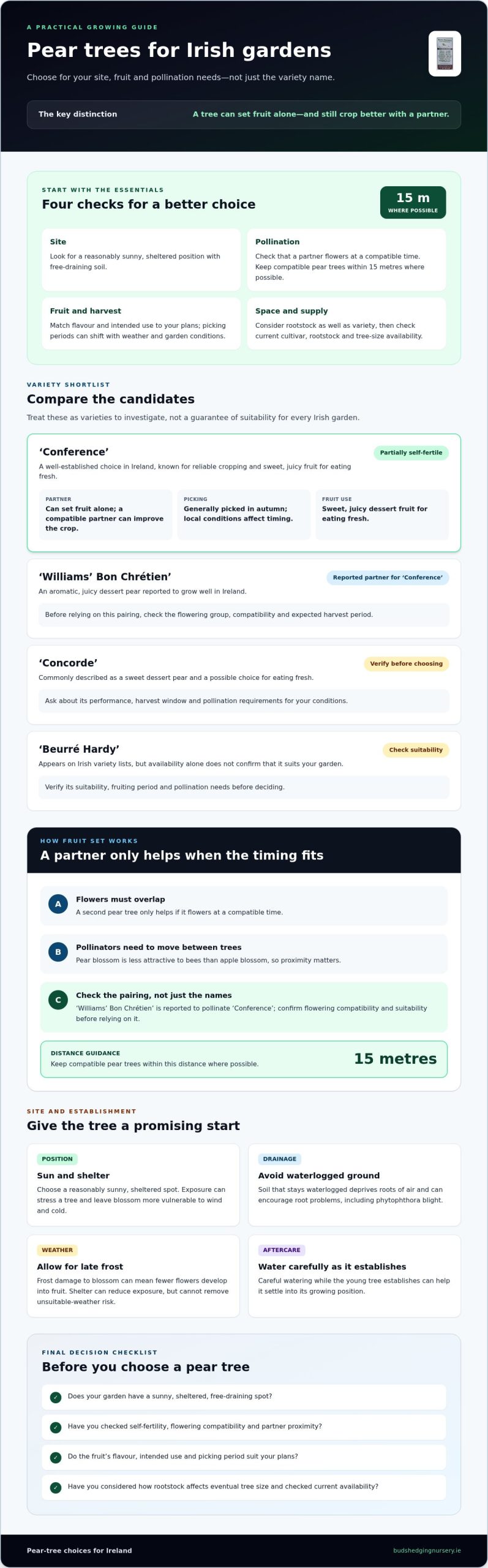
Several pear cultivars may suit Irish gardens, but the right choice depends on your site, pollination options and the fruit you want. ‘Conference’ is a well-established candidate, while ‘Concorde’, ‘Williams’ Bon Chrétien’ and ‘Beurré Hardy’ are also worth investigating. Treat these as a shortlist, not a guarantee. Check cultivar-specific advice for your growing conditions and confirm what is currently available before buying.
Pear varieties to investigate for Irish gardens
‘Conference’ is widely grown in Ireland and known for reliable cropping and sweet, juicy fruit for eating fresh. It is partially self-fertile, so one tree may set fruit, but a compatible pollination partner can improve the crop. Its fruit is generally picked in autumn, although local conditions affect timing.
‘Concorde’ is commonly described as a sweet dessert pear. It may suit gardeners looking for fruit to eat fresh, but check its performance, harvest window and pollination requirements with a knowledgeable supplier before choosing it. ‘Williams’ Bon Chrétien’ is another dessert option, with aromatic, juicy fruit. It is reported to grow well in Ireland and can pollinate ‘Conference’. Check flowering compatibility and the expected harvest period before planting.
‘Beurré Hardy’ appears on Irish variety lists, but availability alone does not confirm that it suits your garden. Verify its suitability, fruiting period and pollination needs before choosing. The list of pear cultivars can help you explore varieties, but use growing advice relevant to your conditions to make the final choice.
Match a pear tree to how you will use the fruit
Consider the harvest as well as the flavour. Dessert pears are generally chosen for eating fresh, while cooking varieties are selected for how they hold up in prepared dishes. The candidates above are generally treated as dessert pears, so check a variety’s intended use if you mainly want fruit for cooking.
Picking periods can shift with the weather and garden conditions, so treat cultivar harvest descriptions as guides rather than fixed dates. If you want fruit over a longer period, compare the expected picking windows of compatible varieties. This plan still depends on their flowering times overlapping for pollination.
Choose for both garden and table. A sunny, sheltered site may suit one candidate better than another, and a pear’s flavour is only one part of a successful choice. Ask for verified details about flowering group, self-fertility and harvest timing before deciding. These checks help turn a promising variety name into a practical choice for your garden.
How Irish weather, pollination and garden conditions shape pear-tree success
A promising variety won’t compensate for a poor planting position. Conditions vary across Ireland, so assess the spot itself: how much direct sun it gets, whether it is exposed to wind and how quickly the soil drains after rain. These checks help you decide which pear trees that grow well in Ireland are realistic options for your garden.
What growing conditions should a pear tree have in Ireland?
Look for a reasonably sunny, sheltered position. A very exposed site can stress a tree and leave its blossom more vulnerable to wind and cold. Late frost is another risk: damage to blossom can mean fewer flowers develop into fruit. A sheltered position can reduce exposure, but it cannot remove the risk of unsuitable weather.
Check drainage before planting. Soil that stays waterlogged deprives roots of air and can encourage root problems, including phytophthora blight. If water regularly sits in the planting area, choose a better-drained position rather than assuming the tree will adapt. Teagasc’s guidelines for planting trees in Ireland offer useful background on preparation and timing. Adapt general tree-planting advice to the needs of a fruit tree.
Do pear trees need a pollination partner?
Pollination is the transfer of pollen between flowers, allowing fruit to develop. A second pear tree only helps if it flowers at a compatible time and pollinators can move between the trees. Pear blossom is less attractive to bees than apple blossom, so proximity matters: the research guidance recommends keeping compatible pear trees within 15 metres where possible.
Pollination needs vary by cultivar: most pear varieties need a compatible partner, while ‘Conference’ is partially self-fertile and can crop more reliably with one. ‘Williams’ Bon Chrétien’ is reported to pollinate ‘Conference’, but check the flowering group and suitability of both trees before relying on that pairing. Varieties in the same or adjacent pollination groups are generally recommended for cross-pollination.
Even a suitable pairing cannot guarantee fruit. Frost during blossom, poor weather and low pollinator activity can all affect fruit set. If you have room for only one tree, confirm its self-fertility rather than assuming it will crop alone. To explore fruit-tree options, ask about current cultivar information before choosing.
Compare pear varieties by pollination, harvest time and garden space
A useful comparison needs more than a variety name. Flowering group helps you assess pollination, expected harvest time helps you plan how to use the fruit, and rootstock gives a better indication of the tree’s eventual vigour. The table includes only details supported here. Confirm cultivar-specific information before choosing, as growing conditions and nursery stock can vary.
| Cultivar | Pollination | Expected picking period | Typical use | Flowering group and size |
|---|---|---|---|---|
| ‘Conference’ | Partially self-fertile; a partner can improve cropping | Autumn | Dessert pear, often eaten fresh | Confirm flowering group and rootstock with the supplier |
| ‘Williams’ Bon Chrétien’ | Reported pollinator for ‘Conference’; check compatibility for your chosen pairing | Confirm locally | Dessert pear | Confirm flowering group and rootstock with the supplier |
Use this as a starting point, not a guarantee of performance or stock. The RHS guide to growing pears provides further advice on choosing, pollinating and harvesting pears. Ask for cultivar-specific details before buying.
Which pear variety fits a small or larger garden?
Rootstock affects vigour and eventual tree size, so the cultivar alone won’t tell you how much room a pear needs. For a smaller garden, ask which rootstock the tree is grafted onto and request the expected mature dimensions for that exact combination. Check both height and width, including clearance from boundaries, paths and other plants. Avoid relying on generic size figures when the rootstock is unknown.
When do different pears flower and ripen?
Flowering overlap matters for pollination, while harvest overlap does not. Pears are assigned to flowering groups, commonly numbered from 1 to 4, and cross-pollination is generally best between trees in the same or adjacent groups. Verify the group for the named cultivar before planting. Irish weather can shift flowering and picking from one season to another, so treat harvest descriptions as guides rather than fixed dates.
For pear trees that grow well in Ireland, compare a verified cultivar, compatible flowering time and suitable rootstock together. If you have a particular space or use in mind, check current cultivar and rootstock details before making plans.
Plant and establish a pear tree in Ireland with fewer avoidable problems
Good establishment starts before planting. Choose a suitable position, prepare the soil, plant at the right time for the tree type, then water and check its condition as it settles in. These steps help pear trees that grow well in Ireland get a sound start, though they cannot remove the effects of poor drainage or difficult weather.
When and how should you plant a pear tree?
Bare-root pear trees are planted while dormant, generally between November and March. Avoid planting into frozen or waterlogged ground. Container-grown trees can be planted outside this window, but need careful watering, especially during dry spells. Neither option is automatically better: choose based on timing, the tree’s condition and the care you can provide.
Before planting, clear grass and weeds around the site and loosen the soil so roots can establish in prepared ground. Set the tree at the depth indicated by the supplier, keeping the graft union above the soil, then firm the earth gently around the roots and water well. For more detail on timing and technique, consult a dedicated guide to the bare-root tree planting season in Ireland.
What care helps a young pear tree establish?
A young tree may need support if wind or loose soil causes it to move. Place a stake to steady the tree, then secure the trunk with a flexible tie that holds it upright without cutting into the bark. Check the tie as the trunk grows, and adjust or remove it when the tree is stable.
Keep the area around the base clear of competing weeds and grass, which can take water and nutrients from a young tree. Water thoroughly during dry spells, particularly while roots are establishing. Avoid keeping the soil saturated: pears need moisture, but persistently waterlogged ground can harm roots.
- Select: Choose a sunny, sheltered position with free-draining soil.
- Prepare: Remove competing growth and prepare the planting area before the tree arrives.
- Plant: Follow instructions for bare-root or container-grown trees, and water in well.
- Monitor: Check moisture, weeds, tree movement and ties regularly as the tree establishes.
Care needs can vary with soil, exposure and the tree supplied. Before making plans, ask about current fruit-tree options and check the planting guidance for your chosen tree.
Choose a pear tree with confidence and check current nursery availability
Make the choice in order. Start with your site, then decide how you plan to use the fruit. Check whether the cultivar needs a pollination partner, whether its rootstock suits the space and whether its growing requirements are appropriate for your garden in Ireland. A variety name alone cannot confirm that a particular tree will thrive or crop well.
Questions to ask before choosing a pear tree
Before travelling or ordering, check what is currently available and ask for details about the specific tree. Cultivars, rootstocks and sizes can vary, so confirm rather than relying on an old list or general description.
- Which cultivar and rootstock are currently available?
- Does it need a pollination partner, and which compatible varieties flower at the same time?
- What mature size should I allow for this cultivar on this rootstock?
- When is the fruit likely to be ready for picking in my growing conditions?
- Is the tree bare-root or container-grown, and is its condition suitable for my planned planting time?
These questions help you match the tree to your space and planting plans. They also make it easier to compare options using practical details, not just flavour or a familiar cultivar name.
Get practical advice and explore fruit-tree options
Buds Nursery Cavan sells fruit trees and can advise on current options and suitability for your garden. The nursery offers sales and arranged delivery to customers across Ireland. Check directly whether a particular pear cultivar, rootstock or size is available, and confirm delivery arrangements before ordering.
For more background, consult reliable guidance on sourcing quality trees from a specialist plant nursery in Ireland, then check the details of the individual tree you’re considering. Availability can change, so make enquiries before travelling or finalising your plans.
Once you know your site, pollination needs and preferred fruit use, you’ll be better placed to choose. Ask Buds Nursery Cavan about current fruit-tree options and confirm which choices may suit your garden.
Make your pear-tree choice with confidence
The pear trees that grow well in Ireland are those matched to your garden, not chosen by variety name alone. Start with a sunny, sheltered, well-drained site, then consider how you’ll use the fruit. Check whether the cultivar needs a pollination partner, and confirm its flowering time and rootstock before buying. Rootstock affects vigour and eventual size, so ask for details that suit your available space.
Availability changes, so check current cultivars and tree sizes before travelling or ordering. Buds Nursery sells fruit trees and has operated for over 30 years. The nursery manages 60 acres dedicated to producing trees, hedging and shrubs. For practical plant-choice advice, ask Buds Nursery about current fruit-tree options, including whether a suitable pear cultivar is available.
A little checking now can help you choose a tree that fits your garden and your plans for the harvest. With the right site and a clear understanding of pollination, you can plant with confidence and look forward to seeing it establish.
Frequently Asked Questions
Which pear trees grow well in Ireland?
‘Conference’ is a well-established choice for Irish gardens, while ‘Concorde’, ‘Williams’ Bon Chrétien’ and ‘Beurré Hardy’ are varieties to investigate. Their suitability depends on your garden’s conditions and the tree’s pollination needs. ‘Conference’ is partially self-fertile, but can crop better with a compatible partner. Before choosing, check growing advice for your conditions and confirm the cultivar’s flowering group, rootstock and expected picking period.
Can pear trees grow in Ireland’s climate?
Yes, pear trees can grow in Ireland, though they generally need a suitable position to crop well. Choose a reasonably sunny, sheltered spot with free-draining soil. Strong exposure can affect blossom, while late frost may damage flowers and reduce fruit set. Soil that remains waterlogged is also a concern for root health. Conditions differ from garden to garden, so assess your site before settling on a variety.
Do I need two pear trees to get fruit?
Not always, but most pear varieties need a compatible pollination partner to produce a good crop. ‘Conference’ is partially self-fertile and may fruit on its own, though a partner can improve cropping. For cross-pollination, the trees must flower at overlapping times, and pollinators need access to the blossom. Check the flowering groups of both varieties before planting. One tree alone cannot guarantee a harvest.
When is the best time to plant a pear tree in Ireland?
Bare-root pear trees are generally planted between November and March, while dormant. Avoid planting when the ground is frozen or waterlogged. Container-grown trees can be planted outside this period, provided you take care to water them, particularly during dry spells. Prepare the site first and follow the supplier’s planting guidance for the tree’s format. If you’re buying near the edge of the planting window, check the tree’s condition and suitability.
Which pear tree is best for a small garden?
There isn’t one best cultivar for every small garden. The rootstock affects a pear tree’s vigour and eventual size, so ask for the rootstock and the expected mature height and width of that specific tree. Allow for its canopy and consider nearby boundaries, paths and plants. Don’t rely on the cultivar name alone to predict size. If the rootstock or mature dimensions aren’t confirmed, get that information before buying.
When are pears ready to harvest in Ireland?
Picking time depends on the cultivar, local conditions and the season. ‘Conference’ pears are generally harvested in autumn, but this is a guide rather than a fixed date. Weather can shift fruit development from year to year. Before planting, ask for the expected harvest period of your chosen variety and look for cultivar-specific guidance as the fruit develops. This helps you plan use and storage without relying on a calendar date alone.
Can I buy pear trees from Buds Nursery?
Buds Nursery sells fruit trees, but check directly whether a particular pear cultivar is currently available. Ask about sizes, rootstocks, pollination requirements and suitability for your garden before travelling or ordering. Buds Nursery serves customers across Ireland through nursery sales and arranged delivery. Confirm delivery arrangements directly, as eligibility and terms may vary.