


More pruning doesn’t necessarily mean more fruit. The right cuts, made at the right time, can improve light and airflow without removing the wood that would carry next season’s crop. If you’re wondering how to prune fruit trees for more fruit, start by identifying the tree and its fruiting habits, not by cutting harder.
It’s easy to hesitate when a branch looks crowded or unproductive, especially when a poorly timed cut could affect flowering and fruiting. This guide explains what to remove, what to retain and where to place clean cuts, so you can prune with a clear purpose.
You’ll learn when apples and pears are generally pruned during dormancy, why plums and cherries are commonly pruned in summer, and how to approach young or overgrown trees. We’ll also cover dead, damaged and crossing branches, what to do if you find an active bird nest, and how to keep a manageable canopy with good light and airflow.
Key Takeaways
- Learn how to prune fruit trees for more fruit by making selective cuts that support light, airflow and healthy structure.
- Use a clear sequence to assess your tree, remove problem branches and reassess before cutting further.
- Match your approach to the fruit-tree group, as apples and pears need different consideration from stone fruit.
- In Ireland, use seasonal guidance as a starting point and avoid pruning in severe frost or unsafe wet conditions.
- Choose a tree that suits your available space and likely maintenance needs, then prune only with a clear purpose.
How pruning fruit trees can support a better harvest
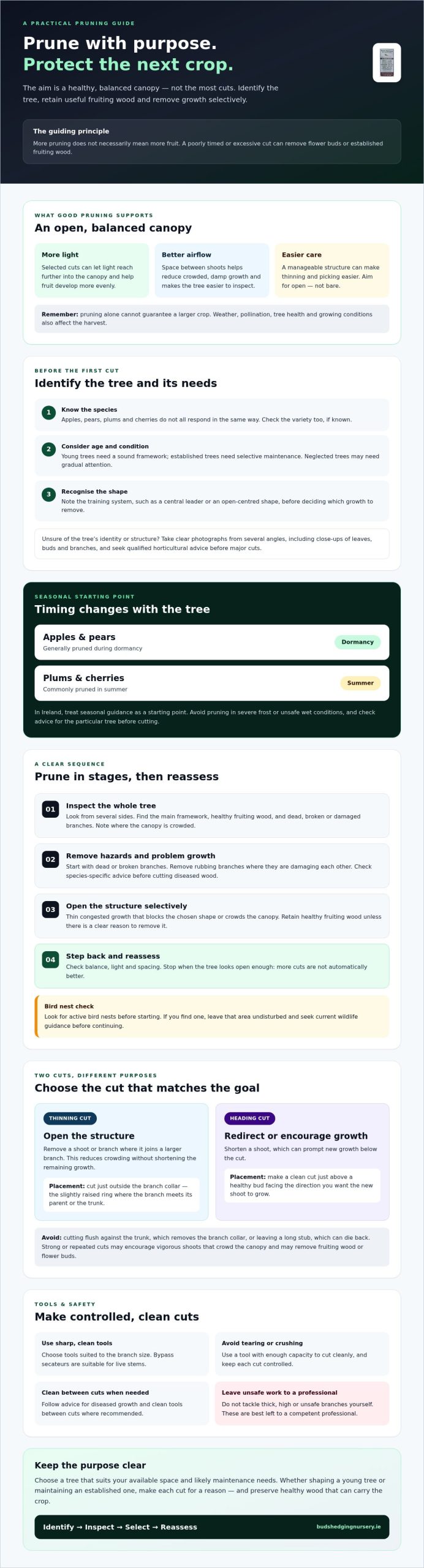
Productive pruning removes selected growth to balance light, airflow, tree structure and the wood that carries flowers or fruit. The aim isn’t to cut as much as possible. A well-spaced canopy can help fruit receive light, make picking easier and reduce crowded, damp growth, but pruning alone can’t guarantee a larger crop. Weather, pollination, tree health and growing conditions also affect the harvest.
Formative pruning shapes a young tree’s framework; maintenance pruning keeps an established tree healthy and manageable. Both need to suit the tree. Species, age, condition and training system influence which branches to remove and which fruiting sites to retain. The overview of Fruit tree pruning explains some of the principles and terminology behind this work.
What pruning changes in a fruit tree
Removing selected branches can let more light into the canopy and improve air movement between shoots. This can help fruit develop more evenly and make it easier to inspect, thin and pick. Aim for an open, balanced structure, not a bare tree.
Different cuts have different effects. A thinning cut removes a branch at its point of origin, while a heading cut shortens a shoot and can prompt new growth. Strong or repeated cuts may encourage vigorous shoots that crowd the canopy. They can also remove established fruiting wood or flower buds, reducing the crop. Before cutting, identify what a branch contributes and what you want the cut to achieve.
Start by identifying the tree and its condition
First identify the species. Apples, pears, plums and cherries don’t all respond to pruning in the same way, so don’t choose a method until you know what you’re working with. If you know the variety, keep that information to hand too, as cultivars can differ in growth and fruiting habits.
Next, assess the tree’s stage and condition. A recently planted or young tree needs a sound framework; an established tree may need selective maintenance. A neglected tree could need gradual attention, while damaged or unhealthy growth calls for careful assessment before cutting. Note the training system as well, such as a central leader or an open-centred shape.
If you’re unsure of the tree’s identity or structure, take clear photographs from several angles, including close-ups of leaves, buds and branches. Use them to seek qualified horticultural advice before making major cuts. For a practical guide on how to prune fruit trees for more fruit, start by knowing what tree you have and what each proposed cut is meant to achieve.
How to prune fruit trees with clean, selective cuts
Work in stages rather than cutting wherever the canopy looks crowded. This keeps each cut purposeful and makes it easier to stop before you remove too much. If you’re learning how to prune fruit trees for more fruit, use this sequence as a guide, then adapt it to the species and training system.
- Inspect the whole tree. Look from several sides and identify the main framework, healthy fruiting wood and any branches that are dead, broken or damaged. Check whether the canopy is crowded in one area or throughout.
- Remove hazards and problem growth. Take out dead or broken branches first. Check species-specific advice before cutting diseased wood. Remove rubbing branches where they’re damaging each other, and look for active bird nests before you start. If you find one, leave that area undisturbed and seek current wildlife guidance before continuing.
- Open the structure selectively. Thin congested growth that blocks the chosen shape or crowds the canopy. Retain healthy fruiting wood unless there’s a clear reason to remove it.
- Reassess before continuing. Step back and check the balance, light and spacing. Stop if the tree looks open enough; more cuts aren’t automatically better.
Choose the right branch and cut
A thinning cut removes a shoot or branch where it joins a larger branch, reducing crowding without shortening the remaining growth. A heading cut shortens a shoot, usually just above a suitable bud, and can prompt new growth below the cut. Use each for a clear purpose: thinning opens the structure, whilst heading redirects or encourages growth.
For a heading cut, make a clean cut just above a healthy bud that faces the direction you want the new shoot to grow. For a thinning cut, cut just outside the branch collar, the slightly raised ring of tissue where a branch meets its parent or the trunk. Don’t cut flush against the trunk, as this removes the collar; don’t leave a long stub, which can die back.
Keep the tree type in mind
Cutting technique is only part of the decision. Timing and the amount to remove depend on the fruit tree, so don’t apply one schedule to every species. For a relevant reference on apples and pears, see the RHS guidance on winter pruning for apples and pears.
If you’re choosing a tree for your garden, consider the space and care it will need, then explore fruit-tree options and check current availability.
Pruning apples, pears and stone fruit: what changes?
Fruit trees don’t all carry fruit on the same growth or respond to pruning in the same way. Apples and pears are pome fruits; cherries, plums, peaches and apricots are stone fruits. That distinction is a useful starting point, not a complete pruning plan. Age, cultivar, rootstock, health and training system can all affect what to cut and when.
| Tree group | Broad pruning aim | Timing caveat |
|---|---|---|
| Apples and pears | Maintain a balanced framework and manage productive side growth. | Generally pruned during dormancy; check the cultivar and training system. |
| Cherries, plums and other stone fruit | Keep the tree’s intended shape whilst preserving suitable fruiting wood. | Often pruned in summer to limit disease risk; confirm advice for the species and conditions. |
How apple and pear pruning differs
For apples and pears, the broad aim is a balanced framework with space for light and air to reach productive side growth. Fruiting habits vary: some cultivars bear much of their crop on short spurs, while others fruit more readily on younger shoots. Learn which pattern your tree follows before shortening healthy growth, or you may remove useful fruiting wood.
Established trees usually need selective maintenance, not an automatic severe cut. Dormant pruning, commonly from November into March or April before new growth starts, makes the framework easier to assess. For technique and timing background, see the university extension guide Pruning Fruit Trees. Its regional recommendations may not transfer directly to Ireland, so verify local and cultivar-specific details.
Why stone fruit needs a different approach
Don’t apply an apple-tree schedule to cherries or plums. Stone fruits have different growth and flowering habits, and pruning wounds can be more vulnerable to disease in unsuitable conditions. In Ireland, summer pruning, often in late July or August, is commonly advised for plums and cherries to reduce the risk of silver leaf disease. Guidance can differ by species and conditions, so confirm the timing before cutting peaches, apricots or other stone fruit.
For any group, check the tree’s age, rootstock and training form. A young tree being shaped, a mature tree with established fruiting wood and a neglected tree won’t call for the same cuts. Treat the table as a seasonal guide, then confirm the advice for your tree rather than relying on a single rule for every cultivar.
Pruning Fruit Trees in Ireland: Avoiding Setbacks
Ireland’s mild, changeable weather makes the calendar a guide, not a fixed rule. Choose the season by species, then check the tree and conditions before you begin. A dormant apple or pear may be ready for winter pruning, whilst a plum or cherry may need summer pruning to reduce disease risk. For how to prune fruit trees for more fruit, timing and restraint matter as much as the cuts themselves.
Choose timing by fruit-tree type
Apples and pears are generally pruned in the dormant season, before spring growth begins. Plums and cherries are commonly pruned in summer because winter cuts can increase the risk of silver leaf disease. Other stone fruits, including peaches and apricots, may need different timing. Confirm advice for the particular species and cultivar, and account for growing conditions. If the weather is unsuitable, wait.
Avoid pruning in severe frost, when wood can be brittle and cuts may be exposed to harsh conditions. Don’t work in wet, slippery or otherwise unsafe conditions either. A sound pruning plan can wait for a suitable day.
If you’re choosing a fruit tree for your garden, consider its likely care needs alongside the space available. You can explore fruit trees and ask about current availability.
Common pruning mistakes that can reduce fruiting
Removing too much canopy at once can stress a tree and prompt vigorous new shoots that are difficult to manage. It can also remove established fruiting wood or flower buds. Avoid topping, which cuts back the upper growth without regard for the tree’s natural structure. Instead, make only cuts that serve a clear purpose, and pause to reassess before removing more.
Poor cut placement can leave a long stub or damage the branch collar, while blunt or dirty tools may crush or tear wood. Use clean, sharp tools suited to the branch, and avoid cutting close against the trunk. If a branch is diseased, first check species-specific guidance on what to remove and how to handle it.
After pruning, assess the tree’s structure and health rather than trying to force rapid regrowth. Watch how new shoots develop, whether light reaches the canopy and whether any damage becomes visible. Don’t respond to vigorous growth with repeated hard cuts. If you find decay, suspected disease or major structural damage, stop and seek qualified advice before proceeding. A measured response gives you time to identify the cause and choose the right next step.
Choose fruit trees you can manage and keep pruning simple
A manageable tree starts with a suitable choice. Before buying, think about the space available, the tree’s likely mature size and how much ongoing care you can take on. A fruit tree that outgrows its position may need repeated hard pruning, which can create more work and may affect its structure and fruiting. Choose for the space you have, not just the size of the tree at purchase.
Before buying a fruit tree, consider its future shape
Check the expected mature height and spread, and ask how the tree is supplied and trained. A central leader, open-centred form or trained shape each creates a different framework and influences which branches will need attention later. Rootstock and cultivar can also affect vigour and eventual size, so confirm these details when selecting a particular tree.
Ask about pollination requirements too. Some fruit trees need a compatible pollinating partner nearby to set a good crop, while others may be self-fertile. Don’t assume that every tree will fruit well on its own. Confirm the cultivar’s needs and consider whether suitable pollinators are within reach before making your choice.
A practical next step for your garden
For a tree you already have, keep a short record before pruning: note the species or cultivar if known, its approximate age, when it was last pruned and any visible concerns. A few clear photographs can help you compare its structure over time and explain the situation if you seek advice. Set one clear aim for each session, such as removing damaged growth or improving the tree’s shape. Make only cuts that serve that aim.
Buds Nursery Cavan offers fruit trees, with varieties and availability subject to change. Explore fruit trees and ask about availability.
Make your next pruning cut with confidence
A better harvest starts with understanding the tree, not removing as much growth as possible. Identify the species, choose a clear aim and make selective cuts that preserve healthy fruiting wood. Timing matters too: apples and pears generally suit dormant-season pruning, while stone fruit often needs a different approach. Check the tree and conditions before you begin, and pause if you’re unsure.
Keep the tree’s future size and care needs in mind when choosing what to plant. Buds Nursery includes fruit trees in its plant range. If you’re considering a tree for your garden, explore fruit trees and ask about current availability.
With a suitable tree and a measured approach, you can build a healthy structure season by season. Use what you’ve learned about how to prune fruit trees for more fruit, and make each cut count.
Frequently Asked Questions
How do you prune a fruit tree to get more fruit?
Selective pruning can support a better harvest by improving a tree’s structure and allowing more light and airflow through its canopy, but it can’t guarantee more fruit. First identify the species and assess the tree’s condition. Remove dead or crossing growth, retain healthy fruiting wood and avoid taking off too much at once. Before substantial cuts, check species-specific guidance, as trees differ in their timing and response.
When is the best time to prune fruit trees in Ireland?
The best time depends on the fruit-tree species, its condition and the weather. Apples and pears are generally pruned during dormancy, before new growth begins. Plums and cherries often need summer pruning to help manage disease risk. This is a broad guide, not a date for every tree. Avoid severe frost or unsafe wet work, and check current horticultural advice for your species and growing conditions.
Can pruning a fruit tree reduce its crop?
Yes. Pruning can reduce a crop if you remove flower buds or established fruiting wood, or cut back too much of the canopy. The effect varies with the species, age and pruning history of the tree. Work gradually and selectively, keeping healthy productive growth unless there’s a clear reason to remove it. For major renovation, arrange an assessment from a qualified professional before making extensive cuts.
How much should you cut off a fruit tree?
There’s no universal percentage that suits every fruit tree. The appropriate amount depends on its species, age, health, training form and the purpose of pruning. Remove only branches with a clear reason, then step back and reassess the shape before continuing. Avoid trying to correct every problem in one session. If the tree needs severe renovation, seek specialist guidance to plan the work safely and manage its recovery.
Should you prune an apple tree differently from a plum tree?
Yes. Apples are pome fruit, whilst plums are stone fruit, and their recommended pruning approaches and timing can differ. Flowering habits, the location of productive wood and disease risks all affect what to cut and when. Don’t transfer an apple-pruning routine to a plum without checking reliable, species-specific advice. If you know the cultivar and training form, include those details when consulting a horticultural guide or adviser.
What happens if you prune a fruit tree too late?
The effect depends on the species, season and amount removed. A late cut may disturb developing growth or remove buds, whilst other trees have different recommended pruning windows. There’s no fixed crop loss that applies to every tree. Before making further cuts, identify the species and check suitable timing for its cultivar and conditions. If you’ve already pruned, observe the tree’s response rather than cutting again to compensate.
Can you prune a neglected fruit tree in one go?
Don’t assume a severely neglected fruit tree should be cut back heavily in one session. Major pruning can stress a tree and prompt vigorous growth, depending on its species and condition. A staged plan is usually a more cautious approach. Deal with urgent hazards first, and seek qualified advice if the tree is large, diseased or structurally damaged. Avoid substantial cuts until you understand the tree and the likely effect.