

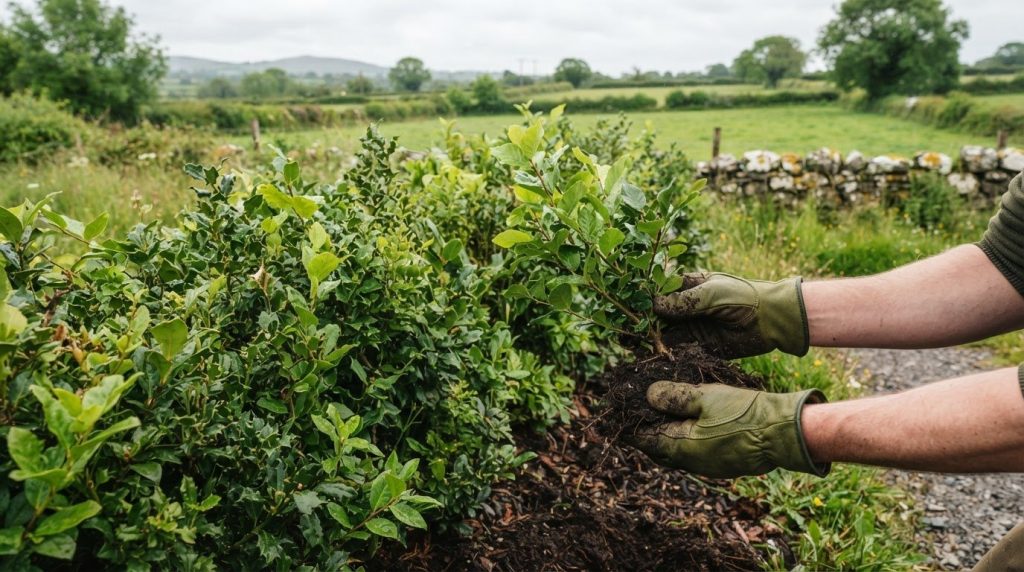
The best defence against hedge disease may not be choosing a plant labelled “resistant”. If you’re comparing disease resistant hedging plants, remember that resistance isn’t immunity: a plant may still be affected, particularly if its growing conditions or care aren’t suitable. The spread of box blight in Ireland has also made it sensible to look beyond familiar choices and consider how a hedge may cope over time.
It’s understandable to want to protect a hedge that takes time and money to establish. The practical approach is to match the plant to your soil, exposure, intended use and maintenance routine, rather than rely on a promise of disease-proof growth. Choosing a suitable plant and helping it establish well can reduce avoidable risks, but no species is guaranteed protection against every problem.
This guide explains what disease resistance can and can’t mean, compares hedge options using practical criteria, and sets out the site and care factors to consider before planting. You’ll also find ways to support healthy establishment, from checking plant condition to avoiding conditions that put unnecessary stress on a new hedge.
Key Takeaways
- “Disease resistant” means less susceptible, not immune. Site conditions and care also affect risk.
- Use drainage, soil moisture, exposure, shade and available space to narrow down suitable hedge options.
- Compare disease resistant hedging plants by growth habit, site suitability and care needs, rather than relying on broad resistance claims.
- Before planting, check roots, stems and foliage for visible damage or concerning symptoms, then monitor plants as they establish.
- Ask a nursery about species suitability for your site, plant health and current stock before choosing your hedge.
What Does Disease Resistant Mean When Choosing Hedging Plants?
For hedge buyers, “disease resistant” means a plant is less likely to be infected or badly affected by a particular disease. It doesn’t mean the plant is immune to every pathogen or will stay healthy in all conditions. The term plant disease resistance describes ways plants can limit the effects of pathogens, but the degree of resistance depends on the plant and the disease involved.
Disease resistance means lower susceptibility to specific diseases, not guaranteed immunity from infection or damage. This is a useful starting point when comparing disease resistant hedging plants, but it shouldn’t be the only measure of a good choice.
Can any hedging plant be completely disease-proof?
No species should be treated as disease-proof. Susceptibility can differ between species and cultivars, and a plant’s response may change with growing conditions. Box blight, for example, is a known concern for box hedges in Ireland. That doesn’t establish how other plants will respond to different diseases. Check specific resistance claims against reliable horticultural sources, and confirm that they refer to the disease and plant in question.
Resistance is also different from tolerance, recovery and general hardiness. A resistant plant may limit infection or its effects. A tolerant plant may become infected but continue to grow with less damage. Recovery describes a plant’s ability to produce healthy growth after damage. Hardiness is broader: it usually refers to coping with climate or environmental conditions, not resistance to a particular disease.
Which factors affect disease risk in a hedge?
Disease risk depends on the plant, the pathogen, the planting site and ongoing care. Poor drainage can leave roots in waterlogged soil, while prolonged dampness and restricted airflow can create conditions that favour some diseases. Planting too densely may limit air movement and slow the drying of foliage. Soil that doesn’t suit the chosen species, or competition for water and nutrients, can also put plants under stress.
A suitable plant can still struggle if it’s put in the wrong conditions. Before choosing, use this checklist:
- Site fit: Check drainage, soil conditions, exposure, shade and space for mature growth.
- Known disease issues: Ask which diseases are relevant to the species or cultivar, and look for reliable evidence behind resistance claims.
- Care needs: Consider whether you can provide suitable watering, spacing and ongoing hedge care.
- Evidence: Distinguish documented resistance to a named disease from general claims of toughness or hardiness.
These checks help set realistic expectations. Choosing a hedge is less about finding a plant with a blanket promise and more about matching its known characteristics to your site and care routine.
How Site Conditions and Plant Health Shape Hedge Disease Risk
A hedge’s health starts with the ground and conditions along the planting line. Before choosing between disease resistant hedging plants, check the site from end to end. Soil can vary along a boundary, and a low, wet section may suit a different plant from an exposed, dry stretch.
What should you check before choosing a hedge?
- Drainage and soil moisture: Is the ground free-draining, compacted, regularly waterlogged or unusually dry? Persistent water around roots can stress plants that need better drainage.
- Light and exposure: Note where the planting line gets sun or shade, and whether it faces strong wind. Conditions may differ along the same boundary.
- Space and airflow: Allow for the hedge’s mature width, not just the space taken by young plants. Overcrowding can restrict airflow and leave foliage slower to dry after wet weather.
Match those observations to the needs of the species you’re considering. A plant poorly suited to the soil or exposure may become stressed, making it less able to cope with other pressures. Penn State Extension also emphasises matching plants to their growing conditions alongside selecting resistant varieties.
How can early care help reduce avoidable problems?
Plant at the recommended depth and spacing for the species, and water carefully during establishment. The aim is to help roots settle without leaving the ground continually saturated. Avoid damaging stems or roots during handling and planting, as wounds and ongoing stress can make plants more vulnerable to problems.
Keep an eye on changes, but treat symptoms as clues, not a diagnosis. Root problems may show as poor growth or wilting even when the soil is wet. Foliage may develop spots, discolouration or dieback, while stem concerns can include lesions, cracking or sections that fail to leaf. Similar signs can have different causes, including growing conditions, pests or disease.
Record which plants are affected, where symptoms appear and how they change. Don’t remove plants or apply a treatment based on appearance alone. First try to identify the cause and check what action, including disposal of affected material, is appropriate. This helps avoid unnecessary removal and reduces the risk of spreading a problem through handling or discarded material.
Unsure how your soil, exposure or intended hedge use affects your shortlist? Discuss those details with nursery staff and check current stock. You can also browse the hedging plant range as a starting point for comparing options.
Disease Resistant Hedging Plants Compared: Species to Investigate
Use this comparison to shortlist plants by hedge purpose and growing conditions, not as a disease-resistance ranking. The disease column avoids unverified claims: resistance must be checked for the particular species or cultivar and the named disease. A plant suited to one site may struggle on another.
| Species | Growth habit | Site fit to assess | Care considerations | Disease note |
|---|---|---|---|---|
| Portuguese Laurel | Evergreen, broad-leaved hedge plant | Check soil drainage, exposure and room for the hedge to grow. | Allow for mature size and maintain suitable spacing. | Check evidence for any claim about a specific disease. |
| Cherry Laurel | Evergreen, broad-leaved hedge plant | Assess available width, soil and exposure before planting. | Plan for regular management of the hedge’s size and shape. | Don’t assume evergreen growth indicates disease resistance. |
| Griselinia | Evergreen hedge plant | Compare the site’s soil and exposure with current growing guidance. | Confirm the space required and care needs for the intended hedge. | Verify any resistance claim against reliable horticultural sources. |
| Escallonia | Evergreen shrub suitable for hedging | Check site exposure and soil conditions for the chosen plant. | Allow space for its growth habit and planned trimming. | Don’t infer blanket resistance from its use as a hedge. |
| Privet | Deciduous or semi-evergreen, depending on type and conditions | Consider the seasonal screening required and site conditions. | Check the characteristics of the particular privet being considered. | Look for evidence relating to the specific privet and disease. |
| Beech | Deciduous hedge plant | Consider seasonal appearance and the intended screening purpose. | Check soil and space requirements before choosing. | Do not treat general hardiness as proof of disease resistance. |
| Hornbeam | Deciduous hedge plant | Assess soil, exposure and the hedge’s intended function. | Allow for establishment and ongoing trimming. | Confirm species-specific claims rather than relying on broad labels. |
| Whitethorn | Deciduous, native hedging option | Consider whether a native hedge suits the site and purpose. | Check planting and management needs for the intended hedge. | Native status alone does not establish resistance to disease. |
Which options should you compare first?
For year-round foliage, compare Portuguese Laurel, Cherry Laurel, Griselinia and Escallonia against your site and desired hedge size. Read the Portuguese Laurel guide for further species-specific detail. Privet, Beech, Hornbeam and Whitethorn offer different seasonal and hedge-purpose considerations. If native planting matters, consult the native trees scheme guide.
A sound comparison considers site suitability, plant health and reliable evidence together. That approach aligns with the UC Statewide IPM Program, which outlines prevention through plant choice and growing practices. Check current stock and discuss your site conditions before selecting plants. Nursery guidance can help you compare options, but no species label guarantees a disease-free hedge.

How to Choose and Plant Hedging to Limit Disease Problems
Good establishment starts before planting. Use this five-step process to choose suitable plants, reduce avoidable stress and spot changes early. It can help lower risks, but even well-chosen disease resistant hedging plants aren’t guaranteed to remain free from disease.
- Assess the site. Check drainage, soil conditions, moisture, light, exposure and available width along the full planting line. Note any sections that stay wet or dry out quickly.
- Shortlist suitable species. Match the site and intended hedge use to each plant’s requirements. Check reliable information for any claim about resistance to a named disease.
- Inspect plants before buying. Look over roots, stems and foliage for visible damage, poor growth or concerning symptoms. For bare-root plants, check that roots appear firm and in reasonable condition. For other plant types, inspect the root area as far as practical.
- Prepare the ground and plant carefully. Follow planting-time and ground-preparation advice for the plant type, along with the supplier’s guidance. Set plants at the recommended depth. Space them according to the species and its expected mature growth, so the hedge has room to develop and airflow isn’t unnecessarily restricted.
- Monitor establishment. Water according to the plants’ needs, taking care not to leave roots waterlogged. Keep weeds from competing with young plants, and check for changes in growth, foliage, stems or roots as the hedge settles in.
What should you check when buying hedge plants?
Ask the supplier about plant origin, how the plants have been handled, whether they suit your soil and exposure, and any known concerns for the species. A visual check can help you avoid plants with obvious damage or widespread symptoms, but it can’t confirm that a plant is disease-free. If something looks unusual, ask for clarification before planting.
Which planting and aftercare steps support establishment?
Follow species-specific advice rather than relying on one planting method for every hedge. Keep watering appropriate to the weather and soil, and avoid routine treatments without a clear reason. If symptoms appear, note which plants are affected and how the signs change. Don’t remove plants or apply treatment until you have a better idea of the cause and appropriate action. Seek advice or a diagnosis if the symptoms are unclear or spreading.
For help comparing hedge plants with your site conditions, ask Buds Nursery Cavan about suitable hedging options and confirm current stock before making a choice.
Where to Source Disease-Aware Hedging Plants in Ireland
A useful nursery conversation starts with your site, not a promise that a plant is disease-proof. Before asking about disease resistant hedging plants, note your soil conditions, drainage, exposure and available space. Explain whether you need year-round screening, a native hedge or an option with simpler maintenance, so the discussion can focus on plants suited to the job.
What should you ask a nursery before choosing?
- Which species may suit my soil, exposure and intended hedge use?
- What care will the plants need as they establish, and how much ongoing trimming should I expect?
- Are there verified disease concerns for the species or cultivar being considered?
- What is the current stock, and what plant sizes are available?
- For a larger order, can you confirm whether delivery is available to my destination and what arrangements apply?
Share what you’ve observed about the planting site, including any areas that stay wet or are exposed to wind. Ask how the plants have been handled and whether there are visible health concerns to check before planting. Nursery guidance can help you compare options, but it can’t guarantee how plants will perform once established.
How can Buds Nursery Cavan help with the comparison?
Buds Nursery has more than 30 years of experience and a broad hedging range that includes Portuguese Laurel, Cherry Laurel, Privet, Beech, Hornbeam, Griselinia and Whitethorn. These are options to discuss, not a claim that any one species is resistant to every disease. Suitability depends on the site, the intended hedge and reliable evidence about specific disease risks. Confirm current stock before making plans.
The team can offer plant-selection guidance to help you weigh up those factors. For larger orders, delivery options may be available, but check the destination and arrangements directly before relying on them. Plant supply and advice are not a guarantee of disease-free growth.
If you’re comparing options, you can explore the nursery range and enquire about plants that may suit your site. Sharing your conditions and hedge requirements gives the team a practical starting point for the conversation.
Choose a Hedge That Fits Your Site
The strongest hedge choice isn’t based on a promise of disease immunity. Disease resistant hedging plants may be less susceptible to specific problems, but healthy growth also depends on matching plants to your soil, exposure, available space and care routine.
Compare species using reliable information about disease concerns, then check roots, stems and foliage before planting. Suitable spacing, careful establishment and regular monitoring can help reduce avoidable stress. If symptoms appear, identify the likely cause before removing plants or applying treatment.
Buds Nursery brings more than 30 years of experience to plant selection and manages a 60-acre operation producing hedging, trees and shrubs. The team can offer guidance on suitable plants. Delivery options for larger orders may be available, subject to confirmation of destination and arrangements.
Explore Buds Nursery’s hedging plants and ask about options suited to your site. Share your site conditions and hedge requirements to get the conversation started.
Frequently Asked Questions
Are any hedging plants completely resistant to disease?
No hedging plant should be treated as immune to every disease. Resistance usually means lower susceptibility to a particular pathogen, and can vary between species, cultivars and growing conditions. A plant may still be affected if it’s stressed or poorly suited to the site. Check resistance claims against reliable horticultural information, and consider drainage, spacing and care alongside the plant’s disease profile.
Which hedging plants are least likely to get diseases?
There isn’t one reliable answer for every garden, because disease risk depends on the plant, the pathogen and growing conditions. Rather than choosing from a universal ranking of disease resistant hedging plants, compare species that suit your soil, exposure and maintenance routine. Check evidence for resistance to specific diseases, not broad claims of toughness. A suitable choice, healthy stock and good establishment can help reduce avoidable risks.
Can laurel hedging get diseases?
Yes. Laurel, like other hedge plants, can develop health problems, and the precise cause can’t be confirmed from the plant name alone. Site stress, pests and disease may produce overlapping symptoms. If foliage, stems or growth look unusual, note which parts are affected and whether the signs are spreading. Check the plant’s growing conditions and seek reliable advice before treating or removing it.
How can I tell if my hedge has a disease?
Look for changes such as leaf spots, discolouration, unusual dieback, lesions on stems or poor growth. These are clues, not a diagnosis: similar symptoms can result from unsuitable soil, water stress, pests or physical damage. Note when signs appeared, which plants are affected and whether the pattern is spreading. If you’re unsure of the cause, seek a reliable diagnosis before choosing treatment or removing plants.
Does good drainage help prevent hedge disease?
Good drainage can reduce stress for plants that struggle in waterlogged soil, but it won’t prevent every disease. Persistent wetness around roots can impair plant health, whilst dense planting and poor airflow may leave foliage damp for longer. Check drainage along the whole hedge line, as conditions can vary within a garden. Choose plants suited to the soil, and avoid watering in a way that keeps the ground saturated.
When is the best time to plant hedging in Ireland?
For bare-root hedging, planting is generally best during the dormant season, often from autumn to early spring, provided the soil isn’t frozen or waterlogged. Container-grown plants can usually be planted over a wider period, but still need suitable weather and careful watering as they establish. Timing depends on plant type and conditions. Check the supplier’s guidance for the particular hedge and avoid planting into ground that’s too wet or dry.
Should I remove a hedge plant if it shows disease symptoms?
Not straight away. Symptoms can have several causes, and removing a plant without identifying the problem may be unnecessary or risk spreading affected material. Record what you see, check whether nearby plants show similar signs, and seek advice if the cause is unclear or symptoms are worsening. Before removing or disposing of affected material, find out what handling is appropriate. Avoid applying treatments until you have a sound reason to do so.