

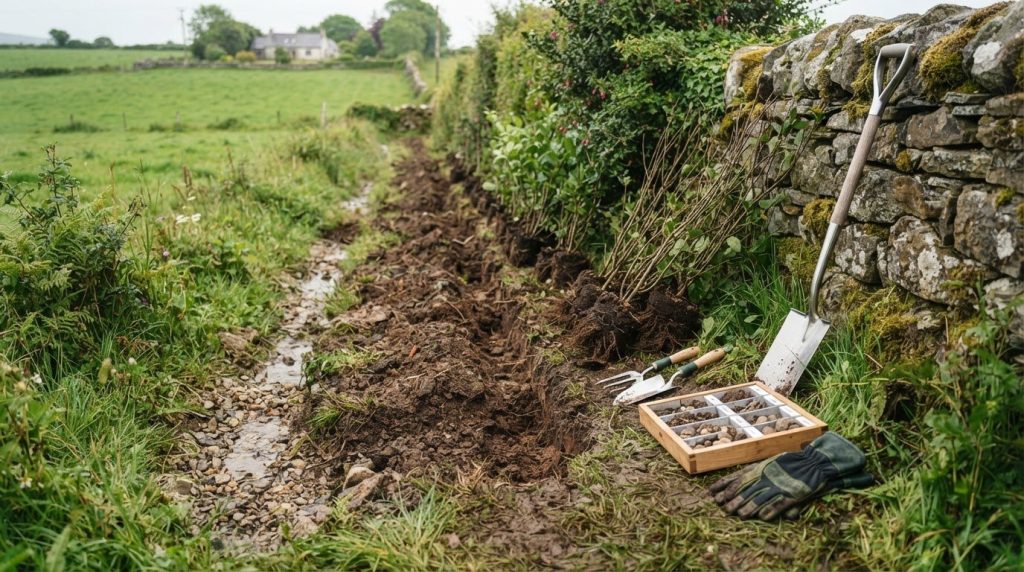
The best first step in preparing soil for new hedging isn’t adding compost. It’s finding out what the ground is like. A planting strip that stays wet after rain needs different attention from dry, free-draining soil, and adding the wrong amendment can create more work without solving the problem.
If you’re unsure whether your soil is heavy, compacted or short of organic matter, that’s a sensible concern. Good preparation helps new hedging establish, but it doesn’t mean digging over the whole garden or feeding every planting area. Start by checking the soil, its drainage and any competing grass or weeds.
This guide explains how to assess the planting site, prepare a suitable strip and decide whether compost or another amendment is needed. It also covers common soil conditions in Ireland and the signs that the ground is ready for planting. The aim is a straightforward approach: match the preparation to the site and the hedge you’ve chosen.
Key Takeaways
- Preparing soil for new hedging starts with checking the site and matching any soil work to the hedge you intend to grow.
- Check how the ground behaves after rain to distinguish temporary surface wetness from ongoing drainage problems.
- Use compost or topsoil only when it addresses a specific issue. Some planting strips may need no amendment.
- Prepare the planting line in stages, then check that the soil is workable before planting.
- Pause if the ground is saturated, severely compacted or affected by unresolved drainage issues.
Preparing Soil for New Hedging: Start by Assessing the Planting Site
Assess the ground before digging or adding materials. Soil texture, structure and drainage affect how roots establish. Light levels, wind exposure and the hedge type also help determine whether the site is suitable and what preparation it needs. Conditions can vary along a single planting line, so don’t assume the whole strip is the same.
In Ireland, rainfall makes it worth checking how water moves through the site. A patch that looks wet straight after heavy rain may drain normally, but ground that stays saturated or repeatedly collects standing water needs closer attention. The aim of preparing soil for new hedging is to address what you find, not to follow a blanket recipe.
A prepared hedge planting area is a clear, workable strip of soil with suitable drainage and structure for the chosen hedge to establish.
How to check soil texture and structure before planting
Take a small handful of soil from several points along the proposed hedge line. If it feels gritty and falls apart readily, it’s likely to be sandy. Soil that feels smooth, holds together briefly and then crumbles when pressed is broadly loamy. Clay-heavy soil often feels sticky when moist and can be shaped into a firm ball or ribbon. This simple hand test gives a useful first impression, not a full soil analysis.
Look at the soil structure too. Large, hard clods can be difficult for new roots to grow through. Tightly packed soil may restrict the movement of both air and water. A crumbly structure is generally easier to work with and gives roots spaces to grow into. If you find different textures or conditions along the line, note where they change rather than treating the strip as uniform.
What the site tells you about drainage and exposure
Walk the planting line after rain, if practical. Look for standing water, patches that remain wet, and water running across or washing soil away. Check whether foot traffic, vehicles or machinery have compacted the ground. These signs can point to different problems, so observe before deciding whether to dig or add anything.
Also note how much sun the hedge will receive, where wind hits the site and whether established trees or shrubs have roots near the planting line. Shade and exposure can influence which hedge is appropriate, while existing roots may compete for space and moisture. Any addition intended to improve soil physically is a type of soil conditioner, but first establish whether the ground needs one at all.
How Irish Garden Soil Affects New Hedge Establishment
Soil needs to hold enough moisture for roots to take up water, while allowing excess water to drain and air to reach the root zone. If the ground is persistently saturated, roots may struggle to function. If it dries very quickly, newly planted hedging can face greater moisture stress. The right balance depends on the soil and the plant selected, so no single soil type or preparation suits every hedge.
Rain after a wet spell doesn’t automatically mean there’s a drainage problem. The surface may be briefly damp but drain as conditions improve. By contrast, water that remains in the planting area, or a patch that repeatedly turns boggy, is a reason to investigate before planting. Adding compost won’t fix every drainage issue, and working saturated soil can damage its structure. Match any change to an observed problem rather than amending the whole strip by default.
Clay-heavy, sandy and loamy soil: what to look for
Clay-heavy soil can feel sticky when wet and may drain slowly. When it dries, it can become hard and form clods that are difficult to break apart. Sandy soil tends to drain quickly and may not hold moisture for as long. Loam usually offers a balance, retaining some moisture while allowing excess water to drain. These are broad descriptions: soil can contain a mix of textures, and the same planting line may vary from one end to the other.
Judge the ground when it’s workable, not when it’s frozen or saturated. Soil condition can look and feel very different at those extremes. If the site is consistently wet, or the soil structure is difficult to improve, pause and find out what’s causing the problem before choosing an amendment.
Drainage problems, compaction and existing vegetation
Repeated foot traffic or vehicle use can press soil particles together. Compacted ground may have fewer open spaces for air and water to move through, making it harder for new roots to spread. This doesn’t mean every firm patch is unsuitable, but a heavily compressed planting line may need attention before planting. Persistent standing water should prompt a closer look at site drainage, rather than an assumption that extra topsoil or compost will solve it.
Nearby mature trees and established hedges can also compete with new plants for moisture, nutrients and space. Consider where their roots extend before settling on the planting line. For practical guidance on preparing the ground, the RHS hedge planting guide is a useful reference. Once you’ve assessed the site, you can also seek plant-selection guidance from Buds Nursery Cavan’s hedging plant range, taking the conditions you observed into account.
Compost, Topsoil or No Amendment? Match Soil Preparation to the Problem
Once you’ve identified the site’s condition, choose the least intervention that addresses it. Preparing soil for new hedging doesn’t mean automatically adding compost, fertiliser or imported topsoil. A suitable planting area may need only weed clearance and loosening of compacted ground when conditions are workable. Amendments should respond to what you’ve observed, not a standard recipe.
- Compacted soil: If the ground is firm from traffic but drains reasonably, wait until it’s workable, then loosen the planting strip without digging when wet.
- Free-draining, light soil: Suitable mature organic matter may help improve structure and moisture retention. Consider the hedge’s needs and the condition of the soil first.
- Poorly drained soil: Don’t assume compost or topsoil will solve persistent wetness. Identify the drainage issue before deciding how to proceed.
When organic matter or topsoil may help
Well-rotted organic matter can be useful where the soil is short of organic material or has a poor structure. Mix it through the prepared planting strip so the surrounding soil remains broadly consistent. Avoid filling each planting hole with a rich, separate pocket: the roots will need to grow beyond it into the soil around it.
Topsoil is worth considering only if the planting plan and site conditions justify adding it. It isn’t a default layer to place over every hedge line, and adding it won’t correct a drainage problem beneath the surface. Choose material that suits the existing ground rather than creating a sharp difference between the planting strip and surrounding soil.
When to avoid unnecessary fertiliser or drainage work
Fertiliser doesn’t loosen compacted soil, improve its structure or correct poor drainage. It’s not a substitute for preparing a workable planting area or choosing a hedge suited to the site. Avoid adding materials or digging when the soil is saturated. If it sticks to tools and smears into a dense surface, wait for it to dry enough to crumble.
Organic matter may improve soil structure, but it won’t repair a serious drainage fault. Persistent or widespread waterlogging needs site-specific investigation before planting. Avoid installing drainage simply because the surface is wet after rain. If water remains for long periods or affects a large part of the proposed hedge line, seek advice from a suitably qualified professional who can assess the site. In some cases, the practical answer may be to reconsider the planting position or hedge choice rather than keep adding material.

How to Prepare a Planting Strip for New Hedging Step by Step
A clear, evenly prepared strip gives you a consistent area to plant into and reduces competition from established vegetation. Keep the work focused on the planting line. Deep or extensive digging isn’t automatically better, especially where mature tree roots or buried services may be present.
- Mark the planting line. Check that the route suits the hedge and leaves enough room for it to grow. Before digging, consider nearby trees and check for buried services so you don’t disturb roots or damage cables and pipes.
- Clear grass, perennial weeds and debris. Remove turf and persistent weeds, including as much of the root system as practical. Perennial weeds can regrow and compete with new hedging for moisture, light and nutrients, so clearing them before planting can reduce later problems.
- Check for compaction. Try the soil with a fork or spade at a few points along the line. If it’s firm from foot traffic or machinery, loosen the compacted area when the soil is moist and workable. Don’t work it when saturated.
- Add only a suitable amendment. If your assessment shows that organic matter is appropriate, spread it evenly along the strip and mix it through the soil. Avoid putting a concentrated layer or rich pocket around each future plant.
- Break down clods and remove obstructions. Where the soil breaks apart cleanly, crumble large clods and take out stones and persistent weed roots that would interfere with preparing the line.
- Check the finish. The ground should be open and workable, not heavily trampled, smeared or waterlogged. If it’s too wet to crumble and sticks to tools, wait for conditions to improve.
Quick checklist: mark the line, clear weeds and debris, loosen compacted soil when workable, incorporate only suitable amendments, then check the strip is open and not waterlogged.
This is ground preparation, not a full planting or spacing plan. Avoid repeated digging once the strip is in good condition, as walking or wheeling equipment over it can compact the soil again. If you’re still choosing a hedge, the conditions you’ve found can help guide that decision. Explore hedging plants and get help with plant selection to consider options that suit your site.
How to Tell When Soil Is Ready for New Hedging
The planting line is ready when the soil is clear, workable and prepared consistently for the hedge you’ve chosen. It should break apart under a spade or fork rather than smear into a dense layer, and there should be no persistent standing water. Check along the full strip, as a suitable patch at one end doesn’t confirm that conditions are the same throughout.
A final soil-readiness check before planting
Before you go ahead, check that:
- Grass, perennial weeds and debris have been cleared from the planting line.
- The soil is moist enough to work but not saturated, sticky or frozen.
- Any suitable amendment has been spread and mixed evenly, rather than left in separate pockets.
- The strip hasn’t been compacted again by repeated walking or equipment.
- There’s no persistent standing water or unresolved drainage concern.
If drainage was in doubt, reassess the area after heavy rain. A brief spell of surface wetness may pass, but ground that remains waterlogged needs further investigation before planting. Pause if the soil is saturated, severely compacted or difficult to work without smearing. Preparing soil for new hedging is about creating workable conditions, not forcing the job through unsuitable ground.
There’s no need to rely on a fixed calendar date here. Conditions can vary between sites and seasons, so use the state of the ground and check current Irish horticultural guidance for timing advice before planting.
Choose hedging plants that fit the prepared site
Use your soil assessment to help choose a hedge that suits the site. Consider drainage, soil condition, exposure to wind and light, along with how much screening you want and the ongoing maintenance you can manage. Plant choice and preparation go together: a well-prepared strip can’t make a poor site match into a suitable one.
If you’re considering Portuguese Laurel, read this Portuguese Laurel guide as you assess whether it fits your conditions. For native planting, the native trees scheme guide offers another starting point. Buds Nursery sells hedging plants and can provide plant-selection guidance. Explore hedging plants and consider your site conditions before choosing.
Put Your Soil Assessment into Practice
Good preparation starts with observing the planting site, not reaching for a bag of compost. Check how the soil holds and drains water, clear competing weeds, and loosen compacted ground only when it’s workable. Add organic matter or topsoil only if it addresses a problem you’ve identified, and pause if the ground remains waterlogged or severely compacted.
That practical approach to preparing soil for new hedging helps you make decisions for your actual site and the hedge you intend to grow. Once the planting line is ready, choose plants suited to its soil, light and exposure.
Buds Nursery manages a 60-acre nursery dedicated to hedging, trees and shrubs. For help considering suitable plants, explore hedging plants and ask the nursery for selection guidance.
Take time to assess the ground first, and you’ll have a sound starting point for your new hedge.
Frequently Asked Questions
How do I prepare soil before planting a new hedge?
Start by checking the soil, drainage, light and planting line before digging or adding materials. Clear grass, perennial weeds and debris, then loosen compacted ground when it’s moist and workable, not saturated. Break up large clods and remove persistent weed roots. Add organic matter only if the soil’s condition calls for it, and mix it evenly through the strip. The aim of preparing soil for new hedging is a clear, consistent area that’s workable and suited to the chosen plants.
Should I add compost when preparing soil for hedging?
Add compost only if it addresses an observed soil problem. Suitable, mature organic matter may help improve soil structure, particularly where the ground is short of organic material. Spread it evenly and mix it through the planting strip rather than creating a rich pocket for each plant. Compost isn’t a cure for persistent waterlogging, and some sites may need no amendment. Assess drainage and soil texture first, then choose the least intervention that meets the need.
Can you plant a hedge in clay soil?
Yes, a hedge can grow in clay soil, but the site’s drainage and the chosen plant both matter. Clay-heavy soil can be sticky when wet, slow to drain and hard when dry. Don’t work it while saturated, as digging can smear and compact it further. Check how quickly water clears after rain and consider plant suitability for the site. If water remains for long periods, investigate the drainage before planting rather than relying on an amendment alone.
What should I do if the soil is waterlogged before planting?
Pause planting if the strip is persistently waterlogged. First distinguish lasting saturation from temporary wetness after heavy rain by checking whether water remains or the ground repeatedly becomes boggy. Avoid digging or adding compost and topsoil to saturated soil, as this may make the structure harder to manage. If standing water persists or affects a large area, seek site-specific advice to identify the drainage issue. Reconsider the planting position or hedge choice if the conditions remain unsuitable.
How wide should I prepare the soil strip for a hedge?
For a garden hedge, prepare enough width to clear competing vegetation and create a workable strip for the hedge you’ve selected. The appropriate width depends on the planting plan and site. If you’re planting under ACRES, Teagasc guidance specifies a prepared strip at least 1.5 metres wide. That scheme requirement shouldn’t be treated as a universal rule for every garden hedge. Check current scheme specifications if your planting is grant-aided.
Do I need fertiliser when preparing soil for new hedging?
Not automatically. Fertiliser won’t correct compacted soil, poor drainage or a planting area that hasn’t been prepared properly. First assess the soil and choose a hedge suited to the site. If you have a specific concern about soil fertility, seek appropriate advice before applying fertiliser rather than using it as a routine addition. Good soil structure, suitable planting conditions and a hedge matched to the site are the practical starting points.
When is the soil too wet to prepare for hedging?
Wait if the ground is saturated, sticks heavily to tools or smears into a dense layer when disturbed. These are signs the soil isn’t workable, and digging it can damage its structure. A damp surface after rain doesn’t necessarily mean you must stop, so check the soil along the planting line rather than judging from one patch. If standing water persists or the ground stays waterlogged, pause and investigate drainage before continuing.
Ready to choose plants for your prepared site? Explore the hedging range at Buds Nursery and ask for plant-selection guidance.