

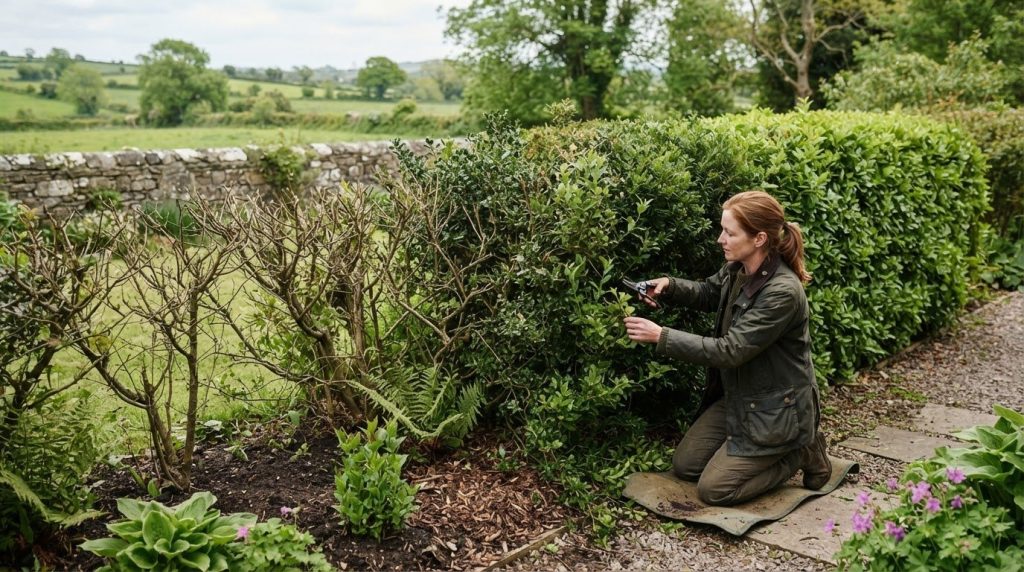
Could pruning a thin hedge make it even thinner? It can, if you haven’t first identified what is causing the sparse growth. If gaps are affecting privacy or making the garden look untidy, learning how to make a hedge grow thicker starts with checking what is holding it back, not simply cutting it harder.
It’s understandable to be cautious. A hedge may struggle because lower branches get too little light, growing conditions are poor, or the plants aren’t suited to their position. The right response also depends on the species, so a pruning approach that suits one hedge may not suit another.
This guide will help you identify likely causes of thin growth and choose practical care steps, from improving conditions to pruning with the hedge’s shape in mind. You’ll also learn when to give plants time to recover, when to adjust your approach, and when infill planting or replacement may be a better option.
Key Takeaways
- Learn how to make a hedge grow thicker by checking where growth is sparse and whether the top or base is affected.
- Choose pruning methods and timing to suit the hedge’s species, age and condition, while taking nesting wildlife into account.
- Use visible symptoms to narrow down possible causes before changing how you care for the hedge.
- Follow a measured recovery plan and monitor new growth. Results depend on the plants and their growing conditions.
- Decide whether to improve the existing hedge, fill isolated gaps or consider a species better suited to the site.
How to Make a Hedge Grow Thicker: Start by Finding the Cause
A sparse hedge doesn’t always need replacing. Gaps may result from growing conditions, plant spacing, pruning or the natural growth habit of the species. Before deciding how to make a hedge grow thicker, inspect the whole row and look for patterns. One struggling plant points to a different issue from thinning that affects the entire hedge.
Hedges vary in their make-up and purpose. For a broad overview of their history, composition and ecological role, see Hedge or hedgerow. To assess your own plants, focus on what is happening at the top, sides and base.
What does a thin hedge look like, and where is it sparse?
Step back and check whether the hedge is bare at the base, thin along one side or uneven across the top. Look closely for dead or damaged stems, and note whether gaps correspond to individual plants or continue along the row. Compare areas in sun and shade, and check for weeds or nearby plants competing for water and nutrients. Take photographs from the same position over time. They can help you track changes before making major pruning decisions.
Which growing conditions can limit hedge density?
Light is one factor. Nearby walls or trees, and a hedge that has become dense above, can leave lower growth in persistent shade. Soil may also be too dry or poorly drained, while roots from established trees and shrubs may compete for moisture and nutrients. Exposure can affect some plants more than others. Species differ in their growth habits and tolerances, so check the plant identity and site before choosing a treatment.
Symptoms to check before choosing a fix
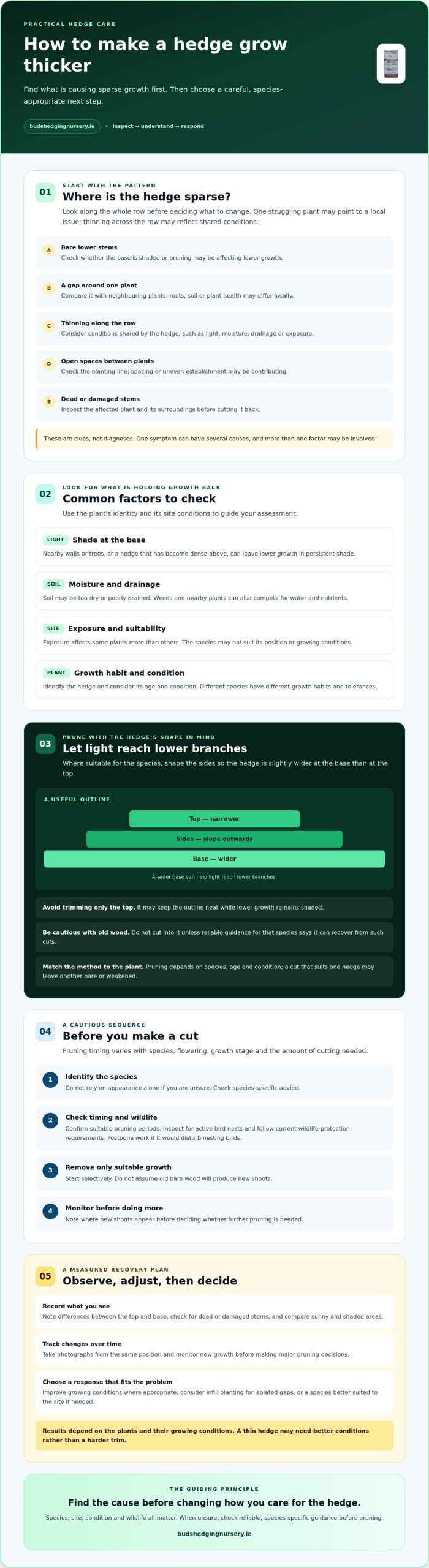
- Bare lower stems: Shade or unsuitable pruning may be factors. Check how light reaches the base.
- One plant has a gap: A local issue with roots, soil or plant health is possible. Compare it with neighbouring plants.
- Thinning across the row: Consider shared conditions such as light, moisture, drainage or exposure.
- Open spaces between plants: Spacing or uneven establishment may be contributing. Check the original planting line.
- Dead or damaged stems: Inspect the affected plant and its surroundings before cutting it back.
These are clues, not diagnoses. One symptom can have several causes, and more than one factor may be involved. Record what you see, including differences between the top and base, then use the plant’s identity and site conditions to guide your next step.
Pruning a Hedge for Thicker Growth: Timing and Technique Matter
Pruning can encourage a hedge to produce side shoots, but cutting harder isn’t always the answer. The right method depends on the species, its age and condition, and whether it can regrow from older wood. Identify the plant and check species-specific advice before you begin. A cut that suits one hedge may leave another bare or weakened.
Should you trim the sides or the top to encourage density?
Where suitable for the species, shape the sides so the hedge is slightly wider at the base than at the top. This helps light reach lower branches, where persistent shade can contribute to sparse growth. Repeatedly trimming only the top may keep the outline neat while leaving lower growth shaded. Use clean, suitable tools, and avoid cutting into old wood unless reliable guidance for that species says it can recover from such cuts.
For young hedges, light formative pruning may help establish a bushier framework. The Royal Horticultural Society explains formative pruning for thicker growth and maintenance of established hedges. Treat this as a starting point, not a universal cutting plan. Plant type and condition matter.
When should you prune a hedge in Ireland?
There isn’t one pruning calendar for every hedge. Timing varies with species, flowering, growth stage and the amount of cutting needed. Check current, species-specific guidance before pruning, particularly before substantial cuts. Inspect the hedge for active bird nests and follow current wildlife-protection requirements. Postpone work if it would disturb nesting birds. If you’re growing Portuguese Laurel, use a dedicated guide for advice specific to that species rather than applying general hedge timings.
Use this cautious sequence before making a cut:
- Identify the species. Don’t rely on appearance alone if you’re unsure.
- Check timing. Confirm suitable pruning periods and consider wildlife.
- Remove only suitable growth. Start selectively, and don’t assume old bare wood will produce new shoots.
- Monitor regrowth. Note where new shoots appear before deciding whether further pruning is needed.
A thin hedge may need better growing conditions rather than a sharper trim. If you’re unsure which plants you have or what to choose for a replacement or gap, seek species-specific advice before cutting. You can also explore hedging plant selection guidance when considering suitable plants for your site.
Compare the Causes of a Sparse Hedge Before Choosing a Fix
The same gap can have more than one explanation. A missing plant, poor growing conditions and pruning damage may all leave a hedge looking patchy, so use the pattern of growth as a clue rather than proof. This comparison can help you decide what to check before changing your care routine or buying replacement plants.
| What you see | Possible cause | What to check | Cautious first step |
|---|---|---|---|
| An open space between otherwise healthy plants | Wide or uneven spacing, or a plant that has died | Look for a missing plant or an empty planting position | Confirm whether the gap is a planting space or a plant-loss issue before considering infill |
| A young hedge with modest, uneven growth | Plants may still be establishing, or conditions may vary along the row | Compare growth between plants and check moisture, weeds and nearby roots | Correct any clear competition or moisture issue, then monitor before replacing plants |
| Bare sections on the lower part of an established hedge | Shade, repeated top-heavy trimming or the plant’s natural growth habit | Check whether the base receives light and how the hedge has been cut | Review species-specific pruning guidance before cutting further |
| Weak growth in a damp or dry patch | Poor drainage, lack of moisture or local soil differences | Check soil moisture and whether water drains away after wet weather | Address the likely condition. Don’t add water or fertiliser without a reason |
| Thinning beside trees, walls or tall plants | Reduced light or competition from nearby roots | Note where shade falls and what is growing close to the hedge | Consider whether the site suits the species before choosing a remedy |
Is the problem poor growth, planting gaps or the wrong hedge for the site?
Look along the planting line. If gaps match empty spaces, the issue may be spacing or plant loss rather than weak growth throughout the hedge. A young hedge can look uneven while it establishes, while persistent bare sections in a mature hedge deserve closer checks. Plant spacing and eventual size also affect screening, so compare the hedge’s growth habit with the privacy you need.
Can water, soil or shade make a hedge look patchy?
Check the ground before changing your watering or feeding routine. Soil that stays wet, dries quickly or competes with nearby roots can affect growth. Structures and overhanging branches may also reduce light. A hedge with sloping sides, wider at the base than the top, is more likely to receive light at its lower growth than one cut straight up and down. The species’ natural form and shade tolerance may still limit density. Seek species-specific advice before applying fertiliser or soil amendments. If the cause remains unclear, ask for nursery guidance before selecting replacement plants.
A Practical Recovery Plan for a Thin Hedge
Once you’ve considered the likely cause, make one change at a time. This makes it easier to judge what helps and avoids putting the hedge under stress with several major interventions at once. A useful recovery plan is straightforward: identify the species, address the most likely problem, prune only if appropriate, then monitor new growth. How to make a hedge grow thicker depends on the plant’s health, its natural growth habit and the conditions on site, so recovery won’t follow a fixed timetable.
What should you do during the first growing season?
Start with care suited to the species and site. Where appropriate, keep weeds from competing around the base. Check the soil for dryness and poor drainage before changing how you water. If pruning is suitable, note when and where you cut. Keep a simple record of new shoots, bare areas and changes in light or moisture. Review it as growth develops rather than making another change as soon as the hedge looks uneven.
Use this sequence to guide your checks:
- Identify the hedge. Confirm the species before following pruning or care advice.
- Address one likely cause. For example, reduce competing weeds or investigate persistently wet soil rather than applying several treatments together.
- Prune cautiously. Follow guidance for the plant’s species, age and condition.
- Record and reassess. Note the date, action taken and where new growth appears. Compare your observations over time.
Look for a change in the pattern of growth, not just a tidier outline. If the affected area continues to spread or a plant shows little sign of recovery, revisit the original diagnosis before repeating the same treatment.
When is infill planting or replacement worth considering?
Infill may be practical where individual plants are missing or clearly beyond recovery. Before buying, check the gap’s size, the spacing of neighbouring plants and whether the site suits the hedge species. Replacing a plant with the same type may not solve the problem if shade, drainage or competition caused it to fail. If the whole row struggles in its position, reconsidering the species may be more sensible than repeatedly treating it.
Privet, beech and hornbeam are options to compare, but match any choice to the screening you want, available space, site conditions and the maintenance you can manage. If you’re considering beech, consult a beech hedging guide for species-specific information. A nursery can also help you assess plant suitability before you choose infill or replacement plants.
If you’re weighing up replacement plants, ask Buds Nursery Cavan for hedging plant guidance to help match a suitable choice to your site.
Choose Suitable Hedging Plants and Get Advice on Your Next Step
After checking the cause, decide whether the existing hedge is still suited to its position. Improve plants that are viable, consider infill where individual plants are missing, or rethink the species if the site consistently works against it. The best next step depends on the screening you need, available space, growing conditions and how much ongoing care you can manage. There isn’t one plant that will make every hedge thicker in every garden.
Which established hedge plants might suit different garden needs?
Portuguese Laurel, privet, beech, hornbeam and Photinia Red Robin are examples to consider when comparing hedging plants. Their suitability depends on the site and the result you want, so check mature size, light and soil requirements, growth habit and maintenance needs before choosing. Don’t assume a replacement will thrive simply because it matches the existing hedge. For focused information, consult a Portuguese Laurel guide or privacy hedging guide before settling on a plant.
For an isolated gap, first check the spacing and condition of neighbouring plants. A replacement should suit the gap and its growing conditions. If the whole hedge is struggling in its position, compare the current species’ requirements with the light, soil moisture, drainage and space available. If you’re considering a beech hedge, look for species-specific advice before deciding it is the right fit.
How can a specialist nursery help you choose?
Bring useful details when seeking plant-selection guidance: the plant name, if known, the hedge’s age, site conditions and clear photographs of healthy and sparse sections. This can help focus the discussion on whether to keep improving the existing plants, fill gaps or consider a different species. Buds Nursery is an established Irish nursery with over 30 years’ experience and a range of hedging plants, including Portuguese Laurel, privet, beech, hornbeam and Photinia Red Robin. Plant-selection guidance is available, as is delivery for larger orders. Check current availability when asking about a particular plant.
If you’re comparing options for infill or a replacement hedge, explore hedging plants at Buds Nursery and ask about suitable choices for your site.
Take the Next Step Towards a Fuller Hedge
Learning how to make a hedge grow thicker starts with finding out why it’s sparse. Check the growth pattern and conditions around the plants before pruning or adding replacements. Then choose care that suits the species and give the hedge time to respond. Recovery depends on plant health and growing conditions, so monitor changes rather than expecting an instant result.
If individual plants are missing or the hedge isn’t suited to its position, infill or a different species may be a better long-term choice. Match plants to your screening needs, available space and garden conditions. Buds Nursery has been established for over 30 years and offers a broad range of hedging plants, with nursery guidance to help you consider suitable options.
Explore hedging plants at Buds Nursery and ask about suitable choices for your site. With the right diagnosis and a steady approach, you can make a sound plan for a healthier, fuller hedge.
Frequently Asked Questions
How long does it take to make a hedge grow thicker?
There’s no fixed recovery time. It depends on the species, the hedge’s health and whether the cause of sparse growth has been corrected. A young hedge may need time to establish, while an older hedge with bare sections may recover slowly or not at all. Record changes in new growth and gaps as the growing season progresses. If there’s little improvement, reassess the site and care rather than repeating the same treatment.
Does cutting the top off a hedge make it grow thicker?
Not necessarily. Cutting only the top can leave lower branches shaded, so it may not address the reason the hedge looks thin. Suitable pruning can encourage side growth in some plants, but the right method depends on species, age and condition. Avoid cutting into old wood unless species-specific guidance confirms the plant can regrow from it. Check for active bird nests before pruning and follow current wildlife-protection requirements.
Can you make a hedge thicker from the bottom?
Sometimes, if the plants are healthy and the species can produce growth from the lower branches. Check whether the base is shaded by the hedge itself, nearby plants or structures. Where suitable, shaping the sides so the base is wider than the top can help light reach lower growth. If stems are bare or dead, identify the species before pruning. Cutting back hard may not encourage regrowth in every hedge.
Should I use fertiliser to help a hedge grow thicker?
Only if there’s a good reason to think the soil lacks nutrients and the fertiliser is suitable for the plant. Feeding won’t correct problems such as poor drainage, dry soil, shade or root competition, and unnecessary fertiliser may encourage growth that doesn’t solve the underlying issue. Check soil and growing conditions first. If you’re unsure, seek advice based on the hedge species and site before applying fertiliser or soil amendments.
Can you thicken a hedge with gaps between plants?
Yes, infill planting may help if individual plants are missing or beyond recovery. First check why the gap formed, whether neighbouring plants have enough room and whether the site suits the existing species. Choose replacement plants for their mature size and growing requirements, not just their appearance when young. If the whole hedge is struggling in its position, a different species may be a better option than filling gaps with more of the same.
When is the best time to prune a hedge in Ireland?
The best time depends on the hedge species, its growth stage and the type of pruning needed, so check species-specific guidance before cutting. Flowering hedges may need different timing from hedges grown mainly for screening. Always inspect for active bird nests first and follow current wildlife-protection requirements. If a nest is present, don’t disturb it. Avoid treating one general calendar date as suitable for every hedge in every garden.
What should I do if my hedge is still thin after pruning?
Don’t keep cutting it back without checking why it remains sparse. Reassess the species, light, soil moisture, drainage, root competition and the hedge’s condition. Pruning may not help if the site is unsuitable or the plant can’t regrow from older wood. Note where new shoots appear and whether gaps are spreading. If individual plants are missing or failing, consider suitable infill or replacement after checking the cause and spacing.