

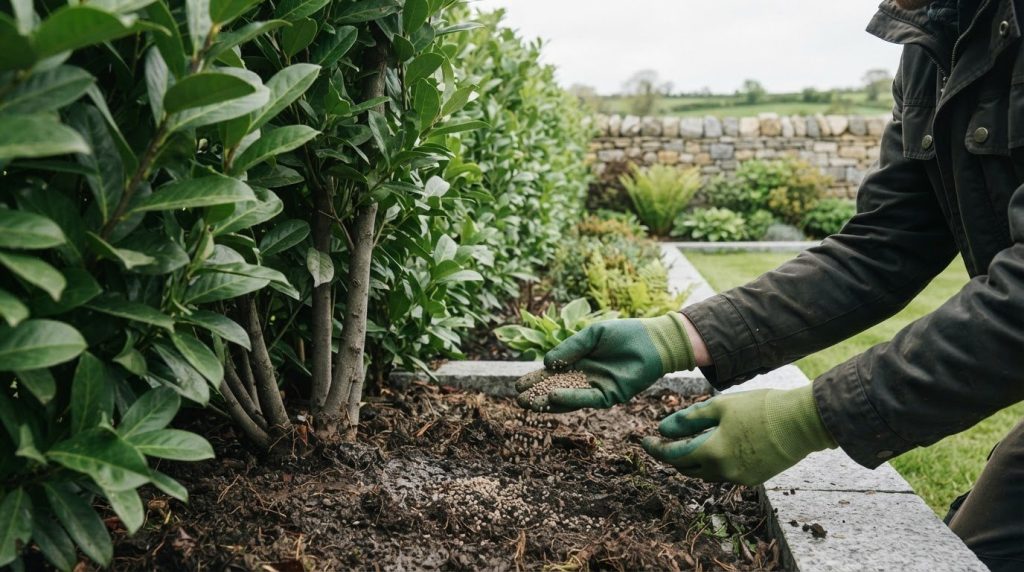
The best feed for laurel hedging may be no feed at all. Yellow leaves or slow growth can look like a nutrient problem, but dry soil, waterlogging or poor drainage may be the real cause. Feeding before checking can waste effort and may put extra stress on young plants.
It’s understandable to wonder whether a new hedge needs a boost or an established one should be fed every year. The right approach depends on the hedge’s stage of growth and condition, not a fixed routine. New plants need suitable conditions and careful establishment, while an established hedge may benefit from a balanced feed as spring growth begins if there’s a reason to apply one.
This guide explains which types of feed may suit new and established laurel, when to consider applying them and how to do so carefully. You’ll also learn what to check before reaching for fertiliser, including watering, soil drainage and signs that another issue may be affecting the hedge.
Key Takeaways
- The best feed for laurel hedging depends on the hedge’s age, condition and growing conditions, so there’s no single product or routine for every garden.
- Use the season as a guide, but consider the weather, soil and active growth before deciding whether feeding is appropriate.
- Before treating yellow leaves or slow growth, check for possible issues with watering, drainage, compacted soil, root disturbance, pests or disease.
- Choose a feed that suits the hedge, follow its label and spread it evenly around the root zone, away from stems and foliage.
- Keep a note of what you apply and how the hedge responds. If you’re choosing laurel for a new hedge, nursery staff can offer on-site plant guidance.
Best feed for laurel hedging: what does a laurel hedge actually need?
There is no single feed that suits every laurel hedge. A young hedge settling into the soil, a well-established hedge growing steadily and one with pale or weak growth may each need a different response. Plant age, recent growth, soil condition and symptoms all matter. Feeding is useful when it addresses a genuine need, not simply because a calendar says it is time.
Fertiliser supplies plant nutrients. Organic mulch, such as compost or well-rotted organic material, has a different role: it covers the soil, helps conserve moisture and can add organic matter as it breaks down. Mulch can support soil conditions, but it isn’t a direct substitute for fertiliser where nutrients are lacking. Cherry Laurel, Prunus laurocerasus, is widely grown as a hedge plant, but “laurel” can refer to different species, so check which plants you have before following species-specific advice.
As a broad guide, the Royal Horticultural Society’s advice on feeding plants supports considering a balanced feed during active growth rather than feeding in dormant conditions. For a laurel hedge, early spring may be a sensible time to consider feeding if its growth or soil condition suggests it could help.
Does a newly planted laurel hedge need feed?
For a new hedge, start with the basics: suitable planting conditions, sound soil preparation and consistent watering while the plants establish. A newly planted laurel may struggle if its roots are dry or the soil stays waterlogged, and extra fertiliser won’t correct either problem. Don’t assume every new hedge needs a routine feed.
If you choose a planting fertiliser or root product, check that it’s suitable for the plants and use it only as directed on the label. Products such as bone meal or root inoculants are options, not essentials for every planting. For background on Portuguese Laurel’s growth and care, see our Portuguese Laurel complete guide.
How does feeding differ for an established laurel hedge?
An established hedge with healthy leaves and steady growth may not need an automatic annual feed. If growth is weak, check the soil and growing conditions first. Poor drainage, dry ground or competition from weeds can affect vigour even when nutrients are present. If feeding appears appropriate, consider a balanced general-purpose fertiliser during active growth. Follow the product label, and don’t add more in the hope of forcing faster growth.
For a new hedge or one that isn’t settling well, on-site plant guidance can help you consider plant choice and establishment needs before deciding what to do next.
When to feed laurel hedging in Ireland through the growing year
Timing depends on more than the month. Check whether the hedge is actively growing, whether the soil is moist but not waterlogged and whether the plants show signs that might justify feeding. Weather can vary, so use the seasons as a guide rather than following a fixed schedule. If the ground is dry, saturated or frozen, pause and check the product instructions before applying anything.
- Spring: As growth starts, consider a balanced feed for an established hedge if its condition and growing site suggest it may benefit.
- Summer: Check soil moisture and plant condition first. Don’t feed a hedge that is struggling with drought or heat stress without checking the product guidance.
- Autumn and winter: Routine feeding is generally less suitable as growth slows. Late feeding may encourage tender growth that is more exposed to frost.
As a cautious general guide, early spring is the usual period to consider feeding an established laurel, while routine autumn feeding is best avoided. Confirm seasonal timing on the product label and against reliable horticultural advice. The RHS advice on cherry laurel also highlights that growing conditions matter, as poor soil can be associated with leaf chlorosis. Recommendations can vary by product and site.
Should you feed laurel in spring or autumn?
Spring is often the more practical time to consider feeding because the hedge is entering active growth. That doesn’t make feeding essential: a healthy hedge in suitable soil may not need it. Autumn is not automatically the right time to compensate for weak growth. As the season advances, the weather cools and growth slows, so a late application could encourage new shoots when frost risk is rising. Check the label for suitable timing and use reliable horticultural guidance if the advice is unclear.
When should you avoid feeding a laurel hedge?
Hold off if the soil is very dry, waterlogged or frozen, or if the plants look stressed. These conditions can affect how a feed is taken up and may point to a problem that fertiliser won’t fix. Assess watering, drainage and root condition before deciding what to do. If the hedge has recently been disturbed or is showing sudden decline, investigate the cause first. Postpone feeding whenever the label advises against applying the product in your conditions.
If you’re planning a new hedge and want guidance on choosing laurel plants, you can ask for on-site advice at Buds Nursery Cavan.
Yellow leaves or slow growth? Check the cause before feeding laurel
Yellow leaves and slow growth can make fertiliser seem like the obvious answer, but neither symptom confirms a nutrient deficiency. Check the hedge and its growing conditions first. Cherry Laurel, in particular, can be intolerant of heavy fertilization, according to NC State University Extension. Applying extra feed without finding the cause may do more harm than good.
| What you notice | What to check |
|---|---|
| Leaves drooping or looking dry | Check moisture around the root zone, not just at the soil surface. Prolonged dryness may be affecting the hedge. |
| Yellowing or poor growth in wet ground | Look for waterlogging, slow drainage or compacted soil that may be limiting healthy root growth. |
| Weak growth in one section | Consider recent digging, building work, root disturbance or nearby plants competing for water and nutrients. |
| Marked or damaged leaves, or affected stems | Inspect both sides of the leaves and the stems for visible pests, spots or other signs of disease. |
Could watering or drainage be the problem?
Check the soil beside the hedge and around the roots. A dry surface doesn’t always tell you whether the deeper soil is dry, and a wet surface doesn’t show how long water is sitting below it. Both prolonged dryness and waterlogged ground can affect plant condition. If the soil is too dry, address watering. If it stays saturated, investigate drainage. Correct the underlying water issue before considering extra feed.
Could roots, pests or disease explain poor growth?
Think about changes around the hedge. Recent digging, construction, vehicles or repeated foot traffic may have disturbed or compacted soil near the roots. Check whether nearby plants are competing for moisture, too. Then inspect the foliage and stems closely for visible signs of pests or disease. A single yellow leaf, colour change or patch of weak growth isn’t enough to identify a specific cause.
Use these checks before deciding whether the best feed for laurel hedging is relevant. If decline is persistent, widespread or worsening, seek professional horticultural advice rather than repeatedly applying fertiliser. A clear assessment can help distinguish a feeding need from a problem with water, roots, pests or disease.

How to apply laurel hedge feed safely and avoid over-fertilising
Apply feed only after deciding it’s suitable for the hedge and the conditions. Products differ, so don’t assume instructions for one granular or liquid fertiliser will suit another. The label is your guide to the application rate, timing, method and any precautions.
How should you apply granular or liquid feed?
Use this label-first process:
- Identify the product. Check that it’s suitable for the type of laurel and the purpose you have in mind.
- Read the full directions. Follow the stated rate and application method. Measure carefully rather than estimating or adding extra.
- Apply evenly. Distribute feed around the root zone as directed. Keep it away from stems and foliage, and don’t leave concentrated piles beside individual plants.
- Check whether watering is needed. Some products may need watering in, while others have different instructions. Follow the label and take account of soil moisture and drainage.
- Handle and store safely. Use any protective equipment specified, and store the product as its label directs.
Granular feeds are generally spread over the soil, while liquid feeds may be diluted or applied in another way. These methods are not interchangeable. Check the specific product guidance before mixing, spreading or watering it in. If the label doesn’t clearly cover your situation, don’t guess at a dose.
More fertiliser is not automatically better. NC State University Extension describes Cherry Laurel as intolerant of heavy fertilization, so stick to the product’s stated rate rather than trying to push extra growth.
Can mulch replace fertiliser for laurel hedging?
No. Mulch and fertiliser have different roles. A layer of suitable organic mulch, such as compost or bark chippings, can cover bare soil and help conserve moisture. As it breaks down, some organic mulches also add organic matter. But mulch shouldn’t be treated as a measured fertiliser dose, and it may not provide all the nutrients a hedge needs if a genuine deficiency is present.
Keep mulch clear of the stems and avoid piling it against the base of the plants. Apply it to the soil surface, taking care not to bury low foliage. Watering is separate: mulch can help the soil retain moisture, but it doesn’t replace checking whether the root zone is too dry or too wet.
If you’re choosing Portuguese Laurel or Cherry Laurel for a hedge and need help with plant selection, ask the nursery for laurel plant guidance.
A simple laurel feeding plan, and where to get help choosing plants
Work through the decision in order: establish the hedge, check symptoms, assess the growing conditions, then consider feed only if it seems appropriate. This avoids treating every yellow leaf or slow patch as a fertiliser problem. The best feed for laurel hedging depends on the plants and their situation, so a simple check is more useful than following a fixed feeding routine.
What is the safest next step for your hedge?
- Newly planted? Focus first on suitable planting conditions and steady care while the roots establish.
- Not looking right? Check soil moisture, drainage, compaction, root disturbance, pests and disease before assuming nutrients are lacking.
- Growing well? Monitor the hedge rather than feeding automatically.
- Feed appears appropriate? Choose a suitable product, follow its label and record the application date and product used.
After feeding, note any changes in the hedge’s growth and appearance. Reassess over time rather than applying more whenever the hedge still looks less vigorous than expected. If decline is persistent, widespread or getting worse, seek professional horticultural advice to help identify the cause.
Choosing laurel plants for a new hedge
Plant choice and establishment conditions shape the care a hedge may need later. Consider the site and the type of hedge you want before choosing between laurel varieties. Buds Nursery offers Portuguese Laurel and Cherry Laurel, with on-site guidance to help you consider plant selection. If you’re comparing where to source plants, read this specialist plant nursery sourcing guide.
A well-considered start can make it easier to judge how your hedge is settling in and whether any later feeding is actually needed. For help comparing plants for a new hedge, browse hedging plants and contact Buds Nursery.
Make a considered choice for your laurel hedge
The best feed for laurel hedging depends on the plants’ age, condition and growing site. Check watering, drainage and other possible causes of poor growth before applying fertiliser, and follow the product label if feeding is appropriate. A healthy, established hedge may not need routine feeding.
For a new hedge, good plant choice and establishment care are the starting points. Buds Nursery offers Portuguese Laurel and Cherry Laurel, with on-site plant guidance and delivery options for larger orders.
If you’re planning a hedge, browse hedging plants and contact Buds Nursery to discuss choosing laurel plants. With careful observation and a measured approach to feeding, you can make practical decisions as your hedge grows.
Frequently Asked Questions
What is the best feed for laurel hedging?
The best feed for laurel hedging depends on the hedge’s age, condition and soil. If an established hedge appears to need nutrients and other causes of poor growth have been checked, a balanced general-purpose fertiliser may be suitable. Choose a product labelled for your intended use and follow its directions. A healthy hedge growing well may not need routine feeding, and applying extra fertiliser won’t necessarily improve it.
When should I feed a laurel hedge in Ireland?
Early spring, as active growth begins, is generally a sensible time to consider feeding an established laurel hedge if its condition indicates a need. The right moment can vary with weather, soil moisture and the product’s instructions. Don’t treat the calendar as a fixed schedule. Don’t apply feed to frozen, dry or waterlogged ground without checking the label, and generally avoid late-season feeding that may encourage vulnerable new growth.
Can I use a general-purpose fertiliser on laurel hedging?
Yes, a general-purpose fertiliser may be suitable if its label includes your intended use and the hedge would benefit from feeding. For an established hedge, a balanced feed can be considered during active growth after checking watering, drainage and other possible causes of poor growth. Apply only at the stated rate and by the specified method. Don’t assume a product suitable for one plant or situation is right for every laurel hedge.
Should I feed a newly planted laurel hedge?
Not automatically. Give new plants suitable planting conditions and consistent watering while they establish. Fertiliser won’t fix dry roots, waterlogged soil or poor site conditions. A planting feed or root product can be considered if suitable, but it isn’t essential for every hedge. Check the product label for use at planting and follow its directions. If the plants struggle, assess the soil and watering before adding more feed.
Why are the leaves on my laurel hedge turning yellow?
Yellow leaves can have several possible causes, so colour alone can’t confirm a nutrient deficiency. Check moisture around the roots: both prolonged dryness and waterlogging may affect the hedge. Also consider compacted soil, root disturbance, pests or disease. If these conditions seem sound, a nutrient issue may be one possibility, but avoid diagnosing it from one symptom. Seek professional horticultural advice if decline is persistent, widespread or worsening.
Can I use mulch instead of fertiliser around laurel hedging?
Mulch and fertiliser do different jobs, so mulch isn’t always a substitute for feed. Suitable organic mulch, such as compost or bark chippings, covers the soil and can help conserve moisture. As it breaks down, it may add organic matter. It isn’t a measured fertiliser dose and may not supply all the nutrients a hedge needs. Keep mulch clear of the stems and check the hedge’s condition before deciding whether feed is appropriate.
Is bone meal suitable for planting a laurel hedge?
Bone meal can be used as a planting fertiliser if the product is suitable for the plants and its label gives directions for that use. It’s an option, not a requirement for every new laurel hedge. Prioritise sound soil preparation and watering as plants establish, and don’t guess the amount or use it contrary to the instructions. If you’re unsure whether it suits your soil or planting situation, seek reliable horticultural advice.