

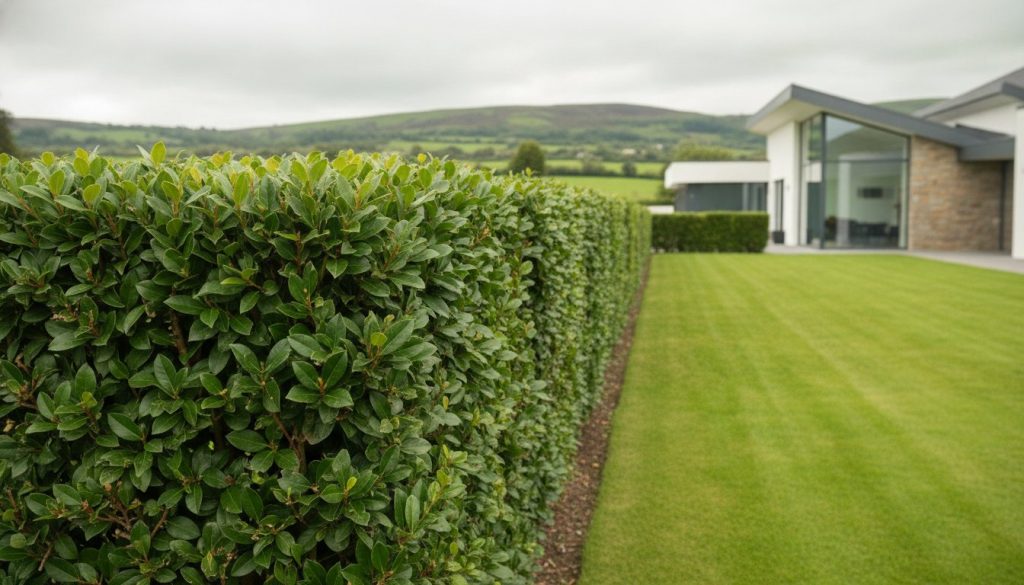
A common mistake in Irish gardening is choosing a hedge for its speed of growth rather than its ability to survive a harsh winter. You likely want a boundary that offers total privacy and a deep green colour, yet many homeowners end up with leggy, thin plants that struggle in heavy soil. If you are looking for Portuguese laurel for sale Cavan, you need a variety that is hardy enough to thrive in our specific local conditions whilst providing a dense, formal aesthetic.
We understand the frustration of investing in hedging only to see it fail due to poor drainage or wind exposure. This 2026 guide draws on 30 years of growing experience to show you why Prunus lusitanica is the premier choice for Irish privacy screening. You’ll learn the practical differences between pot-grown and rootballed plants, along with precise instructions on spacing and soil preparation. We also outline how to source high-quality plants from our 60-acre specialist nursery for national delivery, ensuring your new hedge establishes quickly and stays healthy for decades.
Key Takeaways
- Learn why Portuguese Laurel is the premier evergreen choice for Irish gardens, offering hardy coverage and distinctive red stems.
- Understand why selecting pot-grown Portuguese laurel for sale Cavan is the most reliable way to avoid plant loss during the first winter.
- Calculate your planting needs using the professional rule of two to three plants per metre for a dense, formal boundary.
- Master the pruning techniques and soil requirements needed to maintain a thick, healthy hedge from the ground up.
- Source directly from a 60-acre specialist nursery to access professional-grade plants and expert advice born from 30 years of experience.
Understanding Portuguese Laurel (Prunus lusitanica Angustifolia)
Portuguese Laurel, known botanically as Prunus lusitanica ‘Angustifolia’, is a versatile evergreen shrub that has become a staple in Irish landscaping. It’s easily identified by its pointed, dark green leathery leaves and distinctive maroon-red stems. Unlike the common Cherry Laurel, which can look somewhat coarse with its large, pale leaves, the Portuguese variety offers a more refined and architectural finish. This makes it the preferred choice for garden designers who want a formal look without the high-maintenance requirements of Box or Yew.
When searching for portuguese laurel for sale Cavan, it’s helpful to know that this plant is prized for its year-round density. It creates a solid wall of green that blocks wind, noise, and prying eyes. Its white candle-like flowers appear in early summer, followed by small dark berries, though regular pruning usually removes these before they develop. For homeowners in the north-east, it provides a reliable structure that stays vibrant even during the darkest months of the year.
Why Portuguese Laurel Suits the Irish Climate
Ireland’s weather presents specific challenges for hedging. High rainfall and heavy, damp soils can lead to root rot in less hardy species. Portuguese Laurel is exceptionally resilient in these conditions. It handles the “chill factor” of an exposed Irish site far better than many other evergreens. Whilst some plants turn yellow or drop leaves in a hard frost, this variety maintains its rich emerald colour. The reddish petioles, or leaf stalks, are especially striking in winter. They add a layer of warmth to the garden’s palette when other plants are dormant.
Growth Rate and Expectations
Managing expectations regarding growth is vital for a successful project. You can typically expect 30cm to 50cm of growth per year once the plant is established. It is not as aggressive as Cherry Laurel, which is actually a benefit. A slower growth rate means the hedge is easier to keep in a neat, tidy shape with just one prune per year. When you find portuguese laurel for sale Cavan at a specialist nursery, you are often choosing between young 2-litre pots or mature rootballs. A young plant will take three to four years to form a solid screen, whilst larger specimens provide an almost instant boundary. Starting with quality Irish-grown stock ensures the roots are already adapted to our local climate, leading to a much higher success rate during the transition from nursery to garden.
Key Considerations When Seeking Portuguese Laurel for Sale in Cavan
Searching for portuguese laurel for sale Cavan often leads to a wide variety of options, from small garden centres to private sellers. However, the quality of the stock is what determines if your hedge will look like a professional screen or a collection of struggling plants. A healthy specimen should have glossy, dark green leaves without any yellowing or spotting. Stems must be firm and reddish, indicating strong new growth. When you examine the root structure of a pot-grown plant, look for a well-developed, fibrous system that hasn’t become pot-bound or circled tightly around the container.
Pot-Grown vs Bare-Root: Making the Right Choice
Many homeowners are tempted by bare-root plants because of their lower initial cost. For Portuguese Laurel, this is often a false economy. Unlike deciduous hedging, this evergreen species is sensitive to root disturbance. Moving a bare-root laurel often leads to significant die-back or total plant failure during the first winter. This is why we prioritise pot-grown stock at our 60-acre site. Pot-grown plants arrive with their root system fully protected by soil, allowing them to establish almost immediately in the damp Irish climate. This method also permits year-round planting, whereas bare-root options are strictly limited to the dormant winter months. According to the NC State Extension Gardener Plant Toolbox, maintaining consistent root moisture and avoiding disturbance is critical for the success of Prunus species in varied landscapes.
Sizing and Maturity for Your Project
We supply a range of sizes to suit different budgets and timelines. If you aren’t in a hurry, 2-litre pots, typically 30/60cm in height, offer an affordable way to plant a long boundary. These young plants are vigorous and often catch up to larger specimens within a few seasons if cared for correctly. For those requiring immediate screening, we produce mature rootballs up to 2 metres in height. These larger plants require more attention to watering in their first year but provide an instant, formal boundary. For the 2026 season, it’s advisable to check our current availability for these larger 2-metre specimens, as they are in high demand for new builds. If you’re unsure which size fits your garden, you can always contact our specialist team for a practical recommendation based on your site’s exposure.
Planting Your Hedge: Soil Preparation and Spacing
Success with a new hedge starts with correct spacing. For most garden projects, the standard rule is to plant two to three plants per metre. This density ensures that the plants have enough room to develop a strong root system whilst still closing the gaps quickly to form a solid screen. If you’re sourcing portuguese laurel for sale Cavan for a larger boundary, sticking to this ratio prevents overcrowding, which can lead to thin, leggy growth at the base. A staggered double row can be used for extra thickness, but for a formal Portuguese Laurel hedge, a single straight line is usually sufficient.
Soil quality is the next priority. Like all Prunus species, these plants require free-draining ground. They won’t tolerate sitting in waterlogged soil during a wet Irish winter. If your site has heavy clay or stays damp, we recommend planting into raised drills. By mounding the soil about 15cm to 20cm above the ground level, you allow excess water to drain away from the primary root zone. This simple step often makes the difference between a thriving hedge and one that suffers from root rot.
Nutrition also plays a role in establishment. Portuguese Laurel prefers a neutral to slightly limey soil. If your ground is highly acidic, a light application of lime can help. We also suggest focusing on Potassium and Potash. These nutrients strengthen the cell walls of the plant, making it more resilient against disease and frost damage during its first few seasons.
The Step-by-Step Planting Process
Preparation is better than a quick fix later. Start by digging a trench approximately 30cm to 40cm deep and twice as wide as the pot or rootball. This loosened soil allows new roots to spread without resistance. Incorporate well-rotted organic matter into the bottom of the trench, but avoid fresh manure which can burn tender roots. When you place the plant, ensure it sits at the same depth it was in the pot. Backfill with the excavated soil, firming it down gently with your heel to remove air pockets. Water the plants immediately to settle the soil around the roots.
Protecting Your Investment on Exposed Sites
Young evergreen plants are vulnerable to the “chill factor” of the Irish wind. This isn’t just about the temperature; a cold, biting wind dries out the leaves faster than the roots can replace the moisture. On exposed sites, installing 1-metre high windbreak netting is a practical solution. This netting reduces wind speed by about 50%, providing a micro-climate that encourages faster growth. You can also organise natural shelter by using existing structures or temporary fencing whilst the hedge establishes. Once the plants reach about 1.2 metres, they are usually sturdy enough to handle the elements on their own. If you have secured your portuguese laurel for sale Cavan from our nursery, we can provide specific advice on the best netting for your local topography.

Maintenance and Pruning for a Thick Evergreen Hedge
Establishing a hedge requires more than just correct planting. Regular care ensures the glossy foliage remains dense from the ground up. When sourcing portuguese laurel for sale Cavan, remember that the quality of your aftercare is just as important as the quality of the plant. Your first priority is a consistent watering schedule. For the first two years, the root system is still expanding and remains vulnerable. During dry spells or a warm Irish summer, you should water at the base of the plants twice a week. Deep watering is better than a light sprinkle. It encourages roots to grow downwards into the cooler soil rather than staying near the surface.
Pruning for Density and Shape
Pruning is the primary way to prevent your hedge from becoming thin at the bottom. We recommend pruning in late spring or early autumn. This timing avoids the risk of new growth being hit by a late frost. When pruning, use sharp secateurs to cut individual stems where possible. This prevents the shredded leaf look caused by large hedge shears, where the cut leaves turn brown and unsightly. To encourage a thick screen, trim the leading vertical shoots once they reach your desired height. This forces the plant’s energy into the side branches, filling out any gaps between the individual plants. If you have found portuguese laurel for sale Cavan and want a formal look, aim for a slightly tapered shape where the bottom is wider than the top. This allows sunlight to reach the lower branches, preventing them from dying back.
Feeding and Long-Term Health
A healthy Portuguese Laurel should have a deep, uniform green colour. If you notice yellowing leaves, it often indicates a nutrient deficiency or poor drainage. A balanced fertiliser applied in early spring provides the nitrogen needed for new growth. As winter approaches, we suggest a feed high in Potassium. This strengthens the wood and the leathery leaves, helping the hedge withstand the heavy frosts common in the north-east. Mulching is another effective tool for long-term health. Apply a 5cm layer of bark mulch or well-rotted compost around the base of the plants each spring. This layer suppresses weeds that compete for nutrients and helps the soil retain moisture during the growing season. It also protects the root zone from extreme temperature fluctuations.
To ensure your hedge gets the best start, you can order professional-grade fertiliser and mulching supplies directly from our nursery for national delivery.
Why Source from a Specialist Nursery in County Cavan?
Choosing where to buy is as important as the species itself. When you are looking for portuguese laurel for sale Cavan, sourcing directly from a specialist grower offers a level of quality that general retailers simply can’t match. Our 60-acre production site in Poles is dedicated to hardy, Irish-grown stock. Because we manage the entire lifecycle of the plant, from propagation to the final rootball, we ensure every specimen is adapted to our local soil and weather patterns. Buying direct means your plants haven’t spent weeks sitting in a dry garden centre or being moved between multiple middlemen.
Our 100% Irish-owned nursery operates with a straightforward, no-nonsense approach. We’ve spent 30 years refining our growing methods to produce Prunus lusitanica Angustifolia that doesn’t just look good in the pot but thrives once planted. This long-standing experience means we can provide practical, grounded advice on everything from drainage solutions to wind protection. We focus on the fundamentals of the craft, ensuring your investment in privacy screening is successful for the long term.
National Delivery and Logistical Support
We don’t just serve the local area. Our national delivery service brings Cavan-grown quality to gardens across Ireland. Larger orders are handled with specific care; we utilise a logistical network that understands the requirements of live plants. Every laurel is carefully prepared for transport to ensure it arrives in peak condition, ready for immediate planting. This logistical support is vital for projects requiring mature rootballs that are too large for standard courier services. For more information on what to look for when choosing a supplier, you can read our specialist plant nursery Ireland guide.
Visiting the Nursery: An On-Site Expert Experience
Whilst we offer national delivery, many customers prefer to visit our Glassdrummon site in Poles, Cavan. Seeing the scale of our 60-acre stock allows you to compare different sizes side-by-side, from our 2-litre pots to our 2-metre rootballs. It’s the best way to get a feel for the density and quality of the portuguese laurel for sale Cavan. The nursery is open Tuesday to Saturday. Please note we are closed on Sundays and Mondays, and we take a lunch break from 1pm to 2pm each day. A visit allows you to speak directly with our team and get the specific, expert guidance needed for your project’s unique challenges without any marketing fluff.
Securing Your Garden Boundary for 2026
Investing in a Portuguese Laurel hedge is a permanent commitment to your property’s privacy and structure. Choosing pot-grown stock over bare-root options and following the professional spacing rule of two to three plants per metre ensures your boundary establishes quickly without unnecessary plant loss. It’s about getting the fundamentals of soil preparation and wind protection right from the very first day to ensure your investment thrives in the Irish climate.
If you’re looking for portuguese laurel for sale Cavan, sourcing from our 60-acre specialist nursery provides the reliability you won’t find at a general retailer. With 30 years of experience managing the specific challenges of Irish soil and weather, we produce plants that are built to last. We offer a national delivery service for all hedging orders, ensuring our hardy, specialist stock reaches your garden in peak condition, regardless of your location. You’ll receive the same no-nonsense expert guidance that has made us an established, dependable provider for decades.
View our Portuguese Laurel range at Buds Nursery Cavan
Your garden deserves a boundary that stands the test of time.
Frequently Asked Questions
How many Portuguese Laurel plants do I need per metre?
You generally need two to three plants per metre to create a dense, formal boundary. If you’re using smaller 2-litre pots, three per metre ensures the gaps close quickly. For larger rootballs, two per metre is usually sufficient. This spacing allows each plant enough room to establish its root system whilst still providing total privacy within a few growing seasons. It prevents the leggy growth often seen in overcrowded hedges.
Is Portuguese Laurel better than Cherry Laurel for privacy?
Portuguese Laurel is often considered superior for privacy in smaller gardens because of its smaller leaves and slower growth. It creates a much tighter, more architectural screen than Cherry Laurel. The dense foliage blocks noise and wind more effectively. It also handles the Irish frost better, meaning you won’t see the yellowing or leaf drop that sometimes affects other varieties in a hard winter. The finish is much more refined.
When is the best time to plant Portuguese Laurel in Ireland?
You can plant our pot-grown stock at any time of the year as long as the ground isn’t frozen or waterlogged. Most gardeners prefer autumn or early spring to take advantage of the natural rainfall. Planting during these months allows the roots to settle before the summer growth spurt. If you plant during the summer, you must commit to a strict watering schedule for the first two years to ensure the hedge doesn’t dry out.
Can Portuguese Laurel grow in clay soil?
It grows well in clay soil provided you improve the drainage. Portuguese Laurel won’t tolerate sitting in stagnant water. We recommend planting into a raised drill or mounding the soil to keep the primary root zone above the water table. Adding organic matter to the trench also helps break up the clay, allowing the roots to spread more easily through the heavy Irish ground. This prevents root rot during wet winters.
How fast does a Portuguese Laurel hedge grow?
You can expect an annual growth rate of approximately 30cm to 50cm once the hedge is established. Whilst this is slower than the aggressive Cherry Laurel, it results in a much thicker and more manageable hedge. It typically requires only one tidy prune per year to maintain its shape. This steady growth rate makes it ideal for homeowners who want a formal look without the constant maintenance required by faster-growing species.
Is Portuguese Laurel poisonous to horses or pets?
Yes, Portuguese Laurel is toxic if ingested by horses, livestock, or pets. The leaves and berries contain cyanogenic glycosides, which are harmful to animals. We don’t recommend this species for boundaries that border paddocks or grazing land. For those areas, we suggest looking at our Native Trees Scheme or Whitethorn options. These varieties are much safer for livestock and do a better job of supporting local Irish biodiversity.
Does Buds Nursery Cavan offer national delivery for hedging?
Yes, we provide a reliable national delivery service for all our hedging orders. When you source portuguese laurel for sale Cavan from our 60-acre nursery, we handle the logistics to ensure your plants arrive in peak condition. We use specialist transport for larger rootballs and standard delivery for potted plants. This allows you to access professional-grade Irish stock no matter where your project is located, from Cork to Donegal.
Do I need to use windbreak netting for my new hedge?
We highly recommend using 1-metre high windbreak netting on exposed or coastal sites. Young evergreen plants often struggle with the drying effect of cold winds, which can stall their growth. Netting reduces the wind speed by about half, creating a sheltered micro-climate that helps the hedge establish much faster. It’s a small investment that significantly increases the survival rate of your new privacy screen during its first two critical winters.