


How quickly will portugese laurel hedging give you the privacy you want? Once established, Portuguese Laurel can add around 30-45cm in height a year. Growth is often slower during the first year, while the roots settle into the soil.
It’s reasonable to want a clear timeline for screening, especially when nursery growth estimates don’t match what you see after planting. Progress depends on the plants’ starting size, soil drainage, exposure and aftercare. Waterlogged ground, dry spells and a challenging site can all slow establishment, so treat an annual estimate as a guide, not a promise.
This article explains what growth to expect in Ireland in 2026, why the first year may be different, and how planting time, soil and routine care influence results. You’ll also learn how to plan for screening without relying on a single figure. Buds Nursery Cavan sells Portuguese Laurel and offers practical guidance to help you choose plants with realistic expectations.
Key Takeaways
- Use the growth rate as a planning guide, not a promise of when your hedge will fully screen a view.
- Assess light, drainage, soil moisture and wind exposure to understand what may help or hinder growth in your garden.
- Expect different growth patterns during planting, early establishment and once the hedge is established.
- Support healthy growth with sound planting, attentive watering, weed management and regular monitoring.
- Plan portugese laurel hedging around the level of privacy you want and the time a living hedge needs to develop.
How fast does Portuguese Laurel hedging grow in Ireland?
As a general guide, established Portuguese Laurel may grow around 30-45cm in height per year in suitable conditions. Treat this as an estimate, not a guarantee. Growth depends on how well the plants have established and the conditions along the hedge line. A newly planted hedge may put more energy into root growth before you see much height gain.
This is a broad horticultural estimate for annual height extension, not a measured prediction for every garden in Ireland. It describes upward growth, not the plant’s spread or the amount of new foliage. Published estimates can vary, so don’t assume the upper end is the usual result. The botanical name is Prunus lusitanica; the linked species overview provides background on its description and cultivation.
What does an annual growth estimate actually mean?
Think of the figure as a possible increase in height over a year once a plant is established, not a fixed amount that appears evenly through every season. The 30-45cm range is an estimate for plants in suitable conditions. It isn’t a guaranteed rate for a new hedge, and it doesn’t mean the hedge will become dense or screen a view at the same pace.
When planning portugese laurel hedging, look at how the plants perform on your site rather than measuring them against a single figure. Check for healthy new shoots and consider the plants’ overall condition over time. A sheltered, well-drained position with suitable moisture may support better growth than waterlogged soil or a persistently stressful site.
For a botanical overview of the species, see Prunus lusitanica.
When should a newly planted hedge start showing growth?
After planting, roots need time to settle into the surrounding soil and take up water and nutrients. This can happen without an obvious increase in height. A slow start doesn’t automatically mean the hedge is failing. Look for firm, healthy foliage, then watch for new buds or shoots when conditions support growth.
Visible progress varies with planting conditions and aftercare, so avoid expecting a particular amount of growth by a set month in the first year. If growth remains weak, check whether the soil is staying too wet or drying out, whether weeds are competing with the plants, and whether leaves or shoots show signs of stress.
Quoted growth rates are estimates for established plants. Your hedge’s progress depends on its roots, site and care. Use the range to set broad expectations, then judge establishment by the plants’ condition as well as their height.
Which Irish garden conditions affect Portuguese Laurel growth?
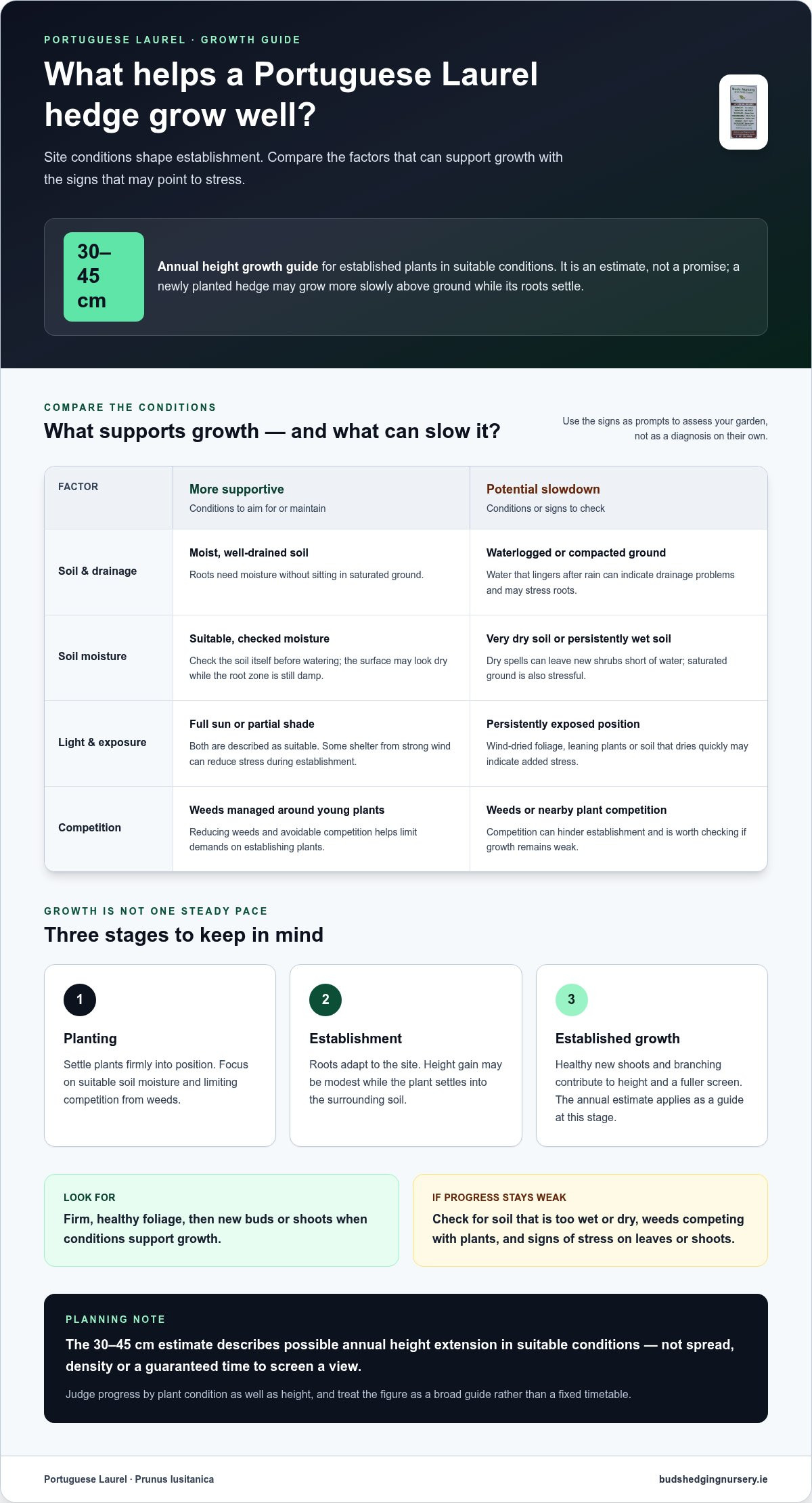
Growth depends on more than the plant itself. Light, soil structure, drainage, moisture, wind and competition all affect how a Portuguese Laurel hedge establishes. The NC State Extension Plant Toolbox describes the species as suited to full sun or partial shade and moist, well-drained soil. Use this as general plant guidance, then assess the conditions in your own garden.
How do soil, drainage and moisture affect growth?
Portuguese Laurel can grow in a range of garden soils, but its roots need moisture without sitting in saturated ground. Persistently wet soil can stress roots, while very dry soil can leave newly planted shrubs short of the water they need to establish. Neither is ideal for steady growth.
Notice how the ground behaves after rain and during dry spells. Water that lingers around the planting area, yellowing foliage or persistently limp-looking plants can point to a moisture or drainage issue. Check the soil itself before watering: the surface can look dry while the root zone is still damp. If the ground is heavy or compacted, consider whether water can drain away before planting rather than relying on extra watering to solve the problem.
Does sunlight or an exposed position slow a Portuguese Laurel hedge?
Light influences growing conditions, but neither full sun nor partial shade guarantees a particular growth rate. Some shelter from strong wind can help reduce stress while plants are establishing. In an exposed spot, look for wind-dried foliage, leaning plants or soil that dries quickly. These signs can indicate that the position is adding to plant stress.
Some conditions are easier to manage than others. You can clear weeds, reduce competition from nearby plants and monitor soil moisture. You may also be able to choose a more sheltered line for the hedge. Underlying soil, existing shade and general exposure can be harder to change, so take them into account when planning portugese laurel hedging.
- Manage: weeds around young plants, watering during dry conditions and avoidable competition.
- Assess before planting: drainage, established shade and exposure to wind.
A slow start may reflect a challenging site rather than a problem with the plant. Buds Nursery sells Portuguese Laurel plants and offers practical plant guidance. Explore Portuguese Laurel plants as you plan your hedge.
How does Portuguese Laurel growth change after planting?
A Portuguese Laurel hedge doesn’t grow at one steady pace from planting onwards. Early progress may be less visible above ground as roots adjust to the new soil. As plants establish, new shoots and branching contribute to height and a fuller screen. The table below is a practical guide, not a fixed timetable. Plant condition, planting season and garden conditions all affect how each stage unfolds.
| Stage | What to expect |
|---|---|
| Planting | Plants settle into their new position. Focus on firm planting, suitable soil moisture and limiting competition from weeds. |
| Establishment | Roots adapt to the site. Top growth may be modest, while foliage condition and the appearance of new buds or shoots offer useful signs to monitor. |
| Established hedge | Growth becomes more apparent when conditions suit the plants. Height, branching and the gradual filling of gaps all contribute to the hedge’s overall form. |
What happens during the establishment period?
After planting, roots need to grow into the surrounding soil and take up water. This is a normal part of establishment, even if the hedge gains little visible height at first. Check that the plants remain upright and their foliage looks healthy. Watch for new buds or shoots as conditions allow. In Ireland, the dormant planting season is generally November to March, but the weather and the plants’ condition still affect how they settle in.
For more on the species and its care, read the Portuguese Laurel complete guide.
Why can height and hedge density develop at different rates?
A plant can grow taller without filling the gaps at its sides. Height measures upward extension, while a dense screen also depends on branching and neighbouring plants growing together. Spacing matters: plants set too far apart may take longer to meet, while closely planted shrubs still need suitable conditions to develop. Assess the hedge from different angles rather than judging progress by height alone.
For portugese laurel hedging, check both new growth and how much foliage is filling the line. The hedge may be growing well before it provides the level of screening you want.
How can you support healthy Portuguese Laurel growth?
Good aftercare is steady rather than complicated. Start with sound planting, check soil moisture as the weather changes, keep weeds from competing around young plants and observe how the hedge responds. These basics support establishment without trying to force fast growth.
What should you do in the first growing season?
After planting, water the root area thoroughly so the surrounding soil settles around the roots. Check the soil before watering again. Rainfall, wind, temperature and drainage all affect how quickly it dries, so a fixed weekly schedule can result in too much or too little water. The linked Portuguese Laurel growing guide offers further species-specific information.
- Check moisture: Feel the soil near the roots instead of judging only by the surface. Water during dry spells if the root zone is drying, and avoid keeping it saturated.
- Limit competition: Remove weeds close to the plants by hand, taking care not to disturb their roots. Keep the immediate planting area clear so weeds aren’t competing for water.
- Observe the hedge: Look for changes in foliage, buds and shoots, and check whether plants remain upright. If concerns persist or symptoms worsen, seek reliable horticultural advice rather than applying a treatment at random.
Waterlogged ground can contribute to root problems and yellowing leaves, while dry conditions can stress newly planted shrubs. Respond to the soil, not the calendar. For sound establishment, keep the roots moist but not waterlogged, and adjust watering to the weather and soil conditions.
How should you manage growth without forcing it?
Give plants time to settle before judging progress by height alone. Extra watering won’t speed growth if the soil is already wet, and unnecessary pruning can remove developing growth. Once the hedge is established, prune with its intended shape in mind rather than cutting simply to encourage faster growth. With portugese laurel hedging, patient care and regular observation are more useful than trying to force a particular rate.
Buds Nursery offers Portuguese Laurel plants and practical selection guidance. Explore the hedging range at Buds Nursery.
Plan a Portuguese Laurel hedge around realistic growth expectations
Portuguese Laurel offers an evergreen option for privacy, but a living screen needs time to establish and fill out. Before choosing plants, consider how much coverage you need, how soon you need it, and whether your garden’s soil, drainage and exposure are suitable. Choosing a hedge that suits the site is more practical than assuming it will screen immediately.
Is Portuguese Laurel suitable for your screening timeline?
A newly planted hedge may have gaps for a time, even when the plants are healthy. Progress depends on the plants’ condition when planted, how they establish and the growing conditions along the hedge line. If you need immediate screening, be realistic about what a young living hedge can provide. Don’t plan around a fixed date for full coverage.
Set out your priorities before planting: the height and density you’re aiming for, how much time you can allow, and whether the site has good drainage, suitable moisture and shelter. If you’re weighing up options, the privacy hedging buying guide offers broader context on choosing hedging for Irish gardens.
Where can you source Portuguese Laurel hedging in Ireland?
Buds Nursery sells Portuguese Laurel and offers practical plant-selection guidance. The nursery has more than 30 years of experience and manages 60 acres devoted to growing hedging, trees and shrubs. This experience can help you consider plant choices and suitability, but it doesn’t guarantee a particular growth rate in your garden.
Think through your screening goal and planting conditions first. Use them to guide your choice of plants and set expectations for how the hedge will establish. If you’re researching portugese laurel hedging for an Irish garden, explore Portuguese Laurel hedging at Buds Nursery.
Plan your hedge with confidence
Portuguese Laurel can provide evergreen screening, but a living hedge takes time to establish. Once established, a general growth estimate is around 30-45cm in height each year, although soil, drainage, light and exposure all influence progress. In the early stages, healthy roots and steady establishment matter more than rapid visible growth.
When planning portugese laurel hedging, consider the screening you need, the condition of your planting site and a realistic timescale. Height alone doesn’t tell the whole story: branching and how the plants fill the hedge line also shape the final screen.
Buds Nursery has over 30 years of experience and manages 60 acres devoted to hedging, trees and shrubs. Portuguese Laurel is among the nursery’s offerings, with practical plant-selection guidance to help you plan your hedge. Explore Portuguese Laurel hedging at Buds Nursery and take the next step towards a hedge suited to your garden.
Frequently Asked Questions
How fast does Portuguese Laurel hedging grow each year?
Once established, Portuguese Laurel typically grows around 30-45cm in height per year in suitable conditions. Treat this as a general estimate, not a guaranteed annual increase. Growth may be slower during the first year after planting as roots settle, and drainage, moisture and exposure can all affect progress. The figure describes upward growth, not how quickly the hedge will become dense or screen a view.
How long does Portuguese Laurel take to establish after planting?
There isn’t a reliable fixed timeframe for establishment. It depends on the plant’s condition, planting conditions and aftercare. Early on, roots are adapting to the garden soil, so visible height gain may be modest. Check that plants remain upright and look healthy, and watch for buds or shoots as conditions allow. A slow start alone doesn’t mean a hedge has failed to establish.
Does Portuguese Laurel grow well in Ireland?
Portuguese Laurel can grow in Irish gardens with suitable conditions, particularly soil that retains moisture without becoming waterlogged. Persistently wet ground, dry spells, strong exposure or competition from weeds can put plants under stress. Check drainage before planting and monitor soil moisture afterwards. A suitable position and steady care help the hedge establish.
Does Portuguese Laurel grow faster in sun or shade?
Portuguese Laurel grows in full sun or partial shade, but neither position guarantees faster growth. Moisture, drainage and exposure also matter. Consider how much sun the planting line receives and whether it is exposed to drying winds. Look at the whole site rather than choosing a position based on light alone, and monitor the plants’ condition as they establish.
Will Portuguese Laurel form a dense hedge as well as grow tall?
It can form a dense hedge, but height gain alone doesn’t guarantee a solid screen. Branching, plant condition and spacing affect how quickly gaps fill between shrubs. A common planting guide for a standard dense hedge is 2-3 plants per linear metre, though the right layout depends on the plants and the hedge you’re planning. Assess side growth as well as height while the hedge develops.
How can I encourage Portuguese Laurel to grow well after planting?
Give the hedge a sound start: plant into well-drained soil, water the root area after planting and check moisture regularly. Water as needed during dry conditions, but don’t keep the soil saturated. Remove weeds near young plants to reduce competition for water, and observe foliage and new shoots for changes. Avoid trying to force growth; steady establishment is a better basis for a healthy hedge.
When is the best time to plant Portuguese Laurel hedging?
In Ireland, the dormant season, generally November to March, is a practical time to plant hedging. Pot-grown plants can be planted at other times, but need closer attention to watering during dry weather, particularly in summer. Choose a period when the soil isn’t waterlogged or frozen, and prepare the planting line before planting. Conditions on the day matter as well as the season.