

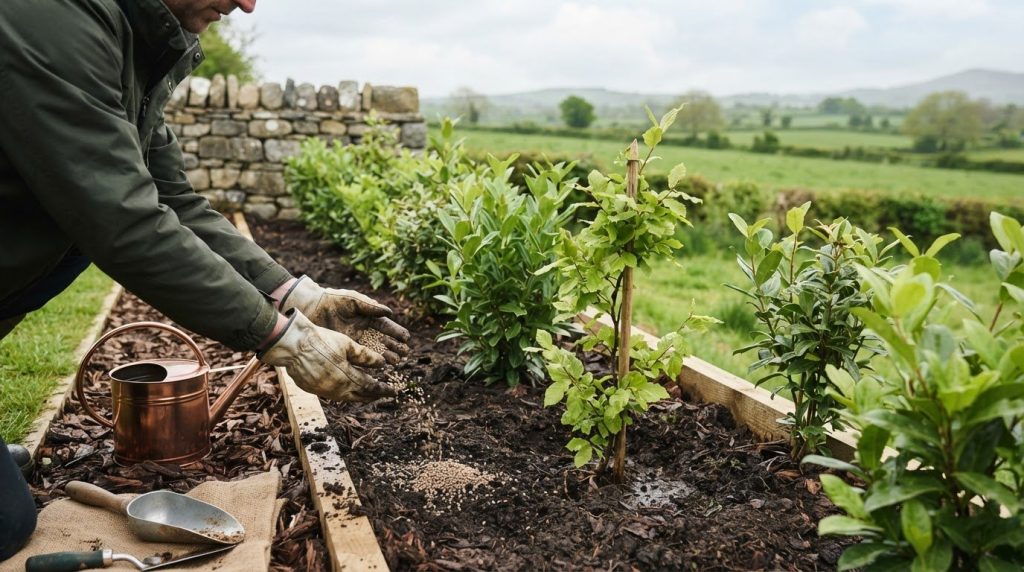
More fertiliser isn’t always better for a newly planted hedge. If you’re wondering when to fertilize new hedge plants, consider the planting season, soil conditions and how well the plants are settling in. Young roots need time to establish, and a heavy feed can add stress rather than encourage healthy growth.
Some hedges may benefit from well-rotted manure or a suitable slow-release fertiliser at planting, while others won’t need an extra feed straight away. Spring, as new growth begins, is generally the main time to assess whether further feeding is needed. Watering and keeping weeds from competing with the hedge are also important parts of early care.
This guide explains when feeding may help, when it may be unnecessary and how to apply a chosen fertiliser safely according to its label. It covers planting-time and spring feeding, considerations for Portuguese Laurel, Beech and Griselinia, and how watering, mulch and regular observation support establishment.
Key Takeaways
- When to fertilize new hedge plants depends on the planting season, active growth, soil and how the hedge is settling in.
- Feeding at planting isn’t always needed. Assess the plants first and keep fertiliser away from their roots.
- Balanced fertiliser and organic matter serve different purposes. Mulch can help retain moisture, but it isn’t a complete feed.
- Follow the fertiliser label for the amount and placement, and avoid feeding plants already stressed by poor conditions.
- Match the hedge to the site, then focus on sound planting and steady aftercare rather than routine feeding.
When to fertilize a new hedge in Ireland: start with the plant’s condition
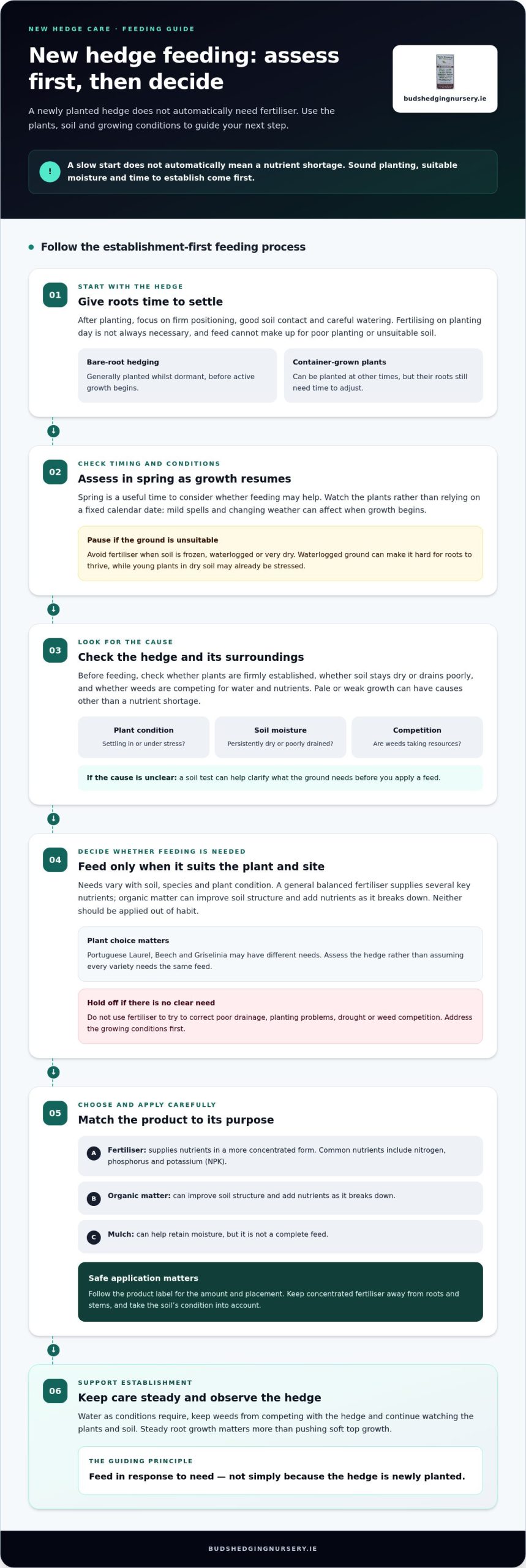
The right time to feed depends on when the hedge was planted, whether it’s actively growing, the soil and the plants’ condition. Don’t apply fertiliser automatically on planting day. First, help the roots settle into the surrounding soil and water the plants as conditions require.
As a general guide, assess a new hedge in spring, when growth resumes, rather than feeding simply because it has been planted. This gives you time to see how the plants are establishing and whether a feed suits the soil and the product’s instructions.
Should you fertilise a hedge straight after planting?
After planting, focus on firm positioning, good soil contact and careful watering. These help roots settle into their new position. Feeding at planting isn’t always necessary, and fertiliser won’t make up for poor planting or unsuitable soil. Products supply nutrients in different forms. For background on different fertiliser types, including solid and liquid feeds, see Wikipedia.
Planting method matters. Bare-root hedging is generally planted while dormant, before active growth begins. Established container-grown plants can be planted at other times, but their roots still need time to adjust. With either type, don’t let concentrated fertiliser touch roots or stems. If you use a suitable product, follow its label for placement and application, and take the soil’s condition into account.
How Irish seasons affect the timing
Spring is a useful time to assess whether a newly planted hedge would benefit from feeding as growth starts again. Don’t treat a particular month as a rule: mild spells and changing weather can affect when plants begin to grow. Portuguese Laurel, Beech and Griselinia may have different needs, so assess the plants rather than assuming every hedge requires the same feed.
Ground conditions matter too. Avoid applying fertiliser when the soil is frozen, waterlogged or very dry. Roots can struggle in waterlogged ground, while young plants in dry soil may already be under stress. Wait for more suitable conditions and keep an eye on soil moisture. The best answer to when to fertilize new hedge plants depends on the season and the plants, not a fixed calendar date.
Why a new hedge may need less fertiliser than you expect
Establishment is the period after planting when a hedge develops roots in its new position. Steady root growth matters more than pushing soft top growth. A slow start doesn’t automatically mean the soil lacks nutrients. Plants may be adjusting to the site, competing with weeds or struggling with unsuitable soil conditions.
Fertiliser supplies nutrients; it doesn’t replace sound planting, suitable moisture or healthy soil. Extra feed can’t correct poorly planted roots, drought or waterlogged ground. Heavy feeding isn’t a shortcut to a taller, denser hedge. Plants need time and suitable conditions to establish, and growth depends on more than the amount of fertiliser applied.
What nutrients can and cannot do
Fertilisers commonly supply nitrogen, phosphorus and potassium, often called NPK. In simple terms, nitrogen supports leafy growth, phosphorus is involved in root development and potassium supports general plant functions. These nutrients have different roles, but that doesn’t mean every new hedge needs the same balance or a routine feed.
Needs vary with the soil, species and condition of the plants. Beech may respond differently from Portuguese Laurel, and pale or weak growth may have a cause other than a nutrient shortage. The Royal Horticultural Society advises that feeding is generally for young or weak hedges rather than a requirement for every hedge. See its guidance on feeding young or weak hedges.
Check the soil and the plant before feeding
Look for practical causes of stress before deciding to fertilise. Check whether the soil is persistently dry or drains poorly, whether the plants are firmly established and whether weeds are competing for water and nutrients. For bare-root hedging planted while dormant, allow time for roots to develop as the plants come into growth. The bare-root tree planting guide explains more about dormant-season planting and establishment.
If a problem persists and you can’t tell whether nutrients are involved, a soil test can help clarify what the ground needs before you apply a feed. That’s more useful than guessing or increasing the dose. Decide when to fertilize new hedge plants by looking at the plants and soil, not by assuming more feed means faster growth.
Good planting and consistent aftercare remain the foundation. If you’re still choosing plants, explore the hedging plant range and consider which varieties suit your site.
Which fertiliser suits a new hedge, and when is it better not to feed?
Choose a feed only if the hedge needs one. A general balanced fertiliser supplies several key nutrients, while organic matter can improve soil structure and add nutrients as it breaks down. These options aren’t interchangeable, and neither should be applied out of habit. The right choice depends on the soil, the plants’ condition and the product’s instructions.
Hold off if the hedge is stressed, the ground is frozen, very dry or waterlogged, or there’s no clear sign that feeding is needed. Fertiliser won’t resolve poor drainage, planting problems or competition from weeds. If weak growth has an uncertain cause, address the growing conditions before adding nutrients. A measured approach is safer than assuming more feed will help.
Organic matter, mulch and fertiliser are not interchangeable
Organic matter can improve soil as it decomposes; fertiliser supplies nutrients in a more concentrated form. Mulch is spread over the soil surface and can help retain moisture and limit weed growth. It may also contribute to soil condition as it breaks down, but it shouldn’t be treated as a complete fertiliser or assumed to meet every plant’s nutrient needs.
Keep mulch clear of stems, and use it alongside suitable watering and weed control. If you choose a fertiliser, follow its label for the amount, timing and placement. Products differ, so don’t transfer a rate or schedule from one type to another. For broader insights into plant nutrition and fertilisation principles, specialist agricultural resources such as rofert.ro offer useful guidance on how different feeds operate.
Does hedge species change the feeding decision?
Species is one factor, but it doesn’t set a feeding schedule on its own. Beech and Privet are deciduous, while Portuguese Laurel is evergreen, but those habits alone don’t show whether a plant needs fertiliser. Soil, establishment and visible plant condition still matter. Don’t assume every hedge in a mixed planting needs the same treatment.
For more about the growing needs of one common evergreen, read the Portuguese Laurel growing guide. Matching plant choice to the site can make ongoing care more straightforward. If you’re planning a hedge, explore the nursery’s hedging plant range as you consider which plants suit your garden.
How to apply fertiliser to a new hedge safely
Check the hedge and conditions before applying a feed. The right amount and placement depend on the product instructions, the plants and the soil, so one general rate won’t suit every situation. If the plants are already under stress or the ground is unsuitable, address those conditions first rather than adding fertiliser.
A simple check-before-feeding routine
- Assess the hedge. Check whether the plants have begun to establish and whether they’re actively growing, if the product guidance requires it. Look for signs of stress and consider whether poor drainage, dry soil or weeds may be affecting growth.
- Read the label. Confirm that the fertiliser is suitable for the plants, then follow its directions for timing, quantity, placement and watering. Don’t assume instructions for another product apply.
- Check the ground. Consider recent rainfall, soil moisture and drainage. Avoid applying feed to frozen, waterlogged or very dry ground, and follow any label advice about weather or soil conditions.
- Apply carefully. Distribute the fertiliser exactly as directed. Keep concentrated feed away from stems and roots, and water afterwards only if the label instructs you to do so.
Never exceed the label rate or place concentrated feed against stems. More isn’t better. Too much fertiliser, or placing it where it can damage plant tissue, can stress the hedge instead of helping it.
What to monitor after feeding
After applying a suitable feed, observe the hedge over time. Watch for new growth and changes in the plants’ overall condition, but don’t respond to slow growth by repeatedly applying more fertiliser. Plants need time to establish, and extra feed won’t correct problems with planting or soil conditions.
Keep watering and weed control as separate parts of aftercare. For gardens that benefit from automated drip systems, choosing to comprar programador de riego rain bird helps maintain consistent moisture without waterlogging the roots. Check soil moisture regularly and water according to conditions, while keeping competing weeds in check around the hedge. If the plants continue to decline despite suitable basic care, seek qualified horticultural guidance to help identify the cause before applying further feed.
Good aftercare starts with plants suited to the site. Explore the hedging plant range as you plan your planting and ongoing care.
Plan new-hedge feeding around plant choice and ongoing care
A feeding plan starts before you reach for fertiliser. Choose a hedge that suits the site, plant it well and provide steady aftercare. Feeding may help if the plants need it, but routine applications aren’t a substitute for matching the hedge to its growing conditions.
Choose a hedge that suits its growing conditions
Consider the site’s exposure, soil and the screening you want before choosing a variety. Griselinia and Escallonia, for example, may suit different garden situations from Beech or Privet. Don’t choose on appearance alone: the conditions where the hedge will grow affect how it establishes and what care it may need. If you’re weighing up screening options, read this guide to hedging plants for privacy.
Buds Nursery Cavan offers a range of hedging plants and on-site guidance with plant selection. Matching the plant to its intended site makes it easier to plan aftercare, including whether feeding is likely to be needed.
Turn the timing advice into a simple care plan
Keep a short record for each hedge. Note the planting date, species, soil condition and any fertiliser used, including when and how it was applied. These details make it easier to assess changes in growth and avoid repeating a feed without a clear reason.
Reassess the plants as the season progresses. Look at their overall condition and new growth, and keep watering and weed control consistent with the weather and site. If growth is slow, review soil moisture, drainage and planting conditions before deciding that more nutrients are needed. Let the hedge’s progress and growing conditions guide feeding, rather than a routine calendar reminder.
Good establishment comes from suitable plant choice and steady care, not feeding alone. If you’re planning a hedge, explore hedging plants at Buds Nursery Cavan and consider which varieties suit your garden’s conditions.
Give your new hedge the right start
The best answer to when to fertilize new hedge plants depends on the planting season, soil and how the plants are settling in. Feeding isn’t automatic: assess the hedge first, and consider a feed as growth resumes if the plants and conditions call for it. Choose a suitable fertiliser and follow its label carefully.
Good establishment relies on more than nutrients. Sound planting, appropriate watering and weed control support young roots, while feeding can’t fix drought, waterlogging or poor planting. Keep an eye on the hedge as it grows, and don’t apply more fertiliser without a clear reason.
Buds Nursery offers a broad range of hedging plants, including Beech, Privet, Portuguese Laurel and Griselinia, with on-site plant-selection guidance. To plan your hedge, explore hedging plants at Buds Nursery and choose varieties with your garden’s conditions in mind.
Frequently Asked Questions
When is the best time to fertilise a newly planted hedge?
For many new hedges, spring is a sensible time to assess feeding as growth resumes, but the best timing depends on planting season, soil and plant condition. Treat active growth as a prompt to assess, not an automatic signal to feed. Check that the ground is suitable and follow the chosen fertiliser’s label. Frozen, waterlogged or very dry soil calls for caution.
Should I fertilise a hedge when I plant it?
No. Feeding at planting isn’t automatically necessary. Give the roots a chance to settle in well-prepared soil, and water according to conditions. If you use a fertiliser, check that it’s suitable for the hedge and follow the label for timing and placement. Don’t put concentrated feed against roots or stems. A feed won’t compensate for poor planting, unsuitable soil or inadequate watering.
Can you over-fertilise a new hedge?
Yes. Applying too much fertiliser, or placing concentrated feed against roots or stems, can damage or stress young plants. More feed doesn’t guarantee faster growth or a denser hedge. Use a product suited to the plants, follow its label rate and don’t repeat applications without a clear need. If the hedge is struggling, first check watering, drainage, planting and weed competition rather than assuming it needs extra nutrients.
What fertiliser should I use for a new hedge?
There isn’t one fertiliser that suits every new hedge. A balanced fertiliser supplies a mix of nutrients, while organic matter can help improve soil condition as it breaks down. Choose based on the soil, hedge condition and product directions, rather than applying a feed by habit. Compost or mulch can support soil care, but don’t assume either supplies every nutrient a hedge may need. Always follow the product label.
Should I feed a bare-root hedge after planting?
Not necessarily. Bare-root hedges are usually planted while dormant, so focus first on firm planting, good soil contact and appropriate watering as they establish. Feeding straight away isn’t required for every plant. Assess the hedge as growth resumes, and use a suitable fertiliser only if the plants and growing conditions indicate a need. Keep concentrated feed away from roots and stems, and follow the label carefully.
Can I fertilise a new hedge in summer?
Consider it only if the hedge is actively growing, the product is suitable and its label permits summer application. Check soil moisture and drainage first. Very dry ground or plants already under stress are reasons to pause; fertiliser won’t solve drought and may add to the strain. If the hedge is growing well, a summer feed may be unnecessary. Keep watering and weed control on track as separate care tasks.
Does a new hedge need fertiliser every year?
No, annual feeding isn’t automatically needed. Whether a hedge benefits from fertiliser depends on its growth, species, soil and overall condition. Reassess rather than following a fixed yearly routine, and check for other causes of weak growth, such as dry or waterlogged soil and competing weeds. If you feed, choose a suitable product and follow its label. Healthy establishment also relies on good planting and steady aftercare.