

A pet-friendly label is a starting point, not a guarantee that every part of a hedge is safe for a dog to chew. Laurel needs particular care: every part of a laurel hedge is toxic to dogs, and its leaves and berries contain hydrogen cyanide. Choosing non-toxic hedging for dogs means checking the plant itself and considering how your dog uses the garden.
It’s sensible to want a boundary that gives privacy without adding avoidable risk. This guide explains what pet-friendly labels can and can’t tell you, which plants need caution, and how to think about groundcovers where paws regularly wear a path.
You’ll also find practical points for choosing a hedge for an Irish garden, including why suitability can depend on whether your dog chews foliage, eats fallen berries or simply runs alongside it. The aim is to give you a clear, workable way to weigh plant choice against everyday garden use.
Key Takeaways
- Treat “pet-friendly” as a useful starting point, not a guarantee; consider which parts of a plant your dog could chew or eat.
- Choose groundcover with your dog’s usual routes in mind, since repeated paw traffic can wear down planting.
- Take particular care with laurel: its leaves and berries can pose a risk if a dog eats them.
- Compare suitable hedge plants with your garden conditions and your dog’s behaviour before choosing what to plant.
1. Meaning and limits of pet-friendly labels
A “pet-friendly” label is a useful clue, not proof that every part of a plant is safe to eat. For non-toxic hedging for dogs, check the species and consider its leaves, berries, seeds and fallen prunings. Yew contains taxine throughout the plant, and ingestion can be fatal to dogs. Privet berries can also make dogs very sick, while oleander and box are among the hedging plants to avoid around pets.
In Ireland, planting beside a boundary or road can raise questions about boundaries, access and visibility. There is no single setback distance that suits every site. Consider the boundary position and road sightlines before deciding where to plant a hedge.
Dog-friendly hedge plants have no single price. Cost varies with the species, plant size and whether plants are supplied bare-root or in pots. Irish plant nurseries stock hedging, and comparing the plant’s form and size helps you assess what suits your planting plan.
For an evergreen hedge, don’t assume that evergreen means dog-safe. Laurel, yew, privet and box are listed as hedging plants to avoid around pets. Choose an evergreen only when you can identify its species and assess its toxicity risk. If safety is uncertain, choose another plant.
Beech, dog rose, elder, hawthorn, hazel and hornbeam are listed as pet-friendly hedging varieties. These are deciduous choices, not evergreen screening. How they perform in an Irish garden depends on site conditions, including soil drainage and exposure, as well as the space available for mature growth.
Read labels as a starting point, then use the botanical name to distinguish similar plants. Consider your dog’s behaviour, too: a dog that chews leaves or eats fallen berries has different exposure from one that runs past the hedge. Remove fallen plant material and keep dogs away from unfamiliar prunings until you have identified them. Just as dedicated animal care suppliers such as Garden State Pet Center recommend for domestic habitats, understanding your pet’s natural curiosity is essential for preventing unwanted hazards.
2. Groundcovers for dog traffic
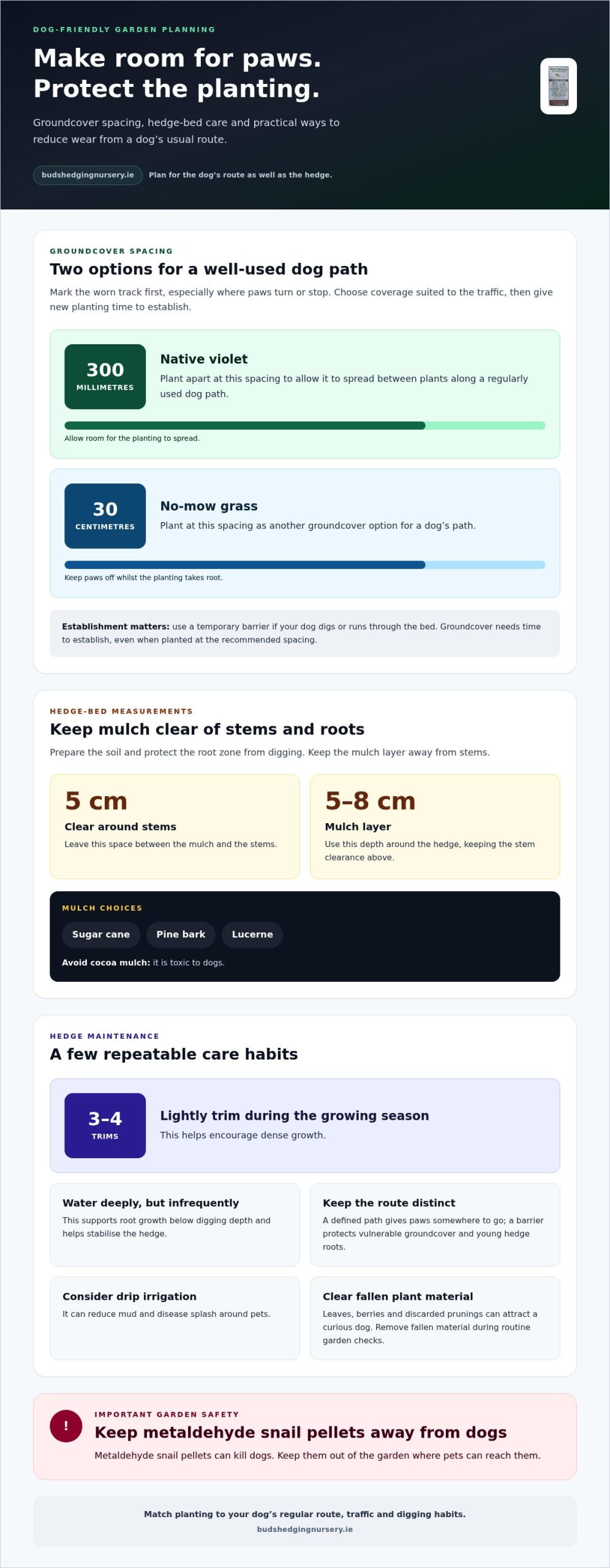
A dog’s regular route can wear away grass and expose soil, especially where paws turn or stop. Mark the worn track before planting, then choose groundcover suited to that level of use. Native violet is one option for a regularly used dog path; plant it 300 millimetres apart to allow it to spread between plants.
No-mow grass is another option for a dog’s path, with planting recommended 30 centimetres apart. These spacings help plan coverage, but groundcover still needs time to establish. Keep paws off new planting while it takes root, and use a temporary barrier if your dog digs or runs through the bed.
For a hedge, plant in prepared soil and protect the root zone from digging. Keep mulch 5 centimetres clear of stems, with a layer 5-8 centimetres deep. Choose sugar cane, pine bark or lucerne mulch; cocoa mulch is toxic to dogs. Avoid metaldehyde snail pellets, which can kill dogs.
Leaves and berries can attract a curious dog, so remove fallen plant material during routine garden checks. Lightly trim a hedge 3-4 times during the growing season to encourage dense growth, and water deeply but infrequently. This supports root growth below digging depth and helps stabilise the hedge.
Drip irrigation can reduce mud and disease splash around pets. Keep the route and planting bed distinct: a defined path gives paws somewhere to go, while a barrier protects vulnerable groundcover and young hedge roots. Choose ground cover plants with the dog’s usual route and digging habits in mind, rather than relying on a label alone.
3. Laurel toxicity
Laurel’s screening value doesn’t make it suitable for a dog-accessible garden. Every part of a laurel hedge is toxic to dogs, and its leaves and berries contain hydrogen cyanide. The risk can come from more than chewing a fresh leaf: fallen berries and discarded prunings also need attention around curious dogs.
“Laurel” can refer to different plants. Cherry laurel and Portuguese laurel are hedging plants, while bay laurel is often grown for culinary leaves. Bay laurel should not be assumed safe around dogs. Don’t use the word “laurel” alone to decide whether a plant is suitable. Identify it by its full name before planting or bringing cut foliage indoors.
In a garden where dogs roam, avoid planting laurel where they can reach its foliage or fallen material. If a laurel hedge is already established, clear fallen leaves and berries, collect prunings promptly and keep dogs away while trimming. Yew and privet also shouldn’t be planted where animals graze, and privet berries can make dogs very sick.
After possible plant ingestion, don’t wait for a particular symptom to appear. Contact a vet or animal poisons line immediately, and take a piece of the plant for identification. This is especially important if it may be cherry laurel, Portuguese laurel or bay laurel. A clear plant sample can help identify what the dog encountered.
Hedge choice should account for access, not just appearance or screening. A dog that can investigate the base of a hedge may reach leaves, berries or pruning waste. If your garden needs an evergreen boundary, choose a different plant rather than assuming laurel is safe because it’s familiar or commonly used.
4. Which hedge plants are non-toxic to dogs and suitable for Irish gardens?
Pet-friendly options listed for hedging include beech, dog rose, elder, hawthorn, hazel and hornbeam. Treat these names as a shortlist, then match each plant to your garden’s space, soil and exposure. Suitability depends on both the plant’s growth habit and the conditions where its roots will establish.
Start by assessing the site. Check whether the ground holds water or drains freely, and note whether the hedge will face strong wind or sit in shelter. These details help narrow the choice: a plant that suits one garden may struggle in another position. Leave room for the hedge to grow without blocking paths or narrowing access.
Decide what the boundary needs to do. Beech, hazel and hornbeam are deciduous choices, so their screening changes through the year. Dog rose, elder and hawthorn have different forms and growth habits. Compare mature shape, maintenance needs and available space rather than choosing by a pet-friendly label alone.
Before planting, confirm the plant’s full name on its label. Common names can refer to different plants, so botanical identification helps avoid confusion. Keep dogs away from new planting while it establishes, and clear fallen berries or prunings where your dog could investigate them. If a plant’s safety is uncertain, choose another variety as a precaution.
For an evergreen hedge, don’t assume a familiar screening plant is suitable. Laurel, yew, privet and box are among the hedging plants to avoid around pets. If dog access is unavoidable, a deciduous option from the pet-friendly list may suit better. The right choice balances screening, garden conditions and your dog’s behaviour.
Planning a planted area beside a hedge? Explore ground cover plants for spaces that need a living surface beneath or near the boundary.
The pet-friendly options listed are deciduous, not evergreen. Avoid laurel, yew, privet and box around pets; beech, hazel or hornbeam may be better alternatives.
Buds Nursery Cavan: Portuguese Laurel
Buds Nursery Cavan offers Portuguese Laurel for gardeners considering a formal hedge, but it isn’t a dog-safe choice where pets can reach it. Laurel leaves and berries are toxic to dogs, so choose another plant if your dog can access the hedge or fallen material.
Buds Nursery Cavan also offers Cherry Laurel and Golden Privet. Don’t assume these are safe alternatives for dogs: cherry laurel and privet need caution around pets. Base your choice on your dog’s access and the plant’s risks, not its label or screening value.
For a garden shared with a dog, use the pet-friendly hedge varieties listed above to guide your decision. Visit Buds Nursery Cavan to discuss its hedging plants and choose an option that suits your planting plans.
Plan a hedge that suits your garden
Build your shortlist around how the garden is used, rather than choosing on appearance alone. Mark the boundary, the routes your dog takes and the space you can maintain. Then compare plant choices with those conditions and keep each plant’s identity clear in your planting notes. This gives you a practical basis for planning the hedge and surrounding groundcover.
A lasting plan for non-toxic hedging for dogs should account for future pruning and your dog’s access as plants mature. Think through where clippings will go, which areas need protection while the hedge establishes, and how you’ll keep the garden usable as plants grow. These decisions help you choose an option that fits both the layout and your day-to-day routine.
For help considering the hedging plants available, contact Buds Nursery Cavan for advice. A clear plan is a sound start to a garden that works for you and your dog.
Frequently Asked Questions
What makes a hedge pet-safe?
A pet-safe hedge uses an identified plant species considered non-toxic to dogs, with the dog’s access taken into account. A label alone may not clarify whether leaves, berries or seeds pose a risk if eaten. Check the full plant name, including its botanical name where available, and consider whether your dog chews foliage, investigates fallen fruit or reaches the hedge base.
Which hedges are poisonous?
Hedging plants to avoid around pets include yew, oleander, box, privet, cherry laurel, holly, daphne, azalea or rhododendron, and cycads. Risk can depend on the plant part: yew contains taxine throughout, while privet berries can make dogs very sick. Identify the exact plant before planting, as common names can refer to different species.
Which common hedge plants are poisonous to dogs, including yew, privet and laurels?
Yew, privet and laurel all need caution around dogs. Yew ingestion can be fatal, and privet berries can cause serious illness. Laurel leaves and berries contain hydrogen cyanide, and every part of a laurel hedge is toxic to dogs. Cherry laurel and Portuguese laurel are both laurel hedges, so don’t treat either as a dog-safe substitute.
Are native Irish hedging plants such as hawthorn, hazel and beech safe for dogs?
Hawthorn, hazel and beech are listed among pet-friendly hedging varieties. They are options to consider for an Irish garden, but identify each plant accurately before buying or planting. Plan for your dog’s habits, too: a dog that chews shoots or eats fallen material may encounter different parts of a hedge from one that simply passes it.
Can hedge berries, leaves or sap be harmful to dogs even if the plant is listed as non-toxic?
Yes. Don’t assume plant parts are harmless just because a general label says “pet-friendly”. Toxicity differs by species and plant part: privet berries can make dogs very sick, while laurel leaves and berries contain hydrogen cyanide. If your dog eats unfamiliar plant material, contact a vet or animal poisons line immediately and take a plant sample for identification.
What are the safest dog-friendly evergreen hedges for Ireland?
A hedge being listed as pet-friendly does not necessarily mean it is evergreen, so check the plant’s characteristics before choosing. Avoid laurel, yew, privet and box around pets, and choose another plant if safety is uncertain.