

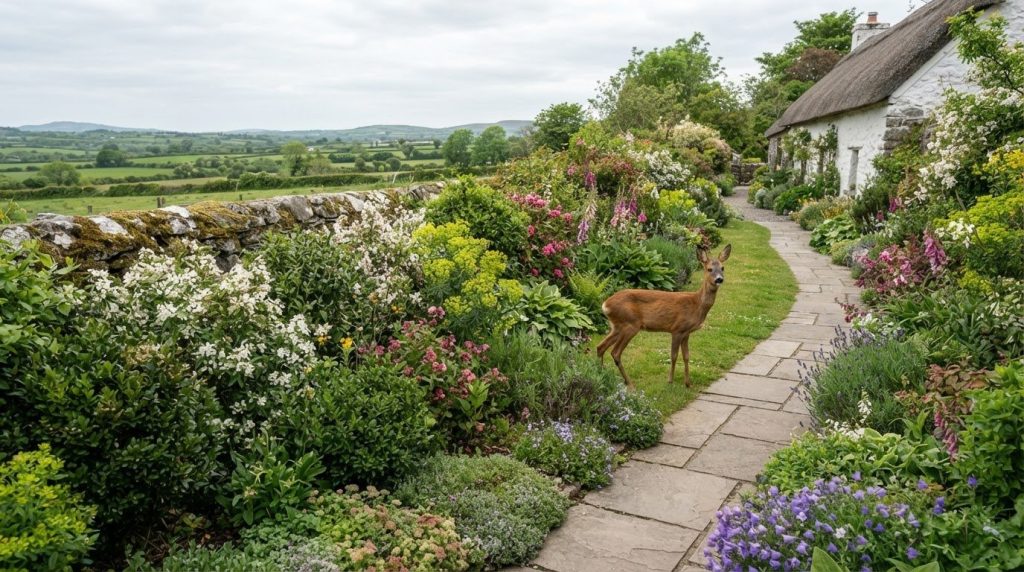
No shrub is completely deer-proof, but some are less tempting to browsing deer. Deer-resistant shrubs in Ireland include Berberis, Choisya ternata, Daphne, Forsythia and Rosa rugosa. Strongly scented leaves can also make aromatic shrubs worth considering, though deer may browse them when food is scarce.
It’s frustrating to plan a garden for flowers and foliage, only to find new growth nibbled. Choosing shrubs less susceptible to browsing can help. Low-growing plants add another layer to consider, but regular deer visits may still call for physical protection.
This guide covers shrubs for flowers, evergreen foliage and scent, including aromatic Choisya, as well as ground-cover ideas. Flowering seasons can help you plan a sequence of colour, from Abelia’s summer-to-autumn display to winter-flowering Lonicera fragrantissima.
Key Takeaways
- Choose shrubs for the features you want, such as seasonal flowers, evergreen foliage or winter scent.
- Compare less tempting choices such as Berberis, Choisya and Rosa rugosa, and consider how local food sources affect browsing.
- Explore aromatic Choisya and low-growing planting to add scent and ground cover to a deer-visited garden.
- When selecting hedging plants, Buds Nursery Cavan offers Portuguese Laurel, Cherry Laurel and Golden Privet.
1. Flowering and foliage characteristics of recommended shrubs
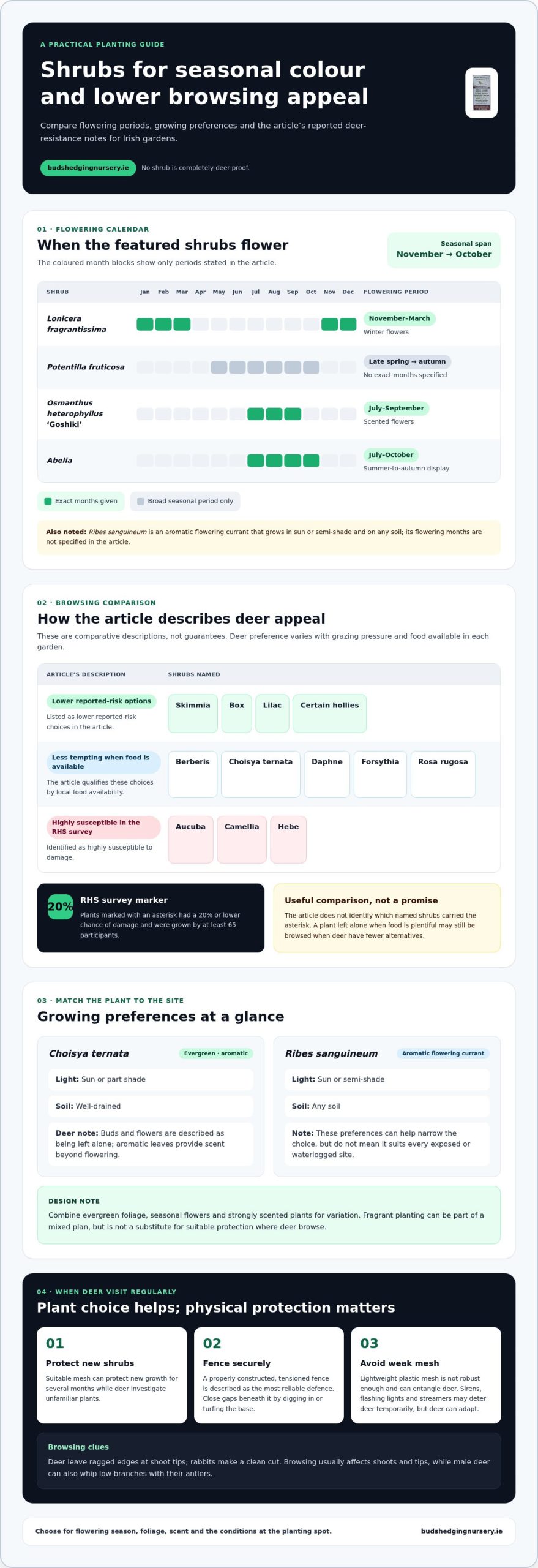
To plan flowers across the season, compare shrubs by their flowering months and foliage. Abelia flowers from July to October, while Lonicera fragrantissima flowers from November to March. Osmanthus heterophyllus ‘Goshiki’ has scented flowers from July to September. Potentilla fruticosa blooms from late spring through to autumn, extending colour beyond summer.
Berberis, Choisya ternata, Daphne and Forsythia are described as less tempting to deer when other food is available. Rosa rugosa offers flowers, prickly stems and pleated leaves. Aromatic flowering currant, Ribes sanguineum, grows in sun or semi-shade and on any soil. Together, these examples offer different flowering seasons, foliage and growth habits to consider when planning a border.
In Ireland, match each shrub to the light, drainage and soil conditions at its planting spot. Ribes sanguineum suits sun or semi-shade and any soil, while Choisya ternata grows in sun or part shade on well-drained soil. These preferences can help narrow the choice, but they do not mean either shrub will suit every exposed or waterlogged site.
Protect new shrubs with suitable mesh for several months, as deer may investigate unfamiliar growth. A properly constructed, tensioned fence is the most reliable defence; close gaps beneath it by digging in or turfing the base. Lightweight plastic mesh is not robust enough and can entangle deer. Sirens, flashing lights and streamers may deter deer temporarily, but deer can adapt to them.
Irish nurseries are a place to buy flowering and foliage shrubs; species and plant size affect cost. Fallow deer are protected in Ireland under the Wildlife Acts, and hunting them requires a section 29 licence from the National Parks and Wildlife Service.
Hydrangeas thrive on heavy clay soil. Hydrangea paniculata is cut back hard in late winter each year to encourage vigorous shoots that flower at their tips. Boxwood, lilac and certain types of hollies are described as less tempting to deer. Philadelphus coronarius may be nibbled when its new shoots appear, but is still recommended for gardens where deer are present.
Roe deer and muntjac deer are described as less than 70 cm at the shoulder and able to reach about 1.2 metres when standing on their hind legs. Chinese water deer in the UK are described as descendants of escapees from Whipsnade Zoo in 1929.
2. Plants considered less susceptible to deer damage
Deer preference varies with grazing pressure and the food available in each garden. In the RHS survey, plants marked with an asterisk had a 20% or lower chance of damage and were grown by at least 65 participants. Treat that as a useful comparison, not a guarantee for every site. A shrub left alone where food is plentiful may be browsed when deer have fewer alternatives.
For gardeners choosing deer-resistant shrubs in Ireland, lower reported-risk options include Skimmia, box, lilac and certain hollies. Berberis and Choisya are also considered less tempting when other food is available. Thorny or prickly shrubs, such as barberry, may discourage browsing. By contrast, Aucuba, Camellia and Hebe were identified in the RHS survey as highly susceptible to damage. The right choice depends partly on local food sources and browsing pressure.
No shrub is completely deer-proof. Where deer are present, mix shrubs with grasses, ferns and strongly scented plants, and vary the garden’s heights and textures. Native plants may be avoided because of their natural defences, and can support local pollinators and other wildlife. Brambles can provide alternative food, while rowan offers another planting option; neither is a guaranteed barrier to browsing. Consider local food sources and how often deer visit, as no single planting rule suits every garden.
Check damaged growth before deciding what caused it. Deer leave ragged edges at shoot tips, while rabbits make a clean cut. Browsing usually affects shoots and tips; male deer can also whip low branches with their antlers, causing thrashing damage. Compare marks and affected heights across several stems. This can help distinguish browsing from other damage and guide your planting choices.
Native plants with natural defences may be avoided by deer, but no specific native Irish shrubs are identified as least attractive to them.
3. Choisya and aromatic evergreen leaves
Choisya ternata is an option for gardeners seeking evergreen foliage and fragrance. Deer are described as leaving its buds and flowers alone, while its aromatic leaves provide scent beyond the flowering period. It grows in sun or part shade on well-drained soil, so assess the planting spot before choosing it. Avoid locations where water sits around the roots.
For Irish gardens, choose a position with enough light for Choisya to grow well and soil that drains freely. Its evergreen leaves give structure through winter, unlike a deciduous shrub that loses its foliage for part of the year. Allow room for the plant to develop rather than crowding it among smaller shrubs. Spacing also makes it easier to see its shape and manage nearby planting.
Other options offer different forms of scent and foliage. Osmanthus heterophyllus ‘Goshiki’ has scented flowers, while Skimmia and certain hollies are considered less tempting to deer. Their fragrance and reported deer resistance differ, so choose by the features you prefer, then group plants with similar light and soil needs.
Strongly fragrant plants may mask the appealing aroma of other plants from deer. Use them as part of a mixed planting plan, not as a substitute for suitable protection where deer browse. Check foliage and growth habit before planting: evergreen shrubs provide year-round cover, while deciduous plants leave a more open outline in winter. Place scented shrubs where people pass or sit to enjoy their fragrance. For a balanced border, combine an aromatic shrub with contrasting foliage and ground-level planting.
Deer damage can be distinguished from rabbit damage because deer leave ragged edges at shoot tips, while rabbits make a clean cut. Fallow deer in Ireland eat herbs, leaves, fungi, acorns, young deciduous shoots and farm crops throughout the year. Berberis, Choisya ternata, Daphne and Forsythia are among plants known to avoid deer damage when other food is available. Rosa rugosa varieties are described as largely resistant to deer, with prickly stems and pleated leaves that are unappealing to them. The availability of alternative food matters when considering these descriptions.
4. Deer-resistant shrubs for ground cover
Ground cover can fill bare soil, soften path edges and create a lower layer beneath taller shrubs. Lonicera nitida is useful for hedging and shaded foliage planting, making it an option where ground-level cover is needed. Its dense growth can knit planting areas together, but it will not stop deer crossing the garden.
For seasonal colour close to the ground, consider Potentilla fruticosa, also known as shrubby cinquefoil. It blooms from late spring through to autumn, extending flowers across much of the growing season. Choose a position that allows for its eventual spread, with room around the plant for air and access. Combining cinquefoil with evergreen foliage keeps the ground layer structured after flowering finishes.
Build a mixed planting rather than relying on one species. Grasses and ferns are usually resistant to deer damage, and varied heights and textures can make a garden less inviting for grazing. Where fallow deer visit, protect vulnerable young plants as they establish. Brash or a dead hedge made from cut material can also keep deer away while garden plants grow through, providing temporary cover as planting becomes established.
Ground cover choices should account for the wildlife you want to support, the soil, shade and the amount of browsing. Brambles can provide a natural food alternative to prized plants, whilst rowan and yarrow add other options for a wildlife-friendly garden. These are not substitutes for protection where deer pressure is high, but they can contribute to a more varied planting plan. For low-level planting, explore ground cover plants suited to filling spaces beneath shrubs and along garden edges.
Buds Nursery Cavan: Portuguese Laurel
Buds Nursery Cavan offers Portuguese Laurel for gardeners choosing hedging and evergreen structure. It also offers Cherry Laurel and Golden Privet, giving you further options to compare when planning a boundary or screen. These offerings are not a guarantee against browsing, so consider them alongside the planting and protection measures described above.
If your plan includes fruit as well as shrubs, the nursery also offers Fruit Trees. Match your choice to the space and purpose: a hedge, a screen or a productive planting each calls for different plants. Buds Nursery Cavan is a useful next step when you’re narrowing down which of these options suits your garden. For more information, contact Buds Nursery Cavan or visit budshedgingnursery.ie.
Plan a planting scheme that suits your garden
Before choosing plants, sketch the area and note its main purpose: screening, seasonal colour, scent or ground cover. Assess the site’s light, drainage and exposure, and consider where browsing is most frequent. This gives you a practical basis for combining shrubs with different growth habits instead of relying on one plant to solve every problem.
For deer-resistant shrubs in Ireland, treat plant choice as part of a wider garden plan. Decide which areas need protection while new growth establishes, and leave room for shrubs to mature without crowding paths or neighbouring plants. A simple planting plan helps balance appearance, function and the conditions in your garden.
If you’re ready to narrow down suitable shrubs for your planting plan, contact Buds Nursery Cavan for shrub advice. Take the next step with a clear idea of what your garden needs, and build a scheme you can enjoy as it grows.
Frequently Asked Questions
Which flowering and berry-producing shrubs are deer-resistant in Ireland?
Berberis, Choisya ternata, Daphne and Forsythia are flowering shrubs generally considered less tempting to deer when other food is available. Holly adds berries and evergreen structure, and certain hollies are also regarded as less attractive to browsing. For a mixed border, pair a flowering shrub with holly and protect young plants while they establish. Deer preferences can vary with local food sources.
Where can I buy deer-resistant shrubs in Ireland, and what do they cost?
You can buy flowering and foliage shrubs from Irish nurseries; Buds Nursery Cavan offers Portuguese Laurel, Cherry Laurel and Golden Privet. Costs vary by species and plant size.