

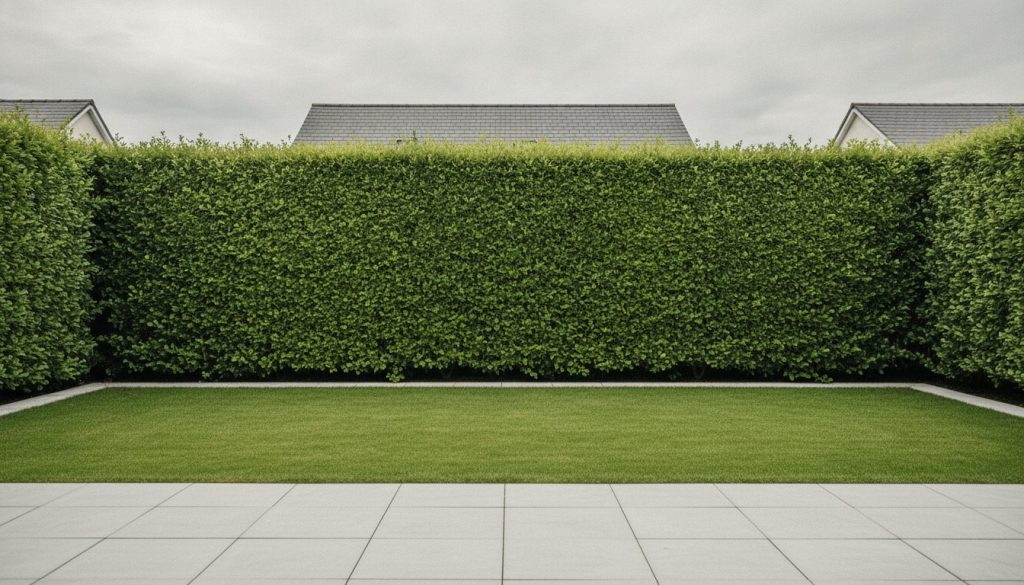
Waiting five years for a boundary to grow into a functional screen isn’t just frustrating; in a modern Irish development, it’s often a luxury you can’t afford. You’ve likely spent too many evenings looking at a neighbouring window or a bare fence, wishing for a bit of genuine seclusion. It’s a common struggle across the country, especially on windy, exposed sites where young plants often fail to take root. You want a garden that feels finished and secure today, not half a decade from now.
This guide explains how to transform your property boundaries using mature, established plants that provide immediate shelter. We’ll show you how to select the right species for the Irish climate, including the hardy privet hedging Ireland gardeners have relied on for generations. You’ll learn how to achieve a professional, architectural look that offers instant security and long-term health. We’ll walk through the practicalities of sourcing from a specialist nursery, managing our unique weather conditions, and choosing between evergreen and deciduous varieties to create a lasting, private sanctuary for your home.
Key Takeaways
- Learn how mature plants provide a continuous screen from day one, saving you up to a decade of growth time compared to smaller saplings.
- Discover the best evergreen and deciduous species for the Irish climate, including hardy options like privet hedging Ireland homeowners use for reliable, dense boundaries.
- Understand the technical differences between rootballed, pot-grown, and trough-grown hedging to ensure you choose the right density and height for your site.
- Master the essential soil preparation and planting techniques required to support the weight and nutrient demands of large-scale hedging units.
- Identify why sourcing directly from a specialist nursery offers better plant health and expert guidance than buying from general retail garden centres.
What is Instant Hedging and Why Choose Mature Plants?
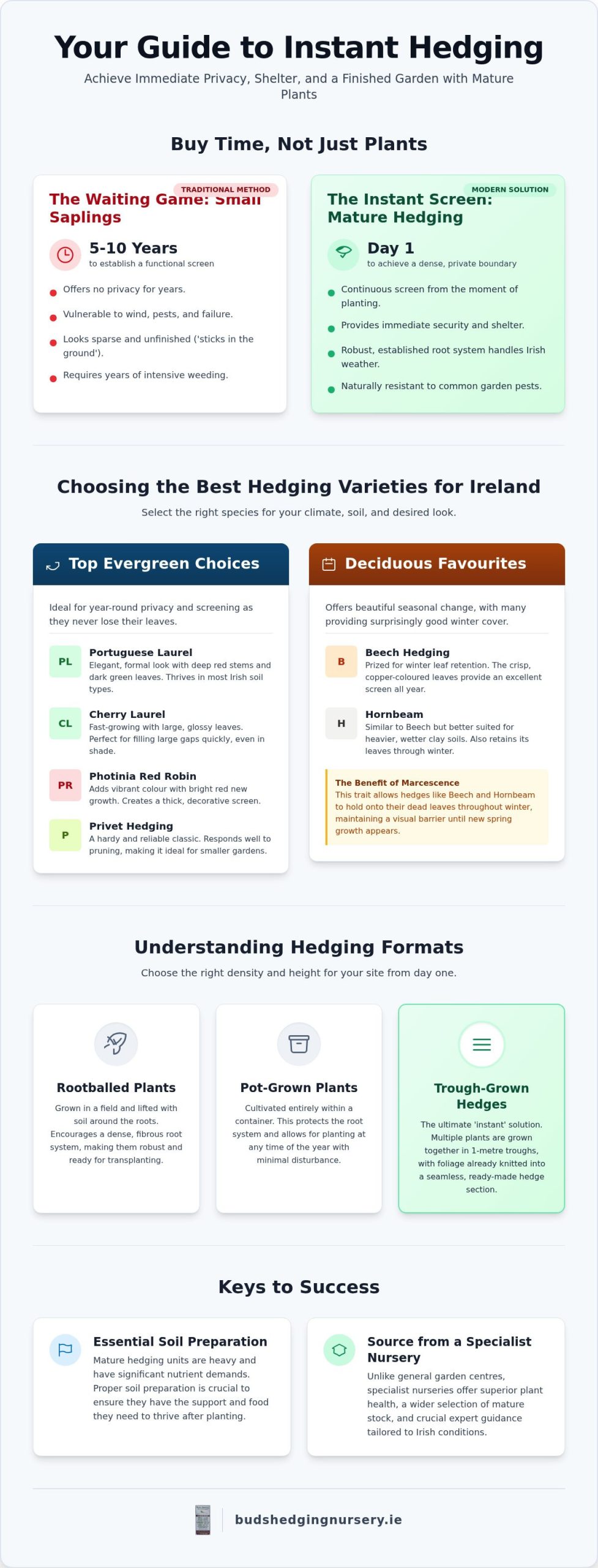
Instant hedging refers to pre-grown, mature plants cultivated specifically to form a continuous screen the moment they’re installed. Unlike traditional methods that require years of waiting, these units arrive with their foliage already knitted together. Choosing mature plants is a way to buy time. You’re skipping the five to ten years it takes for a standard sapling to reach eye level. This density provides instant security and shelter, which is helpful for those dealing with new housing developments or exposed boundaries.
Beyond the visual impact, there’s a significant ecological benefit. When you plant mature units, you’re introducing a large amount of biomass into your garden immediately. This aids in carbon sequestration and provides an instant habitat for local wildlife. Understanding the history and ecological importance of hedges shows how these structures have always been vital for biodiversity in the Irish landscape. Whilst bare-root whips are cheap, they require years of intensive weeding. Mature plants, including choices like privet hedging Ireland homeowners favour for reliability, offer a much more resilient starting point.
The Advantages of Established Root Systems
Mature plants possess a robust root architecture that younger saplings haven’t developed yet. In the nursery, these plants are regularly undercut to encourage a dense, fibrous root system. This makes them far better at handling the heavy rainfall and high winds common across Ireland. They aren’t easily rocked by winter gales. Because the plants are already established, they’re naturally more resistant to common garden pests that often wipe out tender young whips.
Instant Privacy vs. Traditional Planting
The difference in impact is stark. A traditional 60cm whip looks like a stick in the ground and offers no privacy for years. Mature hedging usually stands between 1.5m and 2m tall upon delivery, providing an immediate physical barrier. In urban areas, this density acts as an effective baffle for noise reduction. For those seeking security, mature species with thorns, like Berberis, create an impenetrable boundary. Using privet hedging Ireland ensures your garden remains a private, quiet sanctuary from day one.
Choosing the Best Instant Hedging Varieties for Ireland
Selecting the right species depends on your garden’s micro-climate. Ireland’s weather is notoriously varied. You might be dealing with salt spray on a coastal site or heavy clay in a sheltered inland plot. A formal, tightly clipped hedge offers a crisp, architectural finish. A naturalistic screen allows for more movement and provides a better habitat for local birds. Portuguese laurel is a top choice for its elegant, dark green foliage and ability to thrive in most Irish soil types.
Consistency is key when planting. You need a variety that matches the surrounding landscape while meeting your privacy needs. For those in urban settings, noise reduction is often the priority. In rural areas, wind tolerance is the main concern. Choosing a variety that’s already established in a nursery environment gives the plant a head start against these local challenges.
Top Evergreen Choices for Year-Round Screening
Evergreen varieties are the most popular for privacy because they never lose their leaves. Privet hedging Ireland remains a classic selection for dense, manageable boundaries. Both Green and Golden Privet are tough and respond well to regular pruning. This makes privet hedging Ireland ideal for smaller gardens where space is at a premium.
- Portuguese Laurel (Prunus lusitanica): This species is a favourite for formal gardens. It features deep red stems and small, dark green leaves that look tidy year-round.
- Cherry Laurel: Known for its fast growth rate and large, glossy leaves. It’s the go-to variety for filling large gaps quickly, especially in shaded areas.
- Photinia Red Robin: This variety adds a splash of colour with its bright red spring growth. It maintains a thick, dense screen that’s both functional and decorative.
Deciduous Favourites: Beech and Hornbeam
Deciduous hedges offer a changing seasonal look that many gardeners prefer. Beech hedging plants Ireland are prized for their winter leaf retention. This trait, called marcescence, means the plant keeps its brown, copper-like leaves throughout the colder months. It provides excellent privacy and wind protection until the new spring buds appear.
Hornbeam is the reliable alternative if you have heavy, wet soil. Beech often struggles with poor drainage, but Hornbeam is much more resilient in damp conditions. It looks similar to Beech but has a more textured leaf and a slightly different winter appearance. If you aren’t sure which species suits your land, you can talk to our nursery team for a professional recommendation based on your specific site conditions.
Understanding Sizing, Rootballs, and Trough-Grown Hedges
Purchasing mature plants requires a different approach than buying standard garden centre stock. You aren’t just looking at the height; you’re looking at the density and how the root system has been prepared. For privet hedging Ireland projects, understanding these specifications ensures you don’t end up with gaps that take years to fill. To get an accurate order, measure your boundary in linear metres and decide on the level of density you require from day one.
Sizing terminology can be confusing for many buyers. “Height” refers to the plant from the top of the pot or rootball to the tip. “Feathered” plants have a central leader with lateral branches from the base, but they may be thinner than “Bushy” specimens. Bushy plants are pruned specifically to encourage dense, overlapping foliage. For a truly instant effect, you typically need 2.5 to 3 plants per linear metre, depending on the species and its current width.
Rootballed vs. Pot-Grown Mature Plants
Rootballed plants are only available during the dormant season, usually from November to March. Rootballing is the process of lifting mature plants with soil intact, secured with hessian. These are often more cost-effective for large-scale projects but must be planted whilst the weather is cool. Pot-grown plants are available year-round. They offer a significant advantage because the root system is entirely contained. This reduces transplant shock and allows for flexible planting schedules even during the warmer summer months.
Trough-Grown Instant Hedging Units
Trough-grown units are the premium choice for immediate results. These are grown in 1-metre long containers where several plants have already knitted together to form a solid wall of green. They provide a finished look the moment they’re placed in the trench. Using trough-grown privet hedging Ireland ensures a uniform growth habit across the entire length of the boundary.
- Ease of Alignment: Because they come in 1-metre lengths, keeping the hedge straight and level is much simpler.
- Immediate Screening: There are no gaps between individual plants, making them ideal for high-end residential projects where privacy is a priority.
- Precision: Measuring for these is straightforward. One trough equals one metre of hedging. It’s a precise way to manage your garden layout without the guesswork of spacing individual pots.
Whether you choose individual rootballed plants or trough units, the goal is a professional finish. Selecting the right format depends on your budget, the time of year, and how quickly you need the screen to be fully opaque.
Planting and Establishing Your Mature Hedge
Planting mature hedging is a physical task that requires more than just digging a hole. These established units have high nutrient and water demands compared to younger saplings. If you’re installing privet hedging Ireland gardeners often choose for quick screening, you must ensure the ground is prepared to support immediate, heavy growth. Refer to our best hedging for privacy Ireland guide for specific site preparation tips that help your plants settle in quickly. Proper drainage is essential, especially in parts of the country with heavy clay soil where waterlogging can cause root rot.
The weight of mature plants means that soil structure is vital. You aren’t just planting a hedge; you’re installing a living wall. If the soil is too loose, the plants will lean. If it’s too compacted, the roots will suffocate. Finding the right balance during the initial planting phase determines how well the hedge will perform over the next decade. Taking the time to prepare the site properly saves you from replacing expensive mature specimens later.
Step-by-Step Planting Guide
Start by digging a trench twice the width of the current root system. This extra space allows the new roots to expand into loosened soil without resistance. Mix plenty of well-rotted organic matter and a slow-release fertiliser into the base of the trench before positioning the plants. A common mistake with mature specimens is planting them too deep. This can suffocate the bark and lead to long-term health issues. Ensure the soil level matches the original nursery line on the stem.
Backfill the trench carefully and tread the soil in firmly to remove air pockets. This process, often called “heeling in,” ensures the roots have direct contact with the earth. Avoid over-compacting the earth, as this prevents oxygen and water from reaching the root structure. If you are planting privet hedging Ireland in a particularly dry spell, water the trench before and after backfilling to ensure the roots don’t dry out during the transition.
Aftercare and Maintenance for Mature Hedges
The first two growing seasons are critical for establishment. Mature plants have a large leaf surface area, which means they lose water rapidly through transpiration. Setting up a leaky hose or a basic irrigation system is the most efficient way to provide consistent moisture. This is especially vital during dry spells in May and June when new growth is most active. Keep your hedge looking sharp with a regular pruning schedule, typically in late spring and early autumn to maintain density.
Large plants in exposed Irish sites require staking or wind-firming to prevent the rootball from rocking in winter gales. Constant movement at the base prevents new root hairs from gripping the soil, which can eventually kill the plant. If you need advice on specific tools or feed for your site, contact our nursery team for professional guidance.
Sourcing Quality from a Specialist Plant Nursery
Sourcing your plants from a specialist plant nursery Ireland is a different experience than buying from a general retail garden centre. Retailers often stock plants that have spent weeks in transit or sitting on paved forecourts. A specialist nursery grows the stock in the ground or in large-scale production beds, ensuring the plants are hardy and acclimated to the local climate. When you invest in privet hedging Ireland, you want the assurance that the plants have been cared for by professionals who understand Irish soil conditions and weather patterns. Expert guidance from seasoned growers helps you avoid costly mistakes regarding species selection and site suitability.
Visiting a working nursery allows you to inspect the plants in their growing environment. We welcome customers from Tuesday to Saturday, providing a chance to see the scale and health of the mature stock firsthand. You can compare the density of different varieties and choose the exact height that suits your project. Seeing the plants in the field gives you a realistic expectation of how they will look once installed in your garden. This transparency is a core part of our professional, no-nonsense approach to the trade.
The Buds Nursery Cavan Advantage
Our nursery manages 60 acres of production land with 30 years of horticultural expertise behind every plant. This scale allows us to maintain a vast variety of species in various stages of maturity. Whether you are looking for the dark elegance of Portuguese Laurel, the vibrant spring growth of Photinia Red Robin, or the traditional winter copper of Beech, the stock is managed with long-term health in mind. We don’t focus on trendy marketing; we focus on the quality of the root systems and the density of the foliage. This traditional, hardworking approach ensures that every privet hedging Ireland unit we supply is robust enough to thrive in its new home.
Planning Your National Delivery
Moving mature hedging units requires careful logistics. These plants are heavy, and the foliage is often knitted together, making them delicate to transport. We offer national delivery across Ireland for large-scale mature orders, using specialist vehicles to ensure the stock arrives in prime condition. It’s important to have your site ready for the arrival of heavy stock. This includes ensuring clear access for delivery and having your planting trenches prepared as discussed in previous sections.
Preparation is the key to a successful installation. You should have a plan for moving the plants from the delivery point to the boundary line, as mature rootballs can be difficult to handle without the right equipment. If you aren’t sure about the logistics or which species will suit your specific site exposure, contact our nursery team. We provide straightforward guidance on plant selection and the practicalities of receiving a large-scale delivery.
Secure Your Privacy with Mature Hedging
Choosing mature plants means you no longer have to wait years for your garden to feel private and secure. By selecting established stock, you bypass the vulnerable early growth stages and gain an immediate physical barrier. Whether you opt for the reliable density of privet hedging Ireland or the formal elegance of Portuguese Laurel, the key is sourcing from a grower that understands the Irish climate. This guide has covered the practicalities of sizing, planting, and aftercare required to maintain a healthy screen for decades to come.
We manage 60 acres of Irish-grown stock, backed by over 30 years of nursery expertise. This experience ensures your plants are hardy and ready to thrive in local soil conditions. Our national delivery service makes it simple to receive heavy, mature units anywhere in the country without the stress of transport logistics. Contact Buds Nursery for expert advice on your instant hedging project. Your garden can be a finished, tranquil space much sooner than you think.
Frequently Asked Questions
How much does instant hedging cost per metre in Ireland?
Pricing depends on the plant species, the required height, and whether you choose individual units or trough-grown sections. For example, privet hedging Ireland varies in cost based on whether it is supplied as a 2-litre pot or a 20-litre trough. Larger, more established plants require more nursery care and resources, which is reflected in the final investment. You should consider the density per linear metre when calculating your total project budget.
When is the best time of year to plant mature hedging?
The best time depends on the root format you choose for your garden. Rootballed and bare-root plants must be planted during the dormant season, which typically runs from November to March. Pot-grown and trough-grown hedging can be planted at any time of year, provided you can commit to a strict watering schedule during the warmer summer months. Planting in autumn allows roots to settle into the soil before the spring growth spurt begins.
How quickly will a mature hedge establish in my garden?
While you get immediate visual privacy, it takes approximately two full growing seasons for a mature hedge to fully establish its root system. During this period, the plant is focused on anchoring itself rather than rapid top growth. You’ll notice the hedge becoming more resilient to wind and drought as the roots move into the surrounding soil. Consistent aftercare, especially watering, during these first twenty-four months is essential for the long-term health of the plants.
Is Portuguese Laurel the best choice for a privacy hedge?
Portuguese Laurel is an excellent choice for formal gardens due to its dark green leaves and tidy growth habit. It’s particularly favoured in the Irish climate for its hardiness and ability to thrive in most soil types. However, the best species depends on your site; privet hedging Ireland might be better for tighter spaces, whilst Cherry Laurel is superior for deep shade. It’s about matching the plant to your specific garden conditions and soil type.
Can I plant mature hedging in a windy or coastal area?
Yes, mature hedging is often the best solution for exposed sites because the plants are already strong enough to withstand gales. Species like Griselinia or Escallonia are particularly well-suited to coastal salt spray. For inland windy sites, a mature Hawthorn or Hornbeam hedge provides a sturdy windbreak. Using larger specimens prevents the wind rock that frequently kills younger, thinner whips before they have a chance to take root properly in the challenging Irish weather.
What height should I choose for an instant privacy screen?
Most homeowners choose a height between 1.5 and 2 metres for an effective privacy screen. This height typically clears the top of standard fence lines and provides immediate seclusion from neighbours or passing traffic. If you are planting near a public footpath, check local regulations regarding maximum hedge heights. Remember that taller plants have higher water requirements and may need more substantial wind-firming or staking during their first winter to prevent the roots from rocking.
Do I need to install an irrigation system for a new mature hedge?
Installing a leaky hose or a dedicated irrigation system is highly recommended for any mature hedge project. Large plants have a significant leaf surface area and lose moisture quickly through transpiration, especially in the first two years. Hand-watering often fails to reach the deep rootball effectively. A simple automated system ensures consistent moisture levels, which is the single most important factor in preventing transplant shock and ensuring the long-term survival of your new garden boundary.
What is the difference between rootballed and pot-grown hedging?
Rootballed plants are grown in the ground and lifted with a ball of soil, which is then wrapped in hessian. These are usually only available in winter. Pot-grown plants spend their entire life in a container, meaning their root system is completely undisturbed during delivery and planting. While rootballed units can be more cost-effective for large boundaries, pot-grown plants offer the flexibility of year-round planting and generally experience less stress during the transition into your garden soil.