

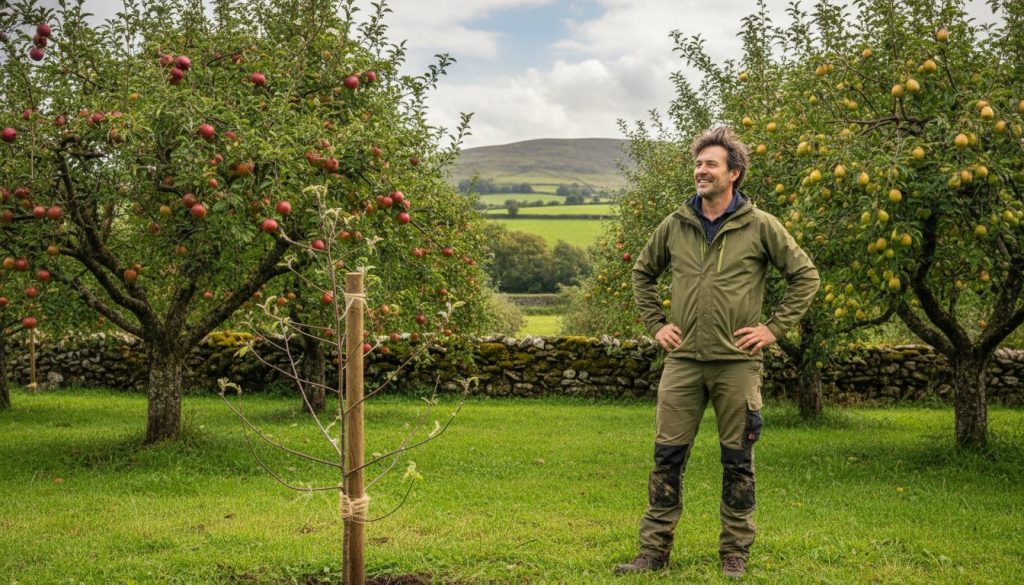
Growing a successful orchard in Ireland isn’t a matter of luck or having a “green thumb”; it’s a result of choosing the right rootstock and understanding your local soil. Many gardeners feel overwhelmed by conflicting advice on planting seasons or fear that the Irish wind and rain will kill off their investment before the first blossom appears. It’s frustrating to browse fruit trees for sale Cavan only to feel unsure if a specific variety will actually survive in your garden’s unique conditions.
We understand these concerns because we’ve spent over 30 years growing trees on our 60-acre nursery. You deserve a healthy, fruit-bearing garden that rewards your hard work every autumn. This guide provides the practical, no-nonsense information you need to select, plant, and maintain the best fruit tree varieties for our climate. We’ll explain the vital differences between bare root and potted stock, clear up the confusion around pollination groups, and show you exactly how to prepare your ground for a lifetime of harvests. With the right techniques, you can plant with confidence and look forward to a bountiful home crop.
Key Takeaways
- Identify the most resilient Apple, Pear, and Plum varieties specifically suited to the Irish weather to ensure your orchard thrives.
- Discover why bare root trees are the professional’s choice for winter planting and how they offer better value for larger garden projects.
- Learn the “square hole” planting technique and essential staking methods to safeguard your young trees against strong winds.
- Find out why sourcing fruit trees for sale Cavan directly from a 60-acre specialist nursery provides superior plant health and expert guidance.
- Understand how to manage pollination groups and shelter requirements to guarantee a reliable and heavy fruit harvest every year.
Growing Fruit Trees in Ireland: Why Every Garden Benefits
A home orchard is a sustainable, multi-generational garden asset that provides nutritional security and environmental value for decades. Planting fruit trees is one of the most rewarding additions a gardener can make. Unlike purely ornamental species, these trees offer a tangible return on investment through fresh, seasonal produce. When you look for fruit trees for sale Cavan, you aren’t just buying a plant; you’re starting a cycle of seasonal abundance. The flavour of a sun-ripened apple picked directly from the branch far exceeds anything found on a supermarket shelf.
The Environmental Impact of Home Orchards
Growing your own fruit significantly reduces your carbon footprint. Most shop-bought fruit travels hundreds of miles in refrigerated containers, but your harvest travels only a few yards. This reduction in food miles is a practical step toward a more sustainable lifestyle. Additionally, fruit trees are vital for local biodiversity. Their spring blossoms provide an essential early food source for bees and butterflies. By integrating fruit trees amongst your existing hedges or flower beds, you create a more resilient ecosystem in your back garden that supports the wider Irish environment.
Assessing Your Garden Space
You don’t need a massive estate to produce a meaningful harvest. Modern grafting techniques mean that even small urban gardens can accommodate trees grown on dwarf rootstocks. These smaller trees remain manageable whilst still producing full-sized fruit. Success depends on identifying the right spot. Fruit trees require maximum sunlight to develop sugars and ripen properly. Look for the sunniest, most sheltered part of your garden. Shelter is particularly important in Ireland to protect blossoms from late frosts and fruit from being blown off during autumn storms.
Soil health is the final piece of the puzzle. Most varieties prefer well-drained, fertile soil. If your ground is heavy clay or prone to waterlogging, you’ll need to address drainage before planting to ensure long-term health. Understanding the basics of apple tree cultivation helps in choosing the right site for your specific needs. When searching for fruit trees for sale Cavan, remember that sourcing directly from a grower ensures you receive stock that’s been hardened to our local conditions. With over 30 years of experience on our 60-acre nursery, we’ve seen how the right placement makes all the difference to a tree’s lifespan.
Selecting the Best Varieties: Apple, Pear, and Plum Trees
Choosing the right variety is the most important step in establishing a productive orchard. Not every tree found in a generic garden centre will thrive in our specific climate. When you look for fruit trees for sale Cavan, you must prioritise varieties that have been proven to withstand damp summers and late spring frosts. Our 60-acre nursery focuses on stock that is hardened to the Irish landscape, ensuring your trees have the best possible start.
Apple Trees: The Staple of Irish Gardens
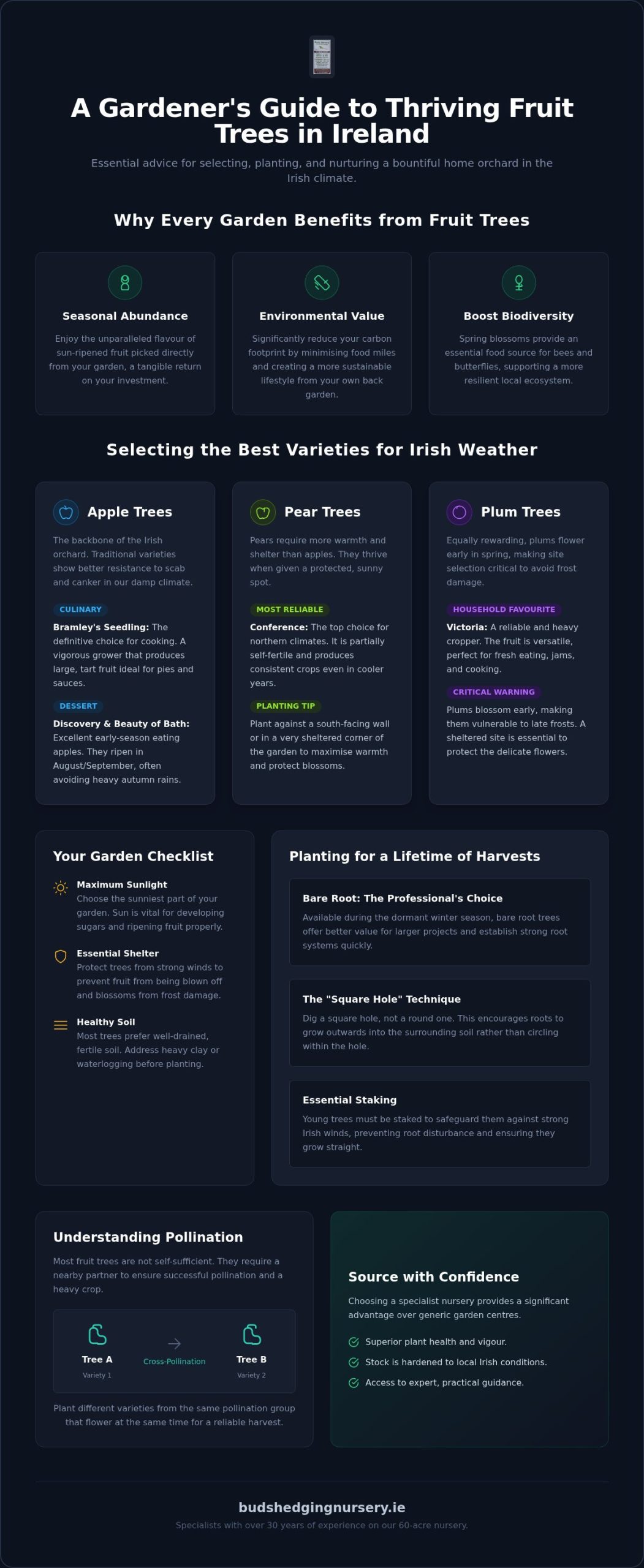
Apples are the backbone of the Irish home orchard. You need to decide between dessert (eating) apples and culinary (cooking) varieties. Bramley’s Seedling is the definitive choice for cooking. It’s a vigorous grower that produces large, tart fruit. For eating apples, Discovery and Beauty of Bath are excellent early-season options. These varieties ripen in August and September. This often allows you to harvest before the heavier autumn rains arrive. Traditional varieties generally show better resistance to scab and canker, which are common issues in our high-humidity environment. For a deeper look at commercial and home growing standards, the Teagasc guide to fruit production in Ireland provides invaluable data on variety performance.
Pears and Plums: Adding Variety to Your Harvest
Pears require more warmth and shelter than apples. They are best planted against a south-facing wall or in a very protected corner of the garden. Conference is the most reliable pear for northern latitudes because it’s partially self-fertile and produces consistent crops even in cooler years. Plums are equally rewarding. The Victoria plum is a household favourite for a reason. It’s a heavy cropper that works well for both fresh eating and making jams. You should be mindful of flowering times. Plums often flower early in the spring, so a late frost can damage the blossom. Choosing a sheltered site is essential to protect these delicate flowers.
Successful cropping often depends on pollination groups. Most fruit trees aren’t solitary; they need a partner tree nearby that flowers at the same time to ensure cross-pollination. Some varieties are self-fertile, but even these usually produce a better harvest with a companion. Understanding these requirements is where professional advice becomes essential. If you’re unsure which varieties to pair together, you can contact our team at Buds Hedging Nursery for expert guidance on matching your trees for a bountiful harvest. Finding the right fruit trees for sale Cavan is about more than just the tree; it’s about the knowledge that comes with it.
Bare Root vs Potted Fruit Trees: Choosing Your Format
Deciding between bare root and potted formats is a practical choice based on your budget and the time of year. Both options yield healthy, productive trees, but they suit different planting strategies. When you search for fruit trees for sale Cavan, understanding these formats helps you plan your garden timeline effectively. At our 60-acre nursery, we produce both to ensure gardeners have access to the right stock regardless of the season. Each format has distinct benefits that impact how the tree settles into your garden soil.
The Advantages of Bare Root Stock
Bare root trees are the professional’s choice for establishing a new orchard. These trees are grown in open ground and lifted only when they enter their dormant phase in late autumn. Because they are sold without soil or pots, they are lighter to transport and significantly more cost-effective. This makes them the ideal choice for larger projects where you might be planting several varieties at once. Planting during the bare root tree season Ireland, which typically runs from November to March, allows the roots to settle into the soil before the energy-intensive spring growth begins. This format also carries a lower environmental impact due to the absence of plastic containers and peat-based composts.
When to Choose Potted Fruit Trees
Potted trees offer the ultimate flexibility for the home gardener. Unlike bare root stock, you can plant these at any time of the year, provided the ground isn’t frozen or waterlogged. They are a sensible choice if you’ve missed the winter planting window or if you want a tree that already has an established canopy. Potted trees often show more immediate maturity and can provide a visual focal point in the garden straight away. When transitioning a potted tree into your garden soil, it’s vital to tease out any circling roots to encourage them to grow outwards. This prevents the tree from becoming “pot-bound” in its new home. Following a RHS comprehensive apple growing guide will show you that whilst potted trees require more frequent watering during their first summer, they are just as resilient as their bare root counterparts once established.
Ultimately, your choice depends on your project’s scale and timing. If you are looking for fruit trees for sale Cavan to fill a large space, the value of bare root is hard to beat. For a single specimen tree or a summer garden refresh, potted stock is the more convenient route. Both formats benefit from our 30 years of growing experience, ensuring you receive a tree that is hardened and ready to thrive in the Irish climate.
How to Plant and Stake Your Young Fruit Trees
Proper planting is the foundation of a productive orchard. Finding quality fruit trees for sale Cavan is only the first step; the way you transition those trees into your garden determines their long-term health. We recommend digging a square hole rather than a round one. When roots hit the corners of a square hole, they’re forced to grow outwards into the surrounding soil instead of spiralling around the pit. This results in a much stronger structural foundation and better nutrient uptake.
Step-by-Step Planting Guide
Depth is critical during the planting process. You must ensure the graft union, which is the visible bump on the lower trunk where the variety meets the rootstock, remains at least 5cm to 10cm above the soil level. If you bury this union, the top variety may grow its own roots, which bypasses the benefits of the specific rootstock. When preparing the ground, you can incorporate well-rotted organic matter, but don’t use fresh manure as it can scorch tender young roots. As you backfill the hole, firm the soil gently with your heel to remove air pockets. These pockets can trap water or cause roots to dry out, both of which lead to poor establishment.
Staking and Initial Protection
In Ireland, wind is a constant challenge for young trees. A stake provides the stability needed for roots to take hold without being rocked loose by autumn gales. Staking should always be done at a 45-degree angle to the prevailing wind. This specific positioning allows the stake to bear the brunt of the force whilst allowing the trunk enough movement to develop its own natural strength. Use flexible rubber tree ties rather than wire or twine. These ties allow for trunk expansion as the tree grows, preventing the bark from being strangled or damaged.
You should also consider physical protection at the base. Rabbits and hares can strip the bark from a young tree in a single night, which often proves fatal. A simple plastic spiral or mesh guard prevents this and shields the trunk from accidental damage by strimmers or lawnmowers. Once the tree is in the ground, apply a thick layer of mulch around the base to suppress weeds and retain moisture, but keep it a few inches away from the trunk to prevent rot. During the first six months, regular watering is essential, especially during dry spells in late spring. If you’re ready to start your orchard, you can browse our full range of fruit trees and get expert advice on the best planting accessories for your site.
Sourcing fruit trees for sale Cavan from an experienced grower means you start with hardened, healthy stock. Our 30 years of experience on our 60-acre nursery has taught us that these small details in planting and staking make the difference between a tree that merely survives and one that thrives for decades.
Sourcing Quality Trees from a Specialist Plant Nursery
Buying directly from the grower ensures you receive plants that have spent their entire lives in the local environment. When browsing fruit trees for sale Cavan, it’s easy to be tempted by mass-produced stock from large retail chains. However, these trees are often imported or grown in controlled conditions that don’t reflect our damp, windy climate. Sourcing from a specialist nursery means your trees are already hardened to the conditions they’ll face in your garden. This local resilience is the key to a bountiful harvest.
The Value of Expert Guidance
Our 60-acre nursery represents over 30 years of hands-on experience in Irish horticulture. This longevity provides a level of reliability that smaller resellers simply cannot match. We understand how different varieties perform across various soil types, from heavy clay to lighter loams. If you’re unsure about rootstocks or pollination partners, speaking to a professional who has managed the growth of thousands of trees is invaluable. You can find more advice on what to look for in our guide to choosing a specialist plant nursery Ireland.
Planning Your Visit
We welcome visitors to our physical site from Tuesday to Saturday. Selecting your own trees allows you to inspect the health and structure of the stock before it arrives in your garden. To make the most of your visit, we suggest bringing along garden measurements and observations about your soil drainage. Knowing whether your site is exposed to high winds or has standing water after rain helps us tailor our recommendations. While we don’t offer an online checkout, we provide expert on-site guidance to ensure you leave with the best possible varieties for your orchard.
For larger orchard projects or commercial planting, we can arrange delivery of your stock. This service is particularly useful for bare root orders during the winter months when you might be handling dozens of trees at once. Whether you’re looking for a single Victoria plum or a full suite of traditional apple varieties, our scale of production ensures consistent quality. Finding the right fruit trees for sale Cavan is the start of a decades-long relationship with your land; we’re here to ensure that foundation is solid.
Start Your Seasonal Harvest Today
Establishing an Irish orchard is a practical investment that provides fresh produce and environmental benefits for decades. Success depends on selecting resilient varieties like Bramley apples or Victoria plums and using professional planting techniques. Remember to prioritise proper staking at a 45-degree angle to protect your young trees from the wind whilst they establish their root systems in the first six months. By choosing the right format, whether bare root for winter projects or potted stock for summer planting, you ensure a healthy start for your garden.
When searching for fruit trees for sale Cavan, sourcing directly from a specialist nursery provides the best chance of long-term success. We have been established for over 30 years and manage 60 acres of dedicated production land, ensuring every tree is hardened to our local climate. You can access expert horticultural advice on-site to help you match varieties to your specific soil and site conditions. Explore our full range of fruit trees at Buds Nursery Cavan to begin your journey toward a bountiful home harvest. With the right preparation and quality stock, your garden will be a source of pride and produce for years to come.
Frequently Asked Questions
When is the best time of year to plant fruit trees in Ireland?
The best time to plant is during the dormant season, which typically runs from November to March. This period is ideal for bare root stock because the tree isn’t actively growing, which reduces transplant shock. If you choose potted trees, you can plant them throughout the year, provided the ground isn’t frozen or waterlogged. When browsing fruit trees for sale Cavan, planning for a winter planting often yields the best long-term results for root establishment.
Do I need more than one tree to get fruit (pollination groups)?
Most fruit trees require a pollination partner to produce a reliable crop. You should check the pollination group of your chosen variety to ensure there’s a compatible tree nearby that flowers at the same time. While some varieties are self-fertile, they almost always produce a heavier harvest when cross-pollination occurs. We recommend planting at least two compatible varieties together unless your neighbours have established trees that can provide the necessary pollen.
What is the difference between bare root and pot-grown fruit trees?
Bare root trees are lifted from the ground during winter and sold without soil, making them a cost-effective choice for large projects. Potted fruit trees are grown in containers and offer the flexibility of year-round planting. While bare root stock is only available during the dormant months, potted trees provide an immediate visual impact in the garden. Both formats are produced on our 60-acre nursery to ensure they are hardened to the local Irish climate.
How long does it take for a newly planted tree to bear fruit?
You can generally expect a young fruit tree to begin bearing fruit within two to three years of planting. The exact timing depends on the tree’s age at purchase and the specific rootstock used. While initial blossoms might appear sooner, it’s often best to remove them in the first year to allow the tree to focus its energy on root development. A full, heavy harvest typically occurs once the tree reaches five to seven years.
Can I grow apple trees in a garden with heavy clay soil?
Apple trees can certainly thrive in heavy clay soil if you take the right preparatory steps. You should dig a square hole to prevent roots from spiralling and incorporate well-rotted organic matter to improve the soil structure. If your garden is particularly prone to waterlogging, planting on a slight mound can help keep the roots above the water table. Choosing a vigorous rootstock also helps the tree establish itself in denser, more challenging ground conditions.
How do I protect my young fruit trees from strong winds?
Protecting young trees from strong winds involves proper staking and choosing a sheltered location. You should drive a stake into the ground at a 45-degree angle to the prevailing wind and secure it with a flexible rubber tie. This allows the trunk to move slightly, which builds natural strength, whilst preventing roots from being rocked loose. In exposed gardens, planting a windbreak of hedging like Green Beech provides essential long-term shelter for your orchard.
What are the easiest fruit tree varieties for beginners?
For beginners, the most reliable varieties include Discovery apples, Victoria plums, and Conference pears. These selections are known for their resilience against common pests and their ability to produce consistent crops in the Irish climate. When looking at fruit trees for sale Cavan, these traditional favourites are often the easiest to manage. They require less specialised care than more exotic varieties and are well-suited to the soil conditions typically found in local gardens.
Do fruit trees require a lot of pruning every year?
Annual pruning is necessary but it doesn’t have to be a complicated or time-consuming task. Most trees benefit from a light winter prune to remove dead or crossing branches and maintain an open shape for airflow. This helps prevent fungal diseases like scab, which are common in our damp weather. Summer pruning is also useful for restricted forms like espaliers to encourage fruit buds. Consistent, minimal maintenance is far better than a heavy, once-in-a-decade hack.