

The tallest, densest hedge isn’t always the best screen. The best plants for garden screening depend on what you want to hide, how much light you want to retain and how much space you can allow for growth and maintenance.
Privacy matters, but a solid wall of greenery can make a small garden feel enclosed or cast shade where you’d rather have sun. Irish gardens also need planting that can cope with wet, windy conditions. A successful screen balances height, density, appearance and ongoing care.
This guide covers practical screening ideas, from evergreen hedging and ornamental shrubs to layered planting and combinations with existing structures. You’ll learn how options such as Portuguese Laurel, Griselinia, beech and Photinia Red Robin can suit different purposes, and what to consider before planting. We’ll also compare living and structural screens, so you can choose an approach that fits your garden and set realistic expectations for how it will develop.
Key Takeaways
- Garden screening can be partial, layered or placed within the garden. Privacy doesn’t have to mean a continuous boundary hedge.
- Compare the best plants for garden screening by foliage, form and purpose, then consider how each choice will look through the seasons.
- Weigh up continuous hedging, staggered planting and screens combined with existing structures for privacy, light, space and maintenance.
- Before choosing plants, assess the view you want to screen and the site’s sun, wind exposure, soil and available planting width.
- On-site guidance at Buds Nursery Cavan can help you weigh plant choices against your garden conditions and preferred screening style.
What makes a modern garden screen work in an Irish garden?
Garden screening uses plants, structures or both to create privacy, soften boundaries or divide outdoor areas. It doesn’t have to be a continuous hedge around the garden. A screen can cover one sightline, sit behind a seating area or divide part of the space. The right approach depends on what you want it to do, and how much room and time you can give it.
What do you want the screen to do?
Start by identifying the view or area you want to change. A screen behind a dining space might create separation without enclosing the whole patio. Planting along an exposed boundary could soften a hard edge, while a screen positioned to frame a view from the house can be more open and selective.
Purpose determines position and density. Denser planting can provide more visual cover, but may also block light and make a narrow garden feel smaller. To divide outdoor areas, a staggered or partial arrangement can mark the change in use while leaving sightlines and routes through the garden. A hedge is a familiar solution, but Hedge also covers varied forms and roles, including boundary planting and habitat.
How can screening feel modern rather than bulky?
A considered layout often feels lighter than a solid wall of planting. Choose a clear planting line, repeat a form or use a small group of plants to give the screen structure. Repetition creates order, while combining evergreen foliage with seasonal interest adds variation without losing the overall shape. Choose the best plants for garden screening for their role in the layout, not just their eventual height.
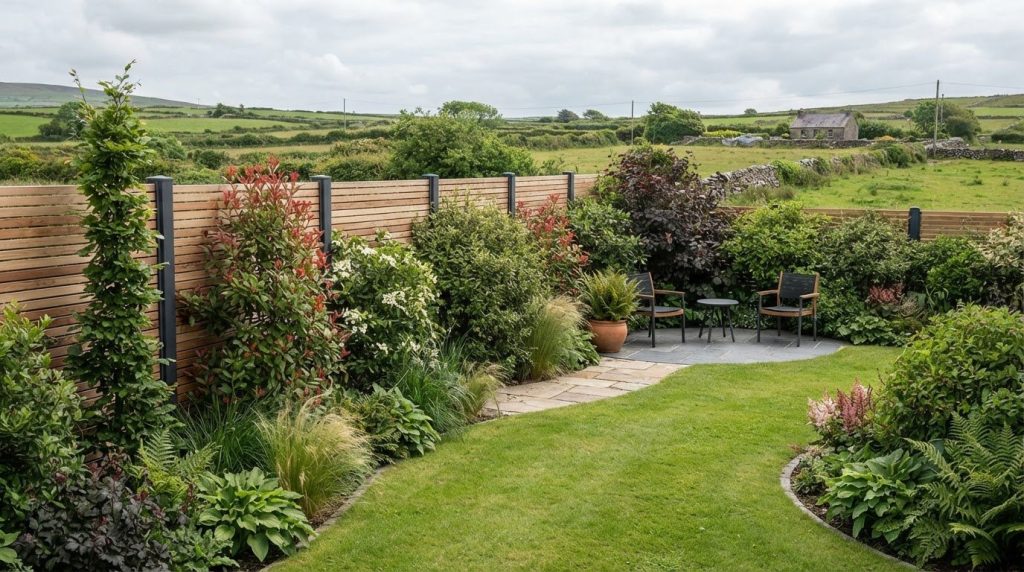
Plants can also work alongside an existing fence or another suitable structure. The structure provides a defined backdrop, while planting softens its appearance and adds depth. This approach can suit a garden where you want a greener view but don’t need a full hedge. Leave practical room around plants for access, pruning and checking their growth. If planting is squeezed against a boundary or path, routine care can become awkward as the screen matures.
Keep the site in mind. Irish gardens can be wet and windy, so position and exposure matter as much as appearance. An exposed boundary may call for a different layout from a sheltered divider near the house. Consider planting width, nearby paths and the light you want to retain before settling on a dense line of greenery. These choices shape the screen’s privacy, appearance and upkeep.
Best plants for garden screening: choose by form, foliage and function
Start with the kind of cover you want. Evergreen foliage gives a screen a consistent appearance through the year, while deciduous plants bring seasonal change and a more open look when their leaves fall. A mixed design can combine foliage shapes and colours instead of relying on a single uniform line. These differences affect the feel of the garden as well as the amount of cover.
Portuguese Laurel, Cherry Laurel, Griselinia and Photinia Red Robin are options to consider for evergreen screening. Photinia Red Robin is also known for contrasting colour on its new growth, which can add interest to a repeated planting line. These plants aren’t interchangeable: available space, exposure and the look you want all matter. The best plants for garden screening are those that suit the site, not simply those that look appealing in isolation.
When does evergreen screening make sense?
Evergreen foliage can maintain a visible screen through the seasons, making it useful when you want a steady green backdrop or year-round cover. Portuguese Laurel, Cherry Laurel and Griselinia offer different options, but none is automatically right for every garden. Before choosing, consider how much width you can allow, where the planting will go and which appearance you prefer.
For another plant-specific reference, NC State University Extension’s profile of Cryptomeria japonica for screening describes its characteristics and cultivation. Use detailed plant information alongside an assessment of your site, particularly its exposure and available space.
How can deciduous or mixed planting add interest?
Beech and hornbeam are deciduous screening choices, so their seasonal appearance differs from evergreen cover. Their foliage changes through the year, and the screen won’t look the same in every season. This can suit a garden where a softer, less constant boundary is acceptable. Consider how much privacy you need at different times of year before choosing.
For a less uniform design, combine plants with different foliage colours or forms. Photinia Red Robin can introduce colour alongside steadier green foliage, while beech or hornbeam can add seasonal character. Keep the arrangement deliberate: repeat selected plants or forms to give a mixed screen structure rather than a crowded appearance.
Look beyond a plant’s current size before committing. Consider its mature spread and height, the width available for planting and access for future care. Don’t assume a screen will reach a particular size or establish at a particular pace. Growth depends on the plant and its conditions. For closer comparisons of hedge options, use this guide to hedging for privacy in Ireland. Buds Nursery offers on-site plant guidance to help you relate plant choices to garden conditions, and its hedging and shrub range can inform a living screen. Find out more about plants and guidance from Buds Nursery.
Modern garden screening ideas compared: planted, layered or structural
A screen doesn’t need to form an unbroken wall along every boundary. A continuous hedge, a staggered group of plants and planting set against an existing fence each create a different balance of privacy, light and upkeep. The tallest or densest option isn’t automatically the most suitable. Start with the sightline you want to address, then consider how each approach will affect the rest of the garden.
| Screen type | Privacy | Visual effect | Light and space | Maintenance |
|---|---|---|---|---|
| Continuous hedge | Can provide a consistent screen along a chosen line | A clear, unified green boundary | Needs a planting strip; dense foliage may reduce light | Plants need room to grow and regular care |
| Staggered planting | Can screen selected views without covering every boundary | Creates depth and a more varied outline | Uses space within the garden; gaps can preserve light and views | Several plants may need individual attention |
| Plants with an existing structure | Combines visual cover from planting with a defined backdrop | Softens the hard edge of a fence or similar structure | Can make use of an existing boundary, but planting still needs space | Care depends on the plants and access around them |
What are the trade-offs between living and structural screens?
A hedge changes as its foliage grows and the seasons pass, giving the boundary a planted appearance. It also needs room, pruning and access for ongoing care. A fence or other built screen has a more defined outline and doesn’t rely on plants to create that edge, but it may look harder against the garden. Combining planting with an existing structure can soften its appearance without expecting plants to do all the screening.
Can layered planting create privacy without closing in a garden?
Yes. Place plants where they interrupt important sightlines, such as beside a seating area or between outdoor zones, rather than screening every boundary equally. Varying plant form and spacing can build depth without creating one solid mass. Leave usable access for garden tasks and consider the effects on daylight and movement. The best plants for garden screening work as part of a layout that suits how you use the space.
Picture the screen from the places you use most: indoors, on a patio or along a garden path. A dense hedge may make sense when a steady boundary is the priority, while selected planting may suit a garden where retaining light and openness matters. Check that the planned line leaves enough space for plants to develop and for you to reach them for routine care.
Think of the options as adaptable, not fixed. A screen can combine a planted section with an existing boundary, or use a few carefully positioned plants to address one view. This avoids treating privacy as an all-or-nothing choice and helps keep the garden usable. Compare the visual effect, available width and likely maintenance before settling on a design.
How to plan a garden screen that suits Irish conditions
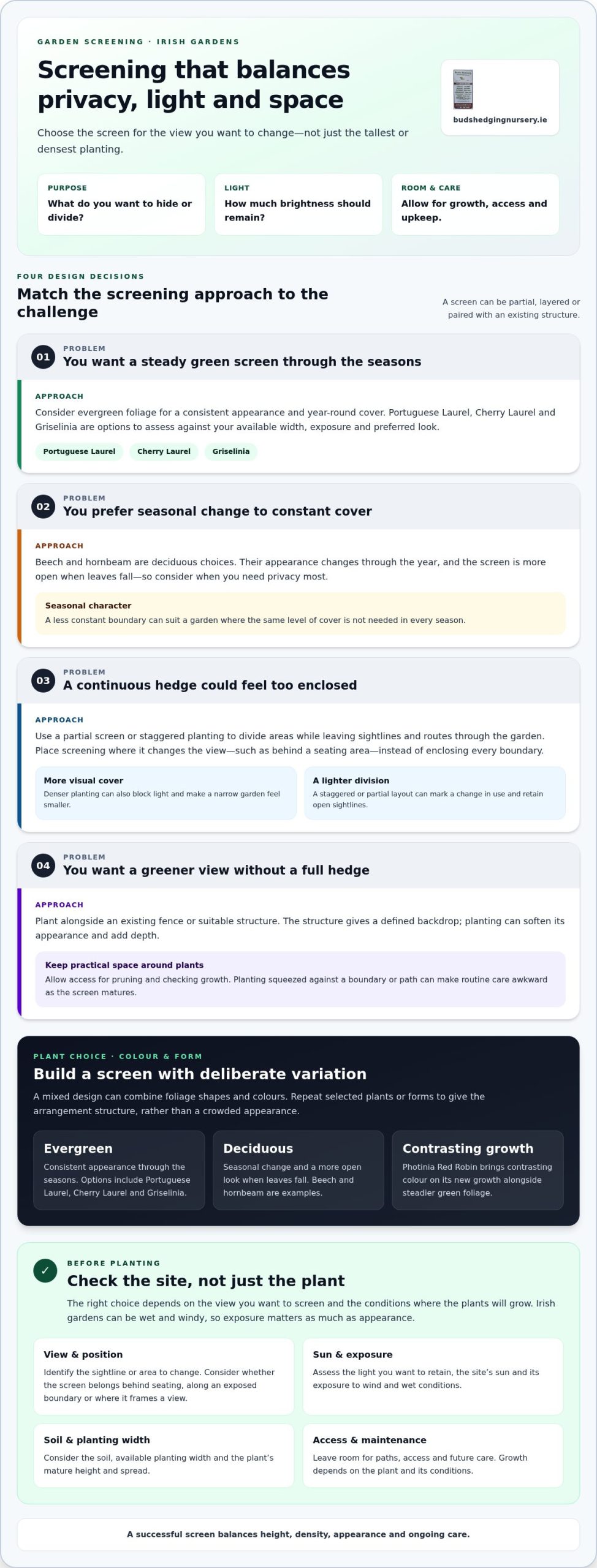
A useful screen starts with the garden, not a plant label. Conditions can differ in sun, wind exposure, soil and available space, even within the same garden. Assess these factors before choosing, then decide how much cover you want and what care you can manage. Plan a garden screen by identifying the view, assessing the site, choosing a style and allowing for ongoing care.
What should you assess before choosing screening plants?
Identify the view you want to soften or block, then mark where daylight, a clear outlook or easy access should remain. Observe the proposed planting area at different times of day and consider how exposed it is to wind. Check the soil and the depth available, including nearby paths, boundaries and other planting. These details help you judge whether a plant’s eventual form will fit without narrowing a route or crowding neighbouring features.
Think about the screen from both sides. A planting line beside a path needs enough room for people to pass and for you to reach the plants. Near a seating area, the aim may be to obscure one direct view rather than create a complete barrier. Match the plant’s mature shape to the space available, rather than relying only on its size when bought.
How should planting and upkeep shape the design?
Decide what appearance you can maintain. A neat outline needs access for pruning and shaping; mixed planting may have a more varied form and different care needs. Seasonal variation is another consideration, as deciduous plants change through the year. Allow for watering and routine attention as plants establish, and keep enough working space for future pruning. Establishment and maintenance depend on the species and garden conditions, so don’t assume every plant needs the same care.
- Identify the view. Note what you want the screen to conceal, soften or separate.
- Assess the site. Observe sun and wind exposure, inspect the soil, and measure planting width and access.
- Select a style. Choose a continuous line, a more open arrangement or a mix of planting and an existing structure.
- Plan for care. Make room for watering, pruning and access as the plants develop.
Season can also inform your planting plan. If you’re considering bare root trees as part of a screen, the bare root tree planting guide explains seasonal planting options. Use it alongside your site assessment rather than treating the calendar as a substitute for checking the conditions where the plants will grow.
Before deciding, compare your preferred look with the work it will involve. A screen that fits the space and your care routine is more practical than one chosen for height or density alone. Buds Nursery offers on-site plant guidance to help you consider plant choices in relation to garden conditions. Explore plant guidance from Buds Nursery.
Choosing screening plants with help from a specialist nursery
A good plant choice brings together three things: the purpose of the screen, the conditions in the garden and the look you want to achieve. At Buds Nursery, you can compare hedging, trees and shrubs with on-site plant guidance, and consider which options suit your garden.
Before discussing plants, describe what you want the screen to do. Is it intended to soften a boundary, create privacy near a seating area or divide part of the garden? Note the available planting space, exposure and soil, along with how much pruning and general care you’re prepared to manage. This gives you a clearer basis for comparing plant forms and planning a screen that fits its setting.
What plant categories can support a screening plan?
Hedging plants can form a defined planting line, while ornamental shrubs can add varied foliage or colour to a less uniform arrangement. Trees offer another scale and form, depending on the space and purpose. Portuguese Laurel, Photinia Red Robin, beech and hornbeam are among the options in the nursery range, each with different characteristics. A plant that suits one position may not suit another, so consider its eventual form and the site before selecting.
If Portuguese Laurel is on your shortlist, the Portuguese Laurel guide for Irish gardens offers more detail on that option. Use species-specific information alongside the conditions and layout you’ve observed in your own garden.
How can native trees fit into a screening design?
Native trees can be part of a more natural garden scheme, particularly where a screen is intended to sit within broader tree and shrub planting. Their suitability still depends on the available space and the role you want them to play. The Native Trees Scheme plants guide provides further information about native tree options. Relate that information to your site and design when deciding what to plant.
Buds Nursery manages 60 acres dedicated to producing hedging, trees and shrubs. Its range includes hedging plants, ornamental shrubs, beech, hornbeam, native trees and ground cover plants. These categories can support different screening approaches, from a more defined hedge to planting that combines trees and shrubs. On-site guidance offers a practical way to discuss your intended use and garden conditions as you weigh up your choices.
You don’t need to settle on a plant before considering the full layout. Bring together your preferred appearance, available space and care expectations, then explore the options in the nursery’s plant range. Explore plants at Buds Nursery.
Take the next step towards a screen that fits
Before choosing, note the view you want to change and the space you’re willing to give the planting. This is a practical starting point for discussing the best plants for garden screening, including the balance you want between privacy, light and ongoing care. A clear purpose and a realistic picture of the site can help narrow the options.
Use that starting point to explore plants suited to your preferred screen. Buds Nursery stocks hedging plants, trees and shrubs, offers on-site plant guidance and provides delivery for larger orders. The nursery manages 60 acres dedicated to producing hedging, trees and shrubs.
Explore hedging plants, trees and shrubs at Buds Nursery and take the next step towards a screen that works for your garden. A considered choice can help shape an outdoor space you’ll enjoy using.
Frequently Asked Questions
Are evergreen plants best for garden screening?
Evergreen plants can keep foliage on the screen throughout the year, but they’re not automatically the best plants for garden screening. Consider whether you need cover in every season, how much room the planting can occupy and how much care you can manage. Deciduous plants change with the seasons, while a mixed screen can combine persistent foliage with variation. Think about the view from inside your home as well as from the garden before deciding.
Can garden screening still let light into a small garden?
Yes, careful placement can help preserve light. Rather than planting a dense line beside every boundary, focus on the particular view that needs screening. For example, position plants to interrupt a direct sightline from a neighbouring window while leaving a brighter part of the boundary more open. Observe how sunlight moves across the garden and consider windows, paths and seating areas before settling on the screen’s position.
How do I screen a garden without using a continuous hedge?
Use a few shrubs or trees to screen a specific spot, such as a patio or seating corner, instead of creating a solid boundary. A staggered arrangement can provide cover from different angles, while an existing fence can act as a backdrop for planting. Before choosing, consider how people move through the space and whether you can reach the plants for pruning and routine care.
Can I mix different plants in one garden screen?
Yes, provided the plants suit similar conditions and their mature forms work together. Combining plants with different foliage shapes can give a screen a less uniform appearance, while seasonal foliage adds change through the year. Don’t choose plants only for variety: first decide whether you want consistent cover, a natural look or a particular visual effect. Consider each plant’s site needs and likely care requirements before combining them.
When is the best time to plant screening plants in Ireland?
Planting time depends on the type of plant and whether it’s bare-root or container-grown. Bare-root plants have a seasonal planting window, while container-grown plants have different handling needs. Follow the guidance for the plants you choose and take account of soil and weather conditions at planting time. Plan the screen and prepare the planting area in advance so the plants can be put in appropriately.
Will screening plants block noise from neighbours or roads?
Don’t rely on planting alone to block noise. A screen may soften the view of a road or neighbouring property, but any effect on sound depends on the design and surrounding conditions. Consider the screen’s continuity and depth as part of the wider garden layout, without assuming it will provide sound insulation. If reducing noise is the main aim, treat plants as one element of the overall plan rather than a guaranteed solution.