

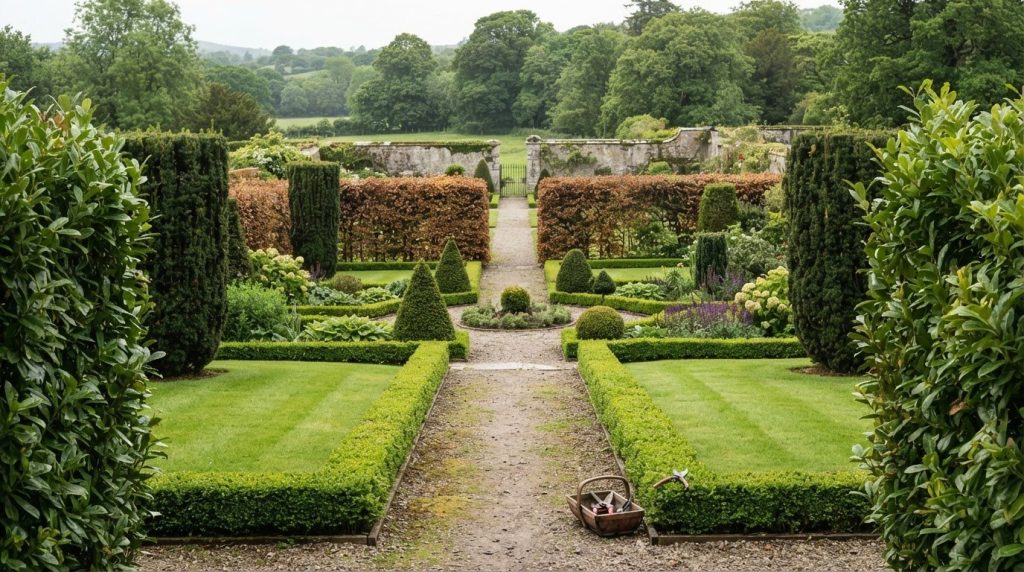
The plant that clips into the sharpest line isn’t always the best formal hedge for your garden. Formal garden hedging plants need to suit more than the design: growth habit, site conditions and pruning needs all affect how well they hold a neat shape over time.
A crisp evergreen boundary or clipped row can bring order to a garden, but first consider whether the plant will suit its position and how often you can trim it. A little planning helps avoid a hedge that feels out of place, outgrows its space or becomes a chore to maintain.
This guide compares evergreen and deciduous choices, including yew, Box, privet, beech and laurel. It explains which plant traits help create a formal outline, how to assess the site and layout, and how growth affects ongoing clipping. Use these practical points to find a hedge that fits both your garden and your routine.
Key Takeaways
- Formal garden hedging plants can frame paths, divide spaces and reinforce symmetry when their shape suits the layout.
- Compare foliage, branching and response to clipping to judge how clearly each plant can hold a defined outline.
- Explore how box, yew, privet, beech, hornbeam and laurel differ in appearance and upkeep before settling on a hedge type.
- Assess exposure, soil and available space, then match your choice to the level of pruning you can manage.
- Buds Nursery Cavan offers a range of hedging plants and on-site guidance to help inform your selection.
What Makes Formal Garden Hedging Plants Right for a Structured Garden?
A formal hedge is a boundary or garden feature kept to a deliberate shape, with a clear outline maintained through regular clipping. Its role is not simply to screen a view. It can define the garden’s structure, mark a route or give a planting area a distinct edge. The Characteristics of a Formal Garden include planned layouts and repeated forms, where clipped hedges help make that order visible.
Choose formal garden hedging plants to suit the shape you want and the care you can provide. A low hedge may work well as a path edge, while a taller one could form a backdrop or divide areas. Decide on the hedge’s intended height, width and outline before choosing a plant, so you can rule out options that would outgrow the available space or need more frequent clipping than you can manage.
How a formal hedge shapes the garden layout
Repeated lines create visual order. Matching hedges along a path can draw the eye towards an entrance or focal point. A clipped boundary around a lawn gives the transition to a planted border a deliberate edge. In a larger garden, shorter hedge sections can separate areas without relying on fences or walls.
Plan the hedge as part of the layout, rather than treating it as an isolated row of plants. Mark its route and consider where it ends, how it meets a path and whether it turns a corner. Straight runs can reinforce symmetry; a defined hedge edge can also frame less formal planting behind it.
A mixed or wildlife-focused hedge usually combines plants with varied forms and a looser outline, rather than a uniform geometric shape. It can bring seasonal interest, but the effect differs from a clipped formal hedge. Neither approach is automatically better. Decide whether the priority is crisp structure, more natural planting or a balance of both in different parts of the garden.
Formal appearance versus privacy screening
A formal hedge is defined by its shape and presentation, not by whether it blocks views. A low, closely clipped edge can define a bed where privacy isn’t needed. A taller hedge can give a garden boundary a consistent, maintained appearance. Privacy can be one purpose, but it needn’t determine the design.
Consider how you want the hedge to look through the seasons. Evergreen foliage maintains a more consistent visual boundary, while deciduous plants bring seasonal changes in appearance. The best fit depends on the hedge’s position, intended shape and the amount of clipping you can commit to for a tidy outline.
If screening is the main priority, assess that separately from the formal design. Our guide to hedging for privacy in Ireland covers that decision. For a structured garden, first settle the hedge’s purpose, height and shape. Then compare plant options against the site and your realistic maintenance routine.
Which Plant Traits Help Formal Garden Hedges Keep Their Shape?
A formal hedge holds its shape best when its growth habit, branching and response to clipping suit the outline you want to maintain. Foliage matters too, but a particular leaf colour or texture doesn’t prove that a plant will form a dense, even edge. Start with the hedge’s purpose, then weigh its appearance against the shaping it will need.
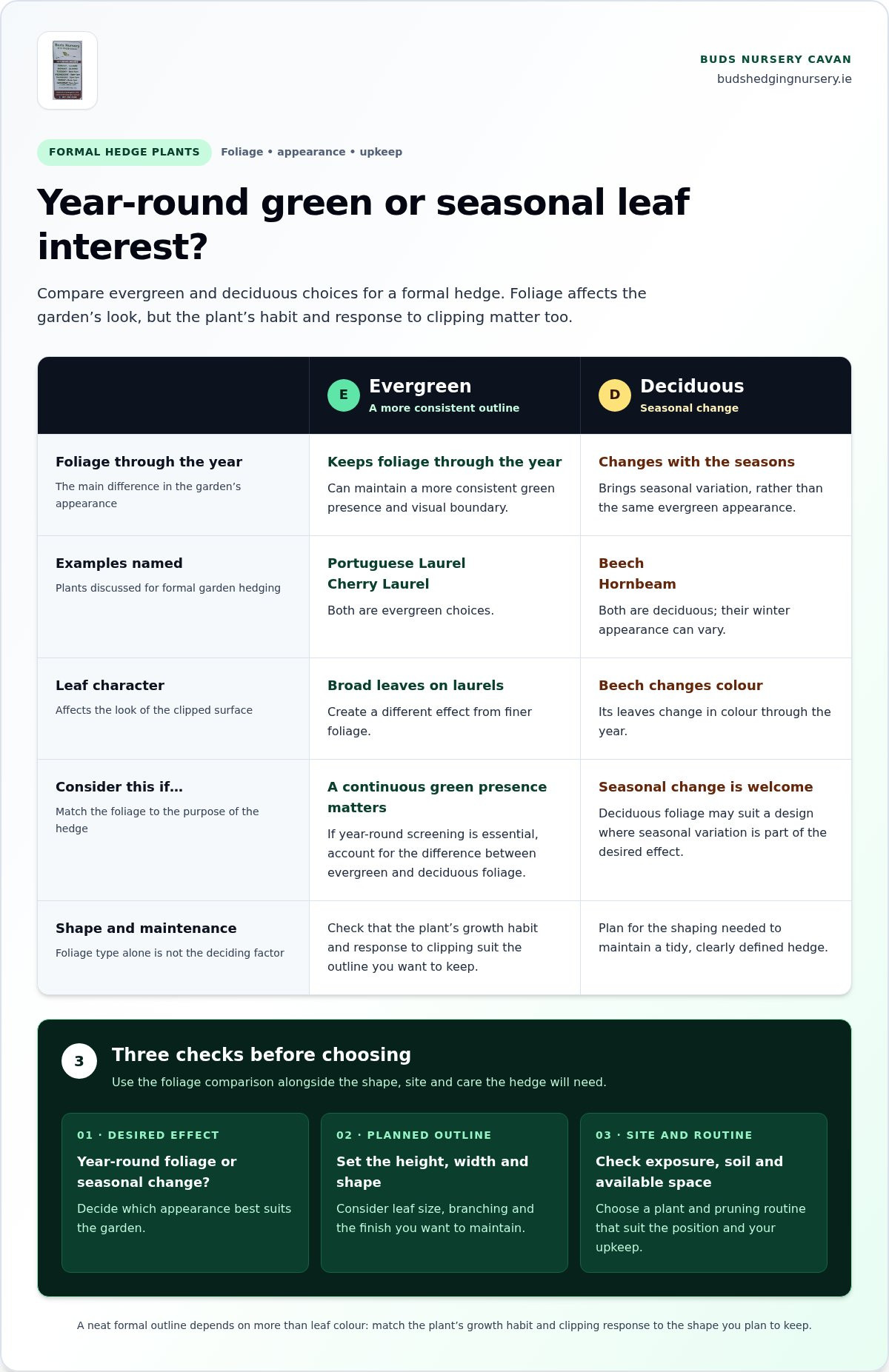
Evergreen plants keep foliage through the year, giving a garden a more consistent outline. Deciduous plants change with the seasons, bringing colour and variation but not the same year-round appearance. These are broad distinctions: foliage behaviour varies by species and growing conditions, so consider the particular plant rather than relying on its category alone.
Evergreen foliage or seasonal leaf interest?
Portuguese Laurel and Cherry Laurel are evergreen choices, so their foliage can maintain a continuous green presence in a formal layout. Their broad leaves create a different effect from finer foliage. Choose between them by considering the look you want and whether the plant suits the position and planned shape. A closer look at the Portuguese Laurel garden guide can help you consider that option.
Beech offers a more seasonal character. Its leaves change in colour through the year, rather than providing the same evergreen appearance as laurel. Beech and Hornbeam are deciduous, though their winter appearance can vary. If year-round screening is essential, account for that difference; if seasonal change is welcome, deciduous foliage may suit the design.
Evergreen or deciduous foliage alone doesn’t determine whether a plant will make a good formal hedge. Match its habit and response to clipping to the job, whether that is a sharply defined low edge or a taller boundary. Avoid choosing on foliage alone.
Leaf, colour and branching characteristics
Leaf size affects how a clipped surface looks both nearby and at a distance. Smaller foliage can give a line a finer texture, while larger leaves create a more noticeable surface. Colour also shapes the overall composition: consistent green can support a restrained layout, while seasonal leaf changes add contrast. These are design considerations, not guarantees of density or shape.
Branching matters too. Growth distributed through the hedge can help it look less sparse, but the plant’s ability to form and retain a clear outline depends on its species and how it is managed. Check that the plant suits clipping into your intended shape, rather than assuming every shrub can be kept as a crisp hedge.
- Choose the effect: decide between year-round foliage and seasonal change.
- Look at the outline: consider leaf size, branching and the finish you want.
- Plan the upkeep: factor in the shaping required to maintain that finish.
These traits help narrow the choice of formal garden hedging plants without making appearance the only test. For a practical look at suitable hedging types, explore the hedging selection at Buds Nursery.
Formal Hedge Plants Compared: Box, Yew, Privet and Laurel
These plants can all contribute to a structured garden, but they create different effects and aren’t interchangeable. Use the comparison as a starting point: the best fit depends on the outline you want, the site and the time you can give to clipping. A formal hedge can be straightforward to maintain, but a close, precise finish does require ongoing attention.
Compact, fine-textured choices for defined lines
Box and Taxus baccata are options for clearly shaped hedges. Box has small evergreen leaves that can give a clipped edge a fine appearance. Yew has evergreen needles and a different, more textured surface. Both are worth considering where a consistent outline matters, but neither removes the need for pruning. The amount and timing of care depend on the intended shape and how closely you want to keep it defined.
Larger-leaved and seasonal alternatives
Privet and laurel offer a contrasting foliage effect, while Beech and Hornbeam bring seasonal change. The table describes general characteristics, not a guarantee that a plant will suit every garden or site.
| Plant | Foliage and intended look | Formal suitability and upkeep |
|---|---|---|
| Box | Small evergreen leaves give a fine-textured appearance. | Can be shaped into a defined line. Clipping is needed to maintain a close outline. |
| Taxus baccata (yew) | Evergreen needles create a denser-looking, textured surface. | Consider it for a lasting, shaped boundary; plan for regular maintenance to retain the chosen form. |
| Privet | Leaves are smaller than those of laurel; retention varies by type and conditions. | Can be considered for a clipped hedge. The upkeep needed depends on the variety and desired finish. |
| Laurel | Portuguese and Cherry Laurel have evergreen foliage and broad leaves. | Suitable for a substantial leafy effect where the site and intended outline fit. Allow for shaping as the hedge develops. |
| Beech | Deciduous foliage brings seasonal change in colour and appearance. | Useful where a formal line can include seasonal variation. Consider its leaf behaviour as part of the design. |
| Hornbeam | Deciduous foliage gives the hedge a seasonal character. | Can suit a structured scheme where seasonal change is acceptable; maintenance depends on the outline you want. |
Beech and Hornbeam aren’t evergreen alternatives, so consider the seasonal effect before choosing either. If you’re weighing up Beech, use the Beech hedging buying guide as part of your decision. Privet also covers more than one type, so don’t assume leaf retention or upkeep will be identical across varieties.
Rather than choosing by a simple ranking, match the plant to the look and routine you have in mind. Explore the hedging plants at Buds Nursery as you compare options for your formal garden.
Matching Formal Garden Hedging to Your Site and Routine
A plant that seems suitable on paper may not suit your garden. Conditions can vary even across a small area, so assess the actual position, soil and available space before settling on a species. Then match those conditions to the hedge’s purpose and the amount of shaping you can manage.
Assess the garden before choosing a plant
Start by noting how much light the planting line receives, whether it is exposed to wind, what the soil is like and how much width the hedge can occupy. Look at nearby paths, walls and planting too. Leave enough room for the hedge to develop without obstructing access or crowding its surroundings.
Next, decide what the hedge needs to do. Is it a low edge beside a path, a backdrop to a border or a taller division between parts of the garden? Set a realistic finished height and shape before comparing plants. Site preferences differ between species, so assess each option against the conditions where it will grow rather than assuming one type suits every garden.
Choose a maintenance level you can sustain
A sharply clipped, geometric outline takes ongoing attention. How often a hedge needs trimming varies with the species, growing conditions and degree of precision you want. A less exact outline may allow more variation between trims, but it still needs suitable care to remain healthy and within its allotted space. Be realistic about the time you can set aside.
Use this sequence to narrow the choice:
- Assess the site: record light, exposure, soil and available width.
- Define the appearance: decide the hedge’s role, height and shape.
- Set your upkeep limit: choose how crisp you want the outline and how much maintenance you can sustain.
- Compare plants: weigh each species’ site suitability and growth habit against your design and routine.
This process helps you avoid choosing on appearance alone. For example, a narrow planting space makes the hedge’s eventual width an important consideration, while an exposed position makes it especially important to check the plant’s site requirements. Don’t rely on a general label such as “evergreen” or “formal” as proof that a plant will suit the spot.
Base planting and spacing decisions on the chosen species and the hedge’s intended dimensions. These details affect how the row develops, so use guidance specific to the plant rather than applying one spacing rule to every hedge. The same applies to pruning: follow advice for the species and adapt the finish to the shape you’re maintaining.
Once you’ve considered the site and your routine, compare hedging plants at Buds Nursery to explore options for your garden.
Find Formal Garden Hedging Plants and Get Practical Nursery Guidance
Choosing formal garden hedging plants means matching the design with the site and the care you can provide. A clear idea of the hedge’s purpose, shape and finished height helps narrow the options. Consider the planting position, soil, exposure and available space before settling on a plant type. A choice that suits all of these factors is more practical than selecting by appearance alone.
What to prepare before selecting your plants
Before seeking plant guidance, note where the hedge will go and what you want it to do. A simple sketch can show its route, nearby paths and available space. Add the approximate finished height and preferred outline, along with observations about light, exposure and soil. Photographs of the planting area can also help explain the setting during an on-site discussion.
These details make it easier to discuss the differences between Box, Taxus baccata, Privet, Beech and Laurel. They help keep the conversation focused on which types may suit the intended look and the actual garden conditions. Buds Nursery offers on-site plant selection guidance from Tuesday to Saturday.
Explore the nursery’s hedging range
Buds Nursery manages 60 acres dedicated to producing hedging, trees and shrubs. Its hedging range includes several plant types used in structured garden schemes, from Box and yew to Privet, Beech and Laurel. Each offers different foliage and seasonal character, so the right choice depends on the effect you want and how it fits your site.
Delivery options are available for larger orders. This can be useful when planning a longer hedge, but the plant decision still starts with the design and conditions rather than the quantity. Take your notes or photographs to help make the selection discussion specific to your garden. Plant requirements vary, and guidance based on the actual planting position can help you compare options thoughtfully.
Bring together the hedge’s intended role, finished height, available width and your maintenance expectations. With those points in hand, you can explore the nursery’s hedging selection and consider which plant type best fits the scheme. Browse the hedging range at Buds Nursery to take the next step in choosing plants for a structured garden.
Plan the Hedge That Fits Your Garden
Picture how the hedge will work as part of the garden, not just as a row of plants. Mark its line, note the space around it and decide how precisely you want its shape maintained. These practical decisions make it easier to choose formal garden hedging plants that suit both the setting and the care you’re ready to give.
You don’t need to settle every detail at once. Start with the purpose and position, then use those notes to compare suitable plant types. A considered choice gives the hedge a clear role in the design and sets realistic expectations for its upkeep as it grows.
Ready to take the next step? Explore formal hedging plants at Buds Nursery and find options to consider for your garden. With a clear plan in hand, you can move towards a structured hedge that feels right for your space.
Frequently Asked Questions
Which plants are best for a formal garden hedge?
The best plant depends on the effect you want, the conditions in your garden and the upkeep you can manage. Box and Taxus baccata can suit a closely defined line; Privet and Laurel offer a different foliage effect, while Beech and Hornbeam bring seasonal change. Before choosing formal garden hedging plants, consider the available space and the hedge’s role. No single option is right for every garden.
Are evergreen plants better for formal hedging?
Evergreen plants keep foliage through the year, which can help a boundary maintain a consistent appearance. Deciduous plants offer seasonal change, with bare branches or changing leaf colour at different points in the year. Neither is automatically better for a formal layout. If clear green lines in winter are important, evergreens may suit the design; where seasonal variation is welcome, a deciduous hedge may be a better fit.
Can formal hedging plants be mixed?
Yes, but a mixed hedge needs a deliberate plan. Different foliage colours or textures can add contrast, yet variations in growth habit and pruning needs may make one even outline harder to maintain. For a consistent clipped appearance, using one type along a run is often simpler. If combining plants, decide whether you want distinct sections or a blended effect, and consider how each plant will look and grow beside the others.
What is the fastest-growing plant for a formal hedge?
There isn’t a reliable fastest-growing choice for every garden. Growth varies by species and is also affected by site conditions and care, so a plant that establishes quickly in one position may perform differently elsewhere. Consider how soon you need the hedge to fulfil its purpose, but weigh that against the work needed to maintain its shape. Check growth information for the species you’re considering rather than relying on a general ranking.
Can formal hedging grow in a small garden?
Yes, if the plant and planned shape fit the available space. Measure the width of the planting strip as well as its length, and allow room for access and future trimming. Consider the intended height too: a tall hedge may feel imposing in a compact garden, even if its base fits. Choosing a plant with a suitable habit and setting a clear limit for its shape helps keep the design in proportion.
When is the best time to plant formal hedging in Ireland?
The best time depends partly on the plant type and how it is supplied. Bare-root hedging is generally planted during the dormant season, while container-grown plants may offer a wider planting window if conditions are suitable. Avoid planting into frozen or waterlogged ground, and take account of dry spells that could affect establishment. Follow guidance for the chosen species and plant form, as timing and aftercare can differ.
How do I keep a formal hedge looking straight?
Plan the line before planting, using fixed points at each end and checking the route from more than one viewpoint. A taut guide line can help keep the planting position consistent, while a sketch shows how the hedge relates to paths, entrances and borders. Decide on a uniform height and width from the outset. View the hedge along its length regularly to spot uneven sections before they disrupt the outline.