

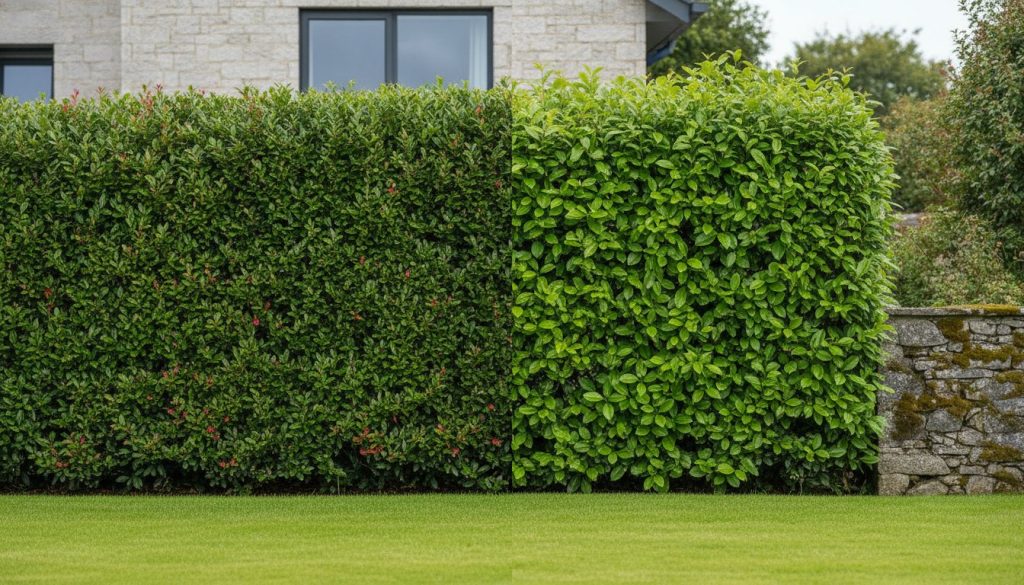
What if the fastest-growing hedge in your garden ends up being your biggest maintenance headache? Many homeowners choose a variety based solely on how quickly it provides privacy, only to find themselves struggling to keep up with the pruning. It’s a common dilemma when weighing up portuguese laurel vs cherry laurel for a new boundary or screen. You likely want a dense, evergreen backdrop that looks professional, but you don’t want to spend every weekend with the shears in hand.
At Buds Nursery Cavan, we’ve spent over 30 years growing both varieties on our 60-acre site, so we understand how they perform in real-world conditions across various climates. This article will show you the critical differences in growth rates, appearance, and climate resilience to ensure you choose the right plant for your landscape. We’ll explore why the vigorous 40cm to 60cm annual growth of cherry laurel might suit some, whilst the more refined, moisture-tolerant nature of Portuguese laurel is often the better fit for formal gardens and heavier soils.
Key Takeaways
- Identify visual differences, from the large, leathery leaves of Cherry Laurel to the refined foliage and distinctive red stems of Portuguese Laurel.
- Compare growth rates to plan your maintenance, as Cherry Laurel can grow up to 60cm a year whilst Portuguese Laurel offers a more manageable pace.
- Determine the best fit for your site by comparing portuguese laurel vs cherry laurel in terms of their resilience to damp Irish soil and wind exposure.
- Choose a variety based on your design goals, whether you need a fast-growing privacy screen or a neat, formal hedge.
- Understand the logistics of planting, including the seasonal benefits of bare root stock and the year-round flexibility of pot-grown laurels.
Understanding the Visual Differences: Leaves, Stems, and Flowers
Choosing between portuguese laurel vs cherry laurel often starts with a simple visual preference. While both are evergreens, they offer distinct textures and colours that change the feel of a garden boundary. Cherry laurel is known for its large, leathery leaves that can reach up to 15cm in length. These leaves have a high-gloss finish, reflecting light and creating a bright, lush aesthetic even on dull winter days. In contrast, Portuguese laurel offers a more understated elegance with smaller, darker green leaves that feel more refined and less imposing.
| Feature | Cherry Laurel (P. laurocerasus) | Portuguese Laurel (P. lusitanica) |
|---|---|---|
| Leaf Size | Large (up to 15cm) | Small and narrow (7-10cm) |
| Leaf Colour | Pale to mid-green; very glossy | Deep, dark green; matte to satin |
| Stem Colour | Green or light brown | Distinctive burgundy-red |
| Growth Habit | Spreading and vigorous | Upright and tidy |
The Aesthetic Appeal of Prunus lusitanica
The most striking feature of Portuguese laurel is its burgundy-red stems. This rich colour provides a sharp contrast against the deep green foliage, a detail that becomes even more vibrant during the colder months. Because the leaves are smaller and teardrop-shaped, the hedge looks naturally tidier. This leaf size is a practical advantage during pruning. When you use shears on a hedge, you’ll inevitably cut through some leaves. With the smaller foliage of Portuguese laurel, these cut edges are less noticeable, whereas large cherry laurel leaves can show unsightly brown “scars” where the blade has sliced them in half. For those interested in the botanical details of Prunus lusitanica, its structure is naturally more compact, making it a favourite for formal designs.
The Bold Impact of Prunus laurocerasus
If you want a hedge that feels substantial from day one, cherry laurel is the traditional choice. The “Rotundifolia” variety is particularly popular in Ireland because its massive, light-green leaves create an immediate sense of privacy. It has a dense, rounded habit that fills gaps quickly, making it ideal for large rural boundaries where you need a solid wall of green. The sheer “glossy” factor of the leaves makes the garden feel bright and healthy, though it requires a bit more space to spread than its Portuguese cousin.
Both varieties produce upright white flower racemes in late spring. These scented blooms are a hit with bees and pollinators. By autumn, these flowers turn into small red berries that eventually ripen to black. These are a vital food source for local birds, though it’s important to remember that the berries and leaves are toxic to humans and livestock. Whether you prefer the bold, tropical look of the cherry laurel or the sophisticated red-stemmed Portuguese variety, both provide a living backdrop that changes subtly with the Irish seasons.
Growth Rates and Maintenance Requirements
When comparing portuguese laurel vs cherry laurel, the most significant practical difference is the amount of time you’ll spend with shears in hand. Cherry laurel is a powerhouse. In typical Irish conditions, it grows between 40cm and 60cm per year. This is excellent for establishing a screen quickly, but that pace doesn’t stop once the hedge reaches your desired height. You’re looking at a long-term commitment to pruning to keep it within its boundaries and prevent it from becoming a massive, unmanageable thicket.
Managing the Fast-Growing Cherry Laurel
To keep cherry laurel from becoming unruly, you’ll generally need to trim it twice a year. A late spring prune keeps the initial burst of growth in check, followed by a tidy-up in early autumn. If you have a small garden, this maintenance is vital to prevent the hedge from encroaching on your lawn or flowerbeds. We recommend using secateurs where possible. Hedge trimmers tend to slice through the large leaves, leaving brown, ragged edges that look untidy. Cutting back to a bud with secateurs keeps the foliage looking pristine and maintains the plant’s health.
The Slow and Steady Portuguese Advantage
Portuguese laurel takes a more measured approach, with a growth rate of 20cm to 30cm per year in Ireland. While it takes a little longer to reach full height, this steadier pace makes it the “lazy gardener’s” favourite. This variety naturally develops a denser, tighter structure than its faster-growing cousin. You can usually get away with a single prune once a year, typically in late summer. This saves significant time and reduces the amount of green waste you have to manage and dispose of annually.
Maintaining a straight, formal line is much easier with Portuguese laurel. It doesn’t throw out long, wild shoots as aggressively as cherry laurel. For those researching growth rates and soil requirements, it’s clear that the slower habit results in a more manageable landscape plant over several decades. If you aren’t in a desperate rush for an immediate 2-metre screen, the reduced workload of this variety is a massive benefit. If you need a reliable, low-maintenance solution, you can view our range of laurel hedging at Buds Nursery Cavan to find the best fit for your garden.
Soil Suitability and Resilience to the Irish Climate
Ireland’s weather presents specific challenges for hedging. High rainfall and heavy clay are common, especially in the midlands and west. When choosing between portuguese laurel vs cherry laurel, understanding how they react to “wet feet” is essential. Both species are fully hardy against frost and typical Irish winter temperatures, but their performance on exposed sites varies significantly.
Portuguese laurel is generally the tougher of the two in harsh conditions. It handles wind-scorch much better than cherry laurel, making it the superior choice for hilltop gardens or coastal areas. As for soil pH, Portuguese laurel thrives in shallow chalk or alkaline soils. Cherry laurel, however, can suffer from chlorosis (yellowing of the leaves) if the soil is too alkaline. Its maintenance and garden design aesthetics are often highlighted because it remains lush even in less-than-ideal ground.
Which Laurel Handles Wet Soil Better?
Cherry laurel is notoriously prone to root rot if left in waterlogged clay. It needs well-drained ground to thrive. If your garden has heavy ground, you’ll need to dig in plenty of organic matter or create a raised bank to improve drainage. Portuguese laurel handles damp soil significantly better. While no laurel wants to sit in a swamp, the Portuguese variety is the safer bet for gardens with high annual rainfall or slower-draining soil.
Disease Resistance: Shot Hole and Laurel Wilt
One common worry for Irish gardeners is “shot hole” disease. This fungal issue creates small holes in the leaves, making the plant look like it’s been hit by a shotgun. It affects cherry laurel far more frequently than Portuguese laurel. The problem is usually caused by damp, stagnant air. To prevent it, ensure good air circulation around the base of the plants and avoid over-crowding. Portuguese laurel is generally considered the hardier option against common pests and these fungal leaf spots. Its tougher, smaller leaves seem to offer better natural resistance.

Screening, Privacy, and Garden Design Aesthetics
Privacy is the most common reason our customers look at portuguese laurel vs cherry laurel. While both provide a year-round green screen, the “style” of privacy they offer is quite different. Cherry laurel creates a thick, solid wall of green almost instantly. Its large leaves overlap like shingles on a roof, blocking views and dampening noise from nearby roads. Portuguese laurel takes a little longer to knit together, but it creates a more architectural and sophisticated boundary once established.
Choosing for Formal vs. Informal Gardens
Portuguese laurel is the refined choice for contemporary or traditional formal gardens. Because it has smaller leaves and a tighter growth habit, it can be clipped into very sharp, straight lines. It even works well for topiary or as a neat backdrop for a minimalist garden design. If you have a large, sprawling boundary or a woodland edge, cherry laurel is often the better fit. It looks more natural in a rural setting and fills massive gaps without needing the same level of precision during pruning. Both varieties can also be grown as specimen shrubs. If left unpruned, they’ll develop into large, attractive evergreen trees that provide excellent shelter for nesting birds.
Spacing and Density for Maximum Privacy
To get a dense screen, you must get the spacing right from the start. Because Portuguese laurel has smaller foliage, we generally recommend planting 2 to 3 plants per metre. This ensures the branches interlock quickly to form a gap-free hedge. Cherry laurel has a much wider spread and larger leaves, so you can achieve a solid screen with just 1 to 2 plants per metre. To calculate how many you need, simply multiply your total boundary length by these figures. If you’re still weighing up your options, you can read our guide on the best hedging for privacy Ireland for more screening ideas.
The “depth” of the privacy screen is also a factor. Cherry laurel creates a very flat, two-dimensional wall because of its massive leaves. Portuguese laurel, with its smaller leaves and dense internal branching, has a more textured, three-dimensional look. This density makes it particularly effective at blocking wind as well as eyes. If you are ready to start your project, you can browse our full selection of laurel hedging and choose the size that fits your budget and timeline.
Selecting Your Laurel: Bare Root, Pot Grown, or Rootball
Once you’ve settled the debate of portuguese laurel vs cherry laurel for your landscape, you need to decide on the best planting format. The choice between bare root, pot grown, or rootballed plants depends on your budget, the time of year, and how quickly you need that privacy screen. At Buds Nursery Cavan, we grow both varieties across our 60-acre site. This ensures our stock is fully acclimatised to the Irish climate before it ever reaches your garden, giving the plants the best start possible.
The Value of Bare Root Hedging
Bare root plants are the most cost-effective way to plant a long laurel hedge. These are plants grown in the field and lifted without soil around the roots during the dormant season. The bare root tree season Ireland typically runs from November to March. Because they are lighter and easier to transport, they offer the best value for money when you have a large boundary to cover.
Timing is everything with bare root stock. You should plant them as soon as possible after they arrive. If you can’t get them in the ground immediately, keep the roots moist and protected from drying winds in a sheltered spot. This prevents the delicate root hairs from dying off before they can establish in your soil. It’s a straightforward process that yields excellent results for patient gardeners who want to keep costs down.
Immediate Impact with Pot Grown and Rootballed Stock
If you’re planting outside the winter months, pot grown laurels are the best option. These can be planted year-round with a near 100% success rate; you just need to ensure they are watered well during dry spells. They are ideal for smaller projects or when you want to fill a gap in the middle of summer without waiting for the dormant season.
For those who want an instant, mature privacy screen, rootballed laurels are the professional choice. These are larger, heavier plants lifted with a ball of soil around the roots, which is then wrapped in hessian. They provide a much more substantial, finished look from day one. To see our current stock and get expert advice on the best size for your project, visit our specialist plant nursery Ireland.
Sourcing from an established grower like Buds Nursery Cavan means you’re getting 30 years of expertise with every plant. We understand the nuances of both Portuguese and cherry laurel. We can help you select the format that balances your immediate needs with your long-term garden goals, ensuring your new hedge thrives for decades.
Choosing Your Long-Term Garden Boundary
Deciding between portuguese laurel vs cherry laurel comes down to your garden’s specific needs and your own maintenance preferences. If you need a fast-growing, bold screen and don’t mind pruning twice a year, cherry laurel is an excellent, vigorous choice. For those with exposed sites, damp soil, or a desire for a more refined, low-maintenance finish, Portuguese laurel is the superior long-term investment.
At Buds Nursery Cavan, we’ve spent over 30 years growing these varieties on our 60-acre site in Cavan. We ensure every plant is hardy and ready for the Irish climate. Our team is available five days a week to provide grounded, expert advice on your selection. Whether you choose the value of bare root or the immediate impact of pot-grown stock, we’re here to help you get it right the first time.
View our range of Portuguese and Cherry Laurel at Buds Nursery Cavan and start planning your perfect evergreen screen today. We look forward to helping you transform your landscape with a hedge that thrives for decades.
Frequently Asked Questions
Which laurel grows the fastest for a privacy hedge?
Cherry laurel is the fastest grower, typically adding 40cm to 60cm of height each year in Irish conditions. This makes it the ideal choice for homeowners who need a tall, thick screen in the shortest possible timeframe. Whilst it reaches its target height quickly, remember that this vigorous habit continues for the life of the plant. You’ll need to stay on top of pruning to prevent it from becoming unmanageable.
Is Portuguese laurel more expensive than cherry laurel?
Portuguese laurel generally carries a higher price point because it grows more slowly in the nursery. It takes longer for a grower to produce a saleable, bushy plant compared to the rapid growth of cherry laurel. When comparing portuguese laurel vs cherry laurel, many find the extra cost worthwhile for the reduced maintenance and refined appearance. Bare root options in winter remain the most economical way to buy both varieties.
Can I grow a laurel hedge in shade?
Both Portuguese and cherry laurel are highly shade-tolerant and will thrive in areas with limited direct sunlight. They are excellent for planting under the canopy of large trees or on the north-facing side of a building. Whilst they grow slightly slower in deep shade, they still maintain their dense, evergreen foliage. This makes them a reliable alternative to other hedging plants that often become thin and leggy without full sun.
Why are the leaves on my cherry laurel turning yellow?
Yellowing leaves, or chlorosis, are usually caused by poor drainage or alkaline soil conditions. If the roots are sitting in waterlogged clay, they don’t take up nutrients properly, leading to a sickly appearance. In very chalky or alkaline soils, the plant may struggle to absorb iron. Improving the soil structure with organic matter or using a sequestered iron treatment can help. Always check that your site isn’t holding too much water during the winter months.
How far apart should I plant Portuguese laurel?
You should plant Portuguese laurel at a density of 2 to 3 plants per metre for a standard hedge. This spacing ensures the branches interlock quickly to form a solid, private screen within a few seasons. If you are planting larger, rootballed specimens, you might space them slightly further apart. Getting the distance right at the start is vital for preventing gaps at the base of the hedge as it matures.
Is cherry laurel poisonous to pets or livestock?
Yes, all parts of the cherry laurel, including the leaves and berries, contain cyanogenic glycosides which are toxic if ingested. This is a significant consideration if you have curious pets or livestock nearby. The leaves have a bitter taste that usually deters animals from eating them, but it’s best to avoid planting them in or directly next to grazing paddocks. Portuguese laurel shares similar toxic properties and should be handled with the same caution.
Which laurel is better for a windy or exposed site?
Portuguese laurel is significantly more resilient on windy or exposed sites than cherry laurel. Its smaller, tougher leaves are less prone to wind-scorch, which often turns the edges of larger cherry laurel leaves brown and tattered. If your garden is on a hilltop or in a coastal area, the Portuguese variety will maintain its tidy appearance much better. It’s a hardier all-rounder for the unpredictable Irish weather.
When is the best time of year to prune a laurel hedge?
The best time to prune depends on the variety you’ve chosen. For cherry laurel, a trim in late spring and another in early autumn keeps its vigorous growth in check. Portuguese laurel is easier to manage and usually only requires a single prune in late summer once the new growth has hardened off. Avoid pruning during very frosty weather or in the height of a summer dry spell to prevent unnecessary stress to the plants.