

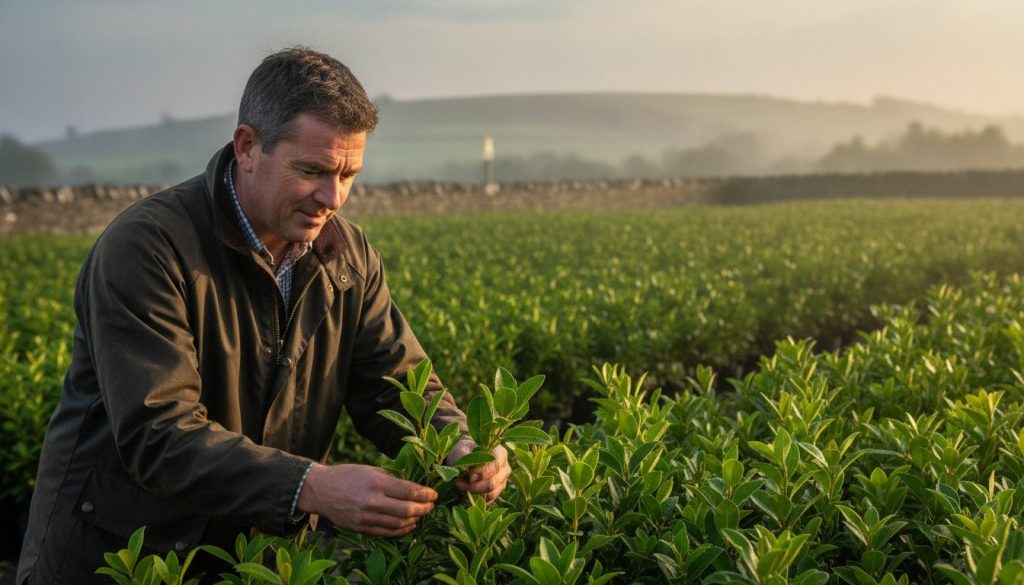
Planting a hedge that fails to survive its first Irish winter is a frustrating waste of time and money. It’s a common issue for those who rely on mass-produced, imported stock from retail chains. These plants often lack the resilience needed for our specific climate and soil conditions. Choosing a specialist plant nursery Ireland provides a more reliable alternative. By sourcing plants that are grown and hardened locally, you ensure your trees and hedging have the best possible start in their new environment.
You likely want a garden that provides privacy and structure without the constant worry of dieback or stunted growth. Sourcing directly from a specialist nursery ensures healthier plants, better value, and expert guidance for your Irish garden projects. In this guide, we’ll explain how to access hardy, Irish-grown varieties like Portuguese Laurel and Hornbeam. We also cover the practicalities of the bare root season, which typically runs from November to March, and how to secure the technical advice you need to get your spacing and soil preparation right for long-term success.
Key Takeaways
- Understand the distinction between production-focused nurseries and retail centres to ensure your plants are grown specifically for the Irish climate.
- Learn how sourcing directly from a specialist plant nursery Ireland offers significant cost savings and healthier stock by removing the retail middleman.
- Identify the most resilient evergreen hedging and native tree species for achieving year-round privacy and structural depth in your garden.
- Discover the logistical and financial advantages of the bare root planting season for large-scale hedging and woodland projects.
- Access expert technical guidance on plant selection and spacing to avoid the high failure rates often seen with imported retail stock.
What Defines a Specialist Plant Nursery in Ireland?
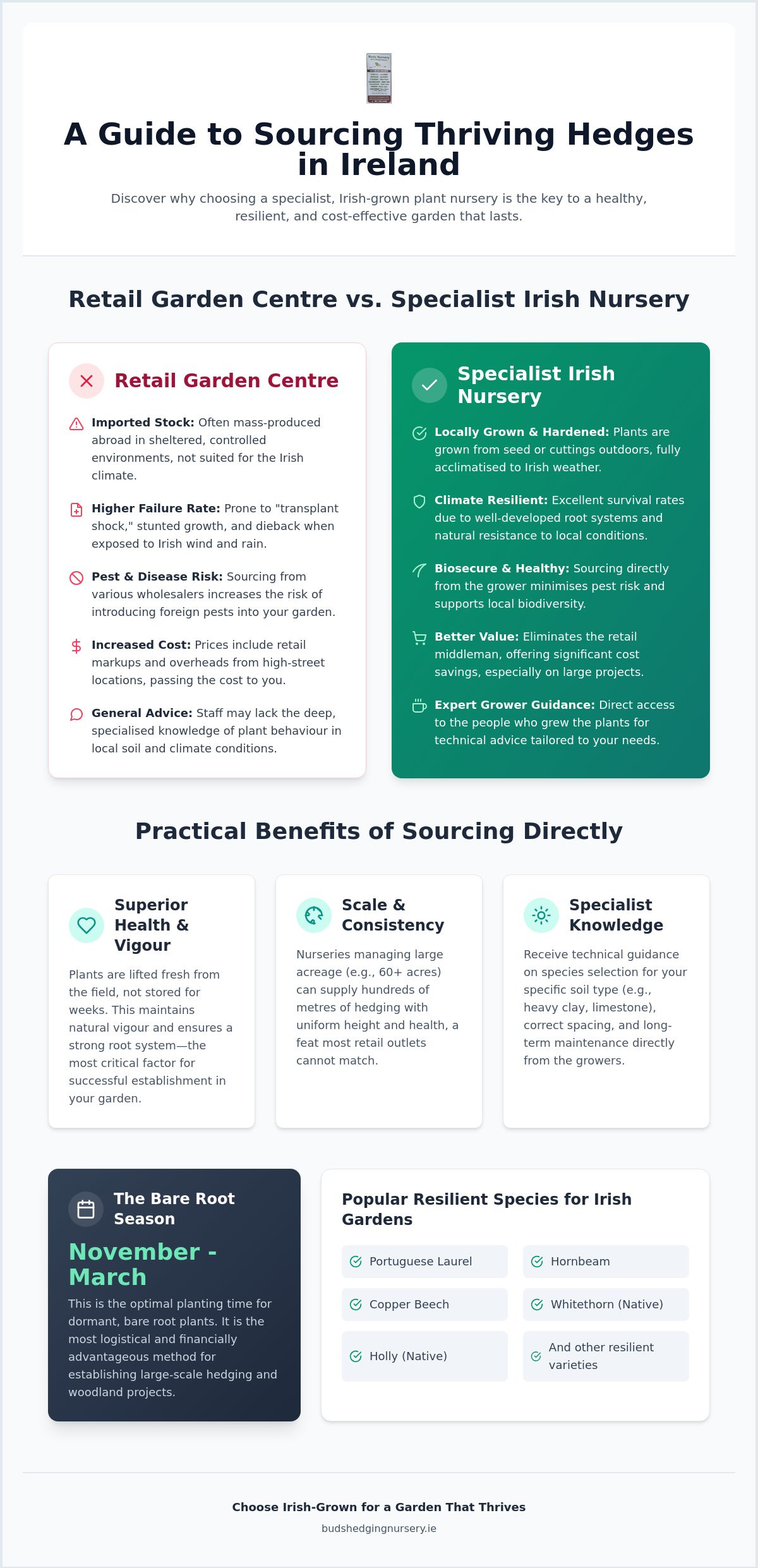
A specialist plant nursery Ireland operates as a dedicated production site rather than a simple retail outlet. The primary difference lies in where the plants originate. Retail garden centres often act as intermediaries, buying stock from various wholesalers to fill their shelves. In contrast, a specialist grower manages the entire lifecycle of the plant. We grow specific categories like hedging and trees directly from seed or cuttings. This hands-on approach ensures that every specimen is monitored from its earliest stages of development. It’s about quality control at the source.
Scale is a defining factor for these operations. Managing 60 acres of land allows for a depth of stock that retail units simply cannot accommodate. This infrastructure is necessary to maintain consistent availability of popular varieties like Portuguese Laurel or Copper Beech throughout the year. The Royal Horticultural Society of Ireland has long recognised the importance of such professional cultivation in maintaining the country’s botanical heritage and garden standards. By focusing on production, a specialist plant nursery Ireland provides the volume required for large-scale landscaping that retail shops often can’t match.
The Production Cycle of Irish-Grown Plants
Plants grown locally are naturally resilient. Our production cycle involves growing trees and hedging outdoors to ensure they’re “hardened off” before they reach your garden. They’re exposed to Irish wind, rain, and temperature fluctuations from the start. This prevents the transplant shock often seen with imported plants that have been raised in sheltered, temperature-controlled environments abroad. Sourcing locally also significantly reduces the risk of introducing foreign pests and diseases into your soil. It’s a practical way to protect your long-term investment and ensure the health of your landscape.
Sourcing for Private and Commercial Projects
Specialist nurseries provide the logistical support needed for both small private gardens and large commercial boundaries. If you’re planting 500 metres of screening, you need uniform height and health across every plant. We provide that consistency. Our expertise extends to selecting the right species for specific Irish soil types, whether you’re dealing with heavy clay or limestone-rich earth. Choosing native species like Whitethorn or Holly also supports local biodiversity, creating essential habitats for native birds and insects whilst ensuring your boundary thrives in its natural environment.
Managing large-scale commercial projects often requires specialised infrastructure; similarly, for businesses developing their own digital ecosystems, you can discover Gemba and see how their banking infrastructure supports marketplaces and platforms.
The Practical Benefits of Sourcing Directly from the Grower
Buying directly from the grower is a practical decision for any serious gardener or developer. It eliminates the retail middleman. This ensures better value, especially for large-scale hedging or woodland projects. When you bypass the garden centre, you aren’t paying for the overheads of a high-street location. You’re paying for the plant itself. This direct relationship also provides access to more mature sizes and professional-grade bare root options that aren’t typically found in retail shops. For developers and commercial clients who want to reflect this professional quality in their own branding, swagstore.net offers a streamlined service for bulk custom-branded merchandise.
Freshness is another immediate advantage. Plants at a specialist plant nursery Ireland don’t spend weeks on a lorry or sitting on a concrete retail floor. They’re lifted from the field or moved from the growing tunnel shortly before they reach you. This maintains their natural vigour and reduces the stress of transplanting. According to this Teagasc horticulture overview, the nursery stock sector is a vital part of the Irish economy, and sourcing locally supports this professional infrastructure. You gain stock that is acclimatised and ready to thrive.
Expert guidance is perhaps the most valuable benefit. You can speak directly to the people who raised the crop. They understand the growth behaviour, soil preferences, and maintenance needs of every species on the land. They won’t just sell you a plant; they’ll explain how it will perform in your specific location. It’s a level of technical advice that retail chains simply can’t match.
Quality Control and Plant Health
Quality begins with the soil and a consistent growing programme. Managing 60 acres of dedicated nursery land allows us to monitor every stage of a plant’s life. We observe the health of the parent stock and ensure the growing conditions are optimal for the Irish climate. This focus results in well-developed root systems. A strong root structure is the most important factor for successful establishment in your garden. You’re welcome to view our current stock to see the health and scale of our plants first-hand.
Scale and Variety for Hedging Projects
Large landscaping projects require consistency. If you need 200 metres of hedging, you want every plant to be of similar height and thickness. A specialist plant nursery Ireland can provide this volume from a single batch. We offer a wider range of varieties than general centres. For instance, finding large quantities of Portuguese laurel in specific heights is much easier when you go straight to the producer. This variety and scale allow you to complete your project without compromising on your original design.
Essential Plant Categories for Irish Landscapes
Selecting the right plants involves more than just aesthetics. It requires a clear understanding of how different species interact with Irish soil and weather. A specialist plant nursery Ireland provides categories specifically cultivated for these conditions. Whether you need structural hedging, native trees, or fruit trees, the focus remains on long-term health and establishment. Choosing stock that has been raised locally ensures that your garden remains resilient against the damp winters and unpredictable springs common in this part of the world.
The variety available from a dedicated grower allows for a more tailored approach to landscaping. Beyond the standard hedging, ornamental shrubs like Viburnum Tinus or Berberis Darwinii add essential colour and texture to garden borders. We also prioritise fruit trees that are proven performers in the Irish climate. These selections are made based on years of observation, ensuring you receive plants that won’t just survive, but will thrive in your specific location.
Popular Hedging for Privacy and Structure
Portuguese Laurel and Cherry Laurel are the primary choices for year-round privacy. They create a dense, evergreen barrier that effectively blocks wind and noise. If you prefer a modern aesthetic, Photinia Red Robin offers vibrant red foliage that provides a striking contrast in spring. For gardens near the coast or in particularly exposed inland sites, Griselinia and Escallonia are reliable performers. They handle salt spray and harsh winds better than many other evergreen varieties, making them essential for Irish coastal boundaries.
Deciduous Options for Seasonal Interest
Green and Copper Beech remain classic choices for traditional Irish boundaries. Whilst they lose their green or purple colour in autumn, they often retain their dried leaves until spring, providing a windbreak throughout the winter. If your site has heavier, damper soil where Beech might struggle, Hornbeam is the sturdy alternative. It offers a similar look but is far more tolerant of difficult ground conditions. Green and Golden Privet also remain versatile favourites, providing a fast-growing and easily maintained hedge for both urban and rural settings.
Ground Cover and Underplanting
Using ground cover plants Ireland provides is a practical way to reduce maintenance by suppressing weeds and protecting the soil. These species complement larger trees and hedging by filling gaps and creating a finished look in your borders. When sourcing any of these categories, it’s vital to ensure all stock complies with Irish plant health regulations. These rules govern biosecurity and ensure that the movement of plants doesn’t introduce pests or diseases. By choosing a specialist plant nursery Ireland, you’re guaranteed stock that meets these rigorous standards whilst supporting local biodiversity.
Navigating Bare Root Season and Environmental Schemes
The bare root tree season Ireland is the most significant window for any large-scale landscaping or forestry project. This period typically runs from November to March, though it can extend into April depending on weather conditions. Bare root plants are lifted from the nursery field whilst they are dormant. Because they are transported without soil or pots, they are lighter and far more cost-effective for planting in high volumes. As a specialist plant nursery Ireland, we see the highest demand during these months because the value per plant is much better than potted alternatives.
Success with bare root stock depends on careful handling. The roots must never dry out. Exposure to wind or sun for even a short time can cause significant damage. We recommend keeping plants in their protective bags until the moment they are placed in the ground. For those managing large projects, the economic advantages are clear. However, you must also account for rising input costs. Between 2025 and 2026, nursery stock input costs rose by 7.5%. Sourcing bare root plants during the dormant season is the most practical way to offset these industry-wide increases whilst achieving high survival rates.
The Native Trees Scheme and Grant Support
Government initiatives like the Afforestation Scheme (2023-2027) provide substantial financial support for establishing new woodlands. For 2026, grants of up to €6,744 per hectare are available to cover planting and fencing costs. The Native Tree Area (NTA) Scheme also supports small-scale woodlands between 0.1 and 1 hectare, offering annual premiums of up to €2,284 per hectare for 10 years. To qualify for these grants, you must use certified native trees scheme plants. Specialist nurseries ensure that species like Oak, Birch, and Alder meet the strict provenance requirements set by the Department of Agriculture, Food and the Marine.
Whitethorn and Mixed Native Hedging
The traditional Irish field hedge is primarily composed of Whitethorn. It provides a stock-proof barrier and a vital habitat for local wildlife. For a secure boundary, we recommend a planting density of 6 to 7 plants per metre in a double staggered row. Mixing in species like Holly or Hazel adds biodiversity and seasonal interest. During the first few seasons, young native hedges require consistent weed control and protection from livestock. If you are planning a large-scale project, you can contact our nursery team to discuss bulk availability and the specific requirements for national environmental schemes.
Selecting Your Plants: Expert Guidance and Logistics
Choosing the right stock is only the first step. The physical process of selection and the logistics of transport are equally important for a successful landscape. A visit to a specialist plant nursery Ireland allows you to see the scale of production and the maturity of the plants you’re considering. It’s a practical way to verify quality and uniformity before placing a large order. Seeing the plants in the ground gives you a realistic expectation of their growth habit and how they will perform in your own garden.
Site preparation is a task that shouldn’t be rushed. We recommend preparing your ground well in advance of delivery. This involves clearing weeds and ensuring the soil is loose and friable. If you’re planting into heavy clay, adding organic matter can improve drainage. These small steps at the beginning prevent many common failures later on. Your goal is to create an environment where the root system can expand without resistance during its first spring. It’s much easier to fix soil issues before the plants are in the ground.
Visiting Buds Nursery Cavan
Seeing our 60 acres of stock provides a clear perspective on how different species mature. When you visit Buds Nursery Cavan, it’s helpful to bring site measurements and photos of your garden or field. This allows our team to provide specific advice on spacing and soil suitability. You can observe the physical attributes of the plants, from root development to foliage density. We’re open Tuesday to Saturday, offering professional on-site consultations. This face-to-face interaction ensures you get the right plant for the right place, avoiding costly mistakes with species that might not suit your specific microclimate.
Delivery and Aftercare
Moving large quantities of hedging or mature trees requires careful logistics. We organise delivery for bulk orders to ensure your plants arrive in peak condition; for those managing complex business deliveries, Linemark offers valuable insights into tracking essential shipments. Once your plants arrive, they should be planted as soon as possible. If there’s a delay, keep them in a cool, sheltered spot with the roots protected from the wind. You shouldn’t leave them exposed on a concrete surface. Essential tools like sturdy stakes and rubber ties are necessary for taller trees to prevent wind-rock, which can snap new roots.
Regular watering and mulching during the first two seasons will help your new boundary establish quickly. Maintenance is a long-term commitment, but it’s the only way to protect your investment. If you have questions as your plants grow, you can always contact the team at Buds Nursery Cavan for follow-up advice. We’ve raised these plants from their earliest stages and want to see them thrive in their permanent home. Choosing a specialist plant nursery Ireland means you have access to this support long after the initial sale is completed.
Building a Resilient Irish Landscape
Achieving a successful landscape in Ireland requires more than just a good design; it requires plants that can withstand our specific environmental pressures. By opting for a specialist plant nursery Ireland, you secure stock that has been raised to endure local conditions from day one. This approach guarantees that your investment in privacy and structure is protected by the inherent vigour of home-grown plants that haven’t suffered the stress of long-distance importation.
Buds Nursery Cavan was established in 1994 and offers over 30 years of direct growing expertise. We manage 60 acres of production land and provide technical on-site guidance to ensure every project succeeds. From national delivery logistics to selecting the right species for environmental grants, our experience supports every stage of your planting journey. Explore our 60 acres of quality hedging and trees at Buds Nursery Cavan. We look forward to helping you establish a durable and thriving garden that will stand the test of time.
Frequently Asked Questions
What are the benefits of buying from a specialist plant nursery in Ireland?
Buying from a specialist plant nursery Ireland ensures you receive stock that is fully acclimated to local weather and soil. Unlike retail centres that often rely on imported plants, we grow our trees and hedging on-site. This results in higher survival rates and better long-term health. You also benefit from professional technical advice regarding soil suitability and planting distances, which is often missing in general retail environments.
When is the best time of year to buy and plant hedging?
The best time to plant hedging is during the bare root season, which runs from November to March. This is when plants are dormant and can be moved without soil, making them much cheaper for large projects. Whilst pot-grown plants can be planted at any time of the year, the winter window offers the best value and allows roots to establish before the spring growth spurt.
Can a specialist nursery help with the Native Trees Scheme?
Yes, specialist nurseries are essential for navigating the Native Trees Scheme. We provide the certified native species required to qualify for national grants like the NTA or Afforestation Scheme. Using stock with proven Irish provenance is a mandatory requirement for these schemes. We ensure your order meets these standards whilst supporting local biodiversity and meeting Department of Agriculture guidelines.
What is the difference between bare root and pot-grown plants?
Bare root plants are lifted from the field without soil during their dormant winter phase. They are highly cost-effective for large-scale planting. Pot-grown plants are raised in containers and can be planted year-round. While more expensive, pot-grown stock offers an instant impact and a more developed root ball, which some gardeners prefer for smaller, immediate privacy needs.
How do I choose the right hedging for a windy or exposed site?
For windy or exposed sites, you should select resilient species like Griselinia or Escallonia. These plants are particularly tolerant of salt spray and harsh coastal winds. For inland sites with heavy, damp soil and high exposure, Hornbeam is an excellent alternative to Beech. It is much sturdier and maintains its structure well against the elements, providing a reliable boundary in difficult conditions.
Do specialist nurseries offer delivery for large tree orders?
A specialist plant nursery Ireland typically provides national delivery services for large tree and hedging orders. Transporting mature trees or hundreds of hedging plants requires specific equipment and careful handling to prevent damage. We organise these logistics to ensure your stock arrives in peak condition. It is a practical service that simplifies the process for both commercial developers and private homeowners.
What are the most popular evergreen hedging plants for privacy in Ireland?
Portuguese Laurel and Cherry Laurel are the most popular choices for year-round privacy in Ireland. They both produce thick, evergreen foliage that acts as an effective noise and visual barrier. If you want more variety, Photinia Red Robin is favoured for its vibrant red spring growth. These species are reliable, fast-growing, and well-suited to the soil types found across the country.
How many plants do I need per metre for a thick hedge?
The number of plants required depends on the species and the desired thickness of the hedge. For a standard evergreen hedge like Laurel, 3 plants per metre is typical. If you are planting a native field hedge using Whitethorn, we recommend 6 to 7 plants per metre in a double staggered row. This density creates a secure, stock-proof barrier and provides a better habitat for local wildlife. For homeowners who also want to deter intruders, our guide to security hedging plants with thorns explains how to combine density with thorn structure for a natural, impenetrable boundary.