

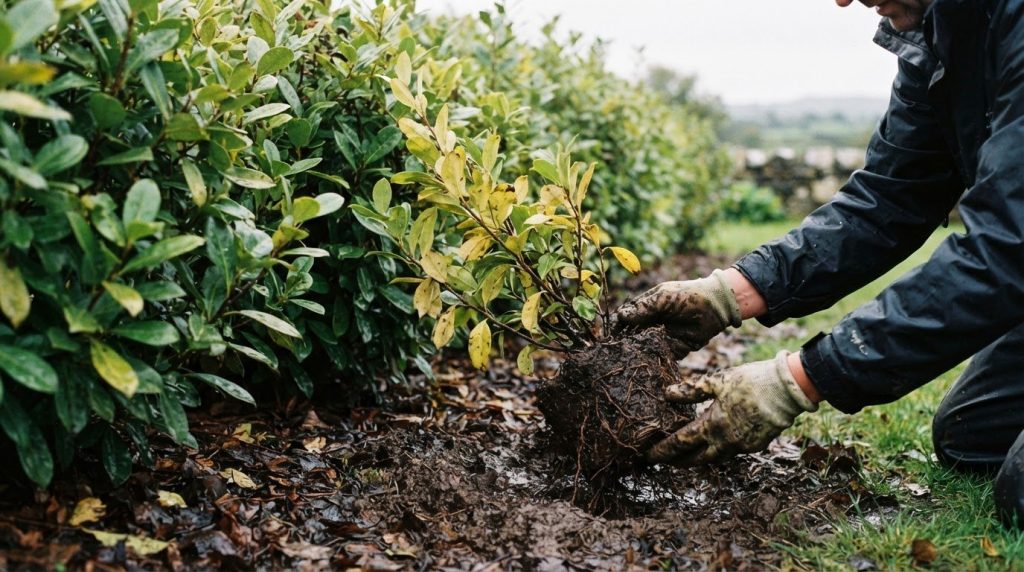
If you’re trying to understand why your Griselinia is dying, check the roots and soil before assuming pests are to blame. Waterlogged soil can cause root rot, while drought, frost and wind can also stress a hedge. Pests may contribute too: vine weevil larvae can feed on roots, and aphids can curl or pucker young leaves.
It’s understandable to suspect insects when a hedge looks unhealthy, but the pattern of damage and the soil conditions can point to other causes. Yellowing, wilting and dieback offer useful clues, especially if the decline is spreading along the hedge or follows wet weather.
This article explains how to recognise possible root rot, distinguish common stress factors from pest damage and decide what to do next. You’ll also learn why drainage matters, how planting depth and watering affect young plants, and when a badly affected section may need replacing.
Key Takeaways
- Read the pattern of yellowing, wilting or dieback to narrow down whether the cause may be pests, disease or growing conditions.
- Look for dark, soft, sparse roots and persistently wet ground as warning signs of root rot; rapid decline across several plants calls for a closer diagnosis.
- Improve drainage before replanting in a problem area, as new plants can struggle if the ground remains saturated.
- Consider drought, frost, wind and planting stress alongside pests when deciding what your hedge needs next.
Why is my Griselinia hedge turning yellow?
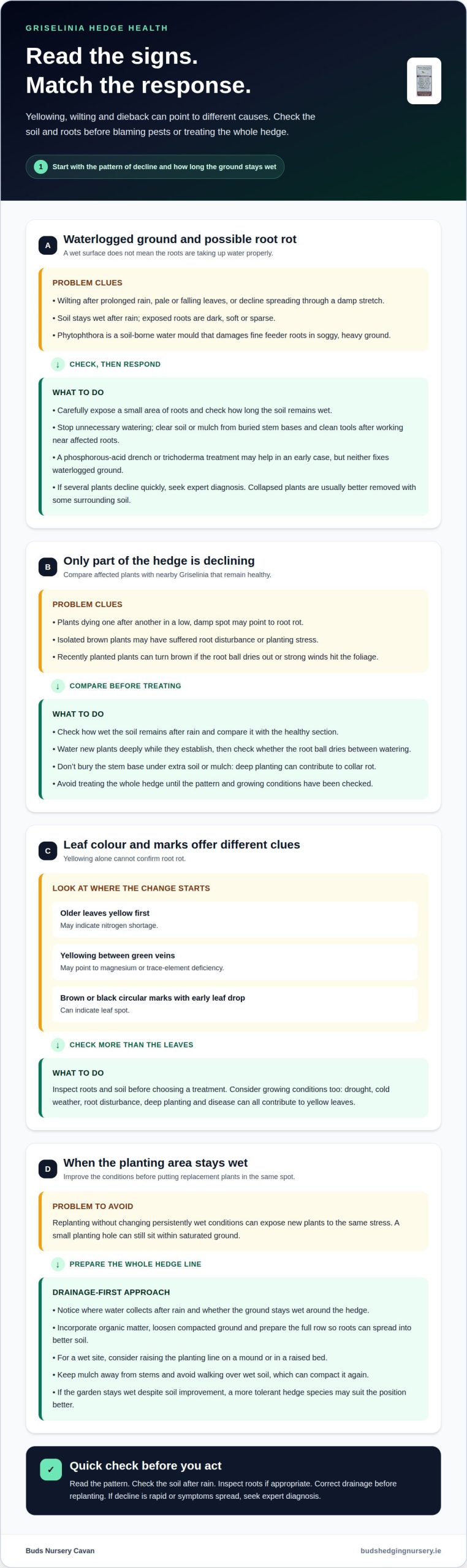
Yellow leaves can result from waterlogged roots, drought, nutrient deficiency, root disturbance, deep planting, cold weather or disease. The pattern matters: plants yellowing one after another in a low, damp stretch suggest a different problem from a newly planted hedge turning brown.
Check which leaves change colour first. Yellowing that starts on older leaves can indicate nitrogen shortage, while yellowing between green veins may point to magnesium or trace-element deficiency. Brown or black circular marks and early leaf drop can indicate leaf spot. In a first-year hedge, a dry spell can leave plants thirsty even if the ground below the surface seems moist.
Individual plants dying within a hedge
If one or several plants decline while neighbouring Griselinia stay healthy, compare the affected and healthy sections. Plants dying one after another in a low, damp spot may point to root rot, while isolated brown plants may have suffered root disturbance or planting stress. Check how wet the soil remains after rain before treating the whole hedge.
Recently planted Griselinia can turn brown if the root ball dries out or strong winds hit the foliage. Water new plants deeply while they establish, then check whether the root ball dries between watering. Deep planting can also contribute to collar rot, so don’t bury the stem base under extra soil or mulch.
Seeking diagnosis or replacing plants
Seek expert diagnosis if several Griselinia decline quickly or symptoms spread despite correcting obvious watering problems. Root rot can cause pale or falling leaves because damaged roots struggle to take up water. If most of the root system has rotted, replacement may be more practical than trying to nurse the plant back.
Remove dead hedge sections with as much of the root system as possible, and dispose of diseased material rather than composting it. Before replanting Griselinia in wet ground, address drainage; a more tolerant hedge species may be more reliable in a persistently wet spot. Replanting without changing the conditions can expose new plants to the same stress.
Phytophthora and root rot
Phytophthora is a soil-borne water mould that rots Griselinia’s fine feeder roots in soggy, heavy ground. Prolonged waterlogging can kill plants by preventing roots from taking up water properly.
Recognising root rot symptoms
Root rot is root decay that leaves a plant unable to take up enough water, even when the soil is wet. Look for wilting after prolonged rain, pale or falling leaves, and decline spreading through a damp section of hedge. Carefully expose a small area of roots: dark, soft or sparse roots, alongside soil that stays wet, strengthen the suspicion. Yellowing alone can also indicate nutrient deficiency, so inspect the roots and soil before choosing a treatment.
Waterlogged soil and root damage
Waterlogged or poorly drained ground can kill Griselinia because Phytophthora thrives in soggy, heavy soil and damages fine feeder roots. As those roots decay, the plant may wilt despite wet soil. Adding more water to a wilting plant in saturated ground can worsen the conditions driving the decline. Consider how long the soil stays wet after rain, not just how it looks on the surface.
Treating root rot and supporting recovery
If you suspect root rot, stop unnecessary watering, clear soil or mulch from buried stem bases, and clean tools after working near affected roots. A phosphorous-acid drench or trichoderma treatment may help in an early case, but neither will solve the problem if the ground remains waterlogged. Biochar-based plant food may support soil structure and root recovery around the affected area. Plants that have collapsed are usually better removed with some surrounding soil; a soil sample can help establish whether root rot is responsible.
Checking whether a plant can recover
To check whether a Griselinia is still alive, inspect several stems for living tissue beneath the bark and look for firm roots rather than dark, soft decay. A little green tissue doesn’t mean the plant will recover if most feeder roots have rotted. To revive a declining hedge, correct drainage first, remove collapsed plants and avoid unnecessary watering. If root rot is confirmed, replace affected soil with fresh topsoil before replanting; otherwise, new roots may face the same wet conditions.
Improving soil and drainage
Griselinia can grow in clay, chalk, sand or loam, but the soil must drain well. Cold, saturated soil over a prolonged period can damage roots and leave an evergreen hedge struggling. Before changing the planting area, note where water collects after rain and whether the soil stays wet around the hedge. A low spot beside a path or at the bottom of a slope may need different preparation from free-draining ground.
For a wet site, improve drainage before planting or replacing Griselinia. Incorporate organic matter to improve soil structure, and consider raising the planting line on a mound or in a raised bed. Free-draining material can help lift roots above persistently wet ground. The aim is to give excess water somewhere to go, rather than creating a planting trench that holds it around the roots.
Compacted ground can also slow drainage. Loosen the planting area before replanting, and avoid compacting it again by walking over wet soil. Prepare the whole hedge line, not just individual planting holes, so roots can spread into better soil. If water remains pooled after rain, a small hole filled with improved soil may still sit within a saturated area.
Keep mulch away from Griselinia stems so damp material doesn’t remain against the base. If a hedge has failed, don’t replant in the same spot until drainage has clearly improved. Otherwise, new plants may face the same conditions. If the garden stays wet despite soil improvement, consider whether a more tolerant hedge plant would suit the position better.
Prepare the soil before adding replacement plants. Check how the ground behaves after rain, improve the full row, then plant each replacement at the same depth it sat in its pot. This helps keep stem bases uncovered while giving roots a better-drained growing area.
Stress factors that contribute to hedge decline
Common causes of a declining Griselinia hedge include waterlogged or compacted soil, prolonged drought, severe frost and cold, drying winds, pests or disease. If you’re asking, “Why is my Griselinia dying?”, compare the damage pattern with recent weather and growing conditions. A problem affecting the whole row may have a different cause from damage limited to exposed growth.
Water and sunlight needs
Griselinia needs moisture to establish, but its roots also need well-drained ground. Water newly planted plants deeply as they establish, adjusting for rainfall and soil moisture. Established hedges may suffer during prolonged dry spells, so check the soil around the roots before watering. Plant in full sun or partial shade, and consider whether cold, drying winds reach the foliage. These conditions can help explain why your Griselinia is dying even when nearby plants look healthy.
Pruning and preventing hedge problems
Regular care keeps hedges open to air and easier to inspect. Prune Griselinia once a year, from late spring to early summer, and avoid high-nitrogen fertiliser before cold weather. It can encourage soft growth that is more vulnerable to frost. If leaf spot appears, improve airflow and avoid overhead watering, which keeps foliage damp.
After frost, check shoot tips for blackening and dieback, especially on the exposed side. Wind scorch tends to brown outer leaves, leaving their edges dry and brittle. These patterns help distinguish weather stress from a problem affecting roots or the whole plant. Avoid digging around the base, as this can disturb roots already under pressure.
Remove dead hedge sections with as much of the root system as possible. Dispose of the material rather than adding it to compost, particularly if disease may be involved. In a persistently wet site, consider a hedge species better suited to those conditions. Planting another Griselinia without addressing the ground can repeat the problem.
For advice on selecting a replacement hedge, explore suitable hedge options for your garden’s conditions.
Buds Nursery Cavan: Griselinia
Buds Nursery Cavan offers Griselinia for gardeners replacing dead or declining hedge plants. Before replanting, make sure the cause of the decline has been addressed, particularly if the ground stays wet after rain. Otherwise, replacement plants may face the same stress.
If your site is too wet for Griselinia, Portuguese Laurel, Cherry Laurel and Golden Privet are other hedge options to consider. The right choice depends on your garden’s conditions and the type of hedge you want. Matching the plant to the site is a practical next step after diagnosing the problem.
Contact Buds Nursery Cavan to discuss Griselinia or these alternative hedge plants for your garden.
Choose a hedge that suits your garden
If you’re still asking why your Griselinia is dying, use the opportunity to reconsider what will suit the planting site. Replacing it with the same type makes sense only if you’ve addressed the conditions that affected it. Consider how wet the ground stays, the hedge’s purpose and the level of ongoing care you can provide.
For a replacement, Portuguese Laurel, Cherry Laurel and Golden Privet are alternatives to consider. The best fit depends on your garden and the hedge’s purpose, so take those conditions into account before choosing plants.
Contact Buds Nursery Cavan for advice about Griselinia or alternative hedge plants. With the site and your needs in mind, you can make a considered choice and give the next hedge a sound start.
Frequently Asked Questions
Are Griselinia hedges affected by pests?
Yes. Vine weevil larvae can eat the roots of container-grown or recently planted Griselinia, while aphids may leave sticky honeydew on foliage and curl or pucker young leaves. Look closely at new growth and around the plant base for clues. Root damage and sticky leaves point to different problems, so note the symptoms before deciding on a suitable treatment.
Could it just be hungry, then?
It could. Yellowing that starts with the oldest leaves can indicate nitrogen shortage, while yellowing between green veins may point to magnesium or trace-element deficiency. A balanced spring feed and compost worked along the hedge base can help plants regain green colour over a season. Don’t use feeding as a substitute for investigating persistently wet ground or other signs of root trouble.
How do I tell root rot from a hedge that’s just hungry?
Check both the leaves and the roots. Nutrient-related yellowing can follow a pattern, such as older leaves paling first or yellow areas between green veins. Root rot is more likely if a plant wilts in wet ground and has dark, soft or sparse roots. If symptoms overlap or affect several plants, a soil sample can help establish whether root rot is involved.
Is Griselinia prone to problems, pests and diseases?
Griselinia can be affected by pests, fungal disease and unsuitable growing conditions. Leaf spot may cause brown or black circular marks, particularly where foliage stays moist in warm conditions. Aphids can distort young leaves, while vine weevil larvae may damage roots. Check whether symptoms affect new growth, individual leaves or whole plants; the pattern helps narrow down the likely cause.
Isn’t it just the wind, or the frost?
Wind or frost can cause visible damage, especially on exposed growth, but the pattern matters. Wind scorch tends to leave outer leaves brown-edged, dry and brittle. Frost may blacken soft new spring shoots, particularly on the exposed side. Griselinia is reliably hardy to -10°C, but a late hard frost can still damage fresh growth, which may later be shed.
What can I actually do about root rot?
Stop unnecessary watering and address the soil conditions; treatments alone won’t resolve waterlogging. Clear soil or mulch from buried stem bases and clean tools after working near affected roots. Phosphorous-acid drenches or trichoderma treatments may help early cases, but won’t cure the problem without better drainage. Remove collapsed plants with some surrounding soil, and replace affected soil if root rot is confirmed.