

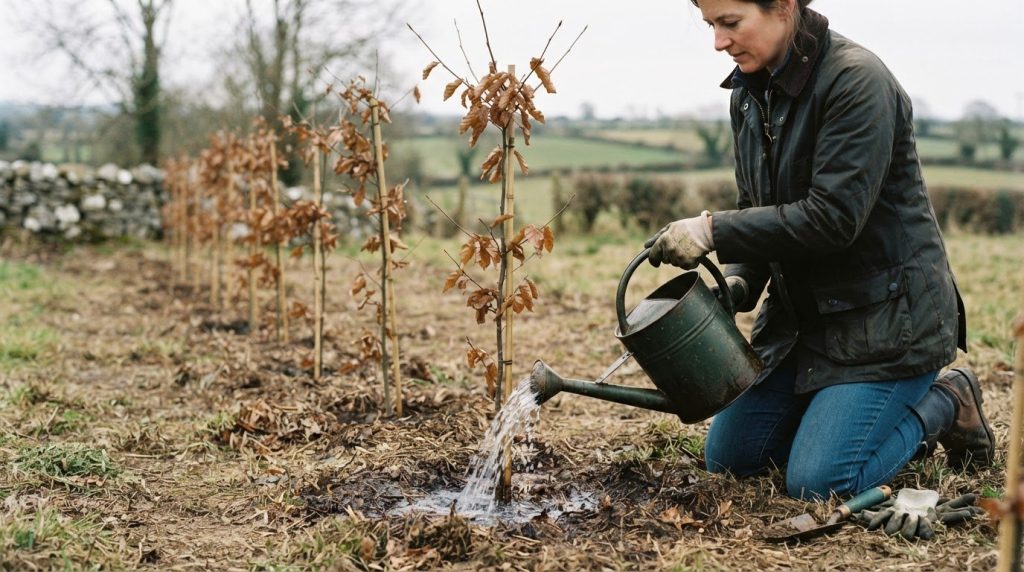
A brown beech hedge in winter isn’t necessarily a failing hedge. Good beech hedge winter care means watering young plants once a week during dry weather, using about one watering can per plant, and keeping the soil moist but not waterlogged. A newly planted hedge with sparse growth can be pruned in winter by shortening its leading and longer shoots by up to one third.
It’s easy to worry when a new hedge looks bare or its leaves turn brown, but beech can retain dead leaves through winter, providing some screening and shelter. This guide explains how to prune young hedges, water through dry spells and care for new plants over winter. It also covers what to expect from brown leaves and when they drop as new growth appears.
Key Takeaways
- Adjust watering to the weather and soil, keeping young beech moist without leaving roots in waterlogged ground.
- Give newly planted hedges extra attention through their first one or two seasons, especially during dry spells.
- Brown leaves can still provide winter screening; watch for them to drop as new growth appears in spring.
- Choose pruning timing and approach with the hedge’s age and growth in mind to encourage a fuller shape.
Watering during dry periods
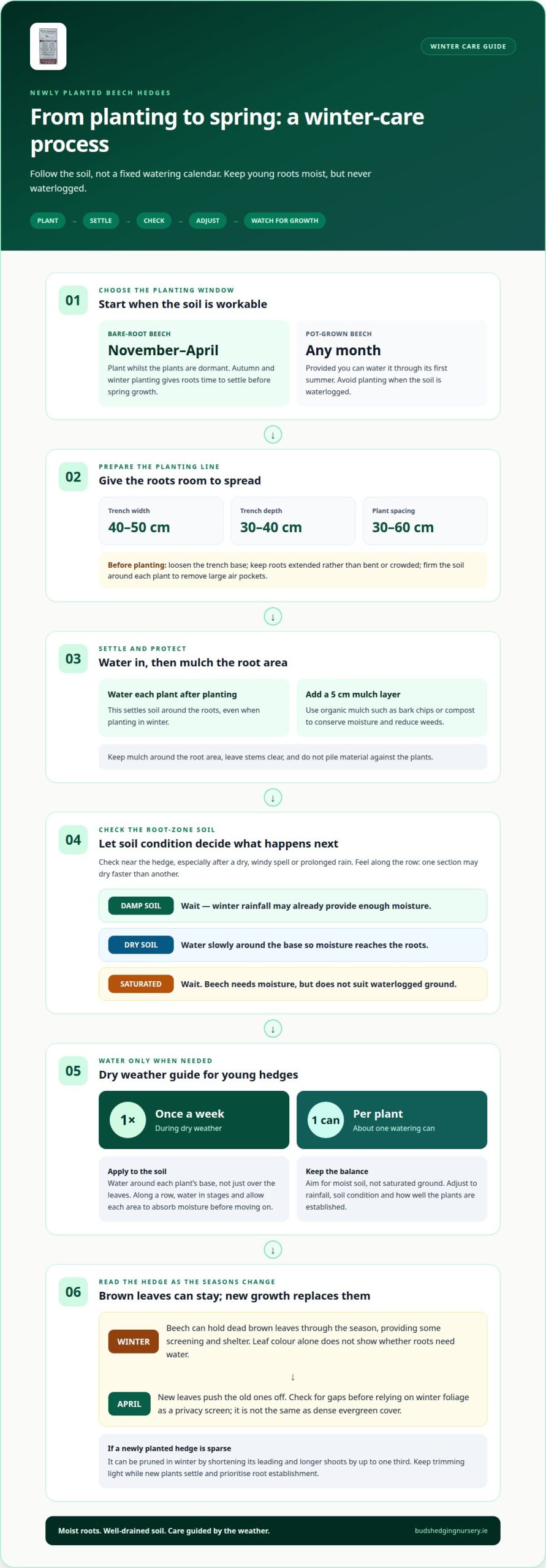
- Check the soil before watering, especially during a dry spell in summer, autumn or late winter. Feel the soil near the hedge rather than judging by leaf colour alone. If it remains moist, wait; if it has dried, water slowly around the base so moisture reaches the roots. This simple check helps avoid watering on a fixed schedule when conditions change.
- Water young beech hedges once a week during dry weather, using about one watering can per plant. Apply it to the soil around each plant, not just to the leaves. For example, water along the row in stages, allowing each area to absorb moisture before moving on. In prolonged dry periods, continue watering regularly to keep the soil moist.
- Keep the soil moist, not saturated. Beech prefers well-drained ground and does not suit waterlogged conditions. When excess water remains around the roots, they can become stressed and the hedge may struggle to establish. After heavy rain in February or late winter, check whether the ground is still wet before watering.
- Improve moisture retention without trapping excess water. Organic mulch such as compost can help conserve moisture and suppress weeds around the hedge. Keep the layer around the base, leaving the stems clear, and avoid piling material against the plants. In poorly draining soil, adding water or mulch over already wet ground can worsen waterlogging.
- Consider the hedge’s condition and the weather together. A young hedge with a small root system needs closer attention than established plants during a dry spell. Check the soil along the row, since one section may dry faster than another. Hedge height does not replace this check: water according to soil moisture, rainfall and the plants’ stage of establishment.
Winter watering for newly planted beech
- Plant bare-root beech hedging in Ireland between November and April, while plants are dormant. Autumn and winter planting gives roots time to settle before spring growth. Pot-grown beech can go into gardens in any month, provided you can water it through its first summer. Choose a period when the soil is workable, not waterlogged.
- Prepare the planting line before setting out the plants. Dig a trench around 40-50 cm wide and 30-40 cm deep, then loosen the base so roots can spread. Set plants about 30-60 cm apart, keeping their roots extended rather than bent or crowded. Firm soil around each plant to remove large air pockets.
- Water each plant after planting, even in winter, to settle soil around its roots. Add a 5 cm layer of organic mulch, such as bark chips or compost, to conserve moisture and reduce weeds. Keep mulch around the root area, not pressed against stems. This helps young hedging establish without encouraging persistently wet conditions.
- Water newly planted beech during its first seasons. In winter, rainfall may supply enough moisture, so assess the soil before watering. During dry spells in spring or summer, water regularly so the roots do not dry out. Focus on the root zone; wetting foliage is no substitute for moisture reaching the soil.
- Check the ground after a dry, windy spell and again after prolonged rain. If the soil around the roots is dry, water slowly; if it is saturated, wait. Beech needs moisture to establish but dislikes waterlogged ground. Unlike evergreen hedging, beech may hold brown leaves through winter, so leaf colour alone doesn’t show whether the roots need water.
- Keep trimming light while new plants settle. Prioritise root establishment and moisture through winter, then maintain watering if early spring brings dry weather. Consistent care through the first seasons supports healthy growth; adjust watering to rainfall, soil condition and exposure rather than following a rigid calendar.
Winter screening from retained brown leaves
Use the winter leaves as seasonal cover, but assess how much screening the hedge actually provides. Check its foliage and branches before relying on it for privacy.
-
Understand retained brown leaves
Look along the hedge in winter and note where brown leaves remain attached to the branches. Beech commonly holds dead leaves through the season, creating a screen and shelter even when the foliage has lost its green colour. The cover comes from leaves retained on the stems, not fresh winter growth. New leaves push the old ones off in April.
-
Recognise winter screening limitations
Assess the hedge from the angle where you need privacy, then look for gaps between branches. Brown leaves can soften views through a beech hedge, but they don’t form the same solid screen as dense evergreen foliage. Wind, sparse growth and gaps near the base can all reduce cover. Treat retained leaves as useful seasonal screening, not a complete barrier.
- Check the hedge again as winter progresses. Some sections may hold leaves more densely than others, so a view screened from one position might remain visible from another. Look through the hedge at eye level and lower down, especially beside paths or garden boundaries. Note bare patches and assess them again after April, when new growth replaces the old leaves.
- Before trimming branches, inspect the hedge for active nests, including outside the main growing season. Cutting can disturb nesting birds, so leave any occupied area undisturbed. Plan shaping with the hedge’s structure in mind: a dense framework helps retain foliage, while unnecessary cutting can remove branches carrying leaves. Keep winter cover in mind when deciding what needs attention.
How often to water a beech hedge in winter in Ireland?
- Don’t use a fixed winter watering calendar. In Ireland, rain and soil conditions vary, so check the root zone before adding water. If the soil is damp, leave it; if it has dried during a prolonged dry spell, water slowly. Beech needs moisture, but its roots can suffer in waterlogged ground.
- For young hedges, use the dry-weather guide: water once a week, with about one watering can per plant. Apply this only when winter weather has left the soil dry. Rainfall may make watering unnecessary, so use the soil condition to decide. Spread water around the root area rather than pouring it against the stem.
- Pay closer attention to newly planted beech during its first one or two seasons. Its roots are still establishing, so prolonged dry periods need regular watering. Check several points along the hedge, as sheltered ground can dry differently from exposed sections. If the soil remains moist, wait rather than watering every plant automatically.
- After heavy rain, pause and assess drainage before watering again. Beech prefers well-drained soil, and saturated ground can deprive roots of the conditions they need. Avoid adding water to muddy, persistently wet soil. If only one part of the row is dry, water that section instead of soaking the entire hedge.
- Use leaf appearance as a prompt to inspect, not as a measure of whether to water. Beech can retain brown leaves through winter, so colour alone doesn’t show whether the roots are dry. Check the soil, consider recent rainfall and adjust accordingly. This practical approach to beech hedge winter care avoids both neglect during dry spells and excess water.
If you’re planning a new hedge, explore beech hedging plants suited to your garden.
Buds Nursery Cavan
Buds Nursery Cavan is a practical next step if you’re planning a hedge or considering alternatives for your garden. The winter care advice above can help you look after established and newly planted beech; choosing plants suited to your planting needs is the next decision.
The nursery offers a range of hedging and tree options, including Portuguese Laurel, Cherry Laurel and Golden Privet, as well as fruit trees. These choices suit different garden purposes, so consider the type of cover and planting you want before deciding. Visit Buds Nursery for on-site guidance and to explore its plant range.
For help with your planting plans, contact Buds Nursery Cavan.
Plan the next stage of your hedge
Use the quieter winter months to consider what you want the hedge to do in the seasons ahead. A clear aim, such as defining a boundary or adding shelter, can guide decisions about its shape and the space around it. Keep notes on changes in growth and coverage, so future care responds to the hedge rather than relying on guesswork. Good beech hedge winter care develops over time through steady observation and adjustments that suit the plants and garden.
If you’re planning a new planting or weighing up suitable hedging options, speak with a nursery before settling on a choice. The right plants depend on the role you need them to serve and the conditions in your garden. Contact Buds Nursery Cavan for advice and take the next step with a clear plan.
Frequently Asked Questions
How Do I Keep My Hedge Healthy?
Keep the hedge healthy by reducing competition and watching for signs of stress. Weed around young plants regularly, particularly during their first few years, so weeds don’t compete for water and nutrients. Inspect leaves and stems for aphids, scale insects or powdery mildew. If you spot a problem, identify the affected plants and sections before deciding what care they need.
How Should I Feed My Hedge?
Feed established hedges in spring, then repeat in mid-summer if needed. For a newly planted bare-root hedge bought in January or February, apply a light feed in April or May. A balanced fertiliser, such as 10-10-10 NPK, can be used in early spring. Apply hedge feed when rain is expected within a couple of days, so it can reach the soil.
When is the Best Time to Trim a Hedge?
In Ireland, plan routine hedge trimming for outside the bird-nesting period and check for active nests before cutting at any time of year. Hedge cutting is prohibited from 1 March to 31 August, subject to safety exemptions. For beech, late summer is generally suitable, but mid-September is a practical timing in Ireland. Avoid cutting if an active nest is present.
Should a beech hedge be pruned in winter, and when is the best time to cut it?
A young beech hedge with sparse growth can be pruned in winter or straight after planting. Shorten leading and longer shoots by up to one third to encourage branching. For routine shaping, aim for late summer and, in Ireland, wait until mid-September rather than cutting during the prohibited hedge-cutting period. Check carefully for active nests before any work.
Should mulch or compost be added around a beech hedge before winter?
Yes, organic mulch or compost can help protect the root area and limit weed growth. Spread it over the soil beneath the hedge, leaving a clear space around each stem. Avoid burying the base of the plants or covering low branches. A tidy, even layer is more useful than piling material against the hedge, where it can keep stems excessively damp.
Does a beech hedge need winter feeding or fertiliser?
No routine winter feed is needed while beech is dormant. Leave fertiliser until active growth resumes in spring, when nutrients can support new shoots. If bare-root hedging was purchased in January or February, wait until April or May for a light feed. Don’t use extra fertiliser to compensate for poor growth without first considering weeds, soil moisture and the hedge’s establishment.