

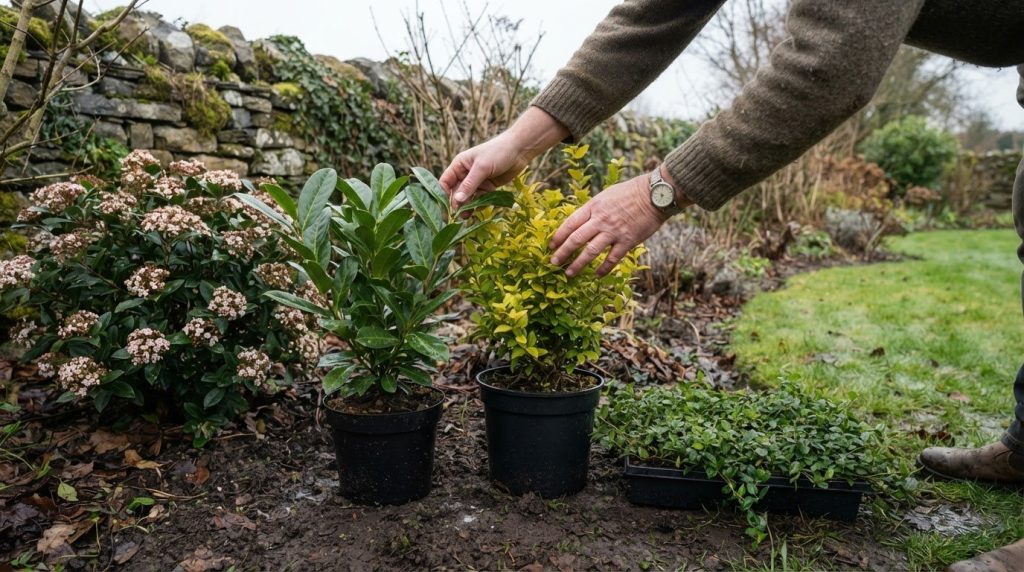
Winter needn’t mean a bare, scentless garden. For winter flowering shrubs in Ireland, consider sweet box, which produces scented white flowers from December to February, witch hazel, which blooms from January to March, or Viburnum × bodnantense ‘Dawn’, with fragrant pink flowers from midwinter onwards. These choices bring both scent and colour through the colder months.
It’s easy to focus on summer when planning a garden, but winter-flowering shrubs can give beds and borders interest when much else is dormant. This guide covers fragrant choices, plants suited to Irish gardens and award-winning options. You’ll also find a range of flower colours, flowering periods and growth habits to help narrow down what may suit your space. From small evergreen shrubs to taller varieties with flowers on bare branches, the right choice depends on the effect you want and the conditions in your garden.
Key Takeaways
- Match fragrance to the season you want to enjoy it, with options that flower from midwinter or through the colder months.
- Compare evergreen shrubs and plants that flower on bare branches to find the right kind of winter interest for your garden.
- Explore award-winning choices and consider how their growth habit and flowering period fit your planting space.
- Use the flowering calendar to plan a sequence of colour and scent, then consider suitable complementary plants for your garden.
1. Fragrant winter-flowering shrubs
For fragrance on bare branches, consider Viburnum × bodnantense ‘Dawn’. Its pink clusters appear from midwinter onwards, bringing colour to the winter garden. Daphne is another option: Daphne mezereum bears reddish-pink flowers along bare stems in late winter, followed by red berries. Daphne bholua flowers from late winter into spring, extending the season of interest.
Position fragrant daphne in a sheltered spot. Daphne ‘Jacqueline Postill’ prefers shelter, ideally in full sun, and can grow to 2.4 metres tall. Allow room for its eventual size, and avoid placing it where strong winds batter the blooms. Witch hazel adds a different effect, with scented red, orange or yellow flowers on bare branches before leaves emerge in spring. In Ireland, witch hazel blooms from January to March. Its bright yellow flowers can provide striking colour amongst dormant shrubs.
For sweet fragrance and yellow flowers, try wintersweet, Chimonanthus praecox ‘Grandiflorus’. It can reach 4 metres tall, so choose a position with space for a substantial shrub. Sweet box is a smaller-scale evergreen option, with small white winter flowers and a honey scent. These shrubs suit different garden layouts, from evergreen structure to flowers displayed against bare stems.
How much do winter-flowering shrubs cost at Irish garden centres? Prices vary by species, plant size and growing format, so compare plants on a like-for-like basis rather than relying on a single typical cost. To care for them, prune lightly after flowering, remove dead or crossing stems and retain the natural shape. Shelter tender growth and keep the root area clear of competing weeds.
Whether a shrub is invasive or toxic to pets depends on the species, not its flowering season. Identify each plant by its botanical name, and consider pet safety and invasive status separately before planting.
2. Winter-flowering shrubs and plants suited to Ireland
Mahonia × media ‘Charity’ provides evergreen structure and tall spires of yellow flowers. Bees visit the flowers, followed by blue-black berries. Its sculptural leaves add interest beyond the flowering season, making it useful where you want colour and foliage together. Erica carnea also flowers through winter, from December to March, and attracts early bees. To support pollinators in Ireland, look for flowers that provide a food source during colder months.
For fragrance, Sarcococca confusa produces scented white flowers from December to February in Ireland. Pieris japonica offers drooping clusters of white, bell-like blooms in late winter. At ground level, Cyclamen coum adds colour beneath evergreen shrubs. Winter jasmine flowers from December to March, according to the BBC, and gives a different flowering habit from compact shrubs.
Match each plant to its site. Hellebores thrive in shade and need well-drained, peat-free soil. Winter heathers need full sun to maintain a compact shape. Witch hazel prefers full sun and neutral to acidic soil for root establishment. A sheltered position protects flowers from exposure, while good drainage helps prevent roots sitting in wet soil. These conditions matter as much as flower colour.
Plant winter-flowering choices early enough to establish before the first frost. For timing, winter jasmine and mahonia are planted in spring or autumn; witch hazel suits late autumn or early spring. Apply mulch in autumn to help protect roots and retain soil moisture. To add structure around seasonal flowers, consider ground cover plants as part of the planting layout. Combine heights and flowering periods so yellow, white and orange tones appear across the winter garden.

3. Award-winning winter-flowering shrubs
An award label matters only when it applies to the exact cultivar named. A plant should not be described as award-winning simply because it flowers in winter. Compare the cultivar name and award scheme, then consider whether its flowering period, mature size and foliage suit your garden.
Several named cultivars offer useful features to compare. Bergenia ‘Winter Glow’ has evergreen leaves that turn rich red in cold weather, followed by pink flowers in late winter. Skimmia × confusa ‘Kew Green’ stays relatively compact, growing to 90 centimetres tall. These examples show how foliage and eventual size can matter alongside flowers, especially in a small border or container planting.
For flowers on bare branches, Salix ‘Mount Aso’ produces soft pink catkins in late winter. Helleborus orientalis has long-lasting blooms in cream, plum and green shades. Helleborus niger produces white winter flowers, while Erica carnea f. alba ‘Springwood White’ grows to 23 centimetres tall. Each offers a different form, from low heather to flowers that stand above ground-level foliage.
Consider the setting before selecting a cultivar. A compact plant such as ‘Springwood White’ can edge a path, while taller shrubs provide structure behind it. Evergreen shrubs retain their leaves through winter, contrasting with bare branches and seasonal blooms. Choose a position that suits the plant’s light and soil needs, and allow room for its mature spread.
For pollinators, Erica carnea flowers from December to March and attracts early bees. Mahonia ‘Charity’ also produces yellow flower spires visited by bees, followed by blue-black berries. These are useful winter features, but they do not establish an award. Compare cultivar names and award labels separately, then weigh them against colour, flowering season and growing requirements.
4. When do winter-flowering shrubs flower in Ireland?
Winter flowering in Ireland can begin in late autumn and continue into spring. Prunus Autumnalis Rosea flowers from late autumn to early spring in mild weather, bridging the gap between autumn colour and spring growth. Acacia dealbata also produces bright yellow flowers in winter and spring, adding a different colour to the seasonal display. A calendar of flowering periods can help you plan a border.
Some plants have a more defined flowering window. Winter heathers typically flower from December or January until March or April. Snowdrops can begin flowering in Ireland in January, offering an early sign of the changing season. Rosemary can produce delicate blue flowers throughout the colder months. Combining plants with different flowering periods helps maintain interest as one finishes and another begins.
Weather affects what flowers and when. Prunus Autumnalis Rosea flowers during mild weather, so its display may vary between winters. Winter heather also flowers over several months rather than reaching a single peak. Use the season as a guide and consider each plant’s position. A sheltered spot can make flowers easier to enjoy, especially near a path or doorway.
To plan a sequence, start with plants that flower in late autumn, such as Prunus Autumnalis Rosea in mild conditions. Add winter heather for colour from December or January, then snowdrops, which can begin flowering in January. Rosemary provides another option during the colder months. This approach combines shrubs, low-growing plants and flowers at different heights, rather than relying on one short display.
Use the flowering calendar to choose plants that suit the months you want to brighten. For a border with seasonal layers, plan your winter planting around flowering periods and available space.
Buds Nursery Cavan
Buds Nursery Cavan offers trees and shrubs to build structure around seasonal planting. Portuguese Laurel, Cherry Laurel and Golden Privet can provide an evergreen or leafy framework beside flowering plants. Fruit trees offer another way to add variety to the garden.
Turn to Buds Nursery Cavan when choosing plants to complement winter-flowering shrubs or develop the wider layout around a border. Match each plant’s mature size and growing conditions to its position, then consider how its foliage will sit alongside winter blooms. This helps create interest beyond the flowering season, without relying on flowers alone.
For help choosing plants for your garden, contact Buds Nursery Cavan.
Plan the next layer of your winter garden
Use your planting plan to connect winter colour with the garden’s structure through the rest of the year. Consider the view from paths and windows, and how shrubs will sit beside existing trees, borders and boundaries. This gives each new plant a clear place without crowding the flowers you’ve chosen.
For winter-flowering shrubs in Ireland, supporting plants can help shape the overall layout. Buds Nursery Cavan offers Portuguese Laurel, Cherry Laurel and Golden Privet to consider alongside flowering plants when planning garden structure. The right choice depends on the space available and the effect you want.
Take the next step by discussing suitable planting options for your garden. Contact Buds Nursery Cavan to plan a garden that gives winter blooms a considered setting.
Frequently Asked Questions
Why Choose Winter-Blooming Plants?
Winter-blooming plants bring flowers, fragrance and seasonal structure to the garden during its quieter months. They can also extend the period when pollinators find flowers, as Erica carnea attracts early bees. For a practical planting plan, combine shrubs with different shapes and flowering periods. This creates varied interest near a doorway, along a path or in a border viewed from indoors.
Which shrubs flower in winter in Ireland?
Several shrubs flower in Ireland between late autumn and early spring. Camellias bloom from late winter to early spring, while mahonia flowers from late autumn to early spring. Hellebores typically flower from late December through February. Winter jasmine adds another option, with flowers from December to March. Choose a mix with overlapping flowering periods to keep the display moving through the season.
What are the best winter-flowering shrubs for Irish gardens?
The best choice depends on the space, aspect and effect you want. Christmas box offers a compact evergreen option, while Viburnum × bodnantense ‘Dawn’ suits a garden with room for a taller plant. Camellia brings flowers towards spring. Compare mature size and preferred growing conditions first, then choose shrubs that suit the site rather than selecting by flower colour alone.
Which winter-flowering shrubs are evergreen and suitable for Ireland?
Christmas box, Sarcococca confusa, is a shiny evergreen shrub with scented winter flowers. Mahonia × media ‘Charity’ also retains its sculptural evergreen leaves through winter and produces flower spires. These plants provide foliage as well as seasonal blooms, helping maintain structure in a border. Allow room for each shrub’s eventual spread and position it where you can enjoy its flowers.
Which winter-flowering shrubs tolerate frost, wind and coastal conditions in Ireland?
Site exposure matters as much as plant choice. In a windy or coastal garden, choose a sheltered position where possible, and avoid placing winter blooms in a direct wind corridor. Evergreen structure can help define a protected planting area, but tolerance varies by species and site. Check each plant’s growing requirements against local exposure, drainage and soil before settling on a choice.