

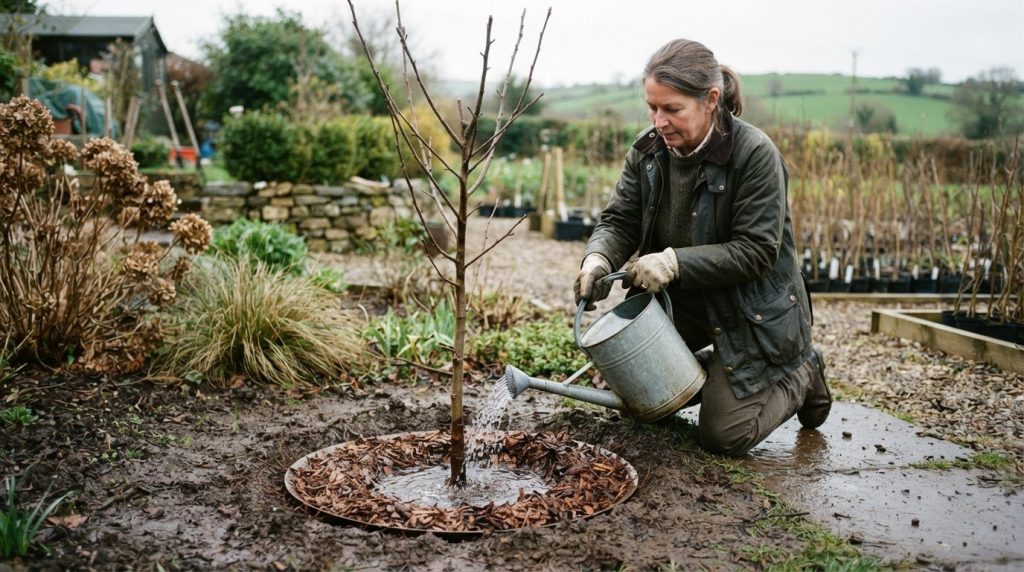
A quick Irish shower can wet the surface without reaching a new plant’s roots. Water new bare root plants thoroughly, then adjust follow-up watering to the soil and weather. Adjust watering to the soil’s moisture and the weather, keeping the root zone moist without leaving the ground constantly wet.
It’s easy to assume regular rain will do the job, but soil type, drainage and season all affect how quickly the root zone dries. Check the soil before watering, and adjust your routine after substantial rain rather than keeping the ground constantly wet.
This guide explains how to water trees, shrubs, hedging and fruit trees when planting and throughout their first growing season. You’ll also learn how needs change with the seasons, when to give plants a deeper soak, and how mulch can retain soil moisture and suppress weeds.
Key Takeaways
- Water slowly at planting so moisture reaches the root zone, rather than just wetting the soil surface.
- Feel the soil before watering and adjust for rainfall, soil type and drainage to avoid keeping roots too wet.
- Use mulch to slow moisture loss and suppress weeds, while leaving space around the stem or trunk.
- Pay closer attention during dry spells and summer heat, when newly planted roots can dry out more quickly.
1. How should I water different types of plants?
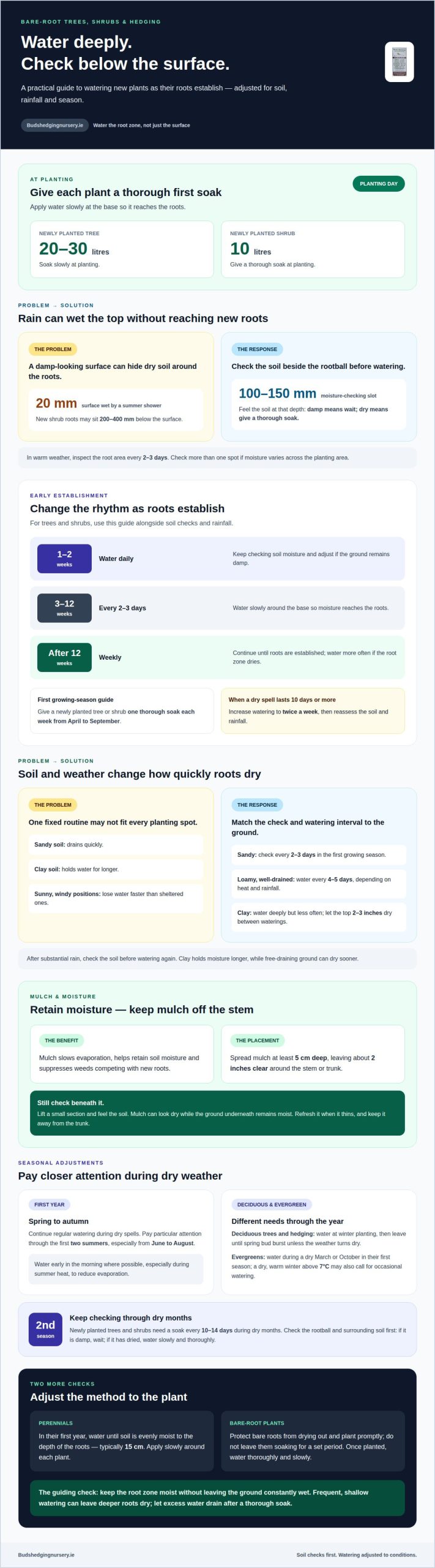
At planting, soak each newly planted tree slowly with 20 to 30 litres of water. A newly planted shrub needs a 10-litre soak. After planting, give trees and shrubs these amounts once or twice a week, adjusting for rainfall and soil moisture. Apply water at the base so it reaches the roots, not just the soil surface.
For the first 1 to 2 weeks, water trees and shrubs daily. From 3 to 12 weeks after planting, water every 2 to 3 days. After 12 weeks, water weekly until roots are established. During dry spells, continue regular watering from spring to autumn in the first year, and through the first two summers, especially from June to August.
Perennials need a different approach from woody trees and shrubs. During their first year, water them until the soil is evenly moist to the depth of their roots, typically 15 cm. Apply water slowly around each plant, rather than relying on a brief splash over the surface. This helps moisture reach the growing roots.
Check the soil a few centimetres down before watering a newly planted tree. If it feels dry, water; if it remains damp, wait and check again. In warm weather, inspect the root area every 2 to 3 days. Summer showers can wet only the upper 20 mm of soil, while new shrub roots may sit 200 to 400 mm below the surface.
Mulch can help young trees retain moisture and limit weeds competing for water. Spread it around the root area to about 10 cm deep, keeping it clear of the trunk. Top it up annually. After watering, check the leaves and soil rather than judging moisture from the surface alone; wilted leaves and dry soil below the surface signal that a deeper soak may be needed.
Water early in the morning where possible, especially during summer heat, to reduce evaporation. Rainfall and drainage vary across Ireland, so use soil checks to adjust your routine. Clay soil holds water longer, while free-draining ground can dry sooner. Slow, thorough watering helps roots establish.
2. Should I add mulch around a new bare root plant to help the soil retain moisture?
Yes. A mulch layer helps retain soil moisture, slows evaporation and suppresses weeds that compete with new roots. Spread mulch at least 5 cm deep, but leave about 2 inches clear around the stem or trunk. This gap keeps damp material from sitting directly against the plant, where it can encourage disease.
Soil type changes how often bare-root plants need water. In sandy soil, check every 2 to 3 days during the first growing season, as water drains quickly. Clay holds moisture for longer, so water deeply but less frequently, allowing the top 2 to 3 inches to dry between waterings. Well-drained loamy soil usually needs water every 4 to 5 days, depending on heat and rainfall.
Before watering, inspect the soil beside the rootball rather than judging by its surface. Open a narrow moisture-checking slot 100 to 150 mm deep against the rootball. Feel the soil at that depth: damp soil is unlikely to need more water, while dry soil calls for a thorough soak. In warm weather, repeat this check every 2 to 3 days.
Water deeply enough to moisten the root zone, then let excess water drain. Frequent, shallow watering can leave deeper roots dry, while constantly wet soil can restrict healthy growth. Check more than one spot if the ground varies across the planting area. A damp patch near the stem doesn’t mean the full rootball is moist.
Mulch won’t replace soil checks, particularly after dry, windy weather. Lift a small section before watering and feel the soil beneath it; the mulch itself can look dry while the ground remains moist. Refresh the layer when it thins, keeping it away from the trunk. For a living cover that helps suppress weeds, consider ground cover plants around suitable planting areas.
3. Weekly watering needs during the first growing season
For a newly planted tree or shrub, give it one thorough soak each week from April to September during its first growing season. If a dry spell lasts ten days or more, increase watering to twice a week. Water slowly around the rootball so moisture reaches the roots instead of running across the garden surface.
Water regularly throughout the first growing season, then keep watching plants through their first two summers. June, July and August are especially important in dry weather. Spring or summer planting also needs consistent attention during the first few months, while roots are establishing and cannot yet draw water from a wide area.
Season affects deciduous and evergreen plants differently. Newly planted deciduous trees and hedging should be watered at planting in winter, then left until spring bud burst unless the weather turns dry. Evergreens can lose moisture through their leaves; in Ireland, water them during a dry March or October in their first season. During a dry, warm winter above 7°C, evergreens may also need occasional watering.
In the second season, newly planted trees and shrubs need a soak every ten to fourteen days during dry months. Check the rootball and surrounding soil before each soak, as rainfall may make a fixed routine unnecessary. If the ground is still damp, wait. If it has dried, water slowly and thoroughly.
Adjust your routine to rainfall, soil and exposure. Sandy ground dries faster than moisture-retentive clay, and a sunny, windy position loses water faster than a sheltered one. After substantial rain, inspect the soil before watering again. During hot spells, check more often and water more frequently if the root zone dries quickly. This helps support healthy growth without leaving roots in constantly wet soil.
4. Watering bare-root plants at planting
Before planting, protect bare roots from drying out rather than leaving them soaking for a set period. Plant them promptly, then water thoroughly once they are in the ground.
Use the soil mark at the base of a bare-root tree or shrub to set its planting depth. Backfill around the roots, firm the soil gently, then water slowly so moisture reaches about 15 cm deep. A low ring of soil around the plant, built about 300 mm from the stem, helps hold water over the root area instead of letting it run away.
Check that the ground has absorbed the water instead of relying on a wet surface. If water runs off, pause and let it soak in before continuing. Applying water slowly gives the soil time to absorb moisture around the roots. This is especially useful on sloping ground or where the surface has dried and become less absorbent.
In Ireland, water newly planted deciduous trees and hedging at planting time in winter. Don’t water again until spring bud burst unless the weather is dry. During dry spells, water in the early morning or cool evening, when less water is lost to evaporation. Winter planting still needs attention if dry weather continues.
When planting outside winter dormancy, give the root area a generous soak. Watch the weather afterwards: rainfall may reduce the need for another soak, but a brief shower can leave deeper soil dry. Check below the surface before watering again. Newly planted evergreens can also lose moisture through their foliage in dry conditions, so inspect the root area rather than judging by rain alone.
Thorough watering at planting helps settle soil around the roots; it doesn’t replace follow-up checks during drought or dry weather. For a suitable planting choice, explore bare-root planting options before preparing the ground.
Buds Nursery Cavan: Bare Root Trees
Buds Nursery Cavan offers bare root trees for autumn or winter planting. If you’re choosing a new hedge, options include Portuguese Laurel, Cherry Laurel and Golden Privet. Consider your planting space, soil drainage and preferred hedge type when deciding which to choose.
After planting, follow this guide’s routine: soak the roots thoroughly, then adjust watering to rainfall, soil moisture and the season. Regular checks matter most during dry spells and the first growing season, while newly planted roots are establishing.
If you’re choosing bare root trees or hedge plants for your garden, contact Buds Nursery Cavan to discuss your planting needs.
Plan your next planting with confidence
Use a watering schedule for new bare root plants as part of a wider planting plan. Before choosing, consider the space available, your garden’s conditions and the role you want each plant to serve. A hedge, boundary screen and mixed planting each call for different choices, so matching plants to their position is a useful first step.
Buds Nursery Cavan offers Portuguese Laurel, Cherry Laurel and Golden Privet for hedge planting. These options are a starting point when deciding what may suit your garden and planting plans. Once you’ve chosen the type of hedge or tree you want, plan for planting and ongoing care in the seasons ahead.
Speak with Buds Nursery Cavan about your planting plans, and take the next step towards a garden that’s ready to grow.
Frequently Asked Questions
How should I water different types of plants?
Water trees and shrubs around their root areas, adjusting the soak to plant size. Herbaceous perennials need moisture evenly through the depth of their roots, rather than only around the crown. For example, water a perennial bed across the root area, while directing water to the base of individual shrubs. Focus on the soil where roots are growing, not simply on wetting leaves.
How long does it take for tree and shrub roots to establish?
For trees and shrubs planted in open ground, regular watering can usually ease from the third year, except during real drought or on free-draining ground. Larger specimens may need regular watering for up to three summers. Plant size, soil drainage and exposure affect how quickly roots reach the surrounding ground, so keep checking during dry spells instead of stopping care by the calendar.
Should I add mulch around a new bare root plant to help the soil retain moisture?
Yes, mulch helps conserve moisture and suppress weeds around a new planting. Apply it from late autumn to late winter, November to February, covering the soil around the roots. Keep mulch clear of the stem or trunk, and check beneath it before watering. The mulch surface may dry while the soil underneath remains moist.
How often should newly planted bare-root plants be watered?
A useful watering schedule for new bare root plants starts with daily watering for the first 1 to 2 weeks, then every 2 to 3 days from week 3 to week 12. After that, water weekly until roots are established, adjusting for rainfall and soil moisture. Autumn plantings generally need little water over their first winter unless dry or hot weather continues.
How do watering needs differ for bare-root trees, shrubs, roses and hedging plants?
Trees need a larger soak than shrubs, while roses can be watered around their root area like other woody plants. For a newly planted hedge, a seep hose along the base can run for an hour to distribute water along the row. Bare-root fruit trees generally need weekly deep soaks after planting until established. Soil and rainfall affect each routine.
How should I change watering during dry, hot, windy or rainy weather?
Build a watering schedule for new bare root plants around changing weather, checking the soil more often during hot, dry or windy spells. During drought, water plants that are suffering thoroughly rather than sprinkling a wide area. After rain, feel the soil near the roots before watering again. Damp soil can wait, even if the surface looks dry.