

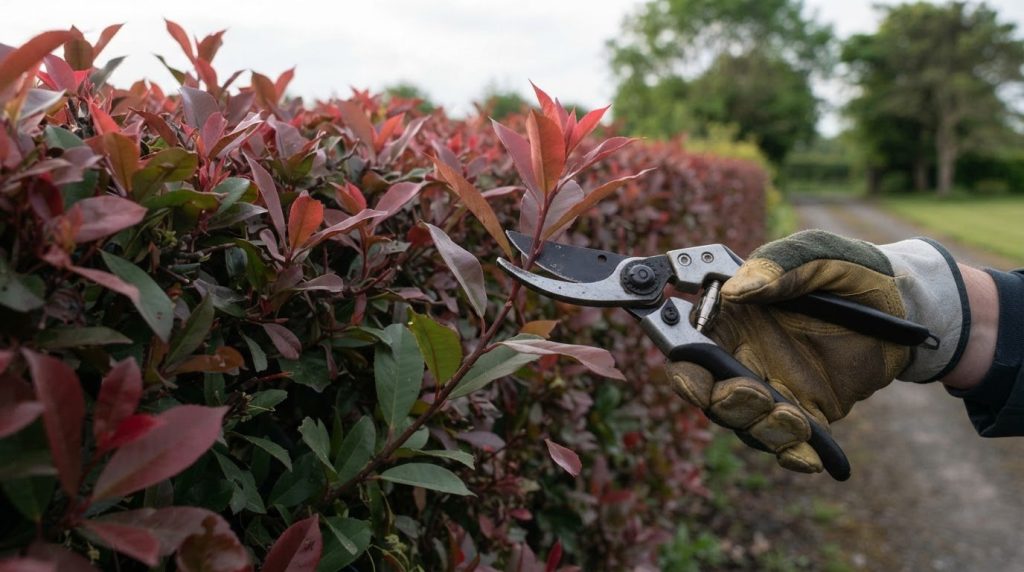
Does your Red Robin need a light trim rather than a hard cut? Established plants generally need pruning once or twice a year to maintain their shape and encourage fresh red growth. This pruning guide for Photinia Red Robin explains when to prune and how much to remove in Ireland.
When a plant becomes leggy or overgrown, cutting it back all at once can be tempting. A gradual approach lets you manage its size while giving new growth time to develop.
This guide covers when to prune, how to encourage red shoots and how to renovate an overgrown plant over time. The right cut depends on the plant’s condition and the result you want, so the advice covers both routine trimming and more substantial pruning.
Key Takeaways
- Prune to suit the plant’s shape: an informal shrub may need just one trim a year, while a formal hedge can benefit from two light sessions.
- Encourage fresh red shoots by lightly shortening young growth in May rather than cutting deeply into older wood.
- Bring an overgrown plant back gradually over two seasons, removing selected growth instead of making one dramatic cut.
- Use clean secateurs for precise cuts, and check for active bird nests before pruning.
Pruning Photinia Red Robin – is it necessary?
Pruning isn’t essential for every plant, but it can control size and keep a hedge in shape. In Ireland, a light prune is recommended in late February, followed by a lighter tidy in September.
-
Choose and clean pruning tools
Use sharp secateurs for individual shoots, making clean cuts just above a leaf joint. This avoids slicing through leaves. Hedge trimmers are quicker along a long hedge, but can bruise foliage and leave browned edges. Clean and disinfect tools used recently on other plants before you start. Remove damaged or diseased branches, then clear prunings from beneath the shrub to help limit disease.
-
Set a pruning frequency
Prune an informal specimen or hedge once a year if it holds its shape; a formal hedge can have two light trims annually. In Ireland, make the first prune in late February and give the plant a lighter tidy in September. Avoid pruning in January, during frost, or after mid-August if fresh shoots could be exposed to autumn frosts. Check for active nests before cutting. The Wildlife Acts prohibit cutting vegetation where birds may be nesting from the first of March through the end of August. Leave any area with a nest until it is clear.
-
Maintain a tapered hedge shape
Trim the sides so the base is slightly wider than the top. This lets sunlight reach the lower branches and helps prevent a thin, bare base. Work along the hedge in sections, shortening current-season growth rather than cutting deeply into old wood. Remove crossing or inward-growing shoots if they crowd the centre. Step back as you work to check that the line stays even.
-
Carry out hard pruning
Renovate an overgrown, healthy plant gradually rather than cutting back the whole hedge at once. Hard pruning is generally carried out in early spring, and renovation can be spread over two seasons. Start by removing selected older or crowded stems, then assess the shape before making further cuts. If you need to reduce the plant substantially, allow for slower recovery than after routine trimming and avoid cutting where active nests are present.
Encouraging red new growth
Photinia Red Robin’s young leaves and stems emerge red, then turn green as they mature. A light trim can prompt another flush, while a sunny position helps the red colour show clearly.
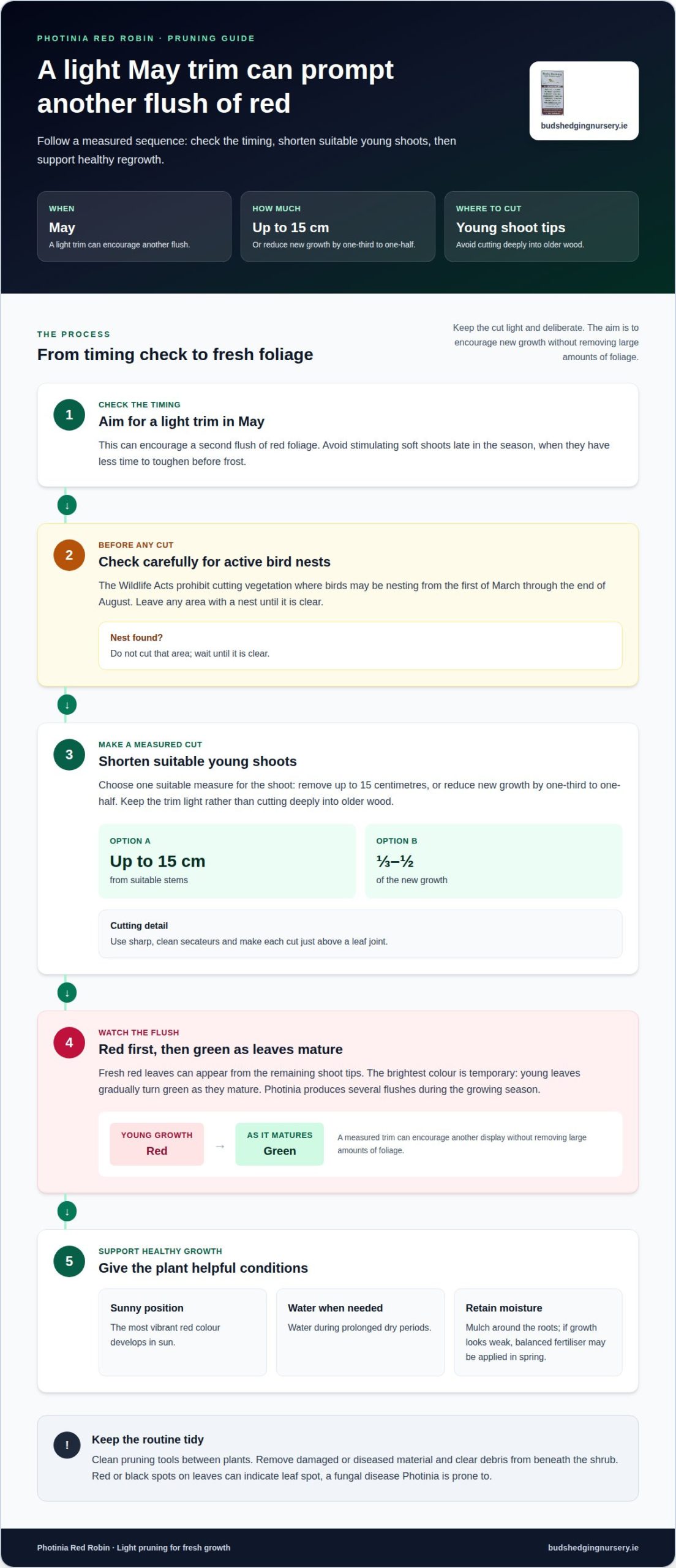
- A light trim in May can encourage a second flush of red foliage. In Ireland, check for active nests before cutting. The Wildlife Acts prohibit cutting vegetation where birds may be nesting from the first of March through the end of August. Leave any area with a nest until it is clear.
- Shorten the tips of young shoots rather than cutting deeply into older wood. You can remove up to 15 centimetres from suitable stems, or reduce new growth by one-third to one-half. Make each cut just above a leaf joint. This directs growth from the remaining shoot tips, where fresh red leaves can appear.
- Watch the new foliage as it develops. Red leaves gradually turn green as they mature, so the brightest colour is temporary. Photinia produces several flushes during the growing season, and a measured trim can encourage another display without removing large amounts of foliage.
- Give the plant conditions that support healthy growth. Photinia Red Robin produces its most vibrant red colour in a sunny position. After pruning, water during prolonged dry periods and mulch around the roots to help retain moisture. If growth looks weak, a balanced fertiliser may be applied in spring.
Keep cuts light and the plant healthy. Red or black spots on leaves can indicate leaf spot, a fungal disease Photinia is prone to. Remove affected or damaged material, clean pruning tools between plants and clear debris from beneath the shrub. Avoid stimulating soft shoots late in the season, when they have less time to toughen before frost.
Renovating overgrown plants gradually
Restore an overgrown Photinia Red Robin in stages rather than removing most of its growth at once. A two-season plan gives you time to assess new shoots and adjust the shape.
-
Reduce plant height or size
Choose early spring for the first reduction, and decide the intended height before cutting. An overgrown Red Robin can be cut back to 60 centimetres high in spring, but avoid removing the whole canopy in one operation. If the plant is healthy, it can be cut back to older wood. Remove selected long or congested stems first, then check how much growth remains across the plant.
-
Plan gradual renovation
Spread renovation over two seasons. In the first, reduce selected stems and remove branches that cross through the centre or compete for space. Let fresh shoots develop during the growing season, then assess their direction and coverage before making further cuts. This staged approach avoids a dramatic reduction and lets you shape the plant as it regrows.
- Choose a planting position with full sun or partial shade, fertile soil and good drainage. Red Robin produces its most vivid red colour in a sunny position. Avoid waterlogged ground, which does not suit this shrub. If you’re replacing a plant or extending a hedge, spring and autumn are suitable planting seasons in Ireland.
- Protect young plants from strong wind while they establish. A green windbreak net can shelter Red Robin plants during their first few years after planting. Keep the net from pressing against the shoots, and make sure it doesn’t block the light needed for bright foliage. Check the shelter as the plants grow, then remove it when it’s no longer needed.
Benefits of pruning Photinia Red Robin
Pruning does more than keep Photinia Red Robin within its space. A practical pruning guide for Photinia Red Robin helps you make cuts with a clear purpose: controlling size, encouraging fresh foliage or improving the hedge’s structure.
- Control growth before shoots extend beyond the space available. An unpruned Photinia Red Robin can reach around 4 metres in every direction in as little as seven years. Light trimming lets you manage its outline without repeatedly cutting deeply into older wood. For example, shorten wayward current-season shoots to keep a hedge clear of a path.
- Encourage denser growth by removing the tips of young shoots. This can prompt bright red leafy regrowth, while regular shaping helps keep the hedge even. If the plant has thin areas, avoid cutting every shoot to the same depth. Target uneven growth instead, preserving foliage where it is needed to fill out the outline.
- Let light reach the lower branches by keeping the hedge slightly wider at its base than at the top. This tapered profile helps stop upper growth shading lower leaves. As you prune, remove inward-growing or crossing branches that crowd the centre. A pruning guide for Photinia Red Robin is most useful when it helps you match each cut to the plant’s shape.
- Remove damaged or diseased branches during routine maintenance. Photinia can develop leaf spot, which appears as red or black marks on leaves. Clear affected material and pruning debris from beneath the shrub, and clean tools before moving to another plant. Avoid stimulating tender growth late in the year, as new shoots need time to toughen before frosts.
Planning a hedge or replacing a shrub? Explore Photinia Red Robin plants for your garden.
Buds Nursery Cavan
If renovating your hedge has you considering other planting options, Buds Nursery Cavan offers hedging plants including Portuguese Laurel, Cherry Laurel and Golden Privet, as well as fruit trees. Consider the space and purpose of your garden when deciding which plants suit your plan.
If you’re keeping your Photinia Red Robin, use the pruning steps above to manage its size and encourage fresh growth. If you’re planning a change or adding plants elsewhere, explore the hedging and tree options at Buds Nursery Cavan.
For information about its plants, contact Buds Nursery Cavan.
Plan your next season of growth
Let the plant’s response guide your next decision. As new shoots develop, note which areas fill evenly and where the shape still needs attention. This gives you a practical starting point for the next growing season, whether you’re maintaining a defined hedge or letting a specimen shrub grow more freely.
Note which areas you trimmed and how the plant responded. Over time, this makes it easier to judge how much attention your Photinia needs, rather than pruning by habit. Use this pruning guide for Photinia Red Robin when planning your next round of care.
If you’re considering plants for another part of the garden, Buds Nursery Cavan can help you explore suitable options. Contact Buds Nursery Cavan for advice about your planting plans, and take your next step with confidence.
Frequently Asked Questions
How fast does Photinia grow after pruning?
Established Photinia Red Robin grows at about 30 centimetres per year, although the amount and timing of regrowth depend on growing conditions. After pruning, look for shoots developing from the remaining stems, then assess whether they’re filling gaps or growing beyond the desired outline. Several flushes of new growth can occur during the growing season, so avoid assuming one cut produces all the season’s red foliage.
How long does Photinia take to recover after hard pruning?
Recovery takes longer after hard pruning than after a routine light trim. A healthy established plant can recover, but the pace depends on its condition, how much you removed and how it grows afterwards. For example, a shrub cut back to older wood needs time to produce replacement shoots and rebuild its shape. Let it grow before deciding whether it needs further renovation.
What Photinia pruning mistakes should I avoid?
Avoid pruning established Photinia while it’s dormant or encouraging soft shoots late in the season, when frost may damage them. Don’t shear every surface indiscriminately: crossing branches, inward growth and damaged stems need different cuts. Check for active nests before pruning, even outside the restricted cutting period. Also clear diseased leaves and branches from beneath the shrub so debris doesn’t remain around the plant.
How much can you cut back Photinia Red Robin without harming it?
For a healthy plant needing hard renovation, an early-spring cut to around 30-45 centimetres from ground level is used. This is a severe reduction, not a routine trim, and a staged approach is less abrupt for an overgrown hedge. Judge the plant’s health and structure first; a weak or damaged shrub shouldn’t be treated like vigorous established growth. Let new shoots develop before making further cuts.
How do you prune Photinia Red Robin to encourage red new growth?
Shorten young shoots to encourage fresh red leaves rather than removing large sections of mature growth. As a guide, cut new growth back by one-third to one-half, making each cut just above a leaf joint. For a more selective approach, remove shoot tips across the hedge instead of cutting every branch deeply. Young leaves start red, then turn green as they mature.
How often should a Photinia Red Robin hedge be trimmed?
An informal hedge usually needs one maintenance trim each year, while a formal hedge can benefit from two light trims. Let the hedge’s growth and the finish you want guide the frequency: a close, even outline needs more attention than a looser screen. Avoid trimming simply to remove every new shoot, as those shoots provide the plant’s next flush of foliage.