

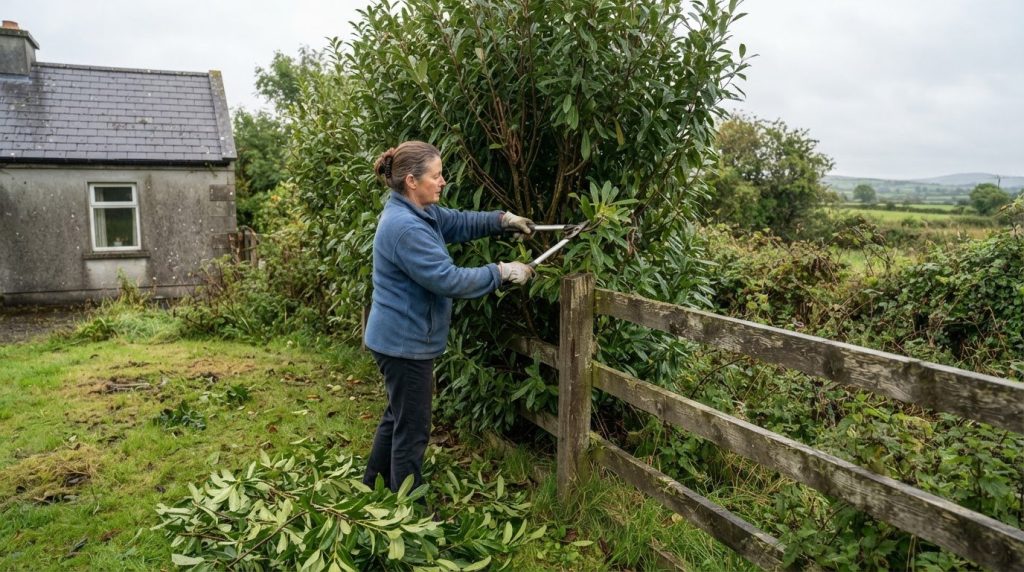
Could a neighbour’s tree be too tall even when there is no set height limit? In Ireland, no specific regulations govern the height of a tree on a neighbour’s boundary. This property line tree planting guide also explains when you may cut overhanging branches back to the boundary: only if they interfere with your property and cause a nuisance.
It’s understandable to want a clear planting distance and a straightforward answer about pruning. This property line tree planting guide explains how to assess a tree’s position and the effect its branches have on your property. If you cut branches back, you must return them to the tree owner and must not cut beyond the boundary.
A property line tree planting guide for Ireland should make the practical choices clear. Learn how to assess planting space, choose a suitable distance from your house and consider a tree’s height near boundaries and overhead lines. You’ll also find out what applies to overhanging branches, so you can address a concern without harming the tree or creating a neighbour dispute.
Key Takeaways
- Base planting distances on a tree’s mature size, canopy spread and the space available around buildings and boundaries.
- Consider underground services, overhead lines, soil and growing conditions before choosing a planting spot.
- Height limits can depend on the setting, especially near overhead lines, so plan for the tree’s eventual height rather than its size at planting.
- Match the planting purpose to a suitable option, such as Portuguese Laurel, Cherry Laurel, Golden Privet or a fruit tree from Buds Nursery Cavan.
How far away can trees safely be planted from a house?
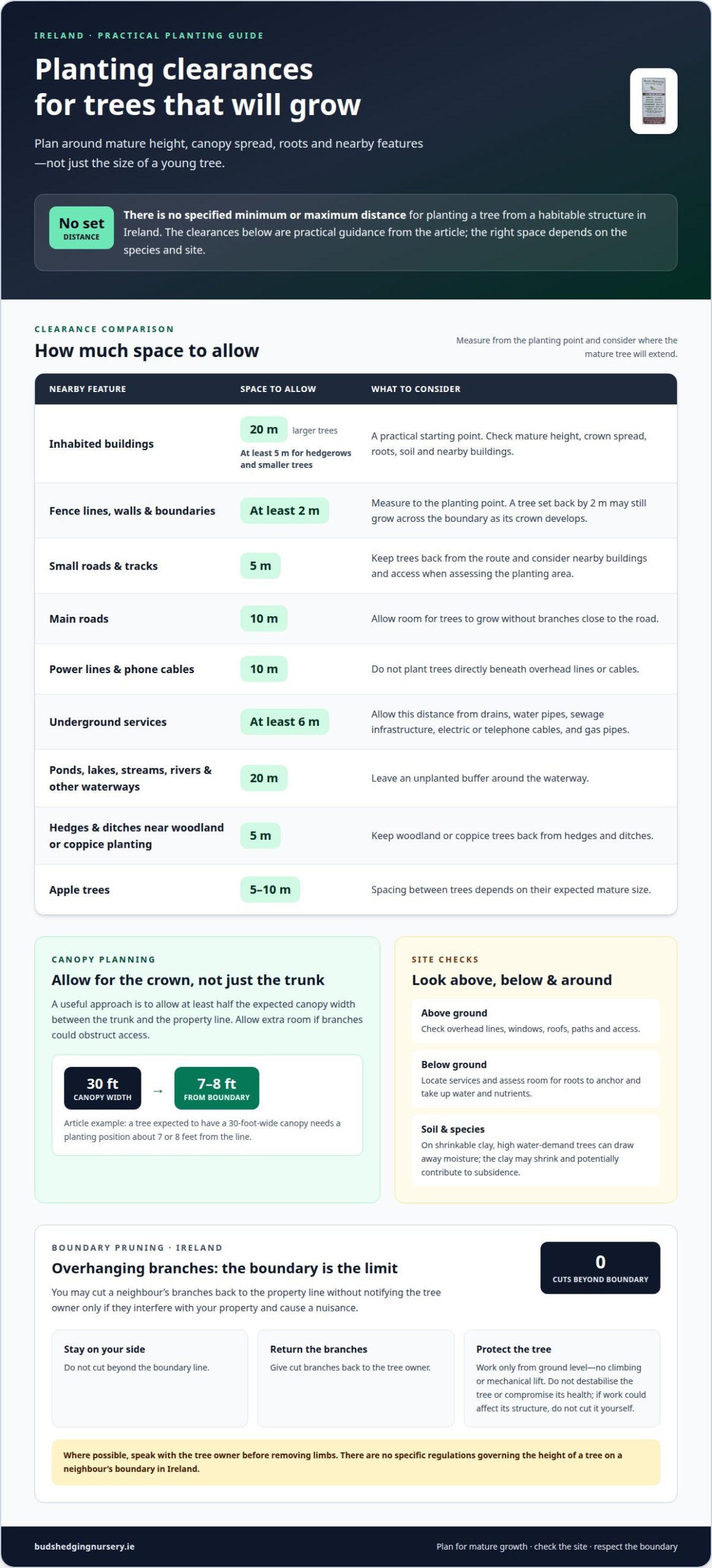
In Ireland, no specified minimum or maximum distance applies when planting a neighbour’s tree from a habitable structure. That does not mean every position is suitable. Mature height, crown spread, roots, soil and nearby buildings all affect how much space a tree needs. A young tree may seem clear of a wall, but its future canopy could shade windows or reach the roof.
As a practical starting point, keep larger tree species 20 metres from inhabited buildings. Hedgerows and smaller trees should be at least 5 metres away. These distances help preserve room for growth, but the species and site matter too. On shrinkable clay, roots from trees with high water demands can draw away moisture, causing the clay to shrink and potentially contributing to subsidence.
Check a tree’s expected height and crown spread before choosing a spot beside a wall or house corner. A broad crown needs more clearance than a narrow one, and overhanging branches may eventually touch buildings or obstruct windows. Roots also need room to anchor the tree and take up water and nutrients. Allowing extra space can reduce the risk of damage to structures as the tree matures.
How much does it cost to plant boundary trees in Ireland? The cost depends on the species, size and number of trees, as well as any ground preparation and planting work required. These factors determine the overall spend, so one figure will not apply to every boundary.
Roadside planting needs separate consideration. Keep trees 5 metres back from small roads and tracks, and 10 metres from main roads. These setbacks give trees room to grow without placing branches close to the route. Consider nearby buildings and access as well as the road edge when assessing the full planting area.
Planting a tree is different from cutting one down. According to Irish Statute Book, cutting down or removing trees illegally can carry, on summary conviction, a fine of up to €200 for each tree, capped at €5,000 in total, or imprisonment for up to 6 months, or both. Check the tree’s likely mature size and its position before planting, rather than relying on its current height.
Overhanging branches and boundary pruning
In Ireland, the right to cut back a neighbour’s branches is limited. The boundary line also matters when planting: a tree positioned too close may grow across it.
Pruning overhanging branches
Boundary pruning means cutting branches back to the property line when they extend over your land. In Ireland, you may do this without notifying the tree owner only if the branches interfere with your property and cause a nuisance. Do not cut beyond the boundary, and return the branches to the tree owner.
Keep the work within safe limits. You may cut branches back only from ground level, without climbing or using a mechanical lift, and the work must not destabilise the tree or compromise its health. Where possible, speak with the tree owner before removing limbs. If the work could affect the tree’s structure, do not cut it yourself.
Setbacks from property boundaries
A setback is the space between a planting position and a fence, wall or other boundary. In Ireland, planting should be set back at least 2 metres from fence lines, walls and other boundaries. This gives a growing tree room and helps limit branches extending over the line as its crown develops.
Measure the setback to the planting point, not to the edge of the mature canopy. Consider the tree’s expected spread as well: a tree planted 2 metres back may still grow beyond the boundary. For a hedge, leave enough room on your side to reach and maintain it without crossing onto neighbouring land.
Measuring and marking the boundary
To measure and mark a boundary, identify its established markers and trace the line between them before setting out the planting position. If the line is unclear, pause planting rather than treating a fence or hedge as proof of the exact boundary. Mark the planting line at least 2 metres inside the boundary, using pegs and string to keep it straight.
For a boundary hedge, prepare the ground along that marked line, plant at suitable spacing, then water and maintain it as it grows. A bare root tree may suit planting where its mature size fits the available space.
Assessing planting location and available space
Start by mapping the available space, including buildings, paths, fences and existing plants. Then consider sunlight, soil conditions, and the species’ mature height and crown spread. A tree that fits the garden as a young plant may outgrow its position, shade a window or crowd a path as it develops.
Estimate the mature canopy radius before deciding where to plant trees near a boundary. A useful planning approach is to allow at least half the expected canopy width between the trunk and the property line. For example, a tree expected to have a 30-foot-wide canopy needs a planting position about 7 or 8 feet from the line. Allow more room if branches could obstruct access.
Look up and below ground. In Ireland, planting should be set back 10 metres from power lines and phone cables, and trees should not sit directly beneath them. Keep trees at least 6 metres from underground drains, water pipes, sewage infrastructure, electric or telephone cables, and gas pipes. These clearances reduce clashes as roots and branches grow.
Nearby water also affects the planting area. Leave an unplanted buffer of 20 metres from ponds, lakes, streams, rivers and other waterways. For woodland or coppice planting, keep trees 5 metres back from hedges and ditches. These distances help define the usable planting space before you settle on a layout.
Match spacing to the plant’s eventual size and purpose. Apple trees need 5-10 metres between them, depending on expected mature size. Mountain ash can reach 8-9 metres in height, so its crown and position need room beyond the trunk itself. A compact garden may suit a smaller species better than a tree with a broad crown.
Before planting, compare the tree’s mature height and crown spread with the available space, then consider soil and light. Check that the mature tree can fit without blocking routes, crowding buildings or reaching overhead services. A simple sketch of boundaries, structures and utilities can reveal potential conflicts before you decide where to plant.
Tree height restrictions in Ireland
In Ireland, no specific regulations govern the height of a tree on a neighbour’s boundary. A neighbour cannot rely on a general boundary-tree height limit alone to require its removal. This does not remove the landowner’s responsibility for tree safety and maintenance.
Height matters in practice because a large tree can overshadow a garden, affect nearby buildings or become a hazard. If a tree is or is likely to be a hazard, a local authority may issue a section 70 notice requiring action. The notice may be appealed to the District Court. A neighbour concerned about a tree should discuss the issue with its owner and seek an amicable solution where possible.
Protected status can affect what happens after planting. In Ireland, a Tree Preservation Order may be made under Section 205 of the Planning & Development Act 2000. Before planning work that could involve cutting or removing a protected tree, establish whether an order applies. A tree-felling licence is generally required before a tree is uprooted or cut down, unless an exemption applies.
Timing also matters. In Ireland, cutting or felling trees is prohibited from 1st March to 31st August every year, subject to limited exceptions. This is relevant to future maintenance, not a height limit for a newly planted tree. Check the tree’s mature height and expected spread before choosing a position beside a boundary, so its eventual size suits the garden.
There is no single boundary-height rule to apply to every hedge or tree. Consider the species, mature dimensions, proximity to buildings and any Tree Preservation Order. If a neighbour dispute concerns necessary work, an adjoining owner may apply to court for an order authorising specified works under Section 45 Land Conveyancing, Law Reform Act 2009. Planning for mature height helps avoid conflicts, but it does not replace protections that may apply to a particular tree.
Buds Nursery Cavan
Buds Nursery Cavan offers tree and hedge options for readers planning a boundary planting. The right choice depends on the available space, the desired screening and the plant’s mature size, so consider these alongside the distances discussed above.
Portuguese Laurel, Cherry Laurel and Golden Privet are options for a boundary hedge. Fruit trees may suit a garden where there is room for the chosen tree to grow. Matching the plant to the space helps reduce future crowding and keeps the boundary layout practical.
Once you have a clear planting area and an idea of the growth you can accommodate, contact Buds Nursery Cavan to discuss your planting needs.
Plan the planting that fits your garden
Before buying, decide what you want the planting to achieve and how much room it can occupy as it grows. A boundary screen, a focal tree and a fruit-bearing planting serve different purposes. Use this property line tree planting guide to match your choice to the available space and the care you can provide, rather than appearance alone.
For a hedge, consider Portuguese Laurel, Cherry Laurel or Golden Privet. The right fit depends on your layout and the result you want along the boundary. This property line tree planting guide can help you narrow your choice to plants suited to your site and plans.
A considered choice gives your garden a clear direction. For help with the next decision, contact Buds Nursery Cavan for planting advice. Take the time to choose well, and your planting can develop as intended.
Frequently Asked Questions
Do I have the right to prune back the branches?
Yes, but only back to the boundary, and only if the branches interfere with your property and cause a nuisance. You must return the cut branches to the tree owner. For example, a limb obstructing a path may meet this test, while ordinary shade alone may not. Keep the work to ground-level cutting and avoid harming or destabilising the tree. Where possible, discuss the proposed pruning with the owner first.
How do I know I’ve chosen the right tree for my location?
Choose a species whose mature height and crown suit your garden, soil and light. For example, common alder may suit damp ground, while silver birch is listed as suitable for an average suburban garden. Consider whether nearby buildings, paths or overhead services could conflict with the tree as it grows. Its appearance at purchase matters less than its eventual size and growing needs.
What is the minimum or maximum distance that a neighbour can plant trees from a habitable structure?
Ireland has no specified minimum or maximum planting distance from a habitable structure. As practical guidance, larger tree species should be kept 20 metres from inhabited buildings, while hedgerows and smaller trees should be at least 5 metres away. These are planning distances, not a legal limit on a neighbour’s planting. Mature size, soil and nearby structures still affect whether a location is suitable.
What can I do about roots encroaching from a tree growing on an adjoining property?
Speak with the tree owner and explain what the roots are affecting before taking action. Don’t poison encroaching roots: toxic substances that damage or kill a neighbouring tree may lead to liability under the Criminal Damage Act 1991. If discussion does not resolve the issue, an adjoining owner may apply to court under Section 45 Land Conveyancing, Law Reform Act 2009 for an order authorising specified works.
What are the legal rules for planting trees near a property boundary in Ireland?
Plant trees at least 2 metres from fence lines, walls and other boundaries as a practical setback. Ireland has no specific regulations governing the height of a neighbour’s boundary tree. Before any later cutting or removal, consider whether a Tree Preservation Order applies; such orders may be made under Section 205 of the Planning & Development Act 2000. Planting and felling have different considerations.
How far from a property line should different tree species be planted?
Allow at least 2 metres from a fence, wall or boundary, then adjust for the species’ mature canopy. A useful way to estimate extra space is to allow at least half the anticipated canopy width between the trunk and the boundary. A broad-crowned tree needs more clearance than a narrow-growing one. Check the expected crown spread, not just the tree’s height or size when planted.