

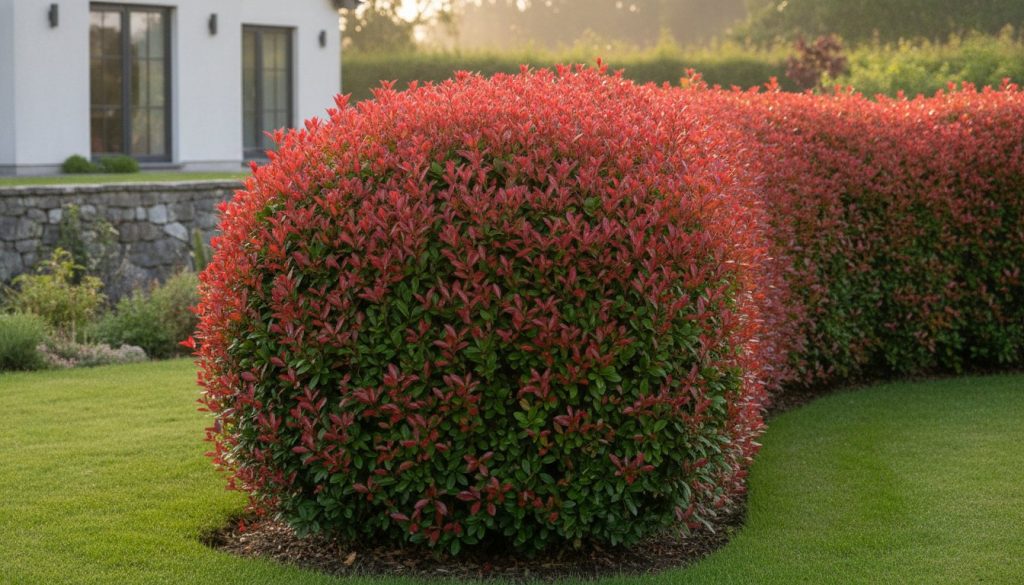
That striking crimson hedge you see in garden magazines isn’t just a matter of luck. Photinia Red Robin is not a “set and forget” plant; its iconic colour is a direct reward for specific, timing-based maintenance. If you’ve invested in photinia red robin plants Ireland, you likely want that vibrant, year-round privacy screen that defines a well-kept garden. It’s frustrating when those brilliant red tips fade to a dull green or, worse, become dotted with unsightly black spots.
We understand the disappointment of seeing a hedge become sparse at the bottom or lose its lustre after the first season. This guide provides the practical knowledge you need to grow, prune, and maintain your Photinia successfully. We’ll cover essential soil requirements, the best sites for planting, and the exact pruning times to ensure your hedge stays thick and healthy. By following these straightforward steps, you’ll transform leggy growth into a dense, vibrant screen that thrives in our local conditions.
Key Takeaways
- Learn how to use Photinia’s unique crimson foliage to create a dense, evergreen privacy screen that provides year-round colour.
- Identify the specific soil and sunlight requirements needed for photinia red robin plants Ireland to thrive and maintain their vibrant hues.
- Master a simple pruning schedule to stimulate new red growth and solve common problems like bare bases or dull leaves.
- Discover why choosing Irish-grown specimens from a specialist nursery ensures your plants are hardy enough for the local climate.
What are Photinia Red Robin Plants? The Vibrant Choice for Irish Gardens
Photinia Red Robin, known botanically as Photinia × fraseri, is a robust evergreen hybrid that has become a staple in Irish landscapes. This plant is celebrated for its brilliant crimson new foliage which eventually matures into a deep, glossy green. It is a hardy choice for our temperate climate, holding an RHS Hardiness rating of H5. This classification confirms it can withstand temperatures as low as -15°C, making it reliable across the midlands and coastal regions alike. It doesn’t just survive here; it thrives.
For gardeners deciding between hedging options, this plant serves as a high-impact alternative to traditional greens. While a Portuguese laurel provides a classic, formal look with its dark leaves and red stems, photinia red robin plants Ireland deliver a more dramatic seasonal shift. It is the go-to selection for those who want their boundary to act as a living feature rather than just a backdrop. The cultivar ‘Red Robin’ is specifically favoured for its compact habit and more intense red colouration compared to older varieties.
A Versatile Shrub for Modern Landscapes
The adaptability of this shrub is one of its greatest strengths. You can use it as a standalone specimen plant in a mixed border where its height and colour provide a clear focal point. As a hedge, it forms a dense, colourful privacy screen that reaches a mature height of 3 to 4 metres if left unpruned. For those with limited space or paved courtyards, it performs well in large containers. Just ensure the pots have adequate drainage and the plants receive regular feeding to maintain that vibrant leaf production.
Seasonal Transformations of Red Robin
The visual appeal of the Red Robin changes significantly through the seasons. In spring, the plant is at its peak. It is covered in scarlet young leaves that glow against the older green foliage. By early summer, you will notice clusters of small, creamy white flowers. These provide a subtle contrast and attract local pollinators like bees. During autumn and winter, the plant settles into a lustrous evergreen state. This provides essential structure and shelter for garden birds during the colder months, ensuring your garden never looks bare.
Understanding the Growth and Seasonal Characteristics of Photinia
Photinia is a reliable performer in Irish soil, offering a moderately fast growth rate that suits most residential projects. On average, you can expect between 30cm and 60cm of new growth every year. This pace makes it an efficient choice for homeowners looking to establish a privacy screen without waiting a decade for results. Because it responds so well to the local climate, photinia red robin plants Ireland can quickly fill gaps in a boundary, provided they receive basic care and occasional feeding.
Left to grow naturally without intervention, a Red Robin eventually develops into a large, broad shrub or even a small tree. It can reach an ultimate height of 4 to 5 metres with a spread of 3 to 4 metres. This expansive habit is useful for large gardens where you might want a standalone focal point. However, in most suburban settings, regular maintenance is required to keep the plant within its allocated space. If you’re planning a new boundary, you can order hardy Photinia Red Robin plants directly from our nursery to ensure you start with well-established stock.
The Science Behind the Scarlet Foliage
The brilliant red colour of the young leaves is more than just a visual trait. It is caused by pigments called anthocyanins. These compounds act as a natural sunscreen for delicate new shoots, protecting them from UV damage while they are still soft. Light levels are the primary driver of this display. Plants in full sun produce the most intense scarlet hues, whereas those in heavy shade may only manage a dull bronze. As the leaves mature and toughen up, the red pigments fade. They are replaced by chlorophyll, turning the foliage into the familiar waxy, dark green that characterises the plant for the rest of the year. Temperature also plays a role, with the first warm days of spring usually triggering the most significant flush of colour.
Flowering and Wildlife Benefits
In late spring, usually around May, the Red Robin produces flat-topped clusters of flowers known as corymbs. These creamy white blossoms have a distinct, slightly musky scent that is reminiscent of hawthorn. While some gardeners prefer to prune these off to focus on leaf colour, they are excellent for local biodiversity. Bees, hoverflies, and other pollinators are frequent visitors to these flowers. If the blooms are left on the plant, they can occasionally develop into small red berries by autumn. These berries are rare on plants that are pruned twice a year, but on more natural, specimen-grown Photinia, they provide a modest winter food source for garden birds.
Essential Planting Guide: Site Selection and Soil in the Irish Climate
Success with photinia red robin plants Ireland starts with choosing the right spot. These shrubs are versatile but they perform best when their specific environmental needs are met from day one. For the most intense scarlet foliage, aim for a site in full sun. While they tolerate partial shade, the colour will be noticeably less brilliant in darker corners of the garden. Sunlight is the engine that drives those vibrant red pigments we discussed earlier.
Soil quality is equally critical. Photinia requires fertile, well-drained ground that is slightly acidic to neutral. It won’t thrive in waterlogged soil. If your garden is prone to standing water during a typical Irish winter, you’ll need to address drainage before planting. This plant is a popular choice for those seeking the best hedging for privacy Ireland, as it provides a dense, colourful screen that remains functional throughout the year.
One specific challenge in our climate is the risk of late spring frosts. While the plant itself is hardy to -15°C, the soft, new red shoots are vulnerable. In inland valleys or frost pockets, a sudden dip in temperature in late April or May can scorch the young growth. It won’t kill the shrub, but it will turn the red tips brown and unsightly. Positioning your hedge in a sheltered spot, away from the path of the coldest winds, can help mitigate this risk.
Preparing Your Site for Success
Many Irish gardens sit on heavy clay. This soil holds nutrients well but drains poorly. To improve the structure, dig in plenty of grit or well-rotted organic matter before you start. Shelter is also a factor. Biting easterly winds can dessicate the leaves, so a site protected by a wall or existing treeline is ideal. Always clear the planting strip of grass and weeds. Competition for nutrients and water is the main reason young hedges fail to establish quickly in their first two seasons.
Spacing and Planting Depth
For a thick, impenetrable hedge, we recommend spacing your plants at 2 to 3 specimens per metre. This ensures the branches knit together without overcrowding the root systems. When digging the holes, ensure they are twice the width of the root ball. Plant them at the same depth they were in the nursery pot. Burying the stem too deep can lead to rot, while planting too shallow can cause the roots to dry out. Incorporating a root booster or organic compost into the backfill will give the plants the best possible start.
Pruning and Problem Solving: Keeping Your Red Robin Healthy
The secret to maintaining the visual impact of photinia red robin plants Ireland lies in your pruning shears. Because the scarlet foliage only appears on new growth, you must prune regularly to keep the display fresh. A “Prune for Colour” strategy involves light trimming throughout the growing season. This prevents the hedge from becoming a solid block of green and ensures a constant supply of crimson tips. It’s a simple cycle: the more you prune, the more red you get.
Timing is everything for a healthy hedge. Perform your main prune in late spring, just after the creamy flower clusters have finished blooming. A second, lighter trim in late summer, usually in August, encourages a final flush of red before the winter dormancy begins. Avoid pruning any later than this. New shoots produced in late autumn are too soft to survive the first frosts and will likely turn black and die back, leaving the plant vulnerable to rot. If you need healthy, nursery-reared stock to start your project, you can buy Photinia Red Robin plants online from our specialist nursery.
In our damp climate, the most common challenge is Photinia Leaf Spot, caused by the fungus Entomosporium maculatum. It presents as small, dark maroon or black spots on the leaves, often surrounded by a faint purple halo. If left unchecked, the plant may drop its leaves prematurely. To manage this, ensure your hedge has excellent air circulation. Avoid planting too close to solid walls and never water the foliage directly from above. Keeping the leaves dry is your best defence against fungal spread. Always clear away fallen, spotted leaves from the base of the plant to prevent the spores from overwintering.
The Art of Pruning for Maximum Colour
For young plants, don’t be afraid to be firm. Pruning the leading shoots early on encourages the plant to branch out from the base. This prevents the “sparse bottom” look that ruins many privacy hedges. For established hedges, use sharp shears to maintain a slightly tapered shape, wider at the bottom than the top. This allows sunlight to reach the lower branches, keeping the entire height of the hedge thick and vibrant. Regular maintenance avoids the need for heavy, restorative pruning later on.
Troubleshooting Common Irish Pests and Diseases
Aside from leaf spot, keep an eye out for Vine Weevil. If you notice C-shaped notches on the leaf edges, adults are present. In containers, the larvae are more dangerous as they eat the roots. If your plant shows sudden wilting despite moist soil, check the root ball for small white grubs. Lastly, frost scorch is often mistaken for disease. If only the very tips of the red growth are brown after a cold snap, it’s simply weather damage. Prune out the affected tips in spring to trigger healthy regrowth.
Sourcing Quality Photinia Red Robin from a Specialist Irish Nursery
When you decide to invest in photinia red robin plants Ireland, where you source them matters as much as how you plant them. Buying from a local producer ensures the stock is already acclimatised to our specific weather patterns. Plants imported from warmer, continental climates often struggle during their first Irish winter. By visiting a specialist plant nursery Ireland, you get access to plants that have been hardened off in local conditions. This significantly reduces the risk of transplant shock and plant failure.
You’ll typically choose between potted plants and rootballed specimens. Potted Photinia can be planted at any time of year, provided the ground isn’t frozen or waterlogged. Rootballed plants are usually lifted during the dormant season, from late autumn to early spring. They are often a cost-effective way to buy larger, more mature specimens. With over 30 years of horticultural experience, we’ve seen how high-quality root systems make the difference between a hedge that limps along and one that thrives from day one.
Selecting the Right Maturity for Your Project
Younger, smaller plants are easier to handle and often establish their root systems more quickly in new soil. However, they require patience before they provide a full privacy screen. Mature specimens give you an instant result but require more care during transport and planting. If you’re moving large Photinia, always support the root ball and keep the foliage shielded from wind during transit to prevent dessication. For those looking to create a varied boundary, you might consider a mixed approach. Combining Red Robin with cherry laurel hedging Cavan creates a multi-textured screen with different shades of green and red.
Why Buds Nursery Cavan is the Professional Choice
We’ve been growing hedging and trees since 1994. Our 60-acre production site in Cavan allows us to maintain a vast selection of healthy, hardy stock. We don’t deal in high-energy marketing; we provide practical, no-nonsense guidance based on decades of working the land. We understand the challenges of heavy Irish clay and can help you select the right grade of plant for your specific site. For larger hedging projects, we offer delivery services across Ireland, ensuring your plants arrive in prime condition for planting without the stress of transport.
Establishing Your Vibrant Privacy Screen
Achieving a dense, scarlet hedge requires more than just digging a hole. Success comes from understanding the “prune for colour” strategy and ensuring your plants have the right drainage to prevent fungal issues. By choosing the correct aspect and managing seasonal maintenance, you’ll enjoy a privacy screen that remains thick and vibrant throughout the year. It’s about working with the plant’s natural growth cycle to keep those crimson tips appearing season after season.
Sourcing your photinia red robin plants Ireland from a specialist grower is the best way to ensure they’re hardy enough for our local conditions. At Buds Nursery, we’ve been producing premium stock on our 60-acre site since 1994. Our team provides practical, expert advice on-site from Tuesday to Saturday, helping you choose the right maturity for your specific garden project. We’ve spent over 30 years refining our growing methods so you can plant with confidence.
View our range of Photinia Red Robin and hedging plants at Buds Nursery to find the perfect specimens for your boundary. With the right preparation and quality Irish-grown stock, your garden will soon boast the brilliant scarlet display you’ve planned for.
Frequently Asked Questions
Is Photinia Red Robin fast growing in Ireland?
Photinia Red Robin is considered a moderately fast-growing shrub in Ireland, typically adding 30cm to 60cm of height each year. This pace depends on soil quality and local light levels. In fertile, well-drained ground, a young hedge can reach its desired height within three to four seasons. Regular feeding with a balanced fertiliser in spring helps maintain this pace and ensures the foliage remains dense and healthy.
Why are the leaves on my Photinia turning black?
Black spots on the leaves are usually caused by a fungal infection called Leaf Spot, which thrives in damp, humid conditions. It can also be a sign of frost damage on soft, new growth. To fix this, improve air circulation around the plant and avoid watering the leaves directly. Prune out heavily affected branches and clear away fallen leaves to stop the fungus from spreading amongst your photinia red robin plants Ireland.
When is the best time to prune Photinia Red Robin for the best colour?
The best time to prune for maximum colour is late spring, immediately after the plant has finished flowering. You can then give it a secondary light trim in late summer, usually around August. This schedule stimulates the growth of the scarlet new shoots that gardeners value. Avoid pruning in late autumn, as the resulting new growth won’t have time to harden off before the first winter frosts arrive.
How far apart should I plant Photinia Red Robin for a hedge?
For a dense, effective privacy screen, you should plant Photinia Red Robin between 33cm and 50cm apart. This equates to roughly 2 or 3 plants per linear metre. Planting them at this distance allows the branches to knit together quickly without the root systems competing too aggressively for nutrients. If you’re using larger, more mature specimens, you can lean towards the wider spacing of two plants per metre.
Can Photinia Red Robin grow in full shade?
Photinia Red Robin cannot grow effectively in full shade if you want to maintain its signature red foliage. While the plant will survive in darker areas, the new growth will likely be a dull bronze or green rather than bright crimson. For the best results, choose a site with full sun or very light partial shade. Sunlight is essential for triggering the production of the red pigments in the leaves.
Is Photinia Red Robin poisonous to dogs or horses?
Photinia leaves are toxic to dogs, horses, and other livestock because they contain cyanogenic glycosides, which can release cyanide when chewed. Whilst most animals find the waxy leaves unpalatable, it’s vital to keep clippings away from curious pets or grazing animals. If you suspect an animal has ingested a significant amount of the foliage, you should contact a vet immediately for professional advice and treatment.
Will Photinia Red Robin survive a hard frost?
Photinia Red Robin is fully hardy and will survive a hard Irish frost, as it is rated to withstand temperatures as low as -15°C. However, the delicate red shoots produced in spring are susceptible to scorch if a late frost occurs. This damage is purely aesthetic and won’t kill the plant. Simply wait for the weather to warm up and prune away the blackened tips to encourage healthy new growth to emerge.
Can I grow Photinia Red Robin in a large pot?
You can successfully grow photinia red robin plants Ireland in large pots, provided the containers have excellent drainage. Use a high-quality, loam-based compost and ensure the pot is at least 45cm to 50cm in diameter to accommodate the root system. Because pot-grown plants dry out faster and have limited nutrients, they require regular watering and a liquid feed every few weeks during the growing season to stay healthy.