

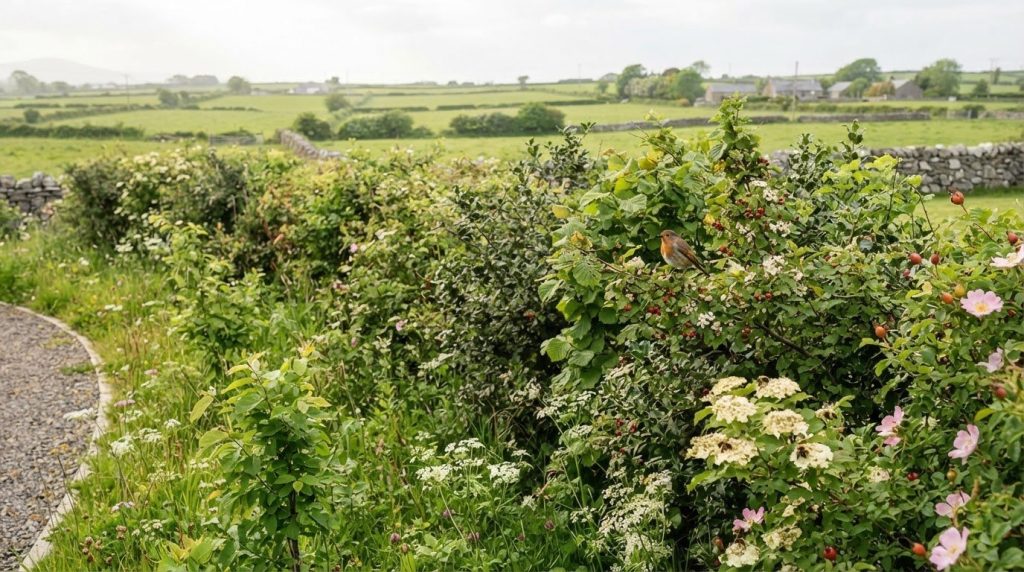
A successful native hedge mix in Ireland depends on more than the number of species: the plants need to suit the site and work together as a boundary. Before choosing a mix, consider what the hedge should do, how much space it can occupy and what conditions the plants will face.
A boundary intended to provide shelter may need a different plan from one designed for seasonal interest and wildlife habitat. Start with the purpose, then compare species by their growing habits and needs instead of treating a mixed hedge as a random assortment.
This guide explains how to shortlist native species, plan the layout and prepare for planting in Ireland. It also covers the early care that helps a new hedge settle in. Buds Nursery Cavan offers on-site plant-selection guidance Tuesday to Saturday, helping you consider plant choices alongside your site and plans.
Key Takeaways
- Plan a native hedge mix Ireland gardeners can establish by matching species to the boundary’s purpose, available space and soil.
- Compare native species by mature size, seasonal features and management needs before deciding which roles your hedge needs.
- Choose a wildlife-focused, boundary-focused or lower-intervention design to guide your species selection without relying on a fixed recipe.
- Measure the planting line, prepare the ground and plan weed control before planting, then check plants as they settle in.
- Use Buds Nursery Cavan on-site plant-selection guidance to discuss suitable choices and shape your next steps.
Native hedge mix Ireland: what a mixed hedge can do for your boundary
A native hedge mix is a planned combination of suitable native species selected for a particular site. It is not simply several plants placed together, and it does not have to come as a ready-made bundle. When planning a native hedge mix in Ireland, begin with the job the hedge needs to do.
A hedge can mark a boundary, screen a view, provide shelter or create habitat, while adding seasonal interest through flowers, berries and foliage. One planting can serve several purposes, but there may be trade-offs. A taller, wider hedge can provide more screening, for example, but takes up more garden space and needs room for access and maintenance.
Start with the purpose of the hedge
Write down the main aim before choosing species. A boundary hedge may simply need to mark where one area ends and another begins. For screening, consider the height and density needed to block the view. Shelter depends on the hedge’s position, eventual size and exposure, as well as the space it can occupy.
Habitat and seasonal interest can also shape the plan. A varied selection can bring different flowering, fruiting and foliage features, but no mix guarantees that particular wildlife will use the hedge. Outcomes depend on the planting, its surroundings and the needs of the species you hope to support.
Note the practical limits too. Measure the available length and space on both sides. Decide what height and width you can accommodate, and whether you’ll need access for maintenance. These details help rule out plants that could outgrow the boundary or make it difficult to manage. A hedge for a small garden edge may not suit an exposed, open boundary.
What makes a hedge mix native?
In an Irish context, native species occur naturally in Ireland. A hedge containing several species is not automatically native: the species themselves need to meet that description. Whitethorn, blackthorn, hazel and holly are examples to research, but their different growth habits still need to suit the site.
Common names can vary, so botanical names help when comparing plant information and confirming which species you mean. The native trees of Ireland page offers a reference list. A name alone, however, won’t tell you whether a plant suits your space or the hedge’s purpose.
Treat the mix as a design decision, not a label on a bundle. Compare candidate species by mature form, seasonal features and management needs, then choose a combination that fits the boundary. Native status defines part of the brief; space, upkeep and intended use still matter.
Choose native hedge species for Irish site conditions and wildlife value
Build your shortlist around the conditions on the ground, not just a list of popular plants. Check whether the soil stays wet or drains freely, how much light the boundary receives and how exposed it is to wind. Then compare each plant’s eventual height, spread and growth habit with the space available. This helps avoid choosing species that need more room or different conditions than the site can provide.
Let the site set the species list, then let the hedge’s purpose narrow it down. The table is a starting point, not a planting prescription. These examples are native Irish species, but their performance varies with local conditions. Compare species-specific requirements with reliable Irish horticultural guidance before settling on a mix.
Match the shortlist to soil, exposure and available space
Some boundaries are narrow and easy to reach; others have room for a wider, more varied structure. Mature size affects the space plants need and the access and cutting that may be required later. Soil drainage and exposure matter as well. Don’t assume that native means suitable everywhere. If a species’ needs are unclear, check guidance for your site and adjust the shortlist accordingly.
Plan for flowers, fruit and varied structure
Different flowering and fruiting periods can add seasonal change, while varied growth forms create differences along the hedge. These features can provide habitat, but a particular planting cannot guarantee that wildlife will use it. Thorny growth also affects access and maintenance, so weigh it against the hedge’s purpose rather than treating thorny and non-thorny plants as interchangeable.
| Common name | Botanical name | Planning feature |
|---|---|---|
| Whitethorn or hawthorn | Crataegus monogyna | Thorny; spring flowers and autumn haws add seasonal features. |
| Blackthorn | Prunus spinosa | Thorny; white flowers appear before the leaves, with sloes later in the year. |
| Hazel | Corylus avellana | Deciduous; catkins and nuts provide seasonal interest. Allow for its mature form. |
| Holly | Ilex aquifolium | Evergreen and prickly; berries form on female plants when pollination occurs. |
| Dog rose | Rosa canina | Thorny; summer flowers are followed by hips. |
| Guelder rose | Viburnum opulus | Deciduous; flowers and later berries offer seasonal variety. |
Use the table to compare plant roles, not as a fixed recipe. A wildlife-minded design may favour seasonal variety, while a tight boundary calls for particular attention to mature width and maintenance. Buds Nursery offers on-site plant-selection guidance to help you assess choices for your plan. Discuss hedge plant choices with the site conditions and available space in mind.
Compare native hedge mix designs before settling on one
There’s no single recipe for a native hedge mix that suits every boundary in Ireland. The right balance depends on the hedge’s purpose, the room available and the characteristics of the chosen species. Compare broad design approaches first, then decide whether a shorter species list or greater variety better suits the plan.
- Wildlife-focused: Consider species with different seasonal features and growth forms. Greater variety can add interest, but check each plant’s needs and mature size against the site.
- Boundary-focused: Prioritise a consistent, manageable line that suits the boundary’s dimensions and intended height. A smaller selection can make the layout easier to plan and maintain.
- Lower-intervention: Choose a design that fits the space and the amount of upkeep you can manage. This does not mean maintenance-free: growth and the hedge’s purpose still shape future care.
A limited selection can make the hedge’s overall form easier to predict, while a more varied mix offers a broader range of growth habits and seasonal features. Neither approach is automatically better. Base proportions on your goals, hedge dimensions and reliable guidance about how each species grows. Avoid copying a ready-made recipe without checking that it suits your conditions.
Balance species variety with a coherent hedge line
Decide where each species will go before planting. You could group plants in short runs or distribute them throughout the hedge. Short runs make species easier to recognise and manage in sections; an interspersed layout spreads variety along the boundary. Choose an arrangement that suits the plants’ growth habits and roles, and verify the plan against reliable Irish horticultural guidance.
A marked planting plan helps you keep track of what is where. That makes later identification, pruning decisions and replacement of a failed plant more straightforward. Keep the pattern clear, especially if the mix includes plants with different mature sizes or management needs.
Choose a planting format that suits the project
Bare-root plants are supplied without soil around their roots and are generally associated with the dormant planting season. Pot-grown plants have their roots in compost and are handled and planted differently. Timing and suitability depend on the plant and current conditions, so check up-to-date Irish guidance before setting a planting date.
Consider the boundary length, planting schedule and practical handling involved when choosing a format. If bare-root plants are part of your plan, the bare-root tree season guide explains the seasonal considerations. Once the design and format are settled, you’ll have a clearer basis for planning the planting.
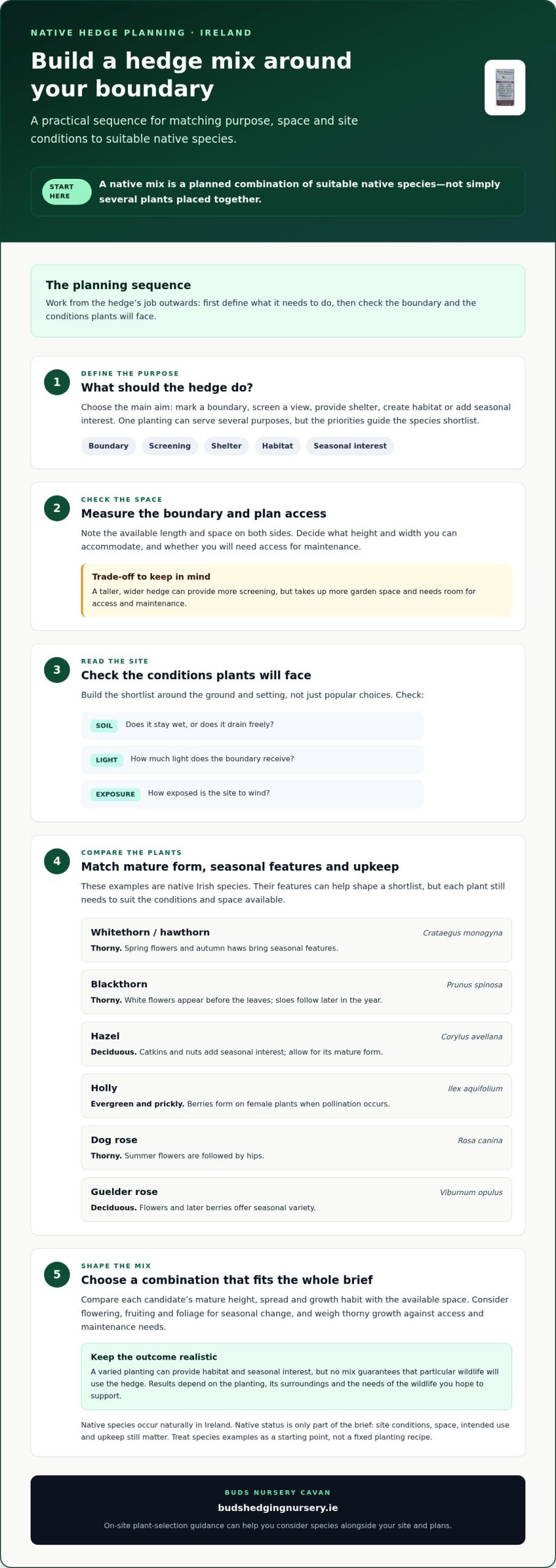
Plan and establish a native hedge mix with practical steps
A native hedge mix is easier to plant consistently and monitor when you plan it carefully. Work through the boundary in order, from measuring and preparing the ground to checking each plant after planting. The right planting method and spacing depend on the species and plant format, so follow reliable, species-specific guidance rather than applying one measurement to every hedge.
- Measure the line. Mark the full hedge length and note gates, paths, corners and access points. Check the usable width on both sides so the planned hedge won’t obstruct access as it grows.
- Review the ground. Look at drainage, soil condition, light and exposure along the route. Conditions can vary from one end to the other, so note wet, compacted or particularly exposed sections before finalising the plan.
- Prepare the planting area. Clear competing vegetation around the planting line and deal with weeds before planting. Choose a preparation method suited to the ground and plants, and avoid disturbing more soil than the site requires.
- Lay out the plants. Mark each position using your species plan. Follow spacing guidance for the chosen species, plant size and hedge design rather than relying on a universal gap.
- Plant and check. Handle roots carefully, plant at the recommended depth, firm the soil without heavily compacting it, then water as appropriate. Walk the line afterwards to check that plants are secure and the layout is consistent.
Prepare the boundary and planting plan
Prepare the site before the plants arrive. Mark the planting line clearly, including changes in direction, and keep access points free. If grass or other vegetation could compete with young plants, plan how to control it around the hedge. Adapt the method to the site and chosen plants rather than treating every boundary alike.
Spacing needs to suit the species and intended form. Check trusted planting guidance for the plants you’ve chosen, then follow a consistent measured layout along the line. This helps avoid crowding in some places and large gaps in others.
Plant and care for young hedge plants
Protect plants from drying out or damage during handling, and follow planting instructions for their format. Take particular care with bare-root plants and plant them during the appropriate dormant-season window, using current Irish guidance for timing. For related scheme context, Buds Nursery Cavan’s Native Trees Scheme guide explains more about scheme plants.
After planting, focus on firm roots, suitable moisture and regular checks for weeds, damage or plants that fail to settle. Watering needs vary with rainfall, soil and establishment, so assess the ground rather than following a fixed schedule. Note any struggling plants and seek species-specific advice where needed. For help choosing plants for your plan, get plant-selection guidance from Buds Nursery Cavan.
Choose native hedge plants and plan your next steps with Buds Nursery Cavan
You’ve considered the hedge’s purpose, the conditions along the boundary, the role of each species and the planting format. Bring those decisions together in a short project brief before choosing plants. It keeps selection focused and makes it easier to discuss practical options for your site rather than starting with a generic native hedge recipe.
What to have ready when selecting plants
A few clear notes make plant selection more useful. Bring measurements and photographs of the boundary, including changes in slope, shade or exposure. Add notes on soil and drainage, and mark access points that need to remain clear.
- Purpose: Decide whether the main aim is marking a boundary, screening, shelter, habitat or a combination.
- Dimensions: Note the planting length and the height and width the hedge can reasonably occupy.
- Site conditions: Describe the soil, drainage, light and exposure, including differences along the line.
- Plant roles: List the features you’re looking for, such as evergreen cover, flowers, fruit or varied growth forms.
- Establishment plan: Consider the plant format, timing and the early checks you can carry out after planting.
These details help match plant choices to the actual boundary. They also make it easier to compare options without losing sight of the hedge’s purpose or the space available. Keep the plan flexible: species suitability and mature form should guide the final selection.
Explore native planting options with Buds Nursery Cavan
Buds Nursery Cavan is an Irish nursery with more than 30 years of experience and 60 acres devoted to hedging, trees and shrubs. On-site plant-selection guidance is available Tuesday to Saturday. Bring your project notes to make the discussion practical, whether you’re comparing species or planning the format and planting requirements for your boundary.
The nursery participates in the Native Trees Scheme. This is useful context if you’re considering native planting, but the mix still needs to suit the site, its dimensions and the hedge’s intended role. Buds Nursery Cavan can help you consider plant choices within those practical limits. Delivery options are available for larger orders.
A clear brief is a good starting point. Explore the nursery’s hedging and tree range as you prepare your shortlist, then use your site notes to guide the next decisions. Focus on suitable plants and a workable establishment plan rather than choosing a mix simply because it is presented as a fixed package.
Make your boundary plan the starting point
A hedge takes time to grow into its role, so plan with the long term in mind. Consider how the boundary may be used in future, where access needs to stay clear and how much room you can leave for growth. Allowing space in the plan can make the hedge easier to live with as it matures.
Your native hedge mix Ireland project doesn’t need to begin with a fixed recipe. Start with the boundary, then shape the plant choices around the conditions and purpose you’ve identified. When you’re ready to shortlist suitable plants, Buds Nursery Cavan can help with the next practical step.
Explore Buds Nursery Cavan and browse plants to move your plan forward. With a clear site brief and a considered choice of species, you can start creating a boundary that suits your garden and has room to establish over time.
Frequently Asked Questions
What is a native hedge mix?
A native hedge mix is a planned selection of native species, chosen to suit the boundary and its intended use. When considering a native hedge mix in Ireland, decide not only which plants to include but where each will sit along the line. This makes the planting easier to manage than an assortment chosen without a plan. Check species names and suitability against reliable Irish horticultural guidance.
Which native plants are commonly used in Irish hedges?
Whitethorn (Crataegus monogyna), blackthorn (Prunus spinosa), holly (Ilex aquifolium), hazel (Corylus avellana), crab apple (Malus sylvestris), guelder rose (Viburnum opulus) and dog rose (Rosa canina) are species to research. Their names alone don’t show whether they suit a particular boundary. Compare mature form and growing requirements, and confirm botanical names and wildlife information using dependable Irish sources.
When is the best time to plant a native hedge in Ireland?
The right time depends on whether plants are bare-root or pot-grown, their requirements and the ground conditions. Bare-root plants are generally planted during dormancy; pot-grown plants may have a different planting window. Avoid planting when the soil is frozen, waterlogged or very dry. Before setting a date, consult current Irish horticultural advice and guidance for your chosen plants, then plan to protect roots from drying out before planting.
Can you mix native and non-native plants in a hedge?
Yes. A hedge can include both, but it should not be described as entirely native if it contains non-native plants. The choice depends on the site and what you want the hedge to do. If native planting is a priority, make suitable native species the main focus and choose any other plants deliberately. Don’t assume ornamental plants offer the same ecological value; consider each plant’s characteristics and suitability separately.
How many species should a native hedge mix contain?
There’s no single species count that works for every hedge. The boundary’s length, available space and planting aims all affect what is practical. A short garden edge, for instance, may be easier to plan with a compact shortlist, while a longer boundary could allow more variety if the site suits those plants. Choose species for clear roles, then check their mature size and spacing requirements before deciding on proportions.
How do I care for a newly planted native hedge?
Check young plants regularly for movement, damage, dry roots and signs of stress. Keep competing vegetation in check so it doesn’t overwhelm small plants, and water in response to weather and soil rather than following a fixed timetable. If a plant struggles, note its species and position, as conditions may differ along the hedge. Pruning and watering needs vary, so follow species-specific Irish guidance during the first growing seasons.