

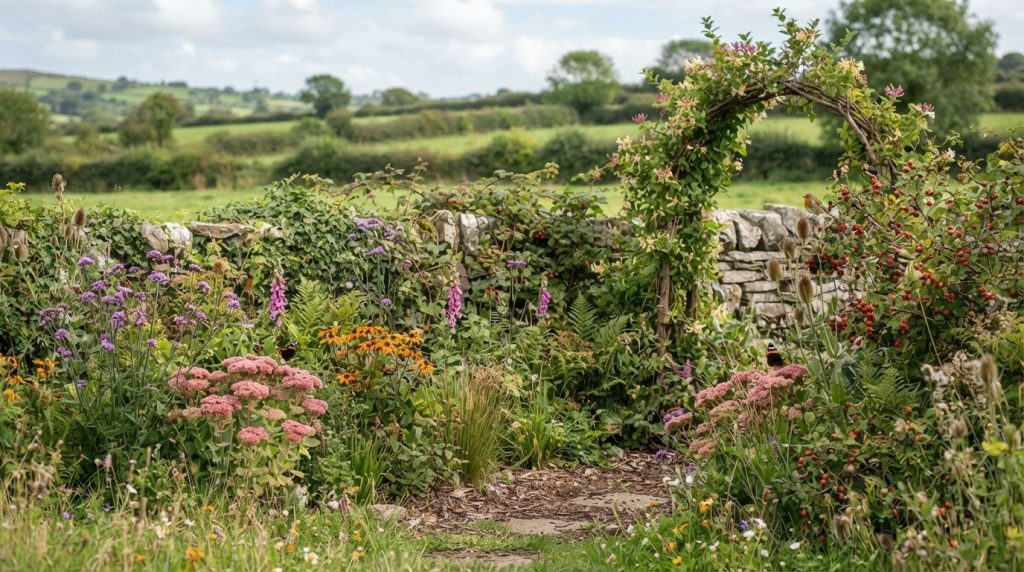
A border of wildlife friendly garden plants should offer more than flowers. Include nectar and pollen, berries and seeds, shelter, and leaves for caterpillars. Aim to have at least one plant in flower in each season. Single-flowered varieties are generally easier for insects to access than many double-flowered varieties.
It’s easy to focus on colourful blooms, but pollinators and birds need food and cover at different times of year. A useful planting plan combines flowers for bees and butterflies with honeysuckle, berry-bearing shrubs and plants that provide nesting or roosting shelter.
This guide explains how to choose plants for garden borders, match them to your garden’s conditions and avoid chemical pesticides. You’ll also learn how flowering times, berries and seedheads can support wildlife through the seasons, with practical examples suited to gardens in Ireland.
Key Takeaways
- Include late-summer sedum to provide nectar for bees and butterflies when other flowers may be fading.
- Choose evening-fragrant honeysuckle for moths, and keep its berries and mature growth in mind as food and potential nesting cover.
- Use hawthorn where it suits your garden to combine bird nesting cover with autumn fruits.
- Plan borders for a mix of nectar, pollen, berries, seeds and shelter, rather than relying on flowers alone.
- Learn how to avoid chemical pesticides and support garden wildlife through your planting and care choices.
Flower colours and shapes for pollinators
Choose flowers for accessible nectar and pollen, not colour alone. A varied border can feed pollinators across the seasons and create useful garden habitats.
-
Choose perennials and single-flowered varieties
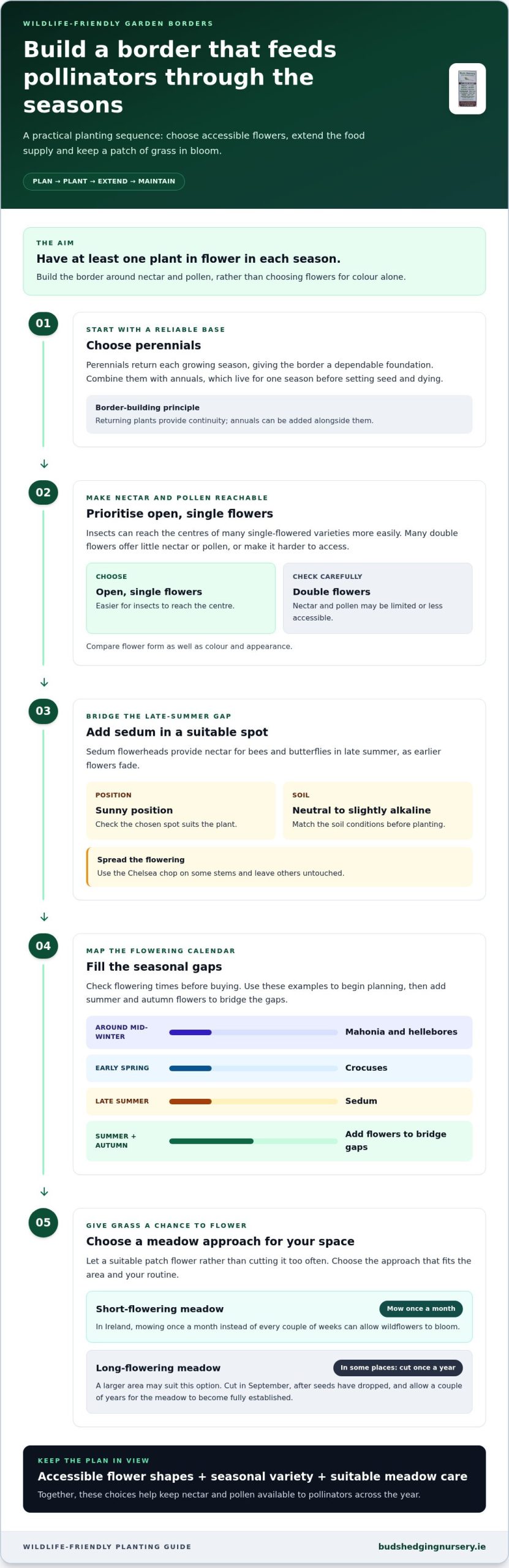
Start with perennial flowers, which return each growing season and can provide a reliable base for a border. Add single-flowered varieties, where insects can reach the centre more easily. Many double flowers offer little nectar or pollen, or make these harder to access. Compare flower forms when choosing plants instead of selecting by colour or appearance alone.
-
Include sedum flowers
Plant sedum in a sunny position with neutral to slightly alkaline soil. Its flowerheads provide nectar for bees and butterflies in late summer, extending the food supply as earlier flowers fade. Check that the chosen spot suits sedum before planting. To spread flowering across the border, use the Chelsea chop on some stems and leave others untouched.
-
Plan flowers across the seasons
Map flowering times before you buy, then aim to have at least one plant in flower in each season. Mahonia and hellebores can provide nectar for pollinators around mid-winter, while crocuses offer food in early spring. Add summer and autumn flowers to bridge the gaps. Annuals live for one season before setting seed and dying, so combine them with returning perennials.
-
Use flower shapes as well as colour
Choose a variety of open, single flowers so pollinators can reach their centres. Consider colour alongside flower shape, flowering season and suitability for your garden. This gives bees and butterflies more than a display to visit. Include flowers at different heights and group plants with similar growing needs to make the border easier to maintain.
-
Add a short- or long-flowering meadow
Let a suitable patch of grass flower rather than cutting it too often. In Ireland, mowing a short-flowering meadow once a month instead of every couple of weeks can allow wildflowers to bloom. A long-flowering meadow may suit a larger area: in some places, it can be cut once a year in September, after seeds have dropped. Allow a couple of years for it to become fully established. Choose the approach that suits your space and routine.
Honeysuckle fragrance, berries and nesting sites
Choose a climber for more than its flowers. Honeysuckle can provide evening food for moths, berries for birds and sheltered structure for nesting wildlife.
- Plant evening-fragrant honeysuckle where it has room to grow and its scent and flowers can be enjoyed. Moths visit flowers that release fragrance in the evening, and those moths feed birds and bats. This creates a food link beyond the plant itself. A climber near a seating area makes its fragrance easier to notice, while a fence or support gives its stems room to grow.
- Choose a honeysuckle that suits the height and space available. The cultivar ‘Graham Thomas’ reaches 2 metres, making its mature size a practical guide when planning a border or support. Allow room around the climber rather than crowding it between other plants. Good placement helps you retain access for pruning and lets the plant develop the leafy cover that makes a climber useful to wildlife.
- Leave some berries and older growth in place. Honeysuckle berries provide food for birds, while older, woodier plants can serve as nesting sites. Avoid cutting every stem back as soon as flowering finishes. Instead, assess the plant’s shape and remove only growth that needs controlling. This balances manageable growth with the denser structure birds may use for shelter or nesting.
- Use climbers to add shelter at different heights. Their stems and leaves can provide nesting places for birds, hibernation sites for butterflies and shelter from rain for bees. Keep the base of a climber accessible, rather than sealing it beneath paving or dense planting. A layer of ground cover plants can complement vertical growth by adding structure lower down, while leaving the climber’s stems visible for inspection.
- Keep wild bee nesting and feeding places close together. Solitary bees will only travel a few hundred meters from their nests to find food, so flowers near suitable nesting spots matter. For a simple nesting feature, drill holes 10cm deep into unvarnished wood. Keep the wood untreated, and position it where the holes remain clear. A bee hotel should be no bigger than an average-sized bird box, limiting the risk of disease spreading and attracting predators.
Broaden the planting around a climber with other forms of shelter. Plants with thorns or spiny leaves, including pyracantha, hawthorn and holly, can shelter nesting birds. A mixed native hedge can provide food and shelter for wildlife, including nesting birds, alongside vertical growth. On the island of Ireland, one third of wild bees are threatened with extinction, so make space for varied planting and nesting habitat. The island of Ireland has one honey bee species; planting for wildlife can support a wider range of needs across the garden.
Allow slower-growing food sources time to become useful. Song Thrushes may take at least five years to feed on ivy berries after the ivy is planted, so retain ivy and give it time to establish. Pruned branches need not be discarded: a log pile can provide habitat for beetles, woodlice and other invertebrates. Place it somewhere undisturbed, where it can complement the shelter and food offered by climbers, hedges and berry-bearing plants.
Avoiding chemical pesticides
Protect insects by preventing pest problems first, then using targeted, non-chemical controls when needed. These steps help keep flowers, pollen and garden habitats available to wildlife.
- Inspect leaves and stems before taking action. Look for aphids on young rose shoots or chewed leaves on brassicas. A small amount of plant damage doesn’t always need treatment. Identify the cause first, then decide whether the plant needs help. Removing a few affected leaves by hand may be enough. Avoid treating every insect as a pest, as some are useful food for birds and other wildlife.
- Use physical controls to protect vulnerable plants. Pick larger pests from leaves by hand, or cover young vegetables with a suitable mesh barrier. Remove weeds before they set seed, and clear diseased plant material rather than applying a general spray. Keep barriers in place only where they protect specific plants. Check beneath leaves and around stems, where insects can shelter from view.
- Encourage a natural balance by growing a variety of plants. Flowers that provide nectar and pollen can attract pollinators, while hedging and shrubs offer cover for wildlife. Leave some plant growth undisturbed where it won’t crowd a crop. A mixed border, for example, gives insects different places to feed and shelter. Avoid routine use of chemical pesticides across the whole garden.
- Time pruning and tidying to retain useful habitat. Ivy flowers provide food for bees in autumn, and its evergreen foliage shelters creatures through winter. If ivy is spreading, cut it back in spring rather than removing all the cover without thought. Leave hollow dried flower stems where practical, as they can shelter overwintering insects. These small choices preserve habitat without relying on chemical treatment.
- Manage specific problems with the least disruptive method. If aphids gather on one plant, try removing them with a firm stream of water or pruning the most affected tip. For slugs around seedlings, use barriers and keep the immediate planting area clear of hiding places. Recheck the plant after treatment. Avoid spraying open flowers, where bees and butterflies may be feeding, and don’t use chemicals simply because insects are present.
Make deliberate habitat choices when adding features to the garden. Think carefully about where nest boxes are placed in relation to bird feeding areas. Consider feeding and nesting locations together, rather than placing them wherever space is easiest to find. Keeping these areas distinct is a practical way to reduce interference while making room for wildlife. Review the arrangement if you change where food is provided or introduce a new habitat feature.
The materials used in routine gardening also matter. Avoid buying peat-based compost. Check the product description before purchasing so your choice supports efforts to garden with less harm to wildlife. These decisions complement careful plant care and restraint with pest control: consider the garden as a whole, including the materials brought into it and the places provided for wildlife. Small, deliberate choices can make a garden more supportive without turning every problem into a reason to use chemical treatment.
Berry-bearing shrubs as food for birds
Choose shrubs and trees that combine berries or seeds with shelter. Native hawthorn, blackthorn, hazel, holly and hornbeam can provide food or habitat for wildlife.
Hawthorn hedges offer nesting places and autumn fruits for birds. Native trees and shrubs can also supply caterpillar food plants, berries and seeds.
Choose berry-bearing shrubs for birds
Plant berry-bearing shrubs where birds can feed without removing every fruit for tidiness. Hawthorn is a useful example: its hedges offer nesting sites, and its fruits provide food in autumn. Keep some dense growth for cover instead of pruning the whole shrub into a bare outline. This combines food and shelter in one planting choice.
Use native trees and hedging plants
Choose native species such as hawthorn, hornbeam, blackthorn, hazel and holly for a wildlife-friendly hedge. Native shrubs and trees can offer caterpillar food plants, berries and seeds, supporting different needs within the same boundary. A mixed hedge also spreads habitat through the garden instead of concentrating it in one shrub.
- Match each plant to the space available. Hawthorn grows in a wide range of soil conditions and suits full sun or partial shade. Its flowers support over 150 insect species, adding value beyond its autumn berries. Allow enough room for a hedge to develop its branching structure, which birds can use for nesting.
- Mix species rather than relying on one hedging plant. Combine suitable native choices such as hazel, holly, blackthorn, hornbeam and hawthorn. Different plants provide a broader mix of berries, seeds and caterpillar food. This variety creates more than a boundary, giving wildlife several sources of food and shelter across the garden.
- Retain fruits and seeds for the season they serve. Birds need to eat plenty in cold weather to maintain their fat reserves, so avoid clearing every seedhead or berry-bearing stem during autumn tidying. Leave some fruits on shrubs and seed-bearing growth in place where it won’t obstruct paths or access.
- Prune hawthorn hedges with their structure in mind. Regular pruning makes them denser, creating useful nesting cover. Check for berries before cutting, and avoid removing all fruit-bearing growth at once. A considered trim can maintain a close hedge while preserving shelter and food for birds.
Wildlife-friendly plants for garden borders
Build a border around its conditions, then combine flowers, leaves and shelter. Match plants to the space and season rather than choosing by appearance alone. Wildlife friendly garden plants work best when their growing needs suit the garden.
-
Choose plants for soil and light conditions
Check how much sun each border receives and whether its soil stays wet or dries quickly. Match plants to those conditions: sedums suit sunny positions and neutral to slightly alkaline soil, while hawthorn grows in varied soils and tolerates full sun or partial shade. Avoid placing a plant where its basic needs don’t match the site.
-
Select native plants for garden wildlife
Choose native species such as hawthorn, hazel, holly, blackthorn and hornbeam for food and shelter. Native trees and shrubs can provide berries, seeds and caterpillar food plants, while a mixed hedge creates varied habitat. Common hawthorn also supports over 150 insect species, making it a useful choice where its mature size suits the garden.
-
Choose plants for moths and caterpillars
Include native trees and shrubs whose leaves can feed caterpillars, and add evening-fragrant honeysuckle to attract moths. Those moths also provide food for birds and bats. Keep some leafy growth instead of tidying every border completely, and choose a mix of plants so wildlife has more than flowers to use.
-
Avoid invasive and wildlife-unfriendly plants
Avoid pollen-free sunflower varieties if you want to feed bees, and favour single flowers over many double varieties. Double flowers can make nectar and pollen difficult for insects to reach. Avoid peat-based compost, too. Choose plants for the habitat they provide, not simply for dense flowering or quick coverage.
- Plant and prune with the season in mind. Winter is suitable for planting shrubs and trees while the ground isn’t frozen or too wet. Prune ivy in spring to help prevent it taking over, and prune hawthorn regularly for a denser hedge. Leave useful stems and foliage where they provide cover.
- Make a small border work harder with seed-grown annuals such as poppies, corn marigolds and cornflowers. They can grow from seed to produce flowers in a few months. Letting a small patch of grass grow longer also creates space for wildflowers, butterflies and small mammals. These choices make wildlife friendly garden plants practical even where space is limited.
- Use the All-Ireland Pollinator Plan garden map, dated March 2024, as a guide when planning for pollinators. For a native planting project, explore native planting options and choose trees suited to your garden’s space and conditions.
Buds Nursery Cavan: Portuguese Laurel
Buds Nursery Cavan can help you choose hedging or trees for a garden planting plan. Its range includes Portuguese Laurel, Cherry Laurel and Golden Privet for hedging, alongside fruit trees. These can provide structure, while native plants and berry-bearing shrubs add food and habitat for wildlife. Consider the role each plant needs to play, then choose accordingly.
For a wildlife-focused garden, balance the practical purpose of a hedge with plants that offer flowers, berries, seeds or shelter. Buds Nursery Cavan also offers a Native Trees Scheme for planting projects. Contact Buds Nursery Cavan or visit budshedgingnursery.ie to explore the options.
Make your next planting choice count
Choose one practical change to begin with, such as adding a shrub to a bare boundary or leaving part of a border less tightly managed. The most suitable wildlife friendly garden plants are those that suit your soil, light and available space, so they can establish and become part of the garden over time.
If you’re planning a hedge or adding trees, Buds Nursery Cavan offers Portuguese Laurel, Cherry Laurel and Golden Privet. Contact the nursery to discuss plant choices for your garden and how they fit your plans.
Contact Buds Nursery Cavan about plant advice, and take the next step towards a garden that gives wildlife more places to feed and shelter.
Frequently Asked Questions
How can I help pollinators in my garden?
Give pollinators several reasons to visit, then keep feeding and nesting areas connected. Plant flowers in small groups so blooms are easy to locate, and leave some hollow stems standing through winter. Avoid routine pesticide use, which can affect insects beyond the pest you intended to control. Even a modest border can contribute; choose plants suited to its light and soil rather than forcing unsuitable varieties to grow.
What flowers provide nectar and pollen for bees and butterflies throughout the year in Ireland?
Plan a sequence of blooms rather than expecting one flower to feed pollinators all year. Snowdrops and crocuses can serve early-emerging bees; mahonia and hellebores offer nectar around mid-winter. Add summer flowers, then retain late-season blooms such as sedum, whose flowerheads provide nectar in late summer. A simple month-by-month garden note helps reveal gaps, so you can choose your next plant to extend the flowering sequence.
Which plants attract birds, and what berries and seeds do they provide?
Hawthorn is useful for birds, offering autumn fruits as well as dense growth for nesting. Holly provides evergreen cover, while ivy and honeysuckle berries add further food sources. Leave sunflower seedheads standing after flowering rather than cutting them down immediately. These choices spread natural food through the garden and give birds shelter near feeding spots. Keep fruit-bearing stems where they won’t obstruct paths or routine garden work.