

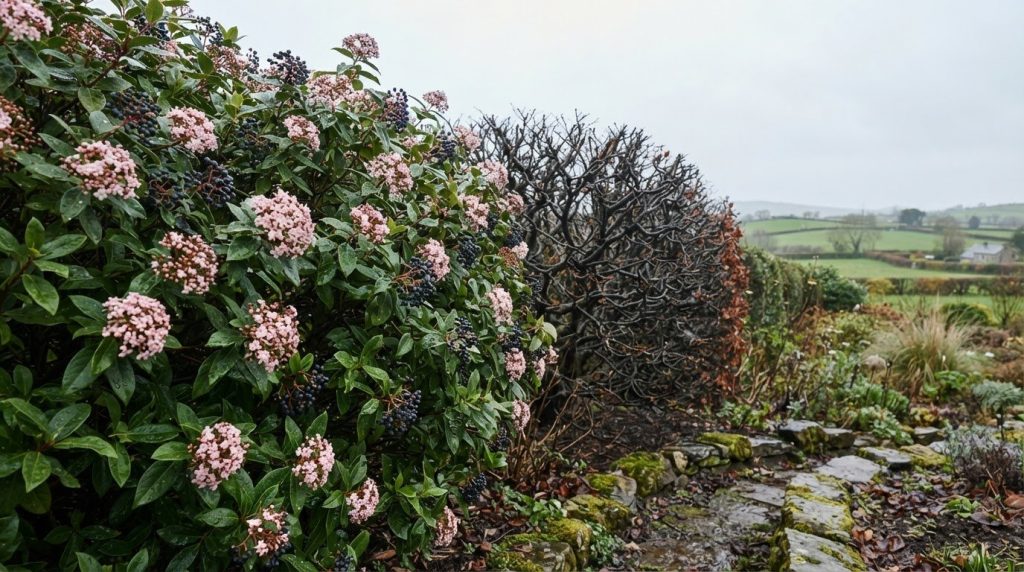
The obvious choice isn’t always the only one. If winter flowers are the priority, evergreen Viburnum tinus is a clear option for hedging that flowers in winter. It blooms during the colder months, with small pink flower clusters that develop into blue-black berries. Deciduous hedges can bring early interest too, although their flowers are more often a late-winter or spring feature.
Both types can suit an Irish garden. Evergreen hedging keeps its foliage and provides year-round structure, whilst deciduous plants offer a changing view through the seasons. The right choice depends on whether you prioritise winter screening, flowers or a mix of features.
This guide compares evergreen and deciduous hedging, explains which plants flower in winter and which bloom later, and looks at Viburnum tinus and its cultivars. You’ll also learn how to combine evergreen structure with seasonal flowers, so you can choose a hedge suited to your garden’s conditions and the effect you want.
Key Takeaways
- Choose evergreen hedging for year-round foliage and winter flowers, or deciduous plants for seasonal interest that often arrives in late winter or spring.
- Viburnum tinus is a practical option to consider for winter blooms, and cultivar choice can shape the effect you want from the hedge.
- Look beyond flowers when planning winter interest: berries, retained foliage and stem colour can also add structure and wildlife value.
- Wintersweet can flower in January during mild winters, but young plants need protection through their first few years.
- Match plants to your garden’s conditions and decide whether screening, flowers or a combination matters most before choosing your hedge.
1. Hedging plants that flower in late winter or early spring
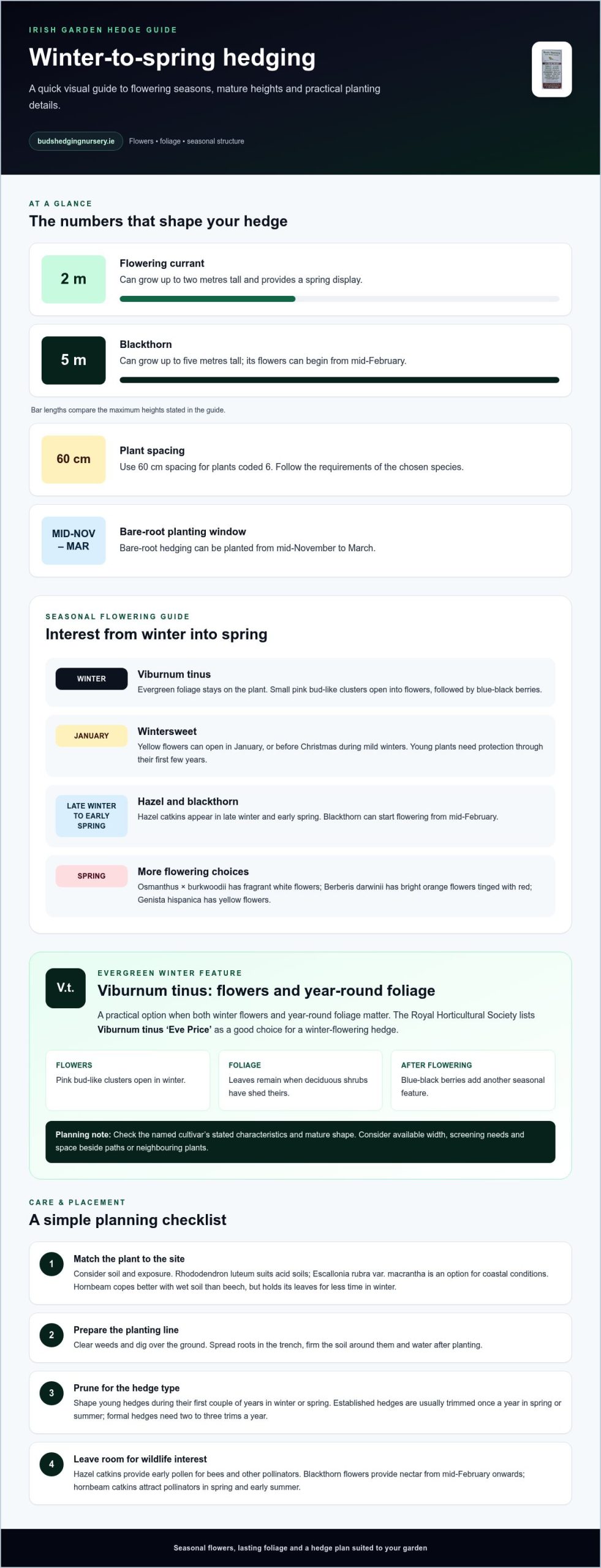
For a colourful hedge before spring is fully under way, consider plants that offer flowers, catkins or berries at different times. Hazel catkins appear in late winter and early spring, whilst blackthorn can begin flowering from mid-February. Both offer earlier interest than shrubs whose main flowering season starts in spring.
For later blooms, Osmanthus × burkwoodii has fragrant white flowers in spring, while Berberis darwinii produces bright orange flowers tinged with red. Genista hispanica is a smaller hedge plant with yellow spring flowers. Flowering currant also puts on a spring display and can grow up to two metres tall.
How tall do winter-flowering hedge plants grow? It depends on the species: flowering currant can reach two metres, whilst blackthorn can grow up to 5 metres. Choose for the mature height and width you can accommodate, as well as the screen you want the hedge to provide.
Match plants to your garden’s soil and exposure. Rhododendron luteum suits acid soils and bears fragrant yellow flowers in spring. For a coastal position, consider plants suited to coastal conditions, such as Escallonia rubra var. macrantha, which has crimson flowers. Hornbeam is another structural hedge option, particularly where wet soil is a concern. It copes better than beech, but holds its leaves for less time in winter.
Bare-root hedging can be planted from mid-November to March. Plant deciduous shrubs in winter or early spring, while they’re dormant. Clear weeds and dig over the ground, then spread the roots out in the planting trench. Firm the soil around them and water after planting. This helps the roots make contact with the soil before active spring growth begins.
How far apart should winter-flowering hedge plants be planted? For plants coded 6, use 60 cm spacing. Follow the needs of the chosen species and allow enough room for the hedge to fill out without crowding.
When and how should winter-flowering hedges be pruned? Shape young hedges during their first couple of years in winter or spring. Established hedges are usually trimmed once a year in spring or summer, while formal hedges need two to three trims a year. After the first growing season, a second pruning should be done while plants are dormant in winter, according to the Department of Agriculture, Food and the Marine.
What wildlife benefits do these hedges provide? Hazel catkins supply early pollen for bees and other pollinators, while blackthorn flowers provide nectar from mid-February onwards. Hornbeam catkins also attract pollinators in spring and early summer.
2. Viburnum tinus cultivar selection
Viburnum tinus is an evergreen shrub that flowers in winter. Its small, pink bud-like clusters open into flowers, followed by blue-black berries. Its leaves remain on the plant, giving the hedge structure when deciduous shrubs have shed theirs. This makes it useful where both winter flowers and year-round foliage are priorities.
Cultivar choice matters. The Royal Horticultural Society lists Viburnum tinus ‘Eve Price’ as a good choice for a winter-flowering hedge. First decide whether the hedge’s main purpose is to screen a boundary, mark a garden edge or add seasonal interest. Then choose a named plant suited to that purpose, rather than choosing by flower colour alone.
Use the plant label to distinguish Viburnum tinus from a named cultivar such as ‘Eve Price’. The species’ features provide a useful guide, but a cultivar is a selected form of the plant. Don’t assume every cultivar has identical growth or flowering details. Check its stated characteristics and mature shape before planning the hedge line.
In a small garden, consider the space beside paths, windows and neighbouring plants. Evergreen leaves create a strong visual presence in every season, so placement affects the whole border. For screening, plan a continuous row. For a mixed planting, leave room for companion shrubs without crowding the viburnum.
Viburnum tinus isn’t a native hedge plant, so decide whether native planting is a separate priority. A mixed garden can combine evergreen structure with native hedging elsewhere. This keeps each plant’s role clear: use viburnum for winter flowers and foliage, and choose other plants for different wildlife or boundary needs.
Before planting, mark the hedge line and compare the available width with the plant’s expected mature spread. Prepare the soil along the row, remove competing weeds and water the root area after planting. Avoid planting shrubs where their mature growth could block access or press against a path. These steps help you plan a hedge that fits the garden, rather than having to force its shape later.
For a tidier outline, remove misplaced or damaged growth with clean secateurs. Pruning just after flowering helps preserve the next display, rather than cutting through developing flower clusters later. Make selective cuts to retain the natural shape, or trim lightly where a defined edge matters. Check the plant before cutting, especially if you want to keep its berries for winter interest.
‘Eve Price’ offers a named starting point, but the choice still depends on space, screening and the balance of flowers against foliage. Weigh up those needs before choosing Viburnum tinus for an evergreen hedge. A clear planting plan helps the shrub add bright winter interest without overwhelming nearby plants.
4. Winter-flowering wintersweet
Wintersweet, Chimonanthus praecox, is a deciduous shrub that adds flowers to a winter garden. Its yellow blooms can open in January, or before Christmas during mild winters. It isn’t a conventional clipped hedge plant, so use it as a feature within an informal boundary. The distinction matters: wintersweet brings seasonal flowers, whilst other hedge plants provide continuous screening and foliage.
Choose its position before planting. Place wintersweet where you can see its flowers from a path or window in winter, and allow room for the shrub’s mature shape. A sheltered position helps protect young growth from exposure. Avoid squeezing it into a narrow formal hedge, where regular clipping would restrict its natural form and flowering wood.
Established wintersweet can withstand temperatures down to -10 °C. Young plants need winter protection during their first few years, so protect them from cold conditions while they establish. A well-placed shrub can then contribute winter colour without being relied on as the garden’s main boundary screen. Pair it with evergreen structure if year-round screening is also needed.
Keep wintersweet’s role distinct from hawthorn. Hawthorn is a hedge plant that flowers in spring and can carry berries into winter; wintersweet provides flowers during the colder season. Combining them can extend interest across more of the year. Use hawthorn for a boundary, then position wintersweet where its winter blooms remain visible rather than hidden in dense foliage.
Prune with the flower display in mind. Remove dead, damaged or crossing growth, and avoid routine clipping into a tight formal outline. If shaping is needed, make selective cuts after flowering and preserve healthy shoots for future growth. Check the shrub’s structure before cutting, then remove only branches that disrupt its shape or crowd nearby plants.
For a practical planting plan, first decide whether you prioritise screening, a formal boundary or winter flowers. Use wintersweet for an informal flowering role, and choose separate hedge plants for a clipped edge or dense foliage. Protect young wintersweet in winter, then let the shrub develop its natural outline. This combination brings seasonal colour to an Irish garden alongside dependable hedge structure.
4. Which hedge plants flower in winter in Ireland?
Viburnum tinus and Viburnum farreri are two options for winter flowers in an Irish garden. Viburnum tinus is evergreen, so it keeps its leaves whilst flowering. The Royal Horticultural Society describes Viburnum farreri as flowering through winter and suitable for a medium-to-large hedge. Choose between them by weighing year-round foliage against the space available for a larger hedge.
Viburnum tinus produces small pink, bud-like flower clusters in winter, which develop into blue-black berries. Its evergreen foliage gives a boundary structure beyond the flowering period. This makes it useful where screening matters alongside seasonal interest. Plan the planting line around its mature shape, leaving enough room for the shrub to grow without pressing against paths or nearby plants.
Viburnum farreri suits a different role. Its winter flowers make it worth considering where a medium-to-large hedge fits the garden. Before planting, mark out the intended hedge line and check its position relative to doors, windows and paths. A hedge can screen a boundary, but flowering shrubs are easier to enjoy when planted where they can be seen from the house.
Neither choice has to cover the whole boundary. Use Viburnum tinus for evergreen structure, then place Viburnum farreri where its flowers can add interest to a more open section. This separates the roles of screening and seasonal display, while leaving room for other hedge plants to provide height, shape or flowers in different seasons.
When comparing these viburnums, consider the conditions where you plan to plant. Check how much room the hedge has to spread, whether the position is exposed and how much screening you need in winter. Read the plant labels for stated size and growing preferences. These details help you choose a suitable position and avoid crowding the hedge as it matures.
For a practical choice, start with the hedge’s purpose. Select Viburnum tinus if evergreen leaves and winter flowers are both priorities. Consider Viburnum farreri for a medium-to-large hedge that flowers through winter. If you need continuous screening, plan for foliage and structure as well as blooms. If flowers are your main aim, place shrubs where you can see the display from a window or path.
5. When do winter-flowering hedges bloom in Ireland?
Winter flowering doesn’t happen at one fixed time across every Irish garden. Viburnum tinus flowers during winter, while the Royal Horticultural Society describes Viburnum farreri as flowering through winter. Wintersweet can open in January, or before Christmas during mild winters. These plants have different flowering windows, so combining them can extend interest through the colder season.
Start the seasonal sequence with wintersweet. Its yellow flowers may appear before Christmas in a mild winter or open in January. Choose a sheltered spot where you can enjoy the flowers from a path or window. Young plants need winter protection in their first few years, so plan for that care when choosing a planting position.
Viburnum tinus adds another winter display. Its pink, bud-like clusters open into flowers, then develop into blue-black berries. Evergreen leaves keep the hedge visually present after flowering. Viburnum farreri flowers through winter and suits a medium-to-large hedge, making it an option where there’s room for a substantial shrub.
Late winter brings other early signs of the coming season. Hazel catkins appear in late winter and early spring, providing early pollen for bees and other pollinators. Blackthorn can start flowering from mid-February onwards, offering nectar. These plants extend the display beyond shrubs whose main flowering period begins in spring.
Spring-flowering hedges can follow winter blooms rather than replace them. Osmanthus × burkwoodii has fragrant white flowers in spring, while Berberis darwinii bears orange flowers tinged with red. Hawthorn flowers in spring and can carry berries into winter. Together, these examples show how a hedge can offer changing colour and wildlife value across several seasons.
To plan a longer flowering sequence, list the months when each plant blooms, then position each shrub where its flowers can be seen. Use evergreen species such as Viburnum tinus where winter structure matters. Add deciduous options such as wintersweet for seasonal flowers, and allow room for their mature form. This gives each plant a clear role without relying on one hedge to provide every feature.
For a winter display, compare the flowering periods of winter-flowering hedge plants and choose a mix that suits your garden’s space and screening needs.
Buds Nursery Cavan: Portuguese Laurel
Buds Nursery Cavan offers hedging plants for structure alongside plants for a winter-flowering display. Portuguese Laurel provides an evergreen screening option, whilst Cherry Laurel and Golden Privet offer further choices for a boundary hedge. These plants can complement flowering shrubs such as Viburnum tinus, rather than replacing them as winter bloomers.
Consider Portuguese Laurel if you want year-round foliage and a defined hedge line. For a mixed garden, think about how evergreen screening will sit alongside flowering plants and other features. Buds Nursery Cavan also offers Fruit Trees for other planting plans.
For a practical next step, visit Buds Nursery Cavan’s website to explore its plant offerings, or contact Buds Nursery Cavan about your hedging plans.
Plan a hedge that suits your garden
Choosing hedging that flowers in winter also means deciding how the planting will work with the rest of your garden. Consider the view from the house, the boundary you want to screen and the space available for shrubs to mature. A simple sketch can help balance flowering plants with evergreen structure, rather than expecting one hedge to meet every need.
Buds Nursery Cavan offers Portuguese Laurel, Cherry Laurel and Golden Privet for evergreen hedge structure. These can sit alongside flowering plants in a broader planting plan, with each serving a clear purpose. First consider the finished effect you want: a dense boundary, a softer mixed edge or planting that frames a path.
For help choosing hedge plants for your garden, contact Buds Nursery Cavan. A considered plan now gives you a practical starting point for a garden with interest through the seasons.
Frequently Asked Questions
Evergreen or deciduous?
Choose evergreen hedging if you want foliage to screen a boundary throughout the year; choose deciduous plants for a more seasonal look. The choice also affects what you see beyond winter: beech leaves can remain on the hedge until spring, whilst hornbeam loses its leaves sooner. In a mixed garden, combine evergreen structure with deciduous shrubs placed where their seasonal flowers can be seen.
Which Flowering Hedge is Best For You?
The right choice depends on what you need the hedge to do. For winter flowers and evergreen foliage, consider Viburnum tinus; for an informal boundary with spring flowers, blackthorn is another option. Check the soil, exposure and available space before deciding. If you need a clipped, narrow screen, choose a plant suited to regular shaping rather than one grown mainly for its natural form.
What does “hedging that flowers in winter” mean?
It describes a hedge or hedge planting that produces flowers during winter, rather than only in spring or summer. The term can refer to shrubs in a continuous hedge or flowering plants mixed with evergreen screening. Viburnum tinus is a clear example: it flowers in winter and develops blue-black berries. Check the plant’s flowering season, as early spring blooms are different from flowers that appear through winter.
Which winter-flowering hedge plants are evergreen?
Viburnum tinus is an evergreen shrub that flowers in winter, combining seasonal blooms with foliage that remains on the plant. This makes it useful when you want a boundary to retain visual cover in colder months. Viburnum farreri also flowers through winter, but is described as a medium-to-large hedge plant, not an evergreen one. Consider foliage needs as well as flowering time when comparing the two.
What are the best winter-flowering hedges for Irish gardens?
Viburnum tinus is a practical starting point for an evergreen winter display, while Viburnum farreri flowers through winter and suits a medium-to-large hedge. Wintersweet can add flowers as a feature shrub rather than serve as a clipped boundary. For a useful comparison, decide whether you need screening, a flowering focal point or both, then choose plants to suit the space and the effect you want.
Are winter-flowering hedges suitable for coastal or exposed Irish gardens?
Some hedge plants are suited to coastal positions, but coastal suitability doesn’t automatically mean winter flowering. Escallonia rubra var. macrantha is listed as a coastal hedge plant with crimson flowers, whilst Viburnum tinus is an evergreen winter-flowering shrub. For an exposed site, assess shelter and the hedge’s purpose before combining them. Keep flowering shrubs where you can see the display, and use suitable plants for boundary structure.
Where can I buy winter-flowering hedge plants in Ireland?
Buds Nursery Cavan offers Viburnum Tinus, a suitable option to consider for winter flowers, alongside other hedging plants. The nursery provides on-site sales and delivery service is available pending quantity and site location. Compare the plants’ flowering season with your garden’s screening needs before choosing. If you’re planning a mixed hedge, decide which plants will provide flowers and which will form the main boundary structure.