

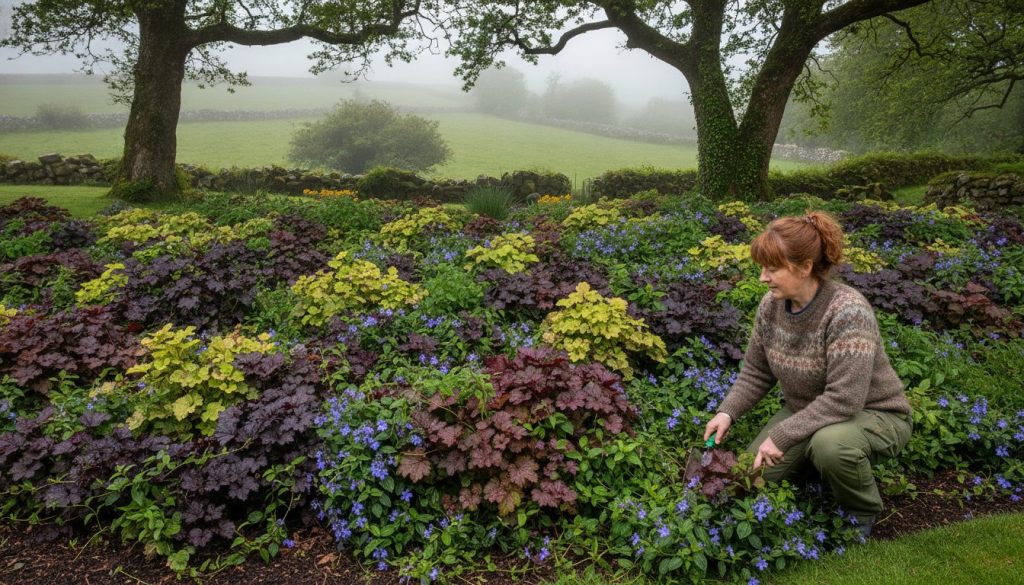
Every hour spent pulling weeds from a bare garden border is essentially wasted energy that could be better spent enjoying your outdoor space. Most Irish gardeners accept persistent weed growth and soil erosion as back-breaking labour, especially when selecting the best ground cover plants Ireland has to offer for heavy clay or shaded corners. It’s frustrating to see open soil washed away by winter rain or overtaken by invasive scutch grass before the summer even begins.
You don’t have to settle for a constant battle against the elements. This guide shows you how to transform those problematic gaps, creating a living mulch that suppresses weeds and protects your soil health. Drawing on 30 years of experience at Buds Nursery, we’ll walk you through selecting varieties that thrive in our specific maritime conditions. You will learn how to choose the right species for deep shade, how to stabilise sloped areas, and the best ways to establish a low-maintenance, lush garden that maintains a professional finish year-round.
Key Takeaways
- Understand the “living mulch” concept and how dense plant mats naturally prevent weed seeds from germinating in your garden soil.
- Discover the best evergreen ground cover plants Ireland has to offer to ensure year-round colour and reliable coverage in our damp maritime climate.
- Learn how to select specific varieties that thrive in difficult Irish conditions, including heavy clay soil, deep shade, and exposed coastal sites.
- Master the correct planting techniques and spacing intervals required to help your ground cover knit together quickly for a low-maintenance finish.
- Benefit from 30 years of specialist growing experience at Buds Nursery to ensure your plants are hardened to local conditions and arrive ready to establish.
Why Ground Cover Plants are Essential for Irish Gardens
Ground cover plants are more than just a decorative choice for the garden floor. They function as a low-growing plant layer that forms a dense, carpet-like mat across open borders. This creates what we call a “living mulch.” Instead of applying bark or gravel every season, you use foliage to prevent weed seeds from germinating. For those managing ground cover plants Ireland offers a natural way to reduce manual hoeing and the reliance on chemical weedkillers. It’s a practical, long-term solution for filling garden gaps that otherwise invite unwanted growth. At Buds Nursery, we’ve spent 30 years observing how these plants transform high-maintenance areas into self-sustaining landscapes.
The Science of Weed Suppression
The effectiveness of these plants lies in their physical structure. Dense foliage creates a canopy that blocks sunlight from reaching the soil surface. Since most weed seeds require light to trigger germination, a well-established carpet effectively keeps them dormant. Beyond light, root competition plays a vital role. Vigorous ground covers occupy the upper soil layers, out-competing invasive garden weeds for nutrients and water. Choosing evergreen varieties is particularly useful in our climate. These plants provide year-round protection. Even during mild winters, the soil remains covered and protected from opportunistic weeds that thrive in damp conditions.
Protecting and Improving Irish Soil
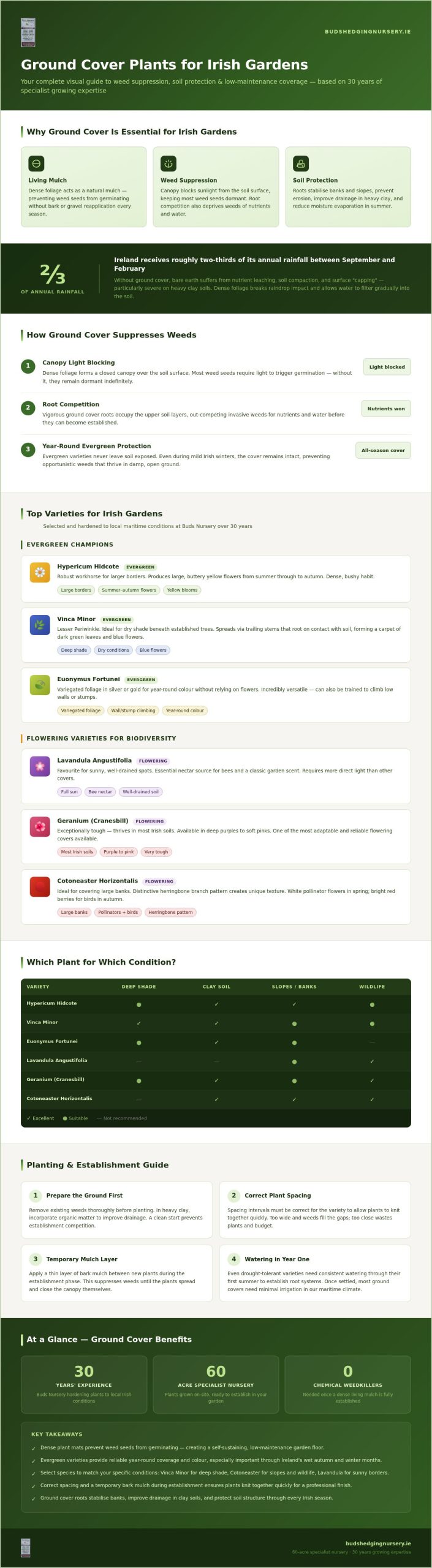
Ireland’s rainfall patterns present specific challenges for bare earth. Roughly two-thirds of our annual rainfall occurs between September and February. Without cover, heavy rain leads to nutrient leaching and soil compaction. Ground cover plants act as a buffer. They break the impact of raindrops and allow water to filter into the soil gradually. This prevents the “capping” of the soil surface that often happens in heavy clay areas.
Their root systems are equally beneficial. They help stabilise sloped garden banks that are prone to erosion whilst improving the overall soil structure. In heavy soil, these roots create channels that improve drainage and aeration. During drier summer spells, the dense foliage regulates moisture by reducing evaporation. This keeps the root zones of larger shrubs and trees cool and hydrated. It’s a simple way to maintain a healthy, resilient landscape with minimal intervention. By selecting the right ground cover plants Ireland gardeners can protect their soil’s integrity through every season.
Top Ground Cover Varieties for Weed Suppression and Colour
Selecting the right species involves balancing growth speed with long-term maintenance. You need plants that colonise bare soil quickly but don’t become a nuisance in neighbouring borders. For the best ground cover plants Ireland offers, we focus on varieties that handle high rainfall and varying light levels. At Buds Nursery, we’ve refined our selection over 30 years to ensure every plant is hardened to local conditions before it reaches your garden.
Low-Maintenance Evergreen Champions
Evergreen varieties provide the most consistent weed suppression because they never leave the soil exposed. Hypericum Hidcote is a robust choice. It produces large, buttery yellow flowers from summer through to autumn. Its dense, bushy habit makes it a reliable workhorse for larger borders. For those difficult patches of dry shade under established trees, Vinca Minor (Lesser Periwinkle) is excellent. It spreads via trailing stems that root where they touch the ground, creating a carpet of dark green leaves and blue flowers. If you want year-round colour without flowers, Euonymus Fortunei varieties offer variegated foliage in silver or gold. These are incredibly versatile and can even be trained to climb low walls or stumps.
Flowering Ground Cover for Biodiversity
Functional gardens should also support local wildlife. Lavandula Angustifolia is a favourite for sunny, well-drained spots. Whilst it requires more light than other covers, it provides essential nectar for bees and a classic scent for the gardener. For sheer toughness, Geranium (Cranesbill) is hard to beat. It thrives in most Irish soils and comes in various colours, from deep purples to soft pinks. If you have a large bank to cover, Cotoneaster horizontalis is a practical selection. Its herringbone branch pattern creates a unique texture. It provides white flowers for pollinators in spring followed by bright red berries for birds in the autumn. To get started with these reliable varieties, you can view our range of ground cover plants grown right here in our 60-acre specialist nursery.
Selecting Plants for Specific Irish Soil and Light Conditions
Successful gardening in our climate depends entirely on matching a species to its environment. We often see homeowners struggle with heavy clay soil or deep shade where grass simply refuses to grow. Ground cover plants Ireland gardeners select must be resilient enough to handle our high rainfall whilst remaining aesthetically pleasing. At Buds Nursery, we advise a “right plant, right place” approach to ensure your landscape thrives without constant intervention. This is particularly important for steep banks where mowing is impractical or dangerous. A well-chosen cover stabilises the soil and removes the need for maintenance on difficult inclines.
Best Ground Cover for Shade and Damp Soil
Shaded areas in Irish gardens are often damp, as roughly two-thirds of our annual rainfall occurs between September and February. Pachysandra terminalis is arguably the most reliable solution for deep shade under mature trees. It forms a neat, evergreen carpet that ignores root competition from larger specimens. For a more decorative finish in damp spots, Ajuga reptans (Bugle) offers striking blue flower spikes and dark, glossy foliage. If you have a larger area to fill, Viburnum Tinus can be managed as a taller ground cover. It provides winter interest with white flowers and metallic blue berries, standing up well to the heavy, wet soils common across the country.
Tough Plants for Sun and Dry Banks
Coastal gardens and south-facing slopes present the opposite challenge: thin soil and salt spray. For these sites, you need plants that are drought-tolerant and wind-resistant. Juniperus horizontalis is a coniferous evergreen that excels in poor soil. It handles salt-laden winds with ease, making it a staple for coastal properties. On sunny paths or rockier banks, Thymus serpyllum (Creeping Thyme) provides a fragrant, low-growing mat that tolerates light foot traffic. We also recommend various Sedum varieties for shallow soils. These succulents store water in their leaves, allowing them to stay green even during the drier summer months when other plants might fail. By selecting from the ground cover plants Ireland nurseries like ours have hardened to local conditions, you ensure your garden remains resilient against the elements.
- Pachysandra terminalis – Best for deep shade.
- Ajuga reptans – Best for damp soil.
- Juniperus horizontalis – Best for coastal wind.
- Buds Nursery Selections – Expertly grown for Irish conditions.
How to Plant and Establish Ground Cover Successfully
Success with ground cover plants Ireland depends on meticulous preparation. You cannot simply plant into a weed-infested border and expect the cover to win. Perennial weeds like dock or couch grass will grow through your new plants and steal nutrients. Thoroughly clear the area of all existing vegetation before you begin. The best time to plant in Ireland is early autumn or mid-spring. In fact, Irish soil temperatures at a depth of 10cm often remain above 13°C into mid-October. This warmth, combined with returning seasonal rain, allows roots to establish quickly before winter dormancy. For those using bareroot varieties, the window extends from mid-November to March.
Preparation and Spacing Calculations
Before planting, incorporate organic matter like well-rotted manure or compost. This is vital for heavy clay soils common across the country to improve drainage and structure. When calculating how many plants you need, consider the pot size and growth habit. For most 9cm or 1-litre pots, we recommend a density of 5 to 7 plants per square metre. If you want a “finished” look faster, increase this to 9 plants. Marking out the area with a grid of sand or string helps ensure even distribution. This prevents patchy coverage that would otherwise allow light to reach the soil and trigger weed germination.
Aftercare and Maintenance Tips
Establishment typically takes two growing seasons. During the first year, regular watering is essential during any dry spells. Apply a 5cm layer of bark mulch between the new plants immediately after planting. This mulch suppresses weeds whilst the ground cover “knits” together to form a solid mat. Spot-weed by hand as soon as you see unwanted growth to prevent it from setting seed. Once the canopy is closed, maintenance drops significantly. Most varieties only need a light trim in early spring to remove dead foliage or to keep them within their designated borders. For the best results, order your ground cover plants from our 60-acre nursery where they are grown to withstand the Irish climate.
Why Choose Buds Nursery for Your Ground Cover Needs
Selecting where to source your plants is just as critical as the species you choose. At Buds Nursery, we operate as specialist growers with 30 years of experience managing our 60-acre site. This scale allows us to grow plants that are fully hardened to the specific challenges of the Irish environment. Buying directly from a traditional grower ensures you receive stock that hasn’t been weakened by long transit times or improper storage in a retail centre. For those seeking the highest quality ground cover plants Ireland has available, our nursery provides a level of reliability that only decades of hands-on experience can produce. We’re proud to be a local fixture that prioritises the health of our output over high-volume retail trends.
Expertly Grown for the Irish Climate
Plants grown on-site are naturally more resilient than generic retail stock. We understand the physical mechanics of Irish soil types, from the heavy clays of the midlands to the exposed coastal soils of the west. Our commitment to plant health means we focus on developing robust root systems before any plant leaves the nursery. This is particularly vital for ground cover. These plants need to be vigorous enough to out-compete weeds from the moment they’re planted in your garden. We don’t rely on high-energy marketing; instead, we offer straightforward, expert horticultural advice to help you match the right species to your garden’s light levels and drainage needs. This ensures your project succeeds in the long term.
A Comprehensive Range of Trees and Hedging
A professional garden finish often involves layering different heights and textures. Our ground cover varieties are designed to complement our wider range of hedging and trees. For example, you can create a classic, structured look by pairing low-growing covers with Portuguese laurel or the seasonal colour of beech hedging. Sourcing your entire project from a single specialist grower ensures consistency in plant maturity and health across your landscape. It also makes the establishment phase much more predictable whilst simplifying your logistics. We provide a reliable national delivery service to ensure your plants arrive in peak condition, ready for immediate planting. You can contact us today to organise your national delivery and benefit from three decades of professional growing expertise across Ireland.
Establishing Your Low-Maintenance Garden
Establishing a resilient garden floor is a practical investment that pays dividends in reduced maintenance and improved soil health. By selecting the right ground cover plants Ireland gardeners can transform difficult corners and sloped banks into lush, self-sustaining landscapes. Success relies on thorough site preparation and choosing species that are hardened to our specific maritime climate. This approach not only suppresses persistent weeds but also protects your soil from the heavy winter rainfall typical across the country.
At Buds Nursery, we provide the expertise needed to make these selections with confidence. With over 30 years of horticultural experience and 60 acres of Irish-grown stock, we ensure every plant is ready to thrive from the moment it’s delivered. Whether you’re managing heavy clay or deep shade, our reliable national delivery service makes it easy to source resilient varieties for any scale of project. You can browse our full range of ground cover and hedging at Buds Nursery to start your garden transformation. Building a functional, beautiful outdoor space is straightforward when you work with the right plants and professional advice.
Frequently Asked Questions
Beyond plant selection, enhancing your garden with functional features can make it a year-round retreat. Even if you are gardening in Ireland, you can look to international trends for inspiration, such as incorporating a fire pit BBQ combo Australia to create a versatile social hub in your newly transformed outdoor space.
What is the fastest-growing ground cover for Ireland?
Vinca Minor (Lesser Periwinkle) and Cotoneaster are amongst the fastest-growing options for Irish gardens. Vinca Minor spreads rapidly via trailing stems that root into the soil as they grow. This habit makes it ideal for covering large, shaded areas quickly. Cotoneaster horizontalis is another vigorous choice, particularly suited for covering steep banks. Whilst speed is an advantage, regular pruning is required to keep these plants within their intended borders and prevent them from overtaking slower species.
Can I plant ground cover through weed membrane?
You should generally avoid planting ground cover through a weed membrane. Most ground cover plants Ireland gardeners use spread by “creeping,” meaning their stems root into the earth as they touch it. A plastic or fabric membrane blocks this physical contact, preventing the plant from forming a dense, self-sustaining mat. Instead, we recommend clearing the soil thoroughly and using a thick layer of organic bark mulch to suppress weeds during the initial establishment phase.
How many ground cover plants do I need per square metre?
We typically recommend planting between 5 and 9 plants per square metre. For standard 9cm or 1-litre pots, 7 plants per square metre is a reliable average that ensures the canopy closes within two growing seasons. If you have a smaller budget, 5 plants will eventually cover the area. Conversely, using 9 plants per square metre provides a much faster “knit-together” effect, which is better for immediate weed suppression and a professional finish.
Are there evergreen ground cover plants that flower?
Several evergreen varieties provide year-round foliage alongside seasonal flowers. Hypericum Hidcote is a standout choice, offering bright yellow blooms from midsummer. Vinca Minor produces blue or purple flowers in spring, whilst Viburnum Tinus offers white clusters followed by metallic berries in the winter months. Selecting these varieties ensures your garden remains green during the damp winter whilst providing essential nectar for pollinators when they emerge in the warmer months. These are reliable, hard-working garden staples.
How do I stop ground cover from becoming invasive?
Choosing the right species is the first step in managing growth. We recommend selecting vigorous but non-invasive growers like Euonymus or Hypericum. To keep them contained, use a spade to edge your borders once a year, cutting back any stems that have strayed beyond their limit. For particularly active spreaders, a physical root barrier buried 30cm deep can prevent underground runners from entering lawn areas or neighbouring flower beds. Regular maintenance prevents a plant from becoming a problem.
When is the best time to plant ground cover in Ireland?
Early autumn, specifically September and October, is the best time to plant ground cover in Ireland. During this period, the soil is still warm from the summer sun, but the returning rainfall provides the moisture needed for root development. This allows the plants to establish a strong system before winter dormancy. Mid-spring is a suitable alternative, provided you can commit to regular watering throughout the first summer to prevent the young plants from drying out during dry spells.
What ground cover works best for heavy clay soil?
Viburnum Tinus and Hypericum Hidcote are exceptionally resilient in heavy clay soil. These plants have robust root systems that can tolerate the low oxygen levels and compaction often found in clay-heavy Irish gardens. Improving the area with organic matter before planting will help, but these specific varieties are naturally adapted to handle damp, heavy conditions. They maintain a dense habit that prevents the soil surface from becoming “capped” or waterlogged during periods of intense rainfall.
Will ground cover plants kill my existing weeds?
Ground cover plants don’t kill existing weeds; they prevent new ones from germinating. If you plant into a bed that already contains perennial weeds like scutch grass or bindweed, those weeds will simply grow through the ground cover. It’s essential to clear the ground completely before you begin. Once established, the dense foliage of the ground cover blocks the sunlight that weed seeds need to grow, effectively acting as a permanent, living mulch that protects your soil.