

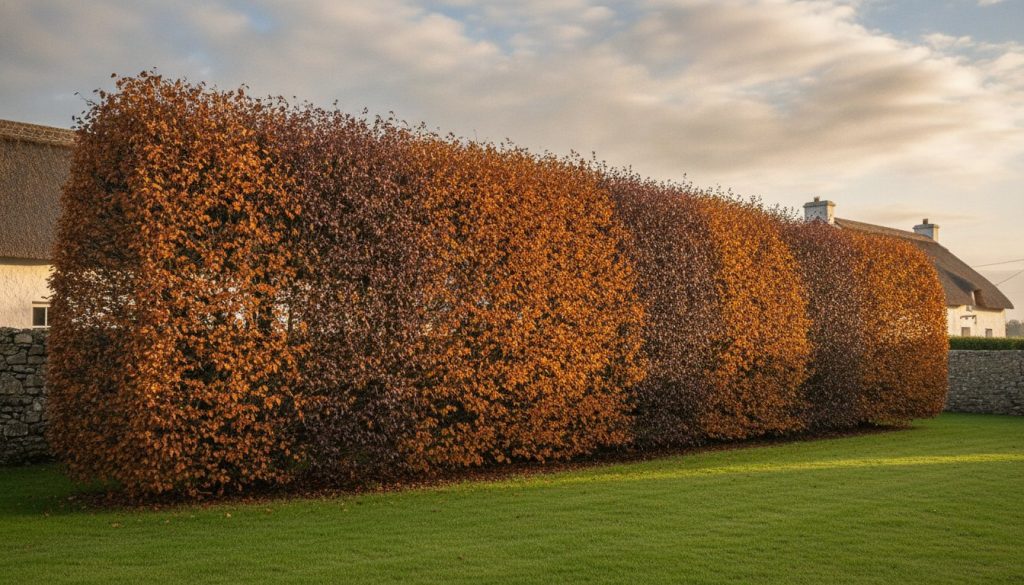
You might think that choosing a deciduous hedge means sacrificing your privacy the moment the first frost hits, but copper beech proves otherwise. It’s a common worry for Irish gardeners who want the security of a laurel hedge but crave the deep, changing colours of a traditional woodland. You want a garden that feels private all year round without looking like a static wall of green. Copper beech hedging plants offer a unique solution by retaining their crisp, copper leaves throughout the winter months, providing a reliable screen when you need it most.
In this guide, we’ll show you how to successfully establish this striking purple hedge in your own garden. Drawing on 30 years of horticultural experience at our 60-acre nursery, we’ll clear up the confusion regarding bare root versus potted varieties and explain why a growth rate of one to two feet per year is worth the wait. You’ll learn the exact spacing required for a dense finish, the legalities of the Wildlife Act 1976 concerning maintenance, and the practical steps to ensure your hedging thrives in the Irish climate. Whether you’re looking for a single row or a staggered double hedge, we have the expert knowledge to help you succeed.
Key Takeaways
- Learn how copper beech provides year-round privacy by retaining its copper foliage throughout the winter months.
- Understand the seasonal differences between bare root and potted copper beech hedging plants to select the best format for your garden and budget.
- Discover the specific spacing requirements and growth rates needed to establish a dense, structural purple screen.
- Gain expert knowledge on site preparation and the legal restrictions regarding hedge maintenance in Ireland.
- Access professional tips on soil testing and planting techniques developed over 30 years of specialist nursery experience.
Understanding Copper Beech: The Majestic Purple Hedge for Irish Gardens
Copper beech is much more than a simple colour variant; it’s a structural garden asset that has defined Irish estates for generations. Scientifically known as Fagus sylvatica ‘Purpurea’, it’s a cultivar of the European Beech (Fagus sylvatica). Unlike the common green variety, these copper beech hedging plants offer a deep purple hue that adds a sense of maturity and prestige to any property. It’s often chosen for large country estates and modern suburban gardens alike because it provides a sophisticated, dark backdrop that contrasts beautifully with lighter green shrubs or flowering perennials.
Many homeowners view copper beech hedging plants as a prestige choice. This reputation comes from the plant’s longevity and the unique way its dark foliage absorbs light rather than reflecting it. This creates a sense of depth and permanence that lighter, faster-growing hedges often fail to match. From an ecological perspective, a beech hedge acts as a living corridor. The dense branch structure provides secure nesting sites for local birdlife like thrushes and finches. Insects find refuge amongst the foliage, and the beech mast produced by mature plants serves as a vital food source for small mammals in late autumn.
The Seasonal Colour Journey of Fagus Sylvatica Purpurea
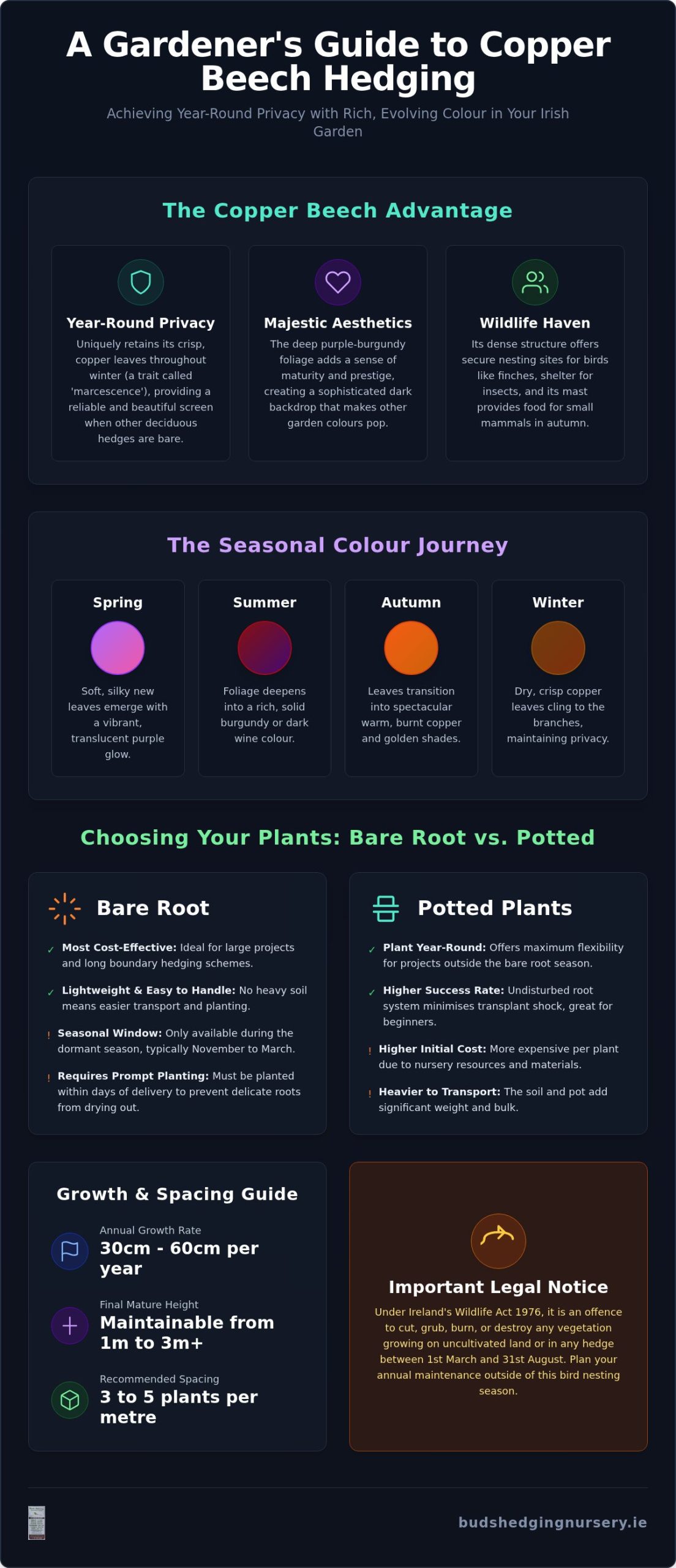
The visual appeal of this hedge changes significantly with the Irish calendar. In early spring, the buds break to reveal soft, silky leaves with a vibrant, translucent purple glow. During the height of summer, the foliage hardens and deepens into a rich burgundy or dark wine colour, providing a solid wall of dark foliage. As autumn arrives, the leaves transition into warm, burnt copper and golden shades. Because beech is marcescent, these dry leaves usually cling to the stems throughout the winter, ensuring your garden remains screened from neighbours even during the coldest months.
Growth Rate and Final Height Expectations
In our experience at the nursery, copper beech typically grows between 30cm and 60cm each year once it has settled into the soil. While it doesn’t have the rapid, sometimes unruly growth rate of laurel, this moderate pace makes it far easier to maintain a tidy, formal shape. Regular pruning is the secret to developing a dense structure; trimming the sides annually encourages thicker growth from the base. You can train it into a compact one-metre border or allow it to mature into a majestic three-metre privacy screen. Its versatility makes it suitable for almost any garden size or style found in Ireland.
Bare Root vs Potted Copper Beech: Choosing the Right Format
When you decide to plant copper beech, your first practical choice is between bare root and potted stock. Both formats have their place in Irish gardens, but they serve different needs and budgets. Bare root plants are grown in open fields and lifted during the winter, while potted plants are grown in containers and available at our nursery throughout the year. Choosing the right one depends on your planting window and how quickly you need a finished look.
High-quality nursery stock is the foundation of a healthy hedge. For bare root plants, look for a well-branched, fibrous root system that hasn’t been allowed to dry out. Potted plants should have a sturdy root ball that fills the container without being “pot-bound” or circling the base. If you’re unsure about the technical details of root health, the RHS beech hedging guide provides excellent visual benchmarks for what to expect from premium specimens.
The Bare Root Season in Ireland
The bare root tree season Ireland gardeners rely on typically runs from November to March. This is when the plants are dormant and can be transported without soil. It is the most cost-effective way to buy copper beech hedging plants, especially for long boundary runs or farm hedging schemes. One critical detail many suppliers miss is storage; you must keep bare root plants in a cool, sheltered spot and plant them within days of delivery to prevent the delicate root hairs from perishing in the wind.
Potted Copper Beech for Year-Round Planting
Potted beech offers maximum flexibility. You aren’t restricted to the dormant winter months, making them ideal for summer garden projects. Because the root system remains undisturbed in its soil, these plants often have a higher success rate for beginner gardeners. At our 60-acre nursery, we produce a wide range of sizes to suit different requirements:
- 2-litre and 5-litre pots: Perfect for establishing a young hedge on a budget.
- 10-litre to 15-litre pots: Mid-sized plants that provide a sense of structure immediately.
- 22-litre and 45-litre specimens: Mature plants for those who want an instant 1.5 to 2-metre privacy screen.
Whether you need a few hundred bare root whips or a dozen mature potted plants, it’s worth visiting us to see our current copper beech stock and get direct advice from our growing team.
Copper Beech vs Green Beech: Comparing Aesthetics and Privacy
Choosing between green and copper beech often comes down to the specific atmosphere you want to create in your garden. Green beech (Fagus sylvatica) is the traditional choice for a bright, airy feel that blends seamlessly with the Irish countryside. In contrast, copper beech hedging plants provide a moody, architectural presence. The primary difference lies in the leaf pigmentation; copper beech contains high levels of anthocyanins. These pigments mask the green chlorophyll, giving the leaves their signature deep purple colour. This dark foliage absorbs light rather than reflecting it, which makes it an excellent tool for creating a sense of depth in smaller gardens. According to the Woodland Trust on Copper Beech, these trees are a natural variant of the common beech, meaning they share the same hardy characteristics and suitability for our local climate. For those still weighing up their options, our guide to beech hedging plants Ireland offers a side-by-side comparison of all varieties.
The Science of Marcescence: Winter Privacy Explained
A common myth is that copper beech, being deciduous, leaves your garden exposed during the winter. This isn’t the case. Beech hedges exhibit a botanical phenomenon called marcescence. This means that while the leaves die and turn a crisp copper colour in autumn, they don’t fall off. They remain firmly attached to the branches until the new buds push them away in the spring. This provides a solid visual barrier and a windbreak through the coldest months. To ensure the best leaf retention, we recommend a late-summer trim in August or September. This timing encourages the plant to hold onto its foliage more effectively than a hedge left unpruned or cut too early in the year.
Which Variety is Best for Your Garden Design?
Your choice of variety dictates the final “look” of your property boundary. A solid copper beech hedge creates a formal, high-contrast wall that looks spectacular against limestone walls or gravel drives. However, many of our customers prefer a more traditional “country” look. You can achieve this by planting a mixed hedge. A popular ratio is one copper beech for every five green beech plants. This adds flashes of purple amongst the green, mimicking the natural variation found in older Irish hedgerows. You can also combine copper beech hedging plants with other species like hornbeam or whitethorn to increase biodiversity and create a more textured, informal screen that changes beautifully through the seasons.
How to Plant and Maintain Your Copper Beech Hedge for Success
Copper beech thrives in well-drained soil but will struggle in heavy, waterlogged clay. Before you order your plants, test your soil drainage by digging a hole and filling it with water. If it hasn’t drained within 24 hours, you’ll need to improve the structure with grit or organic matter. Clear a planting trench at least 60cm wide and 40cm deep. Remove all perennial weeds and grass, as these will compete for nutrients and moisture during the critical first season. This preparation is the most important step in ensuring your copper beech hedging plants establish a deep, resilient root system.
When planting, ensure the specimen sits at the same depth it was in the nursery. You can identify this by the faint soil mark on the stem. For bare root plants, spread the roots out naturally in the trench without cramping them. For potted versions, gently loosen the edges of the root ball to encourage outward growth. Backfill with a mix of native soil and well-rotted compost, firming it down gently with your heel to remove air pockets. The “Golden Rule” for success is consistent moisture. During the first two growing seasons, your hedge requires deep watering twice a week in dry weather. Surface sprinkling isn’t enough; the water must reach the root zone to be effective.
Spacing and Density: How Many Plants Per Metre?
For a standard garden boundary, we recommend 3 plants per metre in a single row. This allows enough space for each plant to develop whilst still creating a solid line. If you require a thick, impenetrable privacy screen, use a double-staggered row with 5 to 7 plants per metre. To calculate your order, simply multiply your boundary length by your chosen density. For a 20-metre run at 5 plants per metre, you would need 100 plants. Choosing the right density from the start prevents gaps that are difficult to fill once the hedge matures.
Pruning and Aftercare Schedule
Don’t be afraid to prune your new hedge. A formative prune immediately after planting, cutting back the leading shoots by about one-third, encourages the plant to branch out from the base. This prevents a “leggy” look where the bottom of the hedge is thin. For established hedges, the best time for annual maintenance is late July or August. This timing ensures the leaves turn that desirable copper colour and stay on the branches for winter screening. Apply a slow-release fertiliser and a fresh layer of organic mulch every spring to maintain vigour. If you’re ready to start your project, you can order your copper beech hedging plants directly from our nursery to ensure you get field-fresh stock grown in Irish conditions.
Why Source Your Copper Beech Hedging from Buds Nursery
At Buds Nursery, we don’t just sell plants; we grow them. With over 30 years of horticultural experience and 60 acres of production land, we’ve refined our methods to produce copper beech hedging plants that are perfectly suited to the Irish climate. Buying direct from a specialist grower means you receive plants that have been cared for by professionals from the moment they were seeds or cuttings. This direct-from-nursery approach ensures you get the freshest stock possible, avoiding the stress plants often endure in retail garden centres. As a specialist plant nursery Ireland gardeners trust, we prioritise the health and longevity of every hedge we supply.
Quality Assurance and Plant Health
Our facility includes a dedicated 6-acre container production centre. This allows us to maintain a vast stock of robust potted beech throughout the year, ensuring they develop strong, fibrous root systems before they reach your garden. Because our plants are grown locally, they are already adapted to regional weather patterns and soil types. We are also proud participants in the Native Trees Scheme, reflecting our commitment to environmental biodiversity and the preservation of the Irish landscape. Every plant we produce meets rigorous standards for health and vigour, ensuring your investment is a sound one.
How to Visit and Order
We welcome visitors to our nursery to see the quality of our stock firsthand. Our expert team is on-site from Tuesday to Saturday to provide practical guidance on your specific project. Please note our opening hours:
- Tuesday to Friday: 9am to 1pm
- Saturday: 9am to 6pm
- Closed on Mondays and Sundays
While we don’t offer an online e-commerce checkout, we provide a reliable delivery service for larger orders and various site locations across the country. To help us provide a bespoke quote, we recommend bringing the total length of your boundary in metres and details of your soil type. Knowing your preference for single or double-staggered row spacing also helps us calculate the exact quantity of copper beech hedging plants required for a successful, long-lasting screen.
Establishing Your Majestic Purple Hedge
Choosing the right boundary is a long-term investment in your property’s character and security. Copper beech hedging plants offer a rare combination of seasonal colour and reliable winter screening through their unique leaf retention. By focusing on proper site preparation and consistent watering during the first two years, you ensure your hedge develops into a dense, structural asset that lasts for decades. Whether you choose the economic route of bare root whips or the instant impact of mature potted specimens, the quality of the initial stock is the most important factor for success.
At Buds Nursery, we bring over 30 years of horticultural expertise to every plant we grow across our 60 acres of production land. We’re specialists in both bare root and mature specimens, ensuring they’re hardy enough for the Irish climate. If you’re ready to transform your garden boundary with a striking purple screen, visit Buds Nursery to select your copper beech hedging today. Our team is ready to provide the practical advice you need to get your project started. Your garden deserves a hedge that’s as resilient as it is beautiful.
Frequently Asked Questions
How far apart should I plant copper beech hedging plants?
For a standard single-row hedge, you should space copper beech hedging plants at 3 specimens per metre. If you require a thicker, more secure boundary, a double-staggered row using 5 to 7 plants per metre is the industry standard. This ensures the hedge knits together quickly to provide privacy. Correct spacing prevents overcrowding whilst ensuring there are no unsightly gaps at the base of your mature hedge. Always measure your boundary accurately before ordering.
Is copper beech evergreen or deciduous?
Copper beech is a deciduous species, but it behaves differently from many other garden trees. It exhibits marcescence, which means the plant retains its dead, copper-coloured leaves throughout the winter months. These only fall when the new spring buds push them off. This characteristic allows it to provide a year-round visual screen and windbreak, giving you the privacy benefits of an evergreen with the seasonal beauty of a deciduous plant that changes with the weather.
When is the best time of year to plant a copper beech hedge in Ireland?
The best time to plant depends on the format you choose. Bare root copper beech hedging plants should be planted during the dormant season, which typically runs from November to March in Ireland. If you prefer to plant during the spring or summer, you must use potted or containerised specimens. Potted plants can be established at any time of year, provided you maintain a consistent watering schedule during dry spells to help the root system settle.
How fast does a copper beech hedge grow per year?
Once established in Irish soil, you can expect a growth rate of 30cm to 60cm per year. It is considered a moderate grower, making it much easier to manage than faster species like laurel. The final height is entirely up to you; it can be kept as a low border or allowed to grow into a tall privacy screen exceeding three metres. Regular pruning helps maintain density as it grows through the seasons.
Why are the leaves on my copper beech turning green?
Copper beech needs plenty of sunlight to maintain its deep purple pigmentation. If planted in heavy shade, the leaves may take on a greenish tint as the plant produces more chlorophyll to compensate for the lack of light. Additionally, young leaves often appear brighter purple in spring and harden into a darker, wine-green hue in late summer. Ensure your hedge isn’t overshadowed by larger trees to preserve the most vibrant purple colour across the foliage.
Can copper beech grow in shade or wet soil?
While copper beech can tolerate partial shade, it performs best in full sun. However, it is very sensitive to soil conditions. It won’t thrive in heavy, waterlogged, or permanently wet soil. If your garden has poor drainage, the roots may rot, leading to hedge failure. For wet sites, you might consider hornbeam as an alternative, as it looks similar to beech but handles damp conditions much more effectively in the Irish landscape.
How often should I prune my copper beech hedge to keep it thick?
You should prune your copper beech hedge at least once a year to encourage thick, bushy growth. The ideal time for this maintenance is late July or August. Trimming at this specific time helps the plant retain its brown leaves during the winter, which is essential for privacy. A formative prune during the first few years is also necessary to prevent the hedge from becoming thin or leggy at the base as it matures over time.
Is copper beech safe for horses and livestock?
Yes, copper beech is generally considered safe for horses and livestock. Unlike Yew or certain types of Laurel, it doesn’t contain the same level of toxins that are dangerous to grazing animals. This makes it a popular choice for farm boundaries and paddocks across Ireland. However, the beech mast produced by mature trees can be mildly toxic if consumed in very large quantities, though this is rarely an issue for hedging that is trimmed regularly.